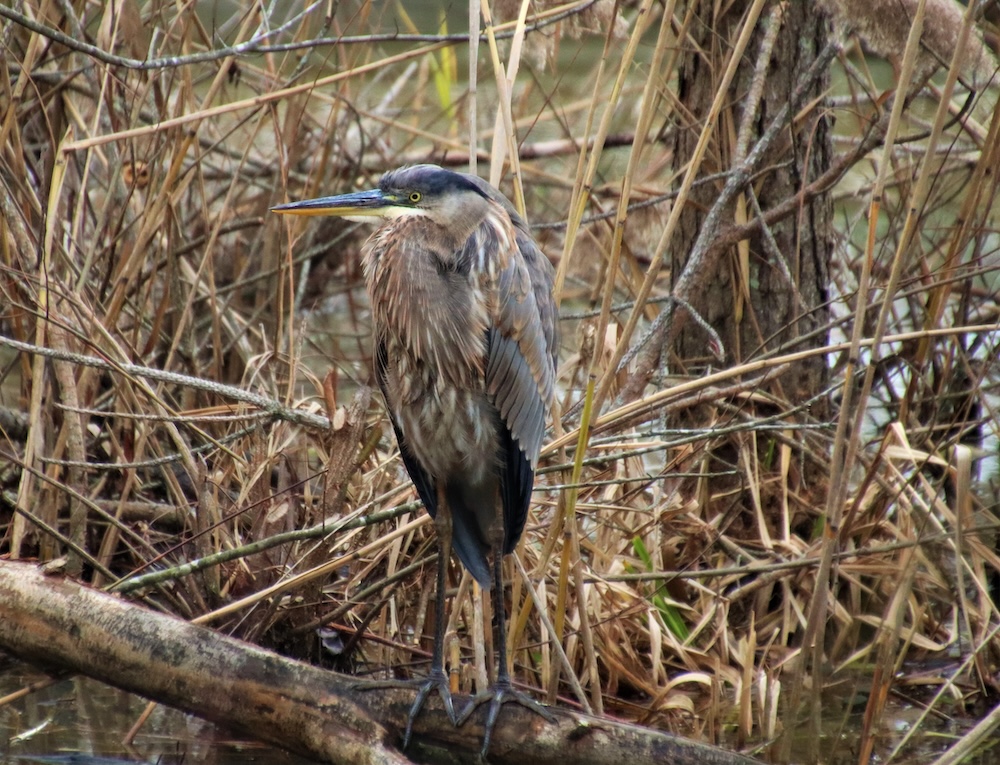


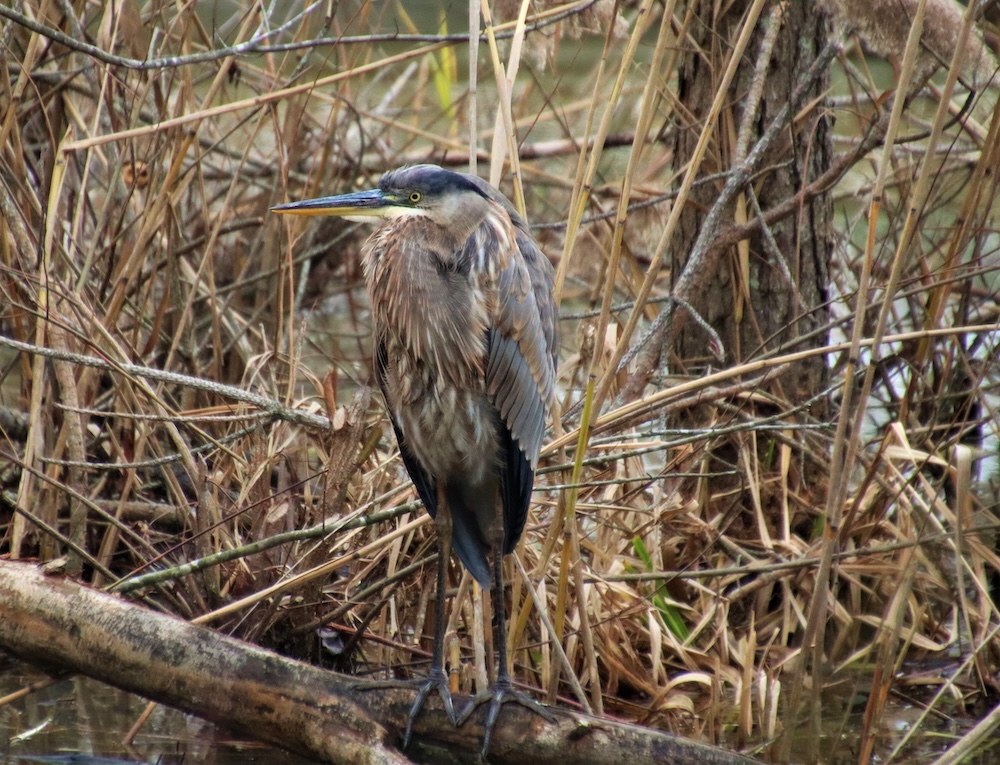
Happy Mystery Monday! Can you guess what is pictured in photo #1?
The answer to last week’s mystery is the common persimmon, Diospyros virginiana, pictured in photo #2.
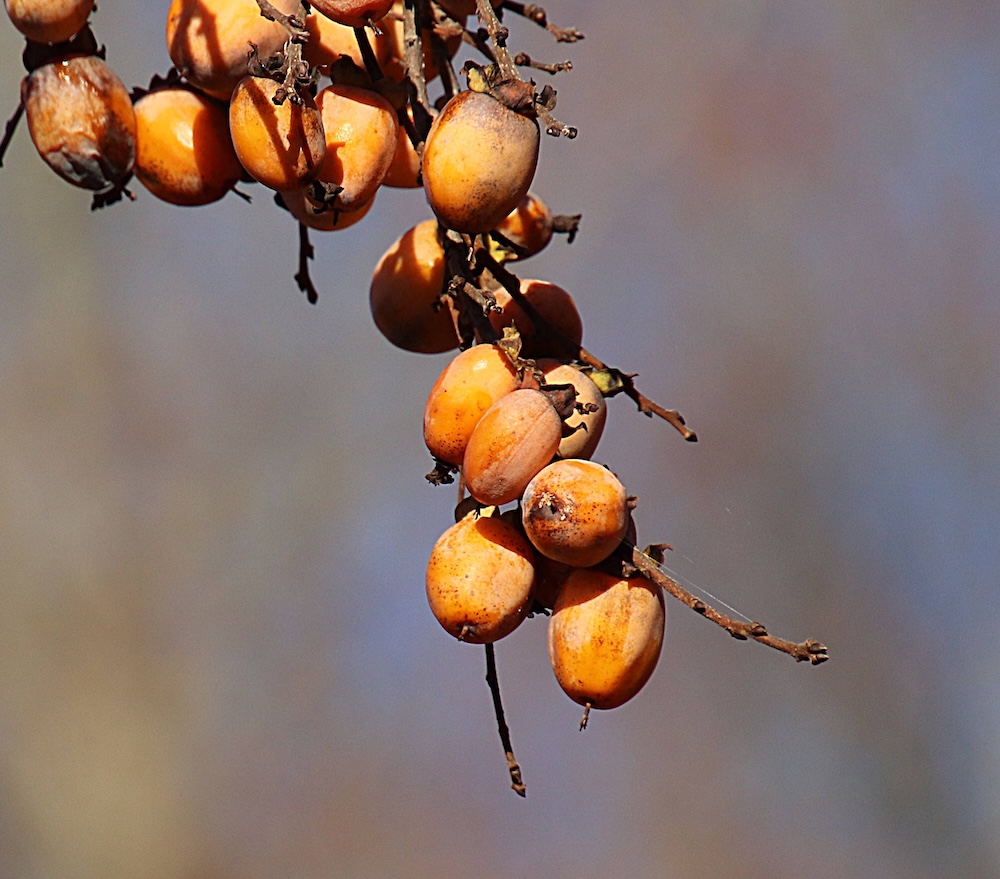
The common persimmon, Diospyros virginiana, is a slow-growing native tree found across the central and eastern United States, from Connecticut to Florida and west to Texas. In Fall, its walnut-sized orange fruits begin to appear—often overlooked on the small, bare-branched trees as showier foliage steals the spotlight. Unripe persimmons are famously astringent, but once softened by frost or season, the ripe fruit becomes a sweet, custard-like treat.
Persimmon thrives in full sun to partial shade and grows best in moist, well-drained sandy soils, especially in bottomlands, though it tolerates heat, drought, poor soils, and wind. Trees are dioecious, requiring both male and female plants for fruit production, and they take several years to mature; the best yields come from trees 25–50 years old. One of the tree’s most distinctive features is its thick, dark gray “alligator bark,” divided into blocky plates, paired with fall foliage that ranges from yellow to brilliant red.
Beyond its beauty, persimmon is valuable to both people and wildlife. Its fruit feeds a variety of animals in Winter, and the tree serves as a host plant for several moth species, including the luna moth. Its hard wood has famously been used for golf club heads and billiard cues, and the fruit pulp appears in cakes, breads, and ice creams. Even its dried leaves can be brewed into tea. Folklore adds one more charm: what you see when splitting a seed is said to predict winter weather—spoons for snow, knives for bitter cold, and forks for a mild season.
Mystery Monday is sponsored by the Spy Newspapers and Adkins Arboretum.
Write a Letter to the Editor on this Article
We encourage readers to offer their point of view on this article by submitting the following form. Editing is sometimes necessary and is done at the discretion of the editorial staff.