

Nonpartisan and Education-based News for Centreville


The Spy Newspapers may periodically employ the assistance of artificial intelligence (AI) to enhance the clarity and accuracy of our content.
Once a year, something extraordinary happens in the forest at Adkins Arboretum. Music begins under the tall trees and echoes through the woods, luring visitors to come closer. Born of a partnership between the Arboretum and the National Music Festival, Forest Music is a unique performance art event that brings young musicians and their mentors from the to play in the forest. This year’s Forest Music is Thurs., June 13 from 2 to 4 p.m.
Positioned individually or in small ensembles along a circuit of wooded paths, these musicians send their music into the air to mingle with birdsong and the rustle of leaves in the high branches. Visitors walking the paths may begin to notice a distant melody that takes shape as they move closer and the musicians come into view. What started as a mystery becomes an intimate encounter as visitors watch them play and perhaps chat with the musicians between pieces before walking on. All along the forest paths, the musicians play simultaneously so that the music shifts and fades and mingles, sometimes harmonizing, sometimes creating magical dissonances.
While the National Music Festival is dedicated to providing numerous performance opportunities, this is its most nontraditional offering. It offers the musicians a unique opportunity to participate in a performance art event, experience the beautiful and surprising acoustics of the towering forest and interact one-on-one with the visitors who pause along the paths to hear them play.
Forest Music is a celebration of musical diversity. Over the years, the forest has come alive with the sounds of violins, clarinets, horns, bassoons, double basses and even steel drums. The repertoire is equally diverse, ranging from classical masterpieces by Bach to timeless hits by the Beatles and even original compositions crafted specifically for the Arboretum’s forest. This musical extravaganza, held during the Festival’s annual two-week run in early June, draws a vibrant mix of visitors from the Festival, the local community and beyond.
Light refreshments will be served, and wine will be available for purchase. Advance registration is strongly recommended. Philip Bernot, wine director at Wishing Well Liquors in Easton, will be joined by his longtime friend Patrick Harney for a presentation of Jardin Wines and Bellview Winery, located in Landisville, N.J. The featured wines will be Jardin White and Red, lovely picnic-style wines, and Bellview San Marco, The San Marco grape was jointly developed by Bellview Winery, Rutgers University and oenologists in Trentino, Italy.
To register, visit adkinsarboretum.org or call 410-643-2847.
The Spy Newspapers may periodically employ the assistance of artificial intelligence (AI) to enhance the clarity and accuracy of our content.


The Spy Newspapers may periodically employ the assistance of artificial intelligence (AI) to enhance the clarity and accuracy of our content.


The Spy Newspapers may periodically employ the assistance of artificial intelligence (AI) to enhance the clarity and accuracy of our content.

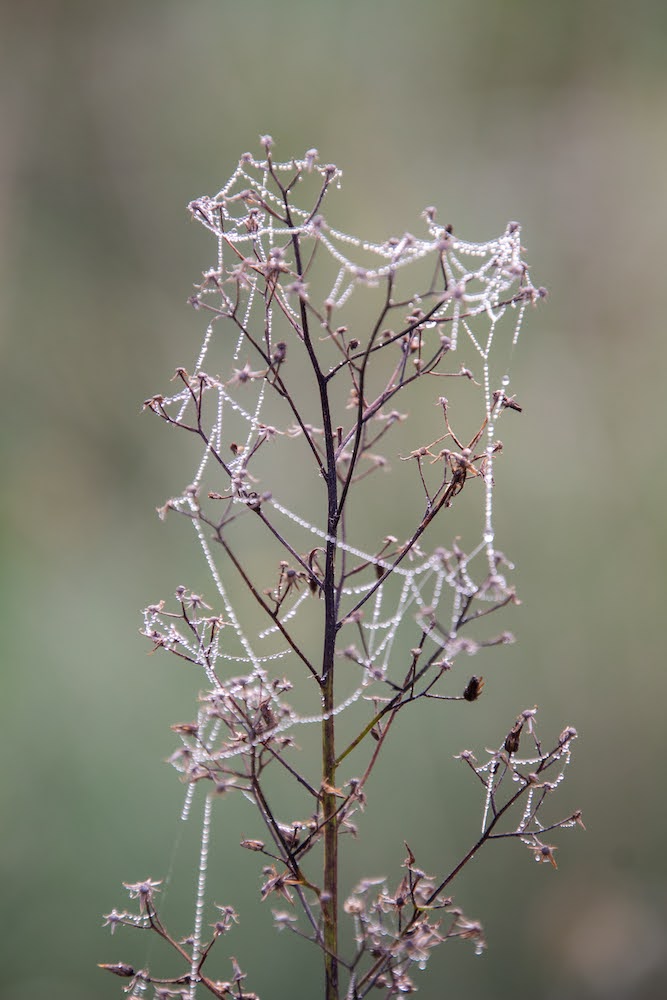
October 14: Morning Dew on Spiderweb” by Kellen McCluskey is among the works on display in The Secret Life of Adkins, her exhibition of photos on view at Adkins Arboretum.
You can lose yourself in Kellen McCluskey’s large-scale photographs of bees, blossoms, birds and trees. In her show The Secret Life of Adkins, on view in the Visitor’s Center at Adkins Arboretum through June 29, this Centreville artist captures stunningly intimate views of the Arboretum through all the seasons of the year. There will be a reception to meet the artist on Saturday, May 11 from 2 to 4 p.m.
The reception also marks the launch of My Covert Home, a new book featuring McCluskey’s photographs and a collection of 14 poems by environmental artist and writer Mary McCoy. A gentle and meditative study, this collaborative project explores the forest’s beauty and ecology.
McCluskey has been shooting photographs at the Arboretum ever since she joined its staff in 2015. Although she has held several positions over the years, she currently serves in Development and is the Arboretum’s first Staff Photographer, a role she relishes because it gives her the unique opportunity to take photographs in nature at all times of day and in every season.
“My interest in nature photography has been a long, slow burn,” she said. “I had access to a ‘Brownie’ camera when I was young and loved taking pictures of my surroundings.”
McCluskey has developed a knack for zeroing in on the beauty of the moment, however fleeting. The large scale, rich color and drama of her photographs swiftly draw you into the enticing realization that there are worlds within worlds to be discovered. Thousands of tiny redbud blossoms dance across a blue April sky, a bee feasts on the golden yellow nectar of a brilliant pink aster in September and frosty winter light shines through the orange of the crinkled beech leaves surrounding a perky white-breasted nuthatch.
“Color! I love color,” McCluskey explained, “and I’m always on the hunt for anything that deviates from leaf green or bark brown.”
For more than 25 years, she has been taking photos of the natural world with a digital camera using available light without artificial enhancements or specialized equipment. While her photographs are featured in the Arboretum’s brochures, calendars and weekly newsletter emails, this first solo exhibition of her work offers a chance to see how her skills, sensitivity and knowledge of the flora and fauna of the Adkins landscape have coalesced to create a breathtaking portrait of the richness and bounty of the natural world.
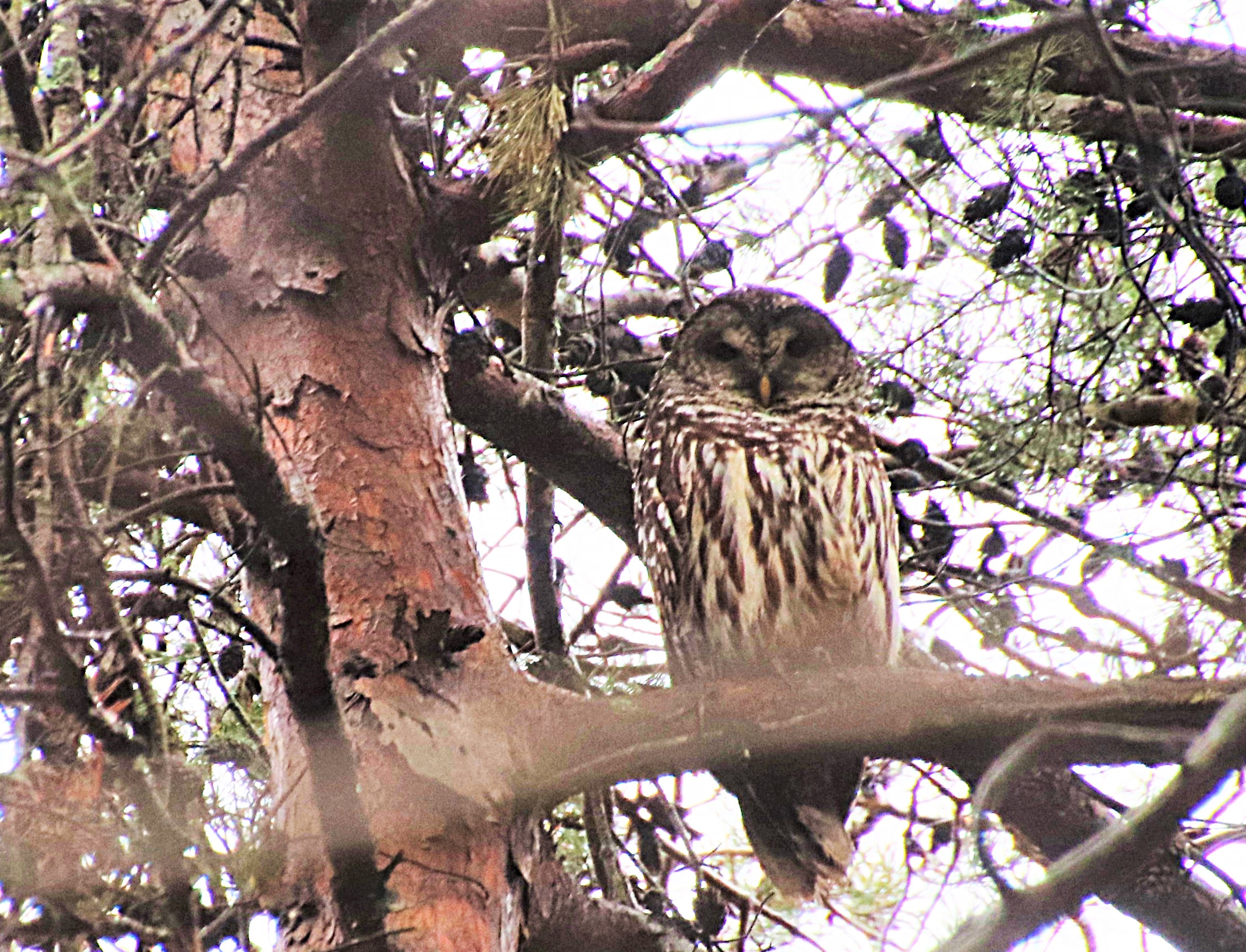
Fascinated with the vibrant seasonal changes she finds in that landscape, McCluskey titled each image with both the subject and the date it was photographed. A shy owl stares from just beyond some branches where tiny green buds are sprouting in “April 20: Barred owl (Strix varia),” while “October 14: Morning dew on spiderweb” reveals the stunning intricacy of a spiderweb where dewdrops are strung like pearls, and in “November 1: Sunny Little bluestem grasses (Schizachyrium scoparium),” airborne seeds catch the light so that they resemble a flurry of snow or perhaps bright sunshine sparkling on the water.
There’s magic in McCluskey’s photos, as there is in all of nature, and The Secret Life of Adkins is a show that stirs a sense of wonder and curiosity about what’s to be discovered when you slow down and really look. No one who hasn’t been spending most of her days at the Arboretum could have such an intimate knowledge of its varied landscapes and the cycles of its seasons, but this show is an invitation to take the time to search them out for yourself.
This show is part of Adkins Arboretum’s ongoing exhibition series of work on natural themes by regional artists. It is on view through June 29 at the Arboretum Visitor’s Center located at 12610 Eveland Road near Tuckahoe State Park in Ridgely. Contact the Arboretum at 410-634-2847, ext. 100, or [email protected] for gallery hours.
A 400-acre native garden and preserve, Adkins Arboretum provides exceptional experiences in nature to promote environmental stewardship.
The Spy Newspapers may periodically employ the assistance of artificial intelligence (AI) to enhance the clarity and accuracy of our content.


The Spy Newspapers may periodically employ the assistance of artificial intelligence (AI) to enhance the clarity and accuracy of our content.

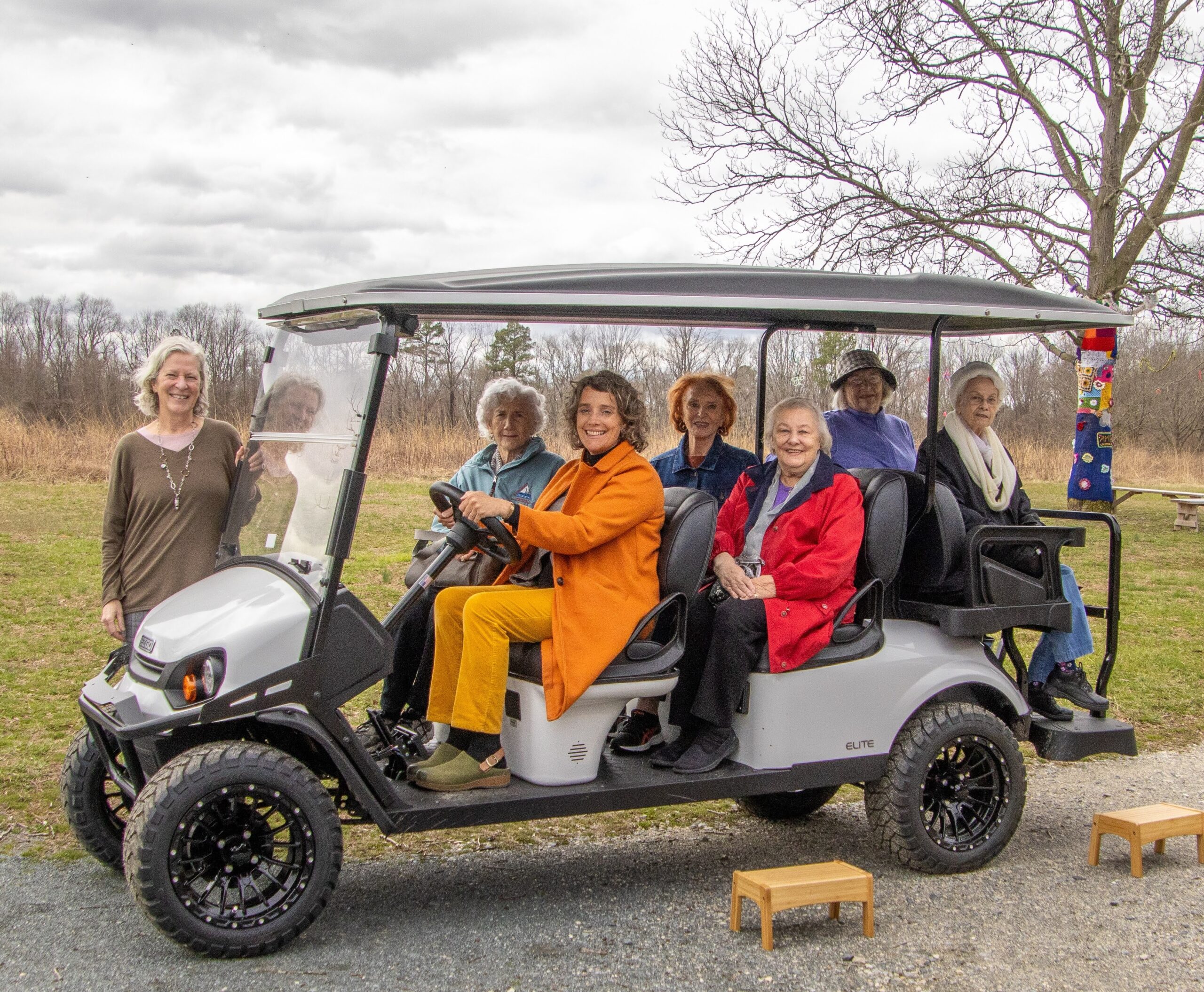
Adkins Arboretum received a grant from RMC to purchase a new six-person golf cart. Pictured from left are Arboretum Executive Director Ginna Tiernan, Edythe Humphries, RMC Program Administrator Megan D’Arcy, Shirley Moore, Audrey Podowski, Jean Cormell and Shirley Brodhead.
Adkins Arboretum recently received funding from the Rural Maryland Council (RMC) to purchase an energy-efficient six-passenger golf cart and the equipment to secure and maintain it. The cart will provide all with exceptional experiences in nature and increase mobility for all visitors.
The cart will ensure no one is left behind. Guests with mobility issues can travel with their companions instead of waiting and can reach areas beyond their ability. Providing everyone with exceptional experiences is central to the Arboretum’s mission. The Arboretum’s previous three-passenger golf cart could carry one or two passengers at a time, forcing anxious program participants to wait their turn for access in the wake of increased visitorship that has doubled since the pandemic.
Providing golf cart transportation for visitors with mobility issues allows equal access to the Arboretum’s paths, programs and events and ensures all the benefits and joy nature offers. Offering comfortable, safe access to nature for those with mobility issues will significantly increase the visitorship and the quality of the experience at the Arboretum. Those with limited access to nature can now engage more fully with nature and reap the benefits and joy of being in nature as others do. A friend of the Arboretum donated to install seat belts on all six seats.
Founded in 1994, the Rural Maryland Council (RMC) serves as the state’s federally designated rural development council and functions as a voice for Rural Maryland – advocating, educating, and helping “A Collective Voice for Rural Maryland” rural communities and businesses across the state to flourish and to gain equity to its suburban and urban counterparts. The Council administers the Rural Maryland Prosperity Investment Fund (RMPIF) and the Maryland Agricultural Education and Rural Development Assistance Fund (MAERDAF) grant programs. Additionally, the Council conducts research activities to understand rural challenges and outreach to engage rural residents in developing solutions to these challenges and convenes groups to identify solutions through consensus and coalition building.
The Spy Newspapers may periodically employ the assistance of artificial intelligence (AI) to enhance the clarity and accuracy of our content.
HOA members are invited to participate in an eight-part speaker series hosted by Adkins Arboretum. The series was developed as part of the Naturally Better Landscaping project in partnership with ShoreRivers with funding from the Chesapeake Bay Trust. All programs are free for HOA members, $10 for Arboretum members and $15 for the general public. Advance registration is required.
The series will kick off on June 2 with an introductory presentation at Chesapeake College’s Eastern Shore Higher Education Center. Subsequent presentations will be held at Adkins Arboretum and explore topics including the impact and history of lawns, native meadow installation and maintenance, designing for seasonal color and supporting wildlife with native plants.
The Naturally Better Landscaping project strives to educate and empower local homeowner associations to adopt environmentally-friendly landscaping practices. Currently, eight homeowners associations in Queen Anne’s and Talbot Counties are taking part. The project is supported by Queen Anne’s County officials and was prompted by the passage of Maryland House Bill 322, which prohibits HOA governing bodies from restricting homeowners who employ landscaping techniques that benefit the environment.
By using native plants in conjunction with other environmentally friendly techniques such as leaving the leaves, reducing turf, and finding alternatives to toxic fertilizers and pesticides, homeowners can help support wildlife and keep our waterways clean. Land, water and wildlife are inextricably linked, and the choices homeowners make play an important role in safeguarding our environment.
To learn more about the speaker series and to register, visit adkinsarboretum.org or call 410-634-2847, ext. 100.
The Spy Newspapers may periodically employ the assistance of artificial intelligence (AI) to enhance the clarity and accuracy of our content.
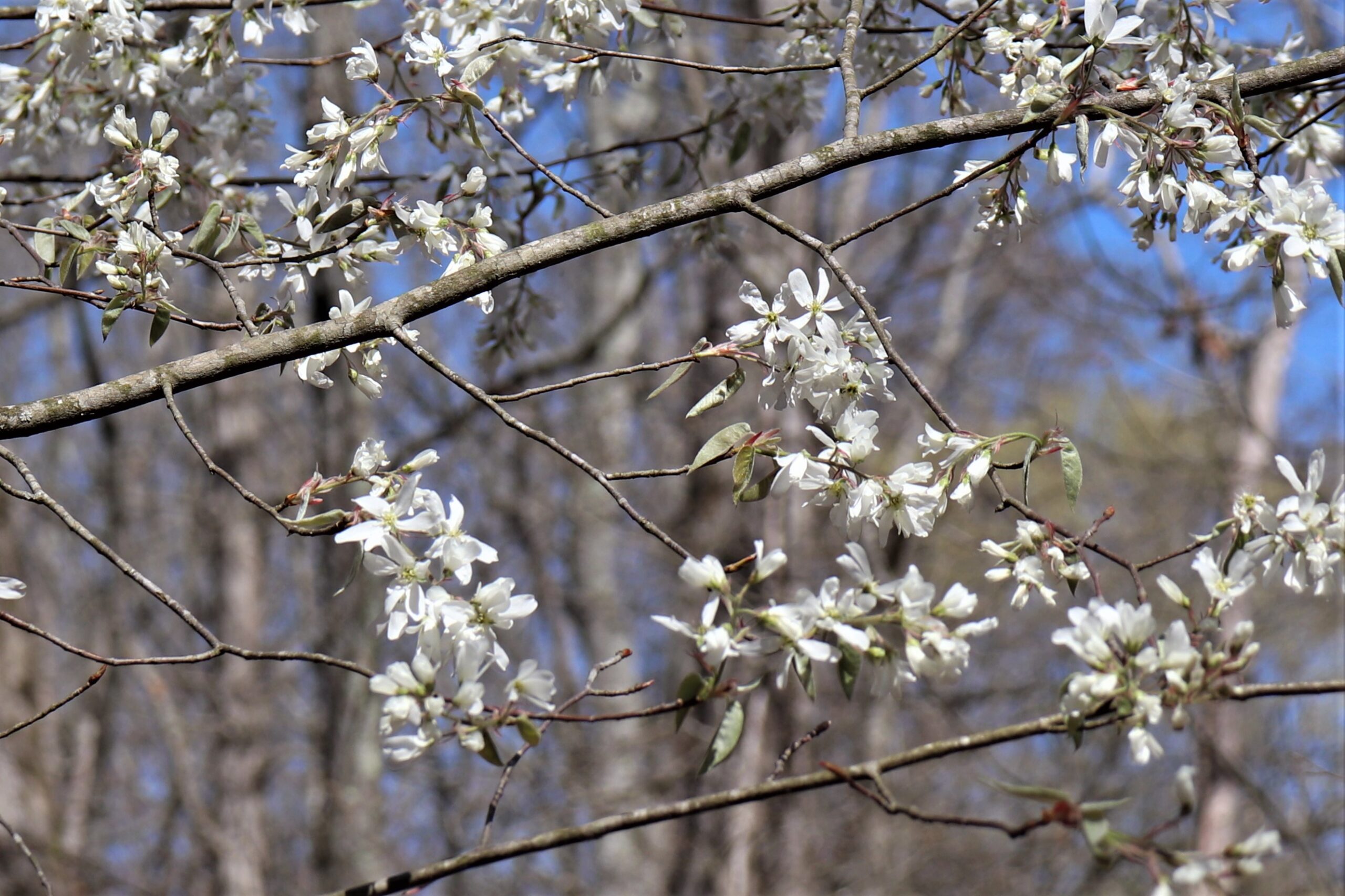
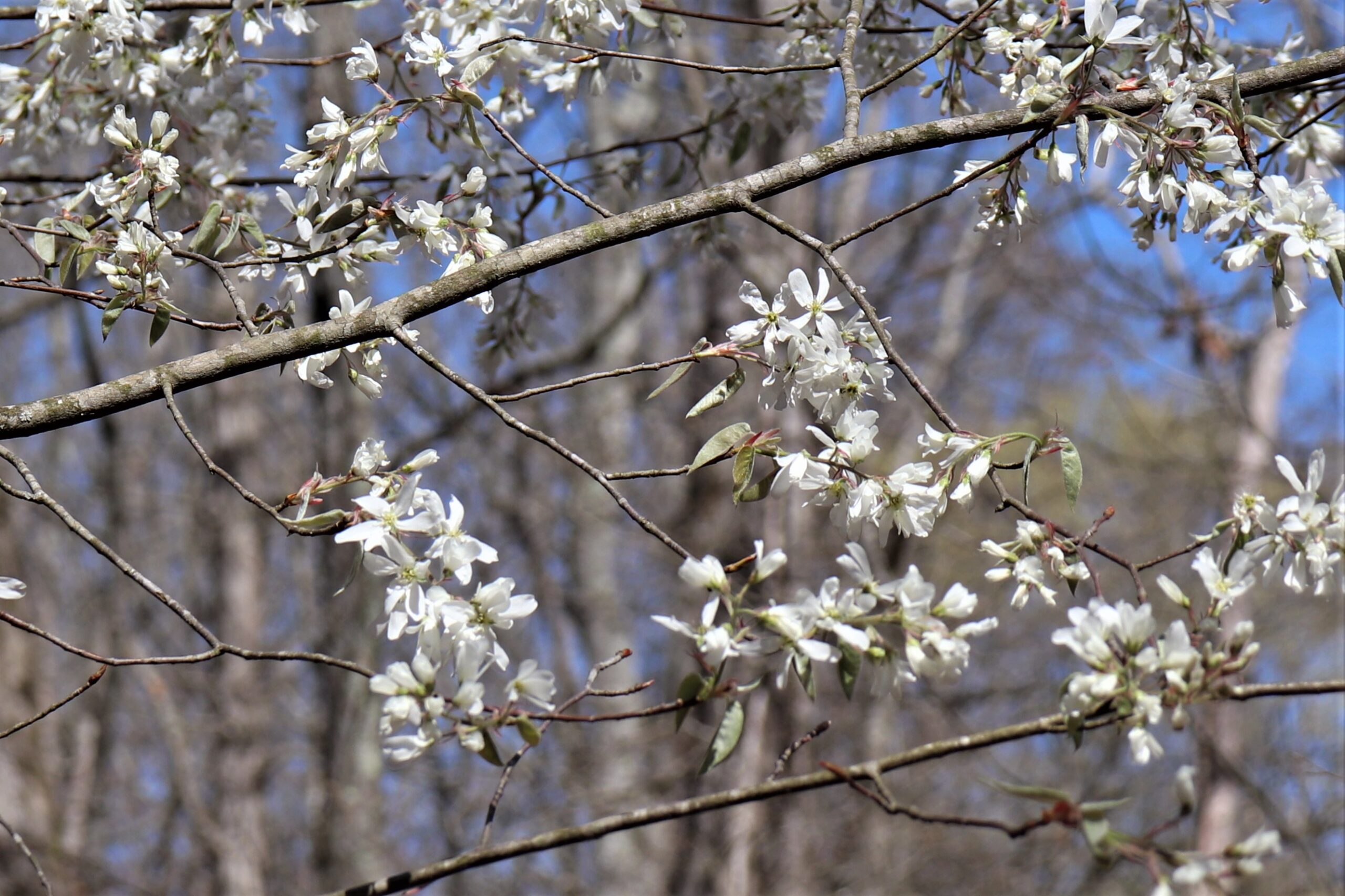
The answer to last week’s mystery is serviceberry, Amelanchier canadensis, pictured below..

There are twenty different species of serviceberry, a deciduous-leaved shrub and small tree in the rose family. They are largely restricted to wet sites, particularly on the Atlantic coastal plain.Serviceberries bloom early in Spring, and in June they produce edible, dark purple berries. These berries are an important food source for pollinators, many different species of birds, and small mammals.Folklore suggests that serviceberries get their name from funeral services. This is because by the time the ground thaws enough for burials, serviceberry flowersare in bloom.In the Appalachians, it is said that after the snows melt and the roads are passable, preachers would begin the hike up into the mountains to perform services around the same time the beautiful, showy white serviceberry flowers were bursting to life against the drab forest backdrop, sometime in late April.Mystery Monday is sponsored by the Spy Newspapers and Adkins Arboretum.
The Spy Newspapers may periodically employ the assistance of artificial intelligence (AI) to enhance the clarity and accuracy of our content.
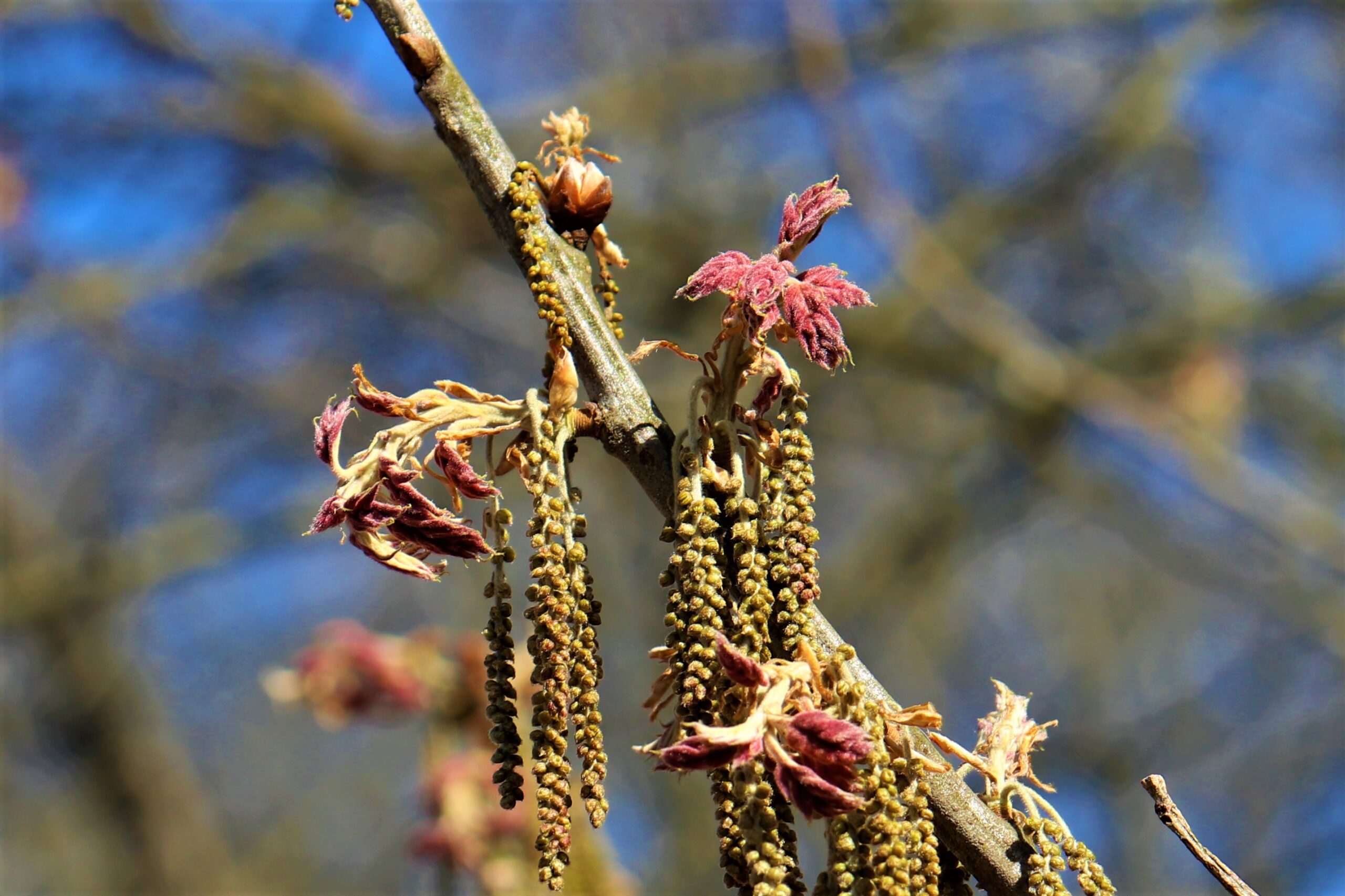
The answer to last week’s mystery is red oak flowers, pictured below.Red oaks flower early in spring, from February to May, depending on latitude. Oaks have both male and female flowers on the same tree. The female flowersare very small and found scattered on the branch tips. Male flowers dangle down in a catkin-like form.Cross-pollination of the florets is by wind during mid-to late Spring. Afterwards, the catkins fall to the ground, while the florets slowly develop into acorns.The oak’s acorns are an important source of food for birds because of their small size. Many mammals eat the acorns as well.Mystery Monday is sponsored by the Spy Newspapers and Adkins Arboretum.
The Spy Newspapers may periodically employ the assistance of artificial intelligence (AI) to enhance the clarity and accuracy of our content.