MENU

Sections

  • Home
  • Education
  • Donate to the Centreville Spy
  • Free Subscription
  • Spy Community Media
    • Chestertown Spy
    • Talbot Spy
    • Cambridge Spy

More

  • Support the Spy
  • About Spy Community Media
  • Advertising with the Spy
  • Subscribe
February 6, 2026

Centreville Spy

Nonpartisan and Education-based News for Centreville

  • Home
  • Education
  • Donate to the Centreville Spy
  • Free Subscription
  • Spy Community Media
    • Chestertown Spy
    • Talbot Spy
    • Cambridge Spy
Ecosystem Eco Notes

Outdoor Fun Planned for Adkins Arboretum’s Earth Day Celebration

April 3, 2024 by Adkins Arboretum Leave a Comment

Earth Day Adkins at Adkins Arboretum in Ridgely MD, 22 April 2023. Photo by Mike Morgan.

A full day of outdoor fun is planned for Adkins Arboretum’s Earth Day Adkins event on Sat., April 20. The event runs from 11 a.m. to 3 p.m. The rain date is Sunday, April 21, noon to 4 p.m.

The whole family is invited for a native plant sale, tree giveaways (while supplies last), dip netting in the wetland and hands-on nature activities with local environmental organizations, including ShoreRivers, Tuckahoe State Park, Maryland Department of Natural Resources, Talbot Master Gardeners, Phillips Wharf Environmental Center, Anne Arundel County Rec and Parks, Bartlett Tree Experts and Pickering Creek Audubon Center.

Refreshments from local food trucks will be available for purchase. Bring your spare seeds to participate in our seed swap, engage in living history with Native American historian Drew Shuptar-Rayvis and take a selfie with Mother Earth! There will also be live entertainment all day by Fine Times, Choptank Little/Big Band, The Naturalists, the Parsons Family and Improv Easton.

Thanks to the generosity of the Arboretum’s sponsors, Earth Day Adkins admission is just $5 per person when purchased in advance at adkinsarboretum.org or by calling 410-634-2847, ext. 100. Children ages 3 and under are admitted free of charge. Only 400 admissions will be sold, so early registration is advised. Admission increases to $10 on the day of the event. For more details, visit adkinsarboretum.org.

The Spy Newspapers may periodically employ the assistance of artificial intelligence (AI) to enhance the clarity and accuracy of our content.

Filed Under: Eco Notes

Join Ethan Kaufmann, Director of Stoneleigh, for Talk April 6 at Adkins Arboretum

April 3, 2024 by Adkins Arboretum Leave a Comment

Catalpa Court and water feature

With a 150-year history as a private estate, Stoneleigh became a public garden in 2018. On Sat., April 6, join its director, Ethan Kaufmann, at Adkins Arboretum for a talk, Wild and Wonderful: How Nature Plants are Transforming a Formal Garden. He will discuss the unexpected plants, expressive design philosophy and unconventional practices that are driving Stoneleigh’s exciting transformation. The talk is from 1 to 2 p.m. and is open to the public.

Kauffman developed his love of the natural world by exploring the Susquehanna River hills in southeastern Pennsylvania. He cultivated his horticultural perspective over two decades of gardening in the Deep South, including as director of Moore Farms Botanical Garden, where he led the transition from a private pleasure garden to a public botanical garden. He enjoys creating an experience at Stoneleigh that inspires others to garden for beauty, biodiversity and the health of the planet.

Following the talk, the public is invited on a bus trip to Stoneleigh and Chanticleer on Fri., May 10. Chanticleer has been called the most romantic, imaginative and exciting public garden in America—a study of textures and forms where foliage trumps flowers, gardeners lead the design and even the drinking fountains are sculptural. It is a garden of pleasure and learning, relaxing yet filled with ideas to take home. Stoneleigh has soaring trees, expansive vistas and dynamic displays of native plants. It is a celebration of the natural world and celebrates the beauty of native plants and the importance of biodiversity.

The bus departs from Aurora Park Drive in Easton at 8 a.m. and will make stops at the Route 50/404 and Route 301/291 Park and Rides. Registration is required and more information is available at adkinsarboretum.org.

The Spy Newspapers may periodically employ the assistance of artificial intelligence (AI) to enhance the clarity and accuracy of our content.

Filed Under: Food and Garden Notes

Adkins Arboretum Mystery Monday! Guess the Picture

April 1, 2024 by Adkins Arboretum Leave a Comment

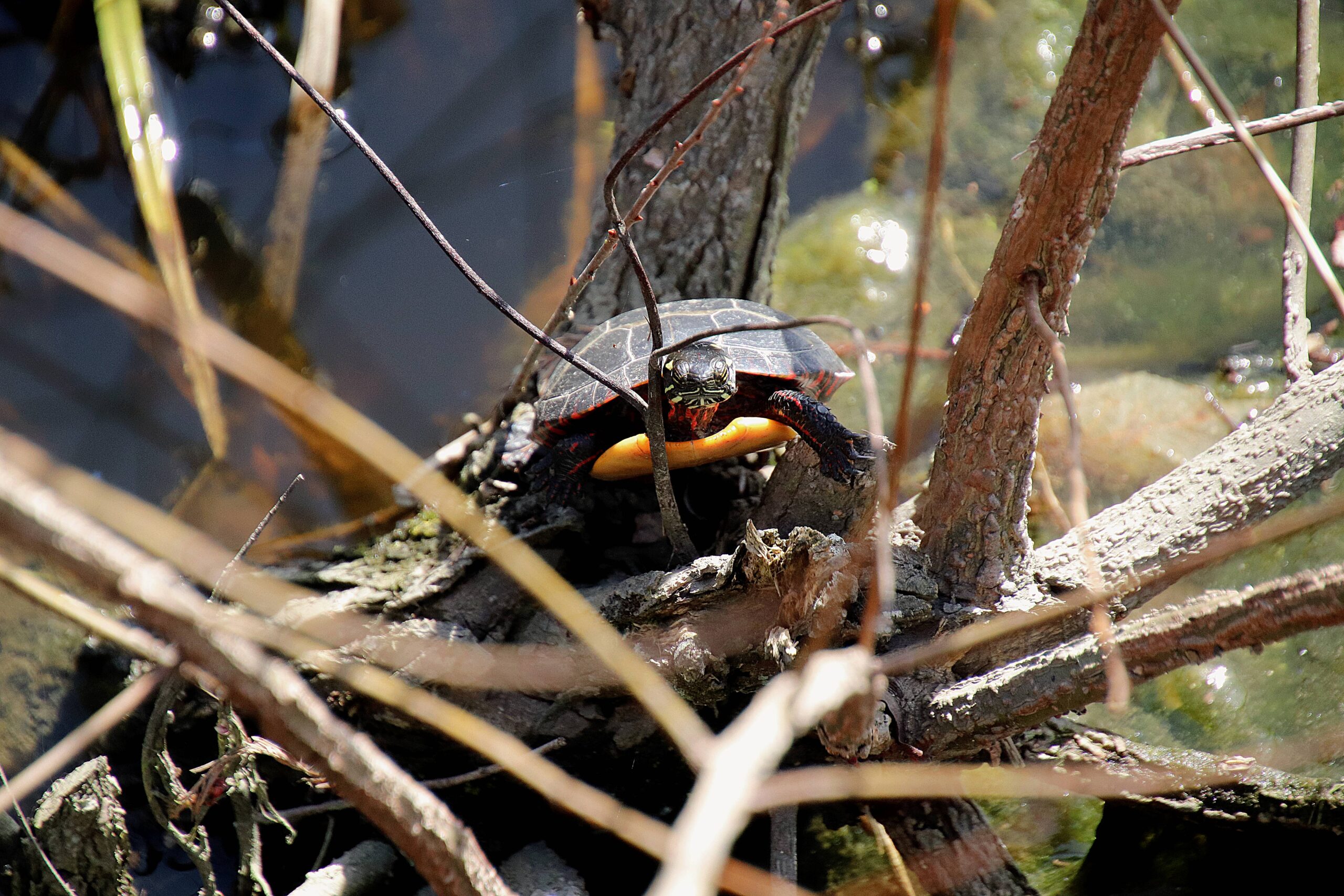
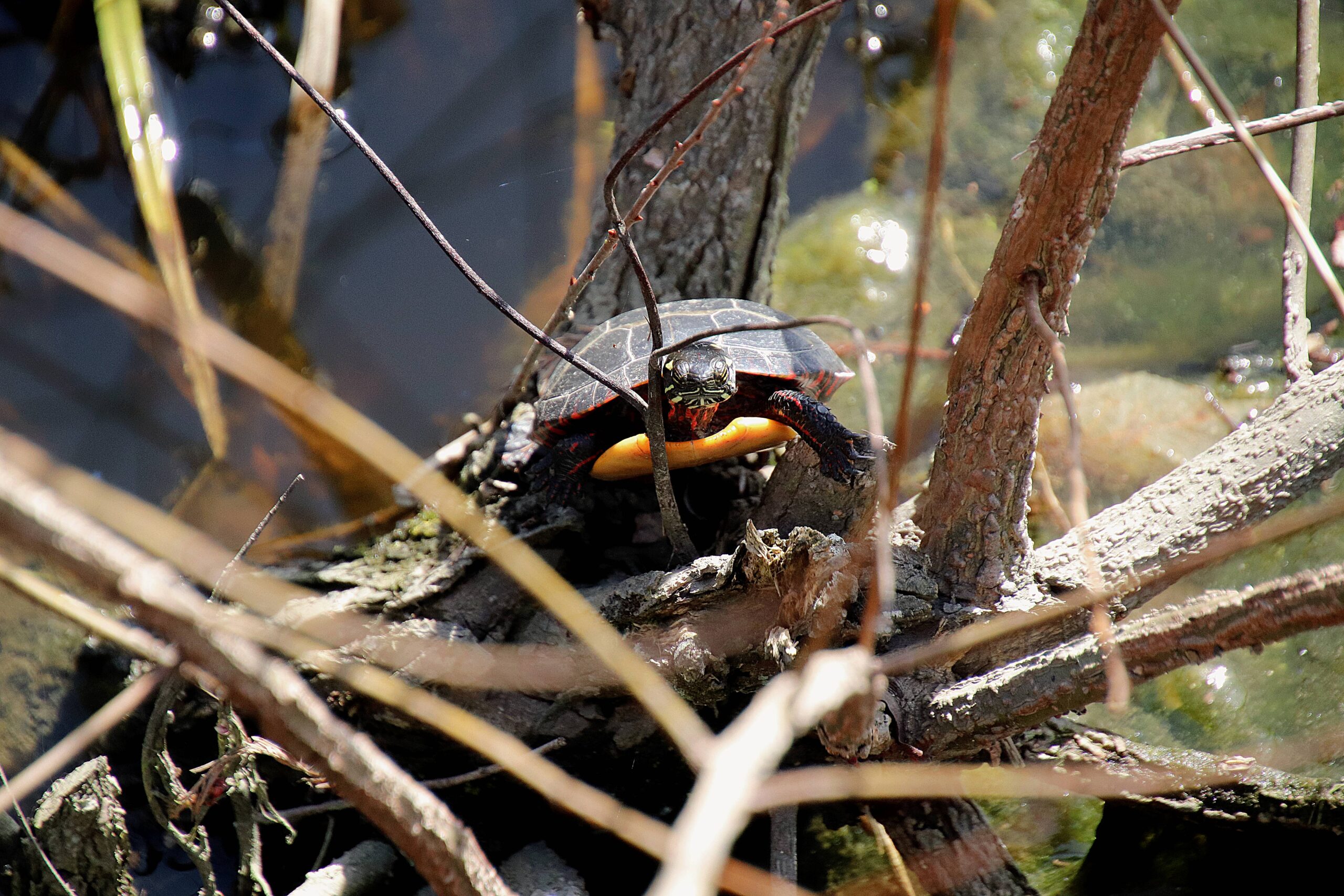
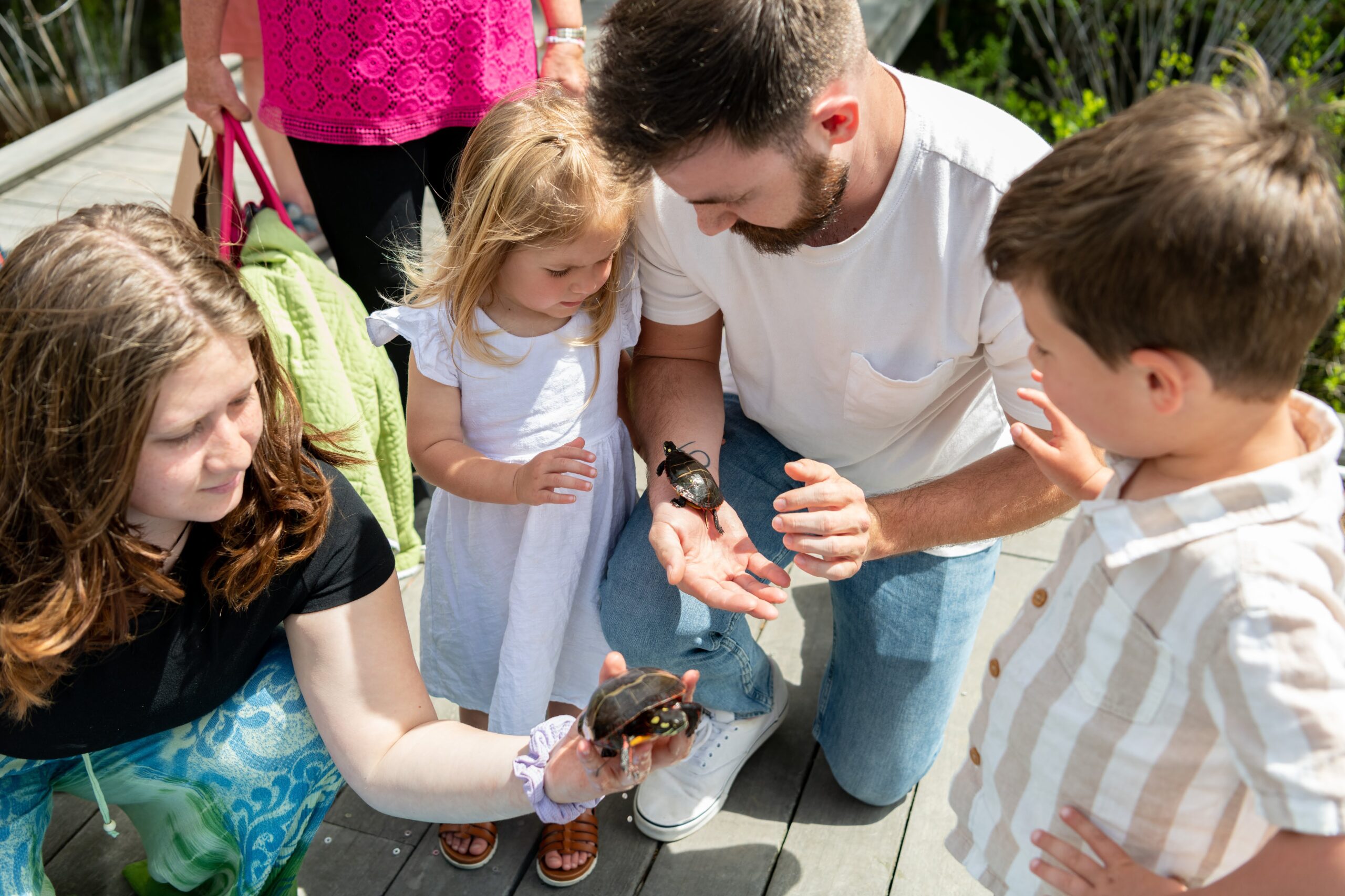
The answer to last week’s mystery is the eastern painted turtle, Chrysemis picta, pictured below:

The fossil record shows that the eastern painted turtle existed 15 million years ago! It is the most wide spread turtle in North America.

The eastern painted turtle has a smooth and flattened carapace, colored olive to black, with a border of red crescents or bars. They have bright yellow spots on either side of their head, and yellow stripes through their eyes and along their jawline.

Painted turtles can be found in slow moving, shallow water with vegetation, such as ponds, marshes, lakes, pools, and ditches. They love basking on warm rocks.

At night, painted turtles drop to the bottom of a body of water, or perch on an underwater object to sleep. In winter, they hibernate by burying themselves, either on the bottom of a body of water, or near water in the shore-bank. During hibernation, the turtle does not breathe, although if surroundings allow, they may get some oxygen through their skin.

Being hit by vehicles is a significant source of mortality to this species. Painted turtles crossing roads are often pregnant females searching for nesting sites.

Mystery Monday is sponsored by the Spy Newspapers and Adkins Arboretum

The Spy Newspapers may periodically employ the assistance of artificial intelligence (AI) to enhance the clarity and accuracy of our content.

Filed Under: Archives, Eco Notes

Adkins Mystery Tuesday-Guess the Picture

March 26, 2024 by Adkins Arboretum Leave a Comment

Guess the photo:
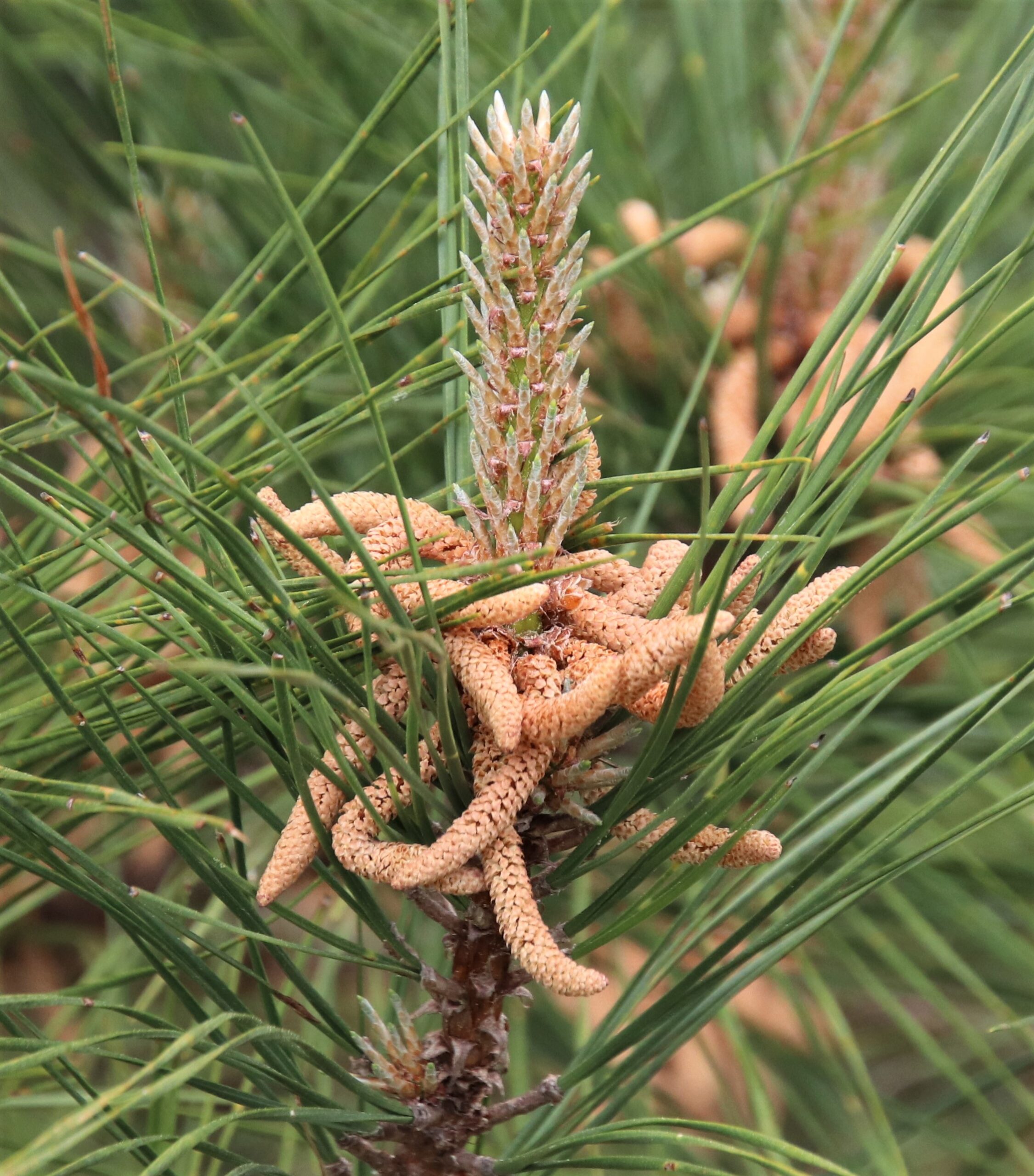
 The answer to last week’s mystery is loblolly pine, Pinus taeda, pictured in photo here:
Loblolly pine is the second-most common species of tree in the United States, after red maple. It is one of the fastest growing pines making it a valuable species in the lumber industry. The lumber is marketed as yellow pine lumber. Loblolly wood is valued as being hard and dense relative to other pines, and it is widely used in construction.
The word “loblolly” is a combination of “lob”, referring to the thick, heavy bubbling of cooking porridge, and “lolly”, an old British dialect word for broth, soup, or any other food boiled in a pot.
Loblolly pines are generally found in lowlands and swampy areas, and are the dominant tree at the transition zone between salt marsh and woodland. Brown-headed nuthatch and yellow-throated warbler are dependent on loblolly pine forests for food and nesting.
Loblolly pine seeds were carried aboard the Apollo 14 flight. On its return, the seeds were planted in several locations in the United States, including the grounds of the White House. As of 2016, a number of these moon trees remain alive.
Mystery Monday is sponsored by the Spy Newspapers and Adkins Arboretum.

The Spy Newspapers may periodically employ the assistance of artificial intelligence (AI) to enhance the clarity and accuracy of our content.

Filed Under: Food and Garden Notes

Adkins Arboretum Mystery Monday! Guess the Picture Below

March 11, 2024 by Adkins Arboretum Leave a Comment

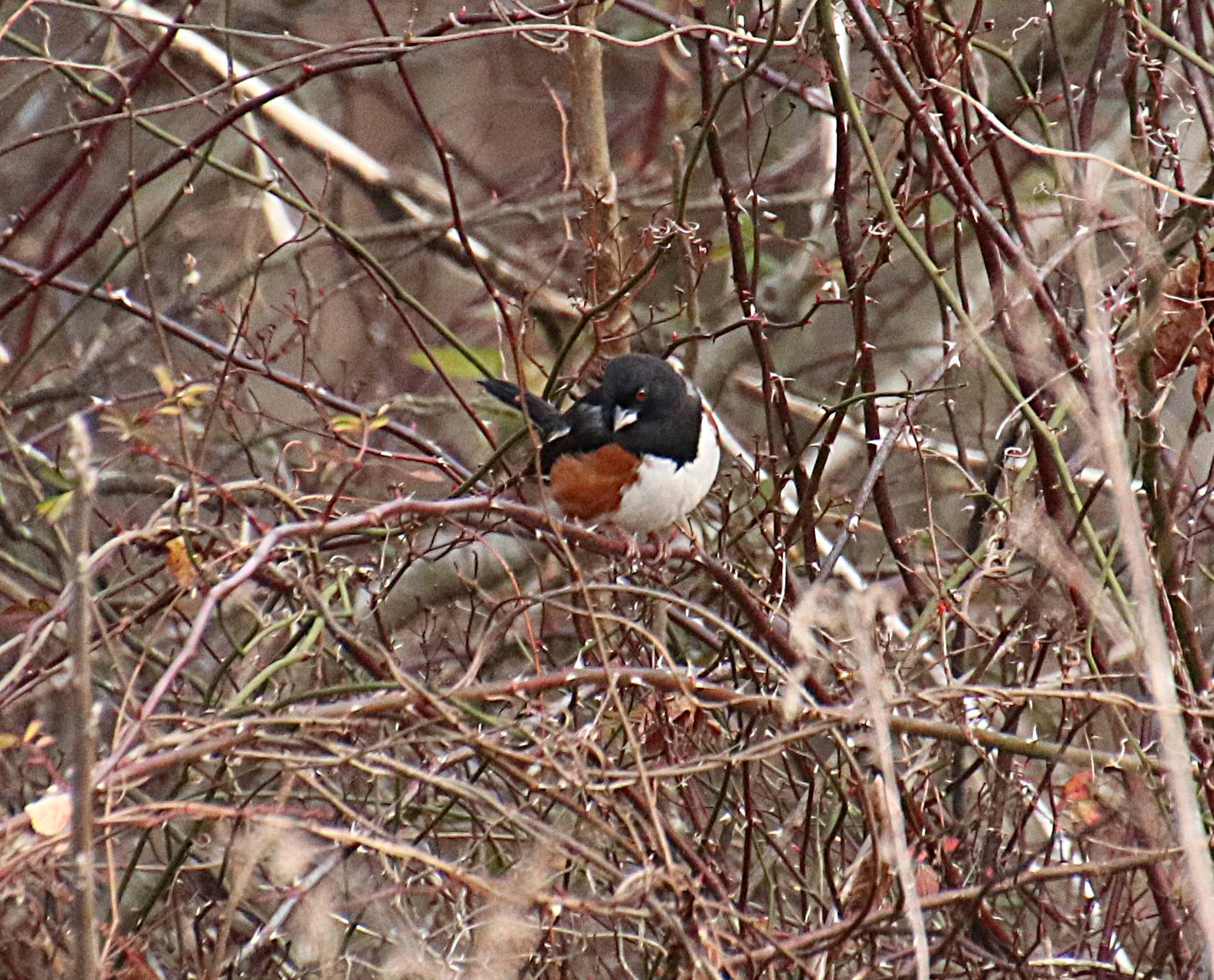
The answer to last week’s mystery is the eastern towhee.
The eastern towhee is a member of the sparrow family, and a year-round resident of Eastern Shore.
Male towhees are striking, with bold sooty black above and on the breast, warm reddish brown sides, and white on the belly. Females have the same pattern, but are rich brown where the males are black.
Towhees are usually shy sulkers and rush for cover at the slightest disturbance. They spend most of their time on the ground, scratching at leaves using both feet at the same time, in a kind of backwards hop.
Eastern towhees are not listed as threatened or endangered, but their numbers have been declining over the last few decades. Construction of subdivisions and the continued growth of shrublands into forests have made the landscape for eastern towhees less suitable. Towhees are important to the ecosystem because they consume pest insects and help to propagate the seeds of various plants.

The Spy Newspapers may periodically employ the assistance of artificial intelligence (AI) to enhance the clarity and accuracy of our content.

Filed Under: Archives, Food and Garden Notes

2024 Juried Art Show: Discover the Native Landscapes of Eastern Shore April 26

March 10, 2024 by Adkins Arboretum Leave a Comment

“Of Water Too Are the Grasses” won first prize in Adkins Arboretum’s Juried Art Show. The show is on view through April 26.

With a tiny painting of a pair of buzzards comically perched on a dead tree, a ceramic pitcher encrusted with honey bees, and a serene photo of winter trees and a farmhouse silhouetted against the blush of a dawn sky, Adkins Arboretum’s 24th annual Juried Art Show, Discovering the Native Landscapes of Maryland’s Eastern Shore, is lively, varied and full of surprises. On view through April 26, the show was juried by Mehves Lelic, who will speak about her choices at a reception on Saturday, March 9, from 2 to 4 p.m.

Lelic is the Director of Mosely Gallery at the University of Maryland, Eastern Shore and was formerly the Curator at the Academy Art Museum in Easton. From the 171 entries that were submitted, she chose 31 works by artists from Maryland, Delaware, Virginia and Washington, DC. It’s an energetic and fascinatingly diverse show in a variety of mediums, including watercolor, oils, acrylics, pastel, watercolor, sumi ink drawings, photographs, found object sculpture, ceramics, and even pyrography (drawing with a wood burning tool).

Lelic explained, “I was looking for artists who interpreted what is essentially a shared experience of space through their unique visual languages, took risks, and alluded to not just the commonly depicted, calming associations with nature but its more complex, cyclical facets.”

While the show includes many beautiful and inspiring landscapes and waterscapes created at different seasons of the year, several of the works are quite unusual. Lelic chose two of these to receive the annual Leon Andrus Awards.

First prize went to a large sumi ink and colored pencil drawing by Irene Pantelis, of Bethesda, called “Of Water Too Are the Grasses” in which ink and color flow in swift, watery brushstrokes that describe grasses with roots reaching deep into water-saturated earth. A close look reveals a myriad of tiny concentric rings that bloom within the brushstrokes where Pantelis added pigment to the still wet ink.

“I love how the ink is traveling on the paper and telling us about the intentions of the artist,” Lelic said, “but there are parts of it that are so controlled. I also like the undercurrents of decay, which to me is such an important part of our relationship with nature. I think this piece touches on that while carrying a sense of exuberance.”

She awarded second prize to Alexandria artist Ceci Cole McInturff’s “Animalis” a sculptural installation with two pale, curving branches, one dangling long strands of white horsehair, the other sporting a bird’s wing, as if it is flying.

“I selected this as the second-place award winner because the piece displays a consideration of how living cells can take all these different forms from feather to hair to branch,” she explained. “I also loved that it was suspended as if you were actually experiencing it out in its natural environment. From found object to contemporary sculpture is a really winding path and I felt the artist navigated that path very successfully.”

Lelic also gave Honorable Mention awards to “Dunes of Maryland,” a bold oil painting by Michael Dean of Fredericksburg, VA, “Creek with Trees,” a whimsical and colorful painting by Easton artist Sheryl Southwick, and an exquisite toned cyanotype print hand-colored with watercolor and gold ground called “Persimmon” by Paige Billin-Frye of Washington, DC.

“The Arboretum holds such an important place in our community,” Lelic said, “and it was exciting to see artistic responses to the natural respite and inspiration it provides. It was a privilege to spend time with all the incredibly strong pieces everyone submitted as we slowly but surely leave winter behind and see the first signs of spring reawakening.”

This show is part of Adkins Arboretum’s ongoing exhibition series of work on natural themes by regional artists. It is on view through April 26 at the Arboretum Visitor’s Center located at 12610 Eveland Road near Tuckahoe State Park in Ridgely. Contact the Arboretum at 410-634-2847, ext. 100 or [email protected] for gallery hours.


The Spy Newspapers may periodically employ the assistance of artificial intelligence (AI) to enhance the clarity and accuracy of our content.

Filed Under: 6 Arts Notes

Adkins Arboretum Announces 2024 Soup ’n Walk Program Schedule

February 26, 2024 by Adkins Arboretum Leave a Comment

Adkins Arboretum’s 2024 Soup ’n Walk programs kick off March 16 with a walk focused on early blooms, songbirds and spring frogs. Photo: Kellen McCluskey

Adkins Arboretum has announced the 2024 lineup for its popular Soup ’n Walk programs. Explore the Arboretum’s forest, meadows and wetland on a guided walk themed to the season, then enjoy a delicious lunch and a brief talk about nature and nutrition. Copies of recipes are provided. All gift shop purchases on these days receive a 20% discount. This year’s offerings include:

Early Blooms, Songbirds & Spring Frogs

Sat., March 16, 11 a.m.–1:30 p.m.

Listen for songbirds and spring frogs while searching for early purple, pink and white blooms. Plants of interest include skunk cabbage, paw paw, spring beauty and bloodroot. Menu: hearty vegetarian chili, sweet and tangy sauerkraut salad, brown rice bread with spinach dip, dark chocolate chewy cookie.

Spring Ephemerals & Pollinators

Sat., April 13, 11 a.m.–1:30 p.m.

Look again! The blooms of ephemeral plants, trees and shrubs are here and gone in the blink of an eye. Look for pink, white and yellow blooms and listen for early pollinators. Plants of interest include pink spring beauty, may apple, dogwood, golden groundsel, spicebush, sassafras and white beech. Menu: ginger sweet potato soup, Eastern Shore crunchy cole slaw, ancient grain bread with strawberry jam, oatmeal walnut cookies.

Beavers, Tuckahoe Creek & Beyond

Sat., May 18, 11 a.m.–1:30 p.m.

Observe the beautiful Tuckahoe Creek view while scouting for signs of beavers. Plants of interest include mountain laurel, beech, tulip tree, pink lady’s slipper, Solomon’s seal and may apple. Menu: kale, apple, and lentil soup, green bean salad with honey cider vinaigrette, pumpernickel bread and apple butter, cinnamon crunch apple cake.

Sunny Meadows

Sat., Sept. 21, 11 a.m.–1:30 p.m.

Walk the meadows in search of golden brown grasses and yellow and purple flowers while watching and listening for bluebirds and dragonflies. Plants of interest include milkweed, black-eyed Susan, goldenrod, Indian grass, big bluestem and sumac berries. Menu: split pea soup, wild rice berry salad, anadama oatmeal bread with orange marmalade, spicy pumpkin pie in easy crust.

Dazzling Fall Color

Sat., Oct. 19, 11 a.m.–1:30 p.m.

Fall colors dazzle the eye and pique the appetite. Listen for migrating birds and woodpeckers while watching for changing color on red and orange sweet gum, sassafras, tupelo, sumac, dogwood, yellow paw paw, hickory, beech and tulip trees. Menu: butternut squash sweet potato bisque, red pepper and chick pea salad, whole wheat flaxseed bread with blackberry jam, tasty peach and berry crisp.

Autumn Harvest

Sat., Nov. 16, 11 a.m.–1:30 p.m.

Enjoy autumn as we hunt for nutritious berries, nuts and seeds and check for signs of beaver. Plants of interest include dogwood, hibiscus, partridge berry, oak, loblolly pine, juniper, verbena, ironwood and strawberry bush. Menu: kale and chicken soup with lemon, black-eyed pea salad, dill rye bread with raspberry jam, Black Forest cake with cherries.

Soup ’n Walk programs are $30 for members and $35 for non-members. Early registration is recommended. Visit adkinsarboretum.org or call 410-634-2847, ext. 100 to register or for more information.

The Spy Newspapers may periodically employ the assistance of artificial intelligence (AI) to enhance the clarity and accuracy of our content.

Filed Under: Archives, Food and Garden Notes

Adkins Arboretum’s Mystery Monday!  Can You Guess What’s Pictured Below?

February 19, 2024 by Adkins Arboretum Leave a Comment

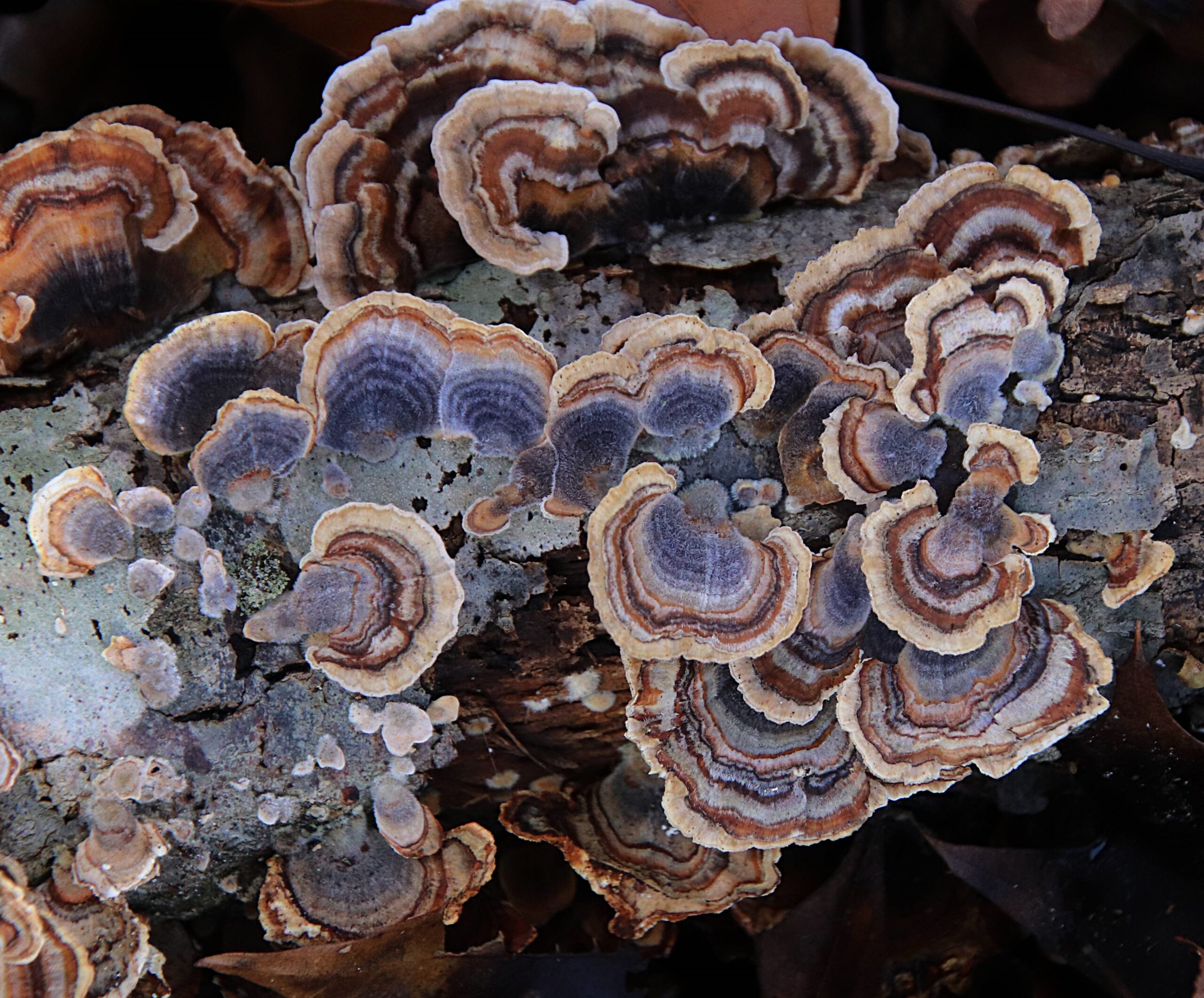
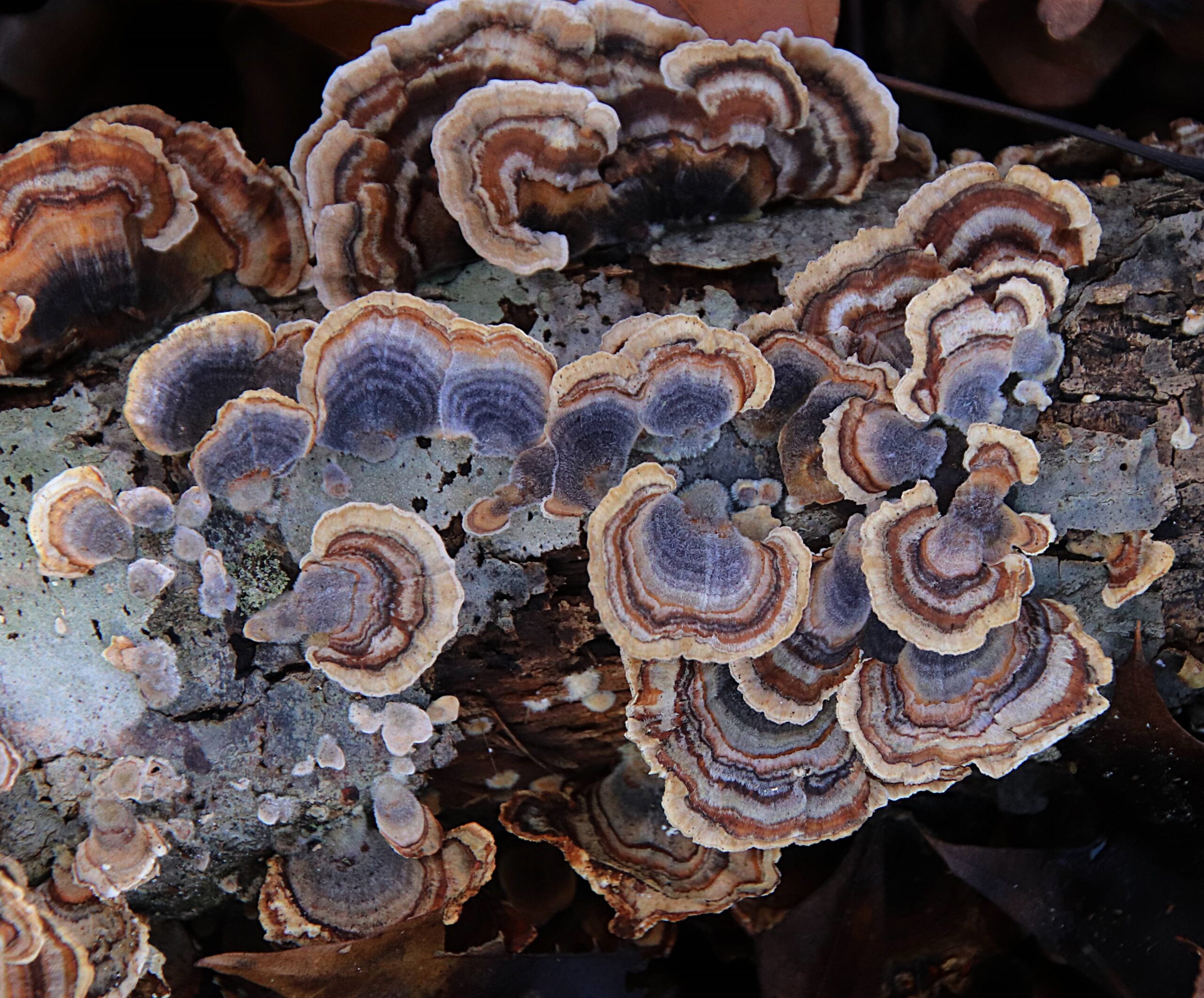
The answer to last week’s mystery is turkey tail fungi, Trametes versicolor. Turkey tail fungi grows in rows or clusters of tiered layers on dead wood. It prefers stumps or logs of deciduous trees, mainly hardwood, such as beech or oak.
Turkey tail breaks down the lignin portion of dead wood, leaving behind white, stringy cellulose, hence, it is considered a “white rot” fungus. Fungi belong to their own kingdom and get their nutrients and energy from organic matter, rather than photosynthesis, like plants.
While other fungi fade away by winter, turkey tail endures, and bridges the color gap to spring. Turkey tail’s vibrant contrasting colors makes one pause to admire the beauty.
Mystery Monday is sponsored by the Spy Newspapers and Adkins Arboretum.

The Spy Newspapers may periodically employ the assistance of artificial intelligence (AI) to enhance the clarity and accuracy of our content.

Filed Under: Food and Garden Notes

Happy Mystery Monday! Can You Guess What is Pictured Below?

February 12, 2024 by Adkins Arboretum Leave a Comment

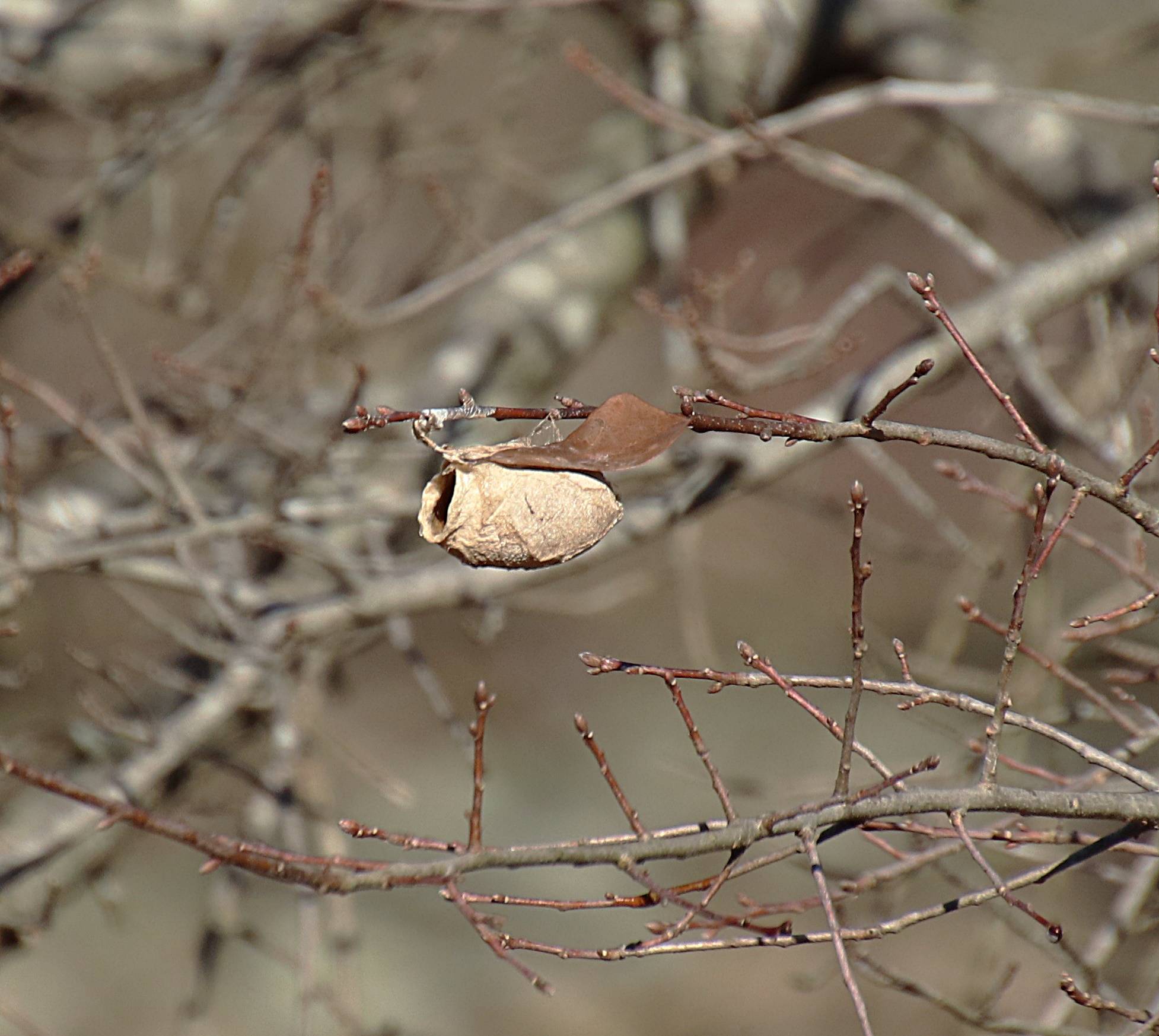
The answer to last week’s mystery is polyphemus moth cocoon, Antheraea polyphemus.
The polyphemus is named after the giant one-eyed monster, Cyclops, of Homer’s Odyssey, for the big false eyespot on each hindwing. Their big, fake eyes make them appear larger to predators and when threatened they will flip forward their front wings to expose the large eyespots as a deterrent.
Adult polyphemus moths are large and butterfly-like, with an adult wingspan of 4-6 inches. Their color varies greatly. Some specimens are brown or tan, others are bright reddish-brown.
The polyphemus is a common, hairy-bodied moth that bears two broods a year in Maryland. Larvae are bright translucent green, with convex segments. Inside of each cocoon is a dark brown pupa which the adult moth will emerge from.
Mystery Monday is sponsored by the Spy Newspapers and Adkins Arboretum.

The Spy Newspapers may periodically employ the assistance of artificial intelligence (AI) to enhance the clarity and accuracy of our content.

Filed Under: Eco Notes

Happy Mystery Monday! Guess the Picture!

February 5, 2024 by Adkins Arboretum Leave a Comment


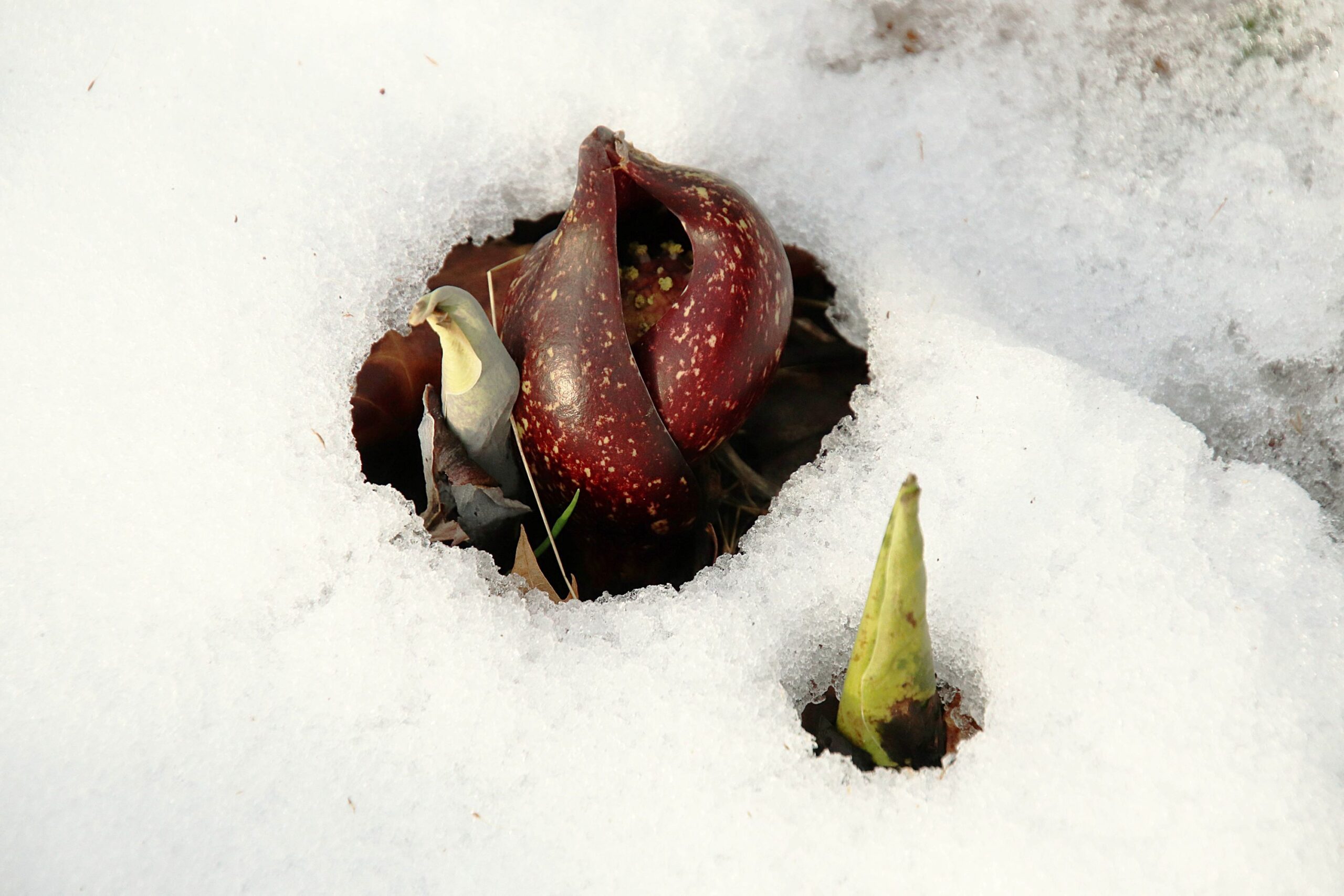
The answer to last week’s mystery is skunk cabbage, Symplocarpus foetidus, pictured in photo below.


The large spathe surrounding the spadix cabbage gets its name from the unpleasant odor it emits.

The skunk cabbage exhibits thermogenesis, or the ability to metabolically generate heat. Its spadix can generate temperatures on average 20 degrees warmer inside the spathe than the surrounding air temperature for nearly two weeks. It can also bloom while there is still snow and ice on the ground.

Skunk cabbage attracts pollinators that are drawn to rotting meat, primarily carrion-feeding flies and gnats. It is also visited by bees, beetles, and other insects, possibly because of the warmth.

Skunk cabbage has a massive root system, with roots which pulls the plant deeper into the soil each year. A few inches below the surface, a thick mat of unbranched, fibrous roots grows out in all directions from the elongated rootstock, terminating in an extensive system of fibrous rootlets. The roots and rootstock store large amounts of nutrients necessary for thermogenesis and to produce the lush foliage the following year.

Mystery Monday is sponsored by the Spy Newspapers and Adkins Arboretum.

The Spy Newspapers may periodically employ the assistance of artificial intelligence (AI) to enhance the clarity and accuracy of our content.

Filed Under: Food and Garden Notes

  • « Previous Page
  • 1
  • …
  • 10
  • 11
  • 12
  • 13
  • 14
  • …
  • 17
  • Next Page »

Copyright © 2026

Affiliated News

  • Chestertown Spy
  • Talbot Spy
  • Cambridge Spy

Sections

  • Sample Page

Spy Community Media

  • Sample Page
  • Subscribe
  • Sample Page

Copyright © 2026 · Spy Community Media Child Theme on Genesis Framework · WordPress · Log in