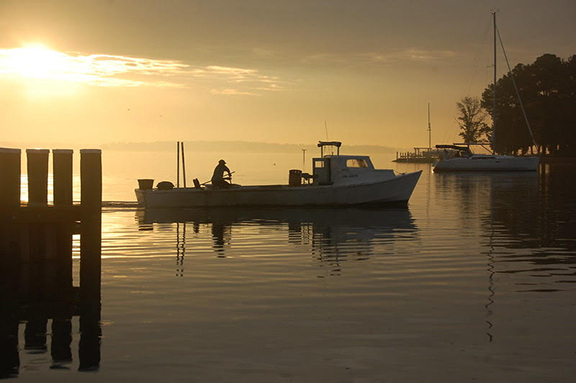


Who doesn’t fancy a strawberry moon? “Idle in Awe”
Nonpartisan and Education-based News for Centreville
The Spy Newspapers may periodically employ the assistance of artificial intelligence (AI) to enhance the clarity and accuracy of our content.
The Spy Newspapers may periodically employ the assistance of artificial intelligence (AI) to enhance the clarity and accuracy of our content.
The Spy Newspapers may periodically employ the assistance of artificial intelligence (AI) to enhance the clarity and accuracy of our content.
Talbot County has unexpectedly been named one of several Maryland jurisdictions designated as a “sanctuary” by the Trump administration—a move that could put federal funding at risk and place the county in the middle of a national immigration debate.
The announcement came Thursday as part of a broader effort by the Trump administration to pressure local governments into supporting federal immigration enforcement. The list includes Baltimore County, Montgomery County, Queen Anne’s County, and the cities of Annapolis, Rockville, and Takoma Park, among others.
The designation follows an executive order directing Homeland Security Secretary Kristi Noem to identify localities that, in the administration’s view, do not fully cooperate with U.S. Immigration and Customs Enforcement (ICE). The purpose is to cut off federal funds to jurisdictions that limit their involvement in immigration enforcement.
Talbot County’s inclusion raises questions. The county has not adopted any formal policy that restricts cooperation with ICE, and immigration issues have rarely been a topic of discussion in local government or public debate. Still, the Trump administration appears to be interpreting “non-cooperation” broadly, and Talbot was swept in.
The designation carries potential consequences. Talbot, like many rural counties, relies on federal grants for programs ranging from public safety and infrastructure to housing and health services. Even the threat of losing those funds could complicate budget planning and long-term community investments.
The Spy Newspapers may periodically employ the assistance of artificial intelligence (AI) to enhance the clarity and accuracy of our content.
The Spy Newspapers may periodically employ the assistance of artificial intelligence (AI) to enhance the clarity and accuracy of our content.
Tall, sharp guidons leading lean troops in starched parade dress on U. S. military installations, preparing to honor their fallen; and in mid-size cities and hundreds of small towns across America winsome majorettes and marching bands, some a bit ragtag in need of new uniforms, eager to strut their stuff. And near big cities, up and down both coasts, loud punk and rock and roll in huge roaring stadiums, vaping and doping; crowded beaches with umbrellas and coolers; major league baseball, hot dogs and cold beer; and, for those who like it less frenetic, softball, golf, and tennis.
Along the Chesapeake Bay near the Naval Academy a handful of patriotic young and middle-aged weekend sailors will gather again to remember. Hopefully, this Memorial Day many will pause to remember.
They were killed in stinking trenches along the Western Front in France and Belgium. They battled dysentery and other crippling diseases for weeks before the end finally came — whizzing machine gun fire, poison and mustard gas, and, for some, bloody hand-to hand combat. Remember the 116,516 killed in action (KIA) in WW1.
At Pear Harbor 2,403 U. S. sailors and soldiers and marines were surprised and killed; and 1,177 sailors went down with the USS Arizona, most engulfed by fires and water when the battleship was ripped asunder by magazines and munitions.
After months fighting in the Battle of Bataan, American POWs were yanked out of notorious POW Camps in the Philippines and forcibly transferred to the Bataan Death March during which 650 American POWs perished from lack of food, malaria, deliberate cruelty, and wanton killings. Remember our POWS.
Thousands of GIs were killed and wounded In North Africa, Sicily, Anzio, Normandy. Poland, Germany, and Great Britian. Remember.
Young GIs fought and died in rice paddies and on long narrow frozen hilltops and mountain ranges along the 38th parallel in Korea. MASH ((Medical Army Surgical Hospital) Unit 825, the 47th Surgical Field Hospital) saved my Uncle Jim “Pee Wee” Gainey Clark when he was badly wounded in combat. Many did not survive in Unit 825. A decade later in another Southeast Asia country, another generation of young GIs fought and died in rice paddies near Da Nang, Pleiku, Hue, and along the Ho Chi Minh supply trail.
Do not forget the 58,220 who came home in caskets draped with brand-new American flags. Perhaps you saw a wood shipping casket being unloaded from a train freight car and carefully placed on a sturdy baggage cart and then slowly, respectfully rolled along the train platform to where the stunned family was waiting, baggage porters a few feet back standing at attention, red caps removed. During the sixties and early seventies baggage handlers bore witness to scores of military home comings.
And in no time, or so it seemed, our country turned the page and old men and a few women in Washington in high places were once again sending young men to fight and die in faraway places. Suddenly 250,000 U. S. wartime troops in Iraq and Afghanistan. Improvised explosives devices (IEDs). Roadside bombings and deadly Humvees. The maimed and disfigured and missing body parts. And 6,522 KIA.
Most of the killed in action we remember today were young, 18, 19, and 20. A few 17. Notwithstanding their courage and medals, I’m pretty sure of two things I can tell you about them.
They were all afraid, and they did not want to die.
In my family, Clarks and Geralds and Sarvises served in the Army, Navy, and Air Force during WWII, Korea, and Vietnam. Three of my uncles served in Korea. My favorite uncle, A. L. Clark, fought in Korea in late 1950 and 1951. A farm boy and unassuming marksman, he wasn’t wounded by enemy fire, but he carried the Battle of the Chosin Reservoir, and his buddies killed on those hills with him, until the week he died in South Carolina.
Clark and his buddies fought in the 1st Battalion, 32nd Infantry Regiment, 7th Infantry Division. Initially, A. L. and his company didn’t comprehend what was happening nor the magnitude of what their unit was up against. The surprised 32nd was trapped with two other battalions of the 7th. Over 200,000 Chinese soldiers had stormed down from Manchuria to stop General Douglas McArthur and the UN forces. McArthur had badly underestimated the Chinese strength level at Yalu as well as the enemy’s determination to fight. Few of the soldiers my uncle fought with in the 32nd Infantry came out of Chosin alive. Uncle A.L. had arrived near the Chosin Reservoir with three scattered companies. He was 1 of 181 soldiers who left the basin alive. Many soldiers were lost or missing; some of the half-alive had to be left behind in the minus 30 degrees hills.
This week I remember soldiers and Marines in the “Forgotten War” at Chosin who did not get out alive. Over 70 years have passed and still some Chosin family members remember, and search for their loved ones.
Two recent posts below from the online Korean War Project tell you why:
Announcement: Funeral for my father Master Sergeant James Lee Quong missing Chosin Reservoir for 72 years set by Department of the Army at Arlington Cemetery, June 2, 2022, 10AM, Section 60. He will be honored by caisson transportation with full military honors. Bag pipes requested.
Subject: Hansel M. Ragner.Looking for my dad. He was deployed with the 32nd Inf, 7th Div. We believed he served from 1950 to 1951 at the Chosin Reservoir and was stranded with the last of his men behind enemy lines.
Today I remember Hansel Ragner.
And let us remember today the Gold Star families who lost a son or daughter or brother or sister serving our country. With gratitude we honor the entire family and their loved one.
From Gettysburg to Petersburg, from Bataan to Beirut, from Seoul to Saigon, from Pleiku to Fallujah, and Kandahar too, let us remember. Let us remember all who fought and died so we might be free.
Aubrey Sarvis
Army Veteran, 32nd Infantry, 7th Division, 1961-1962.
The Spy Newspapers may periodically employ the assistance of artificial intelligence (AI) to enhance the clarity and accuracy of our content.
The Spy Newspapers may periodically employ the assistance of artificial intelligence (AI) to enhance the clarity and accuracy of our content.

Nancy Robson, Joan Berwick, Dona Rodrick, Secethia Davis, Gale Jayne, Joy Mayfield
There was a silver lining to the Charlie Foxtrot that was Covid. People discovered gardening. Even those who had never tried to grow herbs (never mind what kind) in college, flocked to garden centers and bought a plant or 20. ‘Victory gardens!’ the people said. ‘Let us eat vegetables!’
But it was more than a culinary impulse. Gardening – cultivating a plant that silently absorbs our angst and returns beauty, fragrance, butterflies, and maybe even salad – is psychologically nourishing.
It can also positively impact water quality.
“Homeowners are paying a little more attention to how they can adapt practices to help the Bay,” says Rachel Rhodes, Extension Coordinator for Queen Anne’s County, MD.
What we do – or don’t do – on land profoundly affects the health of the Bay, so acting on that knowledge is, as Oprah would say, HUGE.
Bay-Wise, the University of Maryland Extension stewardship program, designed by Senior Agent and Educator Wanda MacLachlan (now retired), offers a straightforward plan.
“I wanted to create a holistic approach to individual land management,” MacLachlan explains.
Key to the program is the Bay-Wise Yardstick, which has 61 possible steps broken into eight categories. Plus, steps taken in one category often spill benefits into others. For example, the native shrubs, trees, ground covers, and grasses you’ve planted to Control Stormwater Runoff and prevent erosion also act as shelter, habitat, and food source, so they Encourage Wildlife. While the Plant Wisely category urges using wind-breaking evergreens on the north and deciduous trees on the south to cut down on energy use, they also provide habitat and draw pollinators and birds (natural Integrated Pest Management) that benefit your victory garden.
Encouraging wildlife also offers enormous entertainment. Seeing a troop of ten cedar waxwings pass a Winterberry fruit (Ilex verticillata) from one bird to the next on a branch or watching a fat baby robin test his barely-fledged wings while his nest-bound siblings shout, “Go on! I dare ya!” at him, is like a homegrown Discovery channel.

Joan Berwick with her Bay-Wise landscape sign
Controlling stormwater runoff by keeping water on your property simultaneously prevents water pollution and saves on your utility bills since you use less water for the landscape and less electricity for the well water pump. Adopted broadly, the cost benefits are multiplied.
Twenty-seven years ago, Portland OR was threatened with a lawsuit for polluting the Willamette River. When they realized that there was a limit to upsizing the infrastructure, they adopted a greener approach, including green roofs, green streets, rain gardens, bioswales, and asking residents to disconnect their downspouts from the storm drain system. The measures significantly diminished runoff and resulted in approximately $65 million in municipal savings.
In Charles County, proof of Bay-Wise certification reduces the county watershed fee by 50% on the property tax bill, acknowledgment of the environmental and cost savings.
Bay-Wise certification – once a property reaches 36 inches’ (points) worth of steps on the Yardstick – bestows a nifty little sign to encourage the neighbors.
“I had my yard in Harford County certified in 2018,” says Master Gardener Joy Mayfield, who became a Bay-Wise certifier when she moved to Kent County. “I had such pride in putting that sign out!”
“It’s an amazing program,” says Rose Markham, Chair for the Charles County committee. “Once people get into it, they really love it!”
Master Gardener Eileen Clements hopes to become a Bay-Wise certifier when the next round of classes starts. Her reasons are both pragmatic and communal.
“Because we live so close to the Bay, and it’s such a resource, it’s better for everybody,” she says. “It’s the livelihood for fishing, for tourism, recreation, and whatever we can do to keep it healthy is important to do. I am a big believer in ‘fix your little world and help someone else to fix theirs.’ It’s a domino effect.”
Properties are certified as Bay-Wise via a (free) consulting visit by several trained volunteers. They walk around a property, listening to the owner’s hopes, goals, and concerns, while examining the lay of the land, the exposure, soil type, plants, wildlife.
“It was the most exhilarating day in my garden and yard,” says Joan Berwick, who lives outside of Crumpton. Berwick has left part of her woodsy property wild and has lushly planted another portion with natives. “I had always wanted a yard that had paths through the woods, that was natural, that was near a stream, and I wanted my landscaping to blend into the environment. Native plants were the way to keep things simple and easy and gave me great results with less effort.”

Part of Joan’s garden (you can’t hear the birdsong, but it’s there).
Prior to the consultation, Berwick had downloaded the Bay-Wise Yardstick from the UMD Extension website to figure out how close she was to certification. (You get 5 inches for simply NOT fertilizing the lawn!). Berwick’s property had a total score of 67 inches.
“It was fun, and I learned some things,” she says. But confirmation of her vision was what she enjoyed most. “What I was doing was valued by other people, and that’s not always the case when you do more natural plantings.”
Mayfield’s Harford County certification experience has guided her own approach to Bay-Wise visits on this side of the Bay.
“It was their tact,” she says. “They were so diplomatic in saying what needed to go, and I didn’t know what I needed to put in place.”
Their guidance helped. Here in Kent County, Mayfield has done several Bay-Wise visits, which are also fun for the certifiers since it’s also an opportunity to get to know the property owner a bit. Plus, the certifiers themselves often share different pieces of knowledge, which enhances the experience for everyone.
“I learned so much that last time,” Mayfield says about a visit to a property behind the Chestertown library. “I love the collaborative aspect of the visits.”
https://extension.umd.edu/programs/environment-natural-resources/program-areas/bay-wise-program/
Native Plants for Wildlife and Conservation Landscaping
https://dnr.maryland.gov/criticalarea/Documents/chesapeakenatives.pdf
The Spy Newspapers may periodically employ the assistance of artificial intelligence (AI) to enhance the clarity and accuracy of our content.
 The Bookplate is continuing their 2025 season of author lectures on May 21st with author Henry Corrigan for a 6pm event at The Kitchen & Pub at The Imperial Hotel. He will be discussing his new queer thriller; Somewhere Quiet, Full of Light.
Perfection has its price. Eric Tillman is looking for a way out. Born into a poor family, the once starving artist has spent his life dreaming of a home where his kids could escape screaming landlords and the sting of poverty. So, when his husband Mike, a house-flipper with a jeweller’s eye for abandoned places, discovers a strange, but exciting old house in upstate New York, it feels like the perfect answer to all their prayers. But once the family moves in, it isn’t long before Eric learns that some chances are too costly to take. For this house has standards it lives by, expectations which must be met. And on the long, relentless road between perfection and salvation…some doors lead only to ruin.
“…the haunted house story of the modern age, told with the deft, artistic pen of a literary titan in the making”
~Elton Skelter, author of F**k You, Mary Sue
“This gripping supernatural tale illustrates the significant differences between houses and homes, but it also shows how deceitful and dark such places can be.”
~James G. Carlson, author of The Eleventh Door and Red Falls
Henry Corrigan is a husband and father, bisexual creative, and emerging author who dreams of writing every kind of story. His debut horror novel, A Man in Pieces, won the Silver Medal from Literary Titan and was shortlisted for the Top 25 Indie Books of the Year. He is a member of the Horror Writers Association and the admin for the Horror Writers Collaborative online. An avid reader, Henry started writing poetry in middle school but it wasn’t until he started writing erotica in high school that he really learned the mechanics of writing. What started out as private stories and love letters, soon became publications in anthologies. Henry works as a teacher in Baltimore, Maryland.
For more event details contact The Bookplate at 410-778-4167 or [email protected]. These events are free and open to the public, but reservations are recommended. The Bookplate will continue their 2025 event series on June 11th. Author Chris Filstrup will be discussing his book, The Turban: A History from East to West. Copies will be available at the shop before and after the event. The Kitchen & Pub at The Imperial is located at 208 High Street in Chestertown, Maryland.
The Spy Newspapers may periodically employ the assistance of artificial intelligence (AI) to enhance the clarity and accuracy of our content.
 From June 1-14, Chestertown’s renowned National Music Festival will bring together almost 30 esteemed mentors and 100 promising apprentices, presenting over 30 events, ranging from majestic symphonies to intimate chamber music, pre-concert talks, and master classes, plus dozens of free open rehearsals. Mentors are professional musicians who teach and perform all over the country and the world; apprentices are young professional musicians on the cusp of their careers. Festival musicians come to Chestertown each season from about a dozen countries and 30 US states.
This year’s mentors will include Yoshiaki Horiguchi (bass) and Diana Loomer (percussion), who are both alumni of the Festival, and several mentors who have been with the Festival since its inception in 2011: Dana Goode (violin), Jared Hauser (oboe), Jeff Keesecker (bassoon), Tom Parchman (clarinet), and Jennifer Parker-Harley (flute).
On Friday, June 6, National Music Festival Artistic Director and co-founder Richard Rosenberg conducts the Festival Symphony Orchestra in a program of movie music, starting with Paul Dukas’ The Sorcerer’s Apprentice, which was famously used in the Walt Disney movie Fantasia. Violin mentor Emma McGrath, who travels from Hobart, Tasmania for her second season with the National Music Festival, will be the soloist in Korngold’s sumptuous Violin Concerto, which incorporates music from several of his film scores for Errol Flynn “swashbucklers,” including The Prince and the Pauper, Anthony Adverse, and more. The second half of the program features exhilarating music from the Star Wars movies by the legendary John Williams.
Several mentors and two apprentices will be featured as concerto soloists during the Festival. Saxophonist Laura Ramsay, a student at the University of Michigan, was selected through a highly competitive application process to attend the Festival as a saxophone apprentice and will perform on June 7 as the soloist in Jaques Ibert’s jazzy and tuneful 1930s Concertino da Camera.
Also on the June 7 concert is Frank Martin’s Concerto for Seven Wind Instruments. Trumpet apprentice Brandon Hebert of Louisiana has been awarded the opportunity to perform as a soloist alongside mentors Jennifer Parker-Harley (flute), Jared Hauser (oboe), Thomas Parchman (clarinet), Jeffrey Keesecker (bassoon), Michelle Stebleton (horn), and Michael Kris (trombone).
The guest conductor for the June 7 orchestra program will Matthew Kraemer, who serves as Music Director of the Louisiana Philharmonic in New Orleans, as well as the Indianapolis Chamber Orchestra.
Concert schedules, tickets, and Festival Passes are available on the Festival’s website, nationalmusic.us.
Highlights of the much-anticipated 13th season include:
“Whatever your musical palate, we have events you will love,” said Festival Artistic Director Richard Rosenberg. “In addition to our huge flagship orchestra concerts, try our free ‘Lunchtime Chamber Bites,’ our special Family Concert, or our Market Music in Fountain Park and enjoy!”
 Lunchtime Chamber Bites are short, free concerts featuring performances and discussion with the artists. The Family Concert and Market Music concerts are also free, as are several other events. All rehearsals are free and open to the public; families with children are especially welcome at rehearsals! Attending open rehearsals is a wonderful way to introduce young children, (and even their grandparents) to concert music.
Venues for concerts and rehearsals range from local churches to Washington College to the Kent Cultural Alliance’s Raimond Cultural Center, and more. Concert and rehearsal schedules are available on the Festival’s website, nationalmusic.us.
For our talented, competitively selected apprentices, the National Music Festival advances the lives and careers of these promising musicians by providing access to world-class mentors and performance opportunities. Apprentices attend the Festival on scholarship, completely free of charge. The Festival is truly a community effort: Chestertown area residents open their homes as host families for apprentices and mentors, Emmanuel Church in downtown Chestertown provides free lunches for the musicians each weekday, and many local restaurants offer discounts to musicians. A few more host families are still needed; please email info@na’onalmusic.us for more information.
Visit the Festival’s website for the complete 2025 Festival concert schedule and repertoire and to purchase tickets or Festival Passes: nationalmusic.us. A number of concerts are free, as are all rehearsals.
The National Music Festival is supported in part by the Maryland State Arts Council (msac.org), Kent Cultural Alliance (kentculture.org), Mid-Shore Community Foundation (mscf.org), The Peoples Bank (pbkc.com), and by tax-deductible contributions from music lovers. For more information about the Festival, visit the website at nationalmusic.us or contact (443)480-0221.
The Spy Newspapers may periodically employ the assistance of artificial intelligence (AI) to enhance the clarity and accuracy of our content.