
MENU

Sections

  • Home
  • Education
  • Donate to the Centreville Spy
  • Free Subscription
  • Spy Community Media
    • Chestertown Spy
    • Talbot Spy
    • Cambridge Spy

More

  • Support the Spy
  • About Spy Community Media
  • Advertising with the Spy
  • Subscribe
January 6, 2026

Centreville Spy

Nonpartisan and Education-based News for Centreville

  • Home
  • Education
  • Donate to the Centreville Spy
  • Free Subscription
  • Spy Community Media
    • Chestertown Spy
    • Talbot Spy
    • Cambridge Spy
00 Post to Chestertown Spy Arts Spy Poetry

Spy Poetry:  In This Brief World by Deidra Greenleaf Allan

December 27, 2025 by Spy Poetry Leave a Comment

Editor’s Note: In the spirit of the approaching new year and its opportunity for resolutions and personal change, this poem explores the poet’s journey toward self-acceptance and happiness.

This is the last poem from Spy Poetry for the foreseeable future until more funding is available. Thank you for being such careful and appreciative readers. I wish you joy in the year ahead and hope that your purse is always full.

In This Brief World

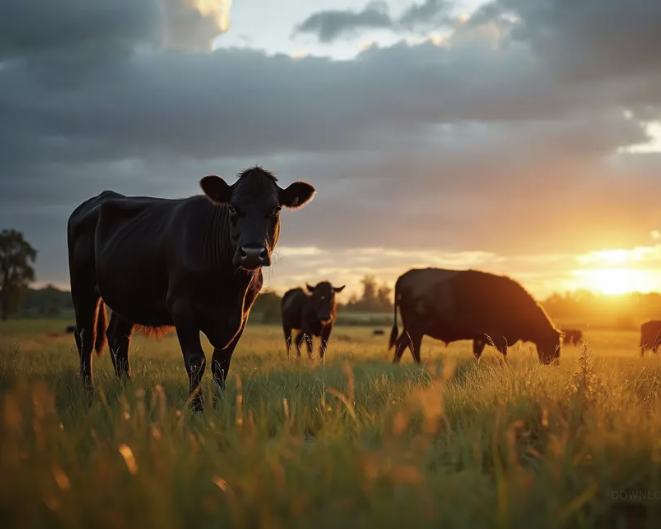
The last time I saw you, you were leaning on a pasture fence
as the sun went down, watching the Angus
gather for the night.

Were you storing up earthly images, as the Pharaohs stored food,
jewelry, and perfumes to take with them into the afterlife?
I, too, had been collecting.

My purse was heavy with life’s stones—sadness and guilt, the regret
of things undone, unspoken, the cumulative sorrows
of consequence. But I am not the person

I was, who thought that living was a quid pro quo—one ounce
of happiness for every pound of sorrow. Now I see
what one carries

is a matter of choice. I choose to carry things that are light—
the relief of self-acceptance, the feathery down of forgiveness,
whispy cirrus clouds

of momentary joy. I’ll walk through what’s left of my earthly time
spreading seeds of solace in sorrow’s soil, hoping they take root
and grow. You asked me, once,

when you knew you were dying, what it takes to be happy
in this brief world. A purse that’s full, I said,
but weighs nothing.

Deidra Greenleaf Allan has been published in American Poetry Review, Quartet Journal, Puerto del Sol, Poet Lore, Plume, and West Branch, among other print and online journals. In 2001 she was selected by Robert Hass as Montgomery County (PA) Poet Laureate. She has received a Leeway Emerging Artist Award and was a finalist for a Pew Fellowship in poetry. Her poem, “Apostrophe to the Living,” was selected in 2012 by Musehouse as its Poem of Hope poster. Allan holds an MFA in Poetry from the Vermont College of Fine Arts. Her chapbook, Each the Other’s Echo, will be published in early 2026 by Seven Kitchens Press.

The Spy Newspapers may periodically employ the assistance of artificial intelligence (AI) to enhance the clarity and accuracy of our content.

Filed Under: 00 Post to Chestertown Spy, Spy Poetry

Spy Poetry: Insha’Allah by Danusha Lameris

December 20, 2025 by Spy Poetry Leave a Comment

Editor’s Note:  Let us carry our tender hopes into the new year and whisper to whatever god we believe in to let them come to fruition. 

Insha’Allah

I don’t know when it slipped into my speech
that soft word meaning, “if God wills it.”
Insha’Allah I will see you next summer.
The baby will come in spring, insha’Allah.
Insha’Allah this year we will have enough rain.

So many plans I’ve laid have unraveled
easily as braids beneath my mother’s quick fingers.

Every language must have a word for this. A word
our grandmothers uttered under their breath
as they pinned the whites, soaked in lemon,
hung them to dry in the sun, or peeled potatoes,
dropping the discarded skins into a bowl.

Our sons will return next month, insha’Allah.
Insha’Allah this war will end, soon. Insha’Allah
the rice will be enough to last through winter.

How lightly we learn to hold hope,
as if it were an animal that could turn around
and bite your hand. And still we carry it
the way a mother would, carefully,
from one day to the next.

Danusha Laméris, a poet and essayist, was raised in Northern California and born to a Dutch father and a Barbadian mother. She is a recipient of a Pushcart Prize and was honored with the 2020 Lucille Clifton Legacy Award. Laméris also served as the 2018–2020 Poet Laureate of Santa Cruz County, California. Her work has appeared in The Best American Poetry, The New York Times, Orion, The American Poetry Review, The Kenyon Review, Ploughshares, Poetry, and Prairie Schooner. Her debut collection, The Moons of August (Autumn House Press, 2014), was chosen by Naomi Shihab Nye as the winner of the Autumn House Press Poetry Prize and was a finalist for the Milt Kessler Book Award. Laméris’s second book, Bonfire Opera (University of Pittsburgh Press, Pitt Poetry Series), was a finalist for the 2021 Paterson Poetry Award and the recipient of the 2021 Northern California Book Award in Poetry. Her most recent collection, Blade by Blade (2024), is now available from Copper Canyon Press. She is currently on the faculty of Pacific University’s low-residency MFA program. 

The Spy Newspapers may periodically employ the assistance of artificial intelligence (AI) to enhance the clarity and accuracy of our content.

Filed Under: 00 Post to Chestertown Spy, Spy Poetry

Spy Poetry: The Journey by James Wright

December 13, 2025 by Spy Poetry Leave a Comment

Editor’s Note: I fell in love with this poem on first reading it. Its simple yet evocative language, the subtle shift in significance and meaning of the word dust, and the unforgettable image of the spider, touched by sunlight, stepping lightly through the accumulations of her wind-blown ruins, as Wright advises us to do.

The Journey

Anghiari is medieval, a sleeve sloping down
A steep hill, suddenly sweeping out
To the edge of a cliff, and dwindling.
But far up the mountain, behind the town,
We too were swept out, out by the wind,
Alone with the Tuscan grass.

Wind had been blowing across the hills
For days, and everything now was graying gold
With dust, everything we saw, even
Some small children scampering along a road,
Twittering Italian to a small caged bird.
We sat beside them to rest in some brushwood,
And I leaned down to rinse the dust from my face.

I found the spider web there, whose hinges
Reeled heavily and crazily with the dust,
Whole mounds and cemeteries of it, sagging
And scattering shadows among shells and wings.
And then she stepped into the center of air
Slender and fastidious, the golden hair
Of daylight along her shoulders, she poised there,
While ruins crumbled on every side of her.
Free of the dust, as though a moment before
She had stepped inside the earth, to bathe herself.

I gazed, close to her, till at last she stepped
Away in her own good time.

Many men
Have searched all over Tuscany and never found
What I found there, the heart of the light
Itself shelled and leaved, balancing
On filaments themselves falling. The secret
Of this journey is to let the wind
Blow its dust all over your body,
To let it go on blowing, to step lightly, lightly
All the way through your ruins, and not to lose
Any sleep over the dead, who surely
Will bury their own, don’t worry.

James Arlington Wright was born on December 13, 1927, in Martins Ferry, Ohio. His father worked for fifty years at a glass factory, and his mother left school at fourteen to work in a laundry; neither attended school beyond the eighth grade. The poverty and human suffering Wright witnessed as a child profoundly influenced his writing, and he used his poetry as a mode to discuss his political and social concerns. He modeled his work after that of Thomas Hardy and Robert Frost, whose engagement with profound human issues and emotions he admired. Wright’s books include The Green Wall (Yale University Press, 1957), winner of the Yale Series of Younger Poets Award, Saint Judas (Wesleyan University Press, 1959), and The Branch Will Not Break (Wesleyan University Press, 1963). Wright was elected a fellow of the Academy of American Poets in 1971, and, the following year, his Collected Poems (Wesleyan University Press) received the Pulitzer Prize in Poetry. “The Journey” is from Above the River: The Complete Poems and Selected Prose. Copyright © 1990 by Anne Wright.

The Spy Newspapers may periodically employ the assistance of artificial intelligence (AI) to enhance the clarity and accuracy of our content.

Filed Under: 00 Post to Chestertown Spy, Spy Poetry

Spy Poetry: Sheep in the Winter Night by Tom Hennen

December 6, 2025 by Spy Poetry Leave a Comment

Editor’s Note: The poet paints a cozy farmyard scene. We’re lulled into a sense of calm with amusing descriptions of the sheep. The allusion to the Christian religion makes us think of another night in a barn, long ago. What are the sheep listening for in the dark? Their wooly backs are full of light, their breath suspended. There’s a building sense of anticipation. We think, like he animals, it is for snow, but in the last two lines, we learn it’s something else.

Sheep in the Winter Night

Inside the barn the sheep were standing, pushed close to one
another. Some were dozing, some had eyes wide open listening
in the dark. Some had no doubt heard of wolves. They looked
weary with all the burdens they had to carry, like being thought
of as stupid and cowardly, disliked by cowboys for the way they
eat grass about an inch into the dirt, the silly look they have
just after shearing, of being one of the symbols of the Christian
religion. In the darkness of the barn their woolly backs were
full of light gathered on summer pastures. Above them their
white breath was suspended, while far off in the pine woods,
night was deep in silence. The owl and rabbit were wondering,
along with the trees, if the air would soon fill with snowflakes,
but the power that moves through the world and makes our
hair stand on end was keeping the answer to itself.

Born into a big Dutch-Irish family in 1942 in Morris, Minnesota, Tom Hennen grew up on farms. After abandoning college, he married and began work as a letterpress and offset printer in 1965. In 1972 he helped found the Minnesota Writers’ Publishing House, printing work with a press stashed in his garage—work that included his first chapbook, The Heron with No Business Sense. He worked for the Department of Natural Resources Wildlife Division in the 1970s and later worked as a wildlife technician at the Sand Lake National Wildlife Refuge in South Dakota. Now retired, he lives in St. Paul near his children and grandchildren. This poem, is from Darkness Sticks to Everything: Collected and New Poems. It is reprinted with permission of Copper Canyon Press.

The Spy Newspapers may periodically employ the assistance of artificial intelligence (AI) to enhance the clarity and accuracy of our content.

Filed Under: 00 Post to Chestertown Spy, Spy Poetry

Spy Poetry: From Our House to Your House by Jack Ridl

November 29, 2025 by Spy Poetry Leave a Comment

Editor’s Note: Many of us will remember these halcyon days of our 1950’s youth. Yes, there was the Cold War, your better-off neighbors were building bomb shelters and we practiced hiding under our desks during nuclear bomb drills. But after-school afternoons spread out ahead of us like lazy Sundays. We’d ride our bikes to buy penny candy at the local market, play baseball and dodge ball. And in the evening, after dinner, we’d run outdoors again to catch fireflies beneath the weightless, unthreatening immensity of the night sky.

From Our House to Your House

It is 1959. It is the cusp of the coming revolution.
We still like Ike. We are still afraid of Sputnik.
We read Life magazine and Sports Illustrated
where the athletes grow up shooting hoops
in the driveway, playing catch in the backyard.
We sit on our sectional sofa. My mother loves
Danish modern. Our pants have cuffs. Our hair
is short. We are smiling and we mean it. I am
a guard. My father is my coach. I am sitting
next to him on the bench. I am ready to go in.
My sister will cheer. My mother will make
the pre-game meal from The Joy of Cooking.
Buster is a good dog. We are all at an angle.
We are a family at an angle. Our clothes are
pressed. We look into the eye of the camera.
“Look ’em in the eye,” my father teaches us.
All we see ahead are wins, good grades,
Christmas. We believe in being happy. We
believe in mowing the lawn, a two-car garage,
a freezer, and what the teacher says. There is
nothing on the wall. We are facing away
from the wall. The jungle is far from home.
Hoses are for cleaning the car, watering
the gardens. My sister walks to school. My
father and I lean into the camera. My mother
and sister sit up straight. Ike has kept us
safe. In the spring, we will have a new car,
a Plymouth Fury with whitewalls and a vinyl top.

Jack Ridl, Poet Laureate of Douglas, Michigan (Population 1,100), is the author of All at Once, (CavanKerry Press, 2024), Saint Peter and the Goldfinch (Wayne State University Press, 2019), and Jack’s Practicing to Walk Like a Heron (Wayne State University Press, 2013) was awarded the National Gold Medal for poetry by ForeWord Reviews. His collection Broken Symmetry (WSUPress) was co-recipient of The Society of Midland Authors “Best Book of Poetry” award for 2006. His Losing Season (CavanKerry Press) was named the best sports book of the year for 2009 by The Institute for International Sport, and The Boston Globe named it one of the five best books about sports. In 2017 it was developed into a Readers’ Theater work. This poem is from Practicing to Walk Like a Heron.

The Spy Newspapers may periodically employ the assistance of artificial intelligence (AI) to enhance the clarity and accuracy of our content.

Filed Under: 00 Post to Chestertown Spy, Spy Poetry

Spy Poetry: Touch Me by Stanley Kunitz

November 22, 2025 by Spy Poetry Leave a Comment

Editor’s Note: I have always loved this poem, and I was privileged to hear Kunitz read it at the Dodge Poetry Festival many years ago. His voice is lost to us now, but not this poignant, lovely tribute to a love sustained over the years. 

Summer is late, my heart.
Words plucked out of the air
some forty years ago
when I was wild with love
and torn almost in two
scatter like leaves this night
of whistling wind and rain.
It is my heart that’s late,
it is my song that’s flown.
Outdoors all afternoon
under a gunmetal sky
staking my garden down,
I kneeled to the crickets trilling
underfoot as if about
to burst from their crusty shells;
and like a child again
marveled to hear so clear
and brave a music pour
from such a small machine.
What makes the engine go?
Desire, desire, desire.
The longing for the dance
stirs in the buried life.
One season only,
and it’s done.
So let the battered old willow
thrash against the windowpanes
and the house timbers creak.
Darling, do you remember
the man you married? Touch me,
remind me who I am.

Stanley Kunitz (1905-2006) was a highly acclaimed American poet who served as the U.S. Poet Laureate Consultant in Poetry twice, in 1974-1976 and again in 2000-2001. He won a Pulitzer Prize for his poetry collection, Selected Poems, 1928-1958. Kunitz also served as the New York State Poet from 1987-1989 and was a dedicated educator, teaching at multiple universities. 

The Spy Newspapers may periodically employ the assistance of artificial intelligence (AI) to enhance the clarity and accuracy of our content.

Filed Under: 00 Post to Chestertown Spy, Spy Poetry

Spy Poetry: Delores Jepps by Tim Seibles

November 15, 2025 by Spy Poetry Leave a Comment

Editor’s Note: Such a charming paean to first love and that innocent time before the “real world” sets in and the mystery of the “other sex” is dispelled by familiarity.

It seems insane now, but
she’d be standing soaked
in schoolday morning light,
her loose-leaf notebook,
flickering at the bus stop,
and we almost trembled

at the thought of her mouth
filled for a moment with both
of our short names. I don’t know
what we saw when we saw
her face, but at fifteen there’s
so much left to believe in,

that a girl with sunset
in her eyes, with a kind smile,
and a bright blue miniskirt softly
shading her bare thighs     really
could be The Goddess. Even
the gloss on her lips sighed
Kiss me    and you’ll never

do homework again. Some Saturdays
my ace, Terry, would say, “Guess
who was buying Teaberry gum
in the drugstore on Stenton?”
And I could see the sweet
epiphany still stunning his eyes

and I knew that he knew
that I knew he knew     I knew—
especially once summer had come,
and the sun stayed up till we had
nothing else to do but wish
and wonder about fine sistas

in flimsy culottes and those hotpants!
James Brown screamed about: Crystal
Berry, Diane Ramsey, Kim Graves,
and her. This was around 1970: Vietnam
to the left of us, Black Muslims
to the right, big afros all over my

Philadelphia. We had no idea
where we were, how much history
had come before us—how much
cruelty, how much more dying
was on the way. For me and Terry,
it was a time when everything said

maybe, and maybe being blinded
by the beauty of a tenth grader
was proof that, for a little while,
we were safe from the teeth
that keep chewing up the world.
I’d like to commend

my parents    for keeping calm,
for not quitting their jobs or grabbing
guns    and for never letting up
about the amazing “so many doors
open to good students.” I wish

I had kissed
Delores Jepps. I wish I could
have some small memory of her
warm and spicy mouth to wrap
these hungry words around. I

would like to have danced with her,
to have slow-cooked to a slow song
in her sleek, toffee arms: her body
balanced between the Temptations’
five voices and me—a boy anointed

with puberty, a kid with a B
average and a cool best friend.
I don’t think I’ve ever understood
how lonely I am, but I was

closer to it at fifteen because
I didn’t know anything: my heart
so near the surface of my skin

I could have moved it with my hand.

The Spy Newspapers may periodically employ the assistance of artificial intelligence (AI) to enhance the clarity and accuracy of our content.

Filed Under: 00 Post to Chestertown Spy, Spy Poetry

Spy Poetry: Prairie Spring by Willa Cather

November 8, 2025 by Spy Poetry Leave a Comment

Editor’s Note: This poem offers a wonderful contrast between the hard, thankless labors of adulthood and the insuppressible hopefulness and beauty of youth.    

Prairie Spring

Evening and the flat land,
Rich and sombre and always silent;
The miles of fresh-plowed soil,
Heavy and black, full of strength and harshness;
The growing wheat, the growing weeds,
The toiling horses, the tired men;
The long empty roads,
Sullen fires of sunset, fading,
The eternal, unresponsive sky.
Against all this, Youth,
Flaming like the wild roses,
Singing like the larks over the plowed fields,
Flashing like a star out of the twilight;
Youth with its insupportable sweetness,
Its fierce necessity,
Its sharp desire,
Singing and singing,
Out of the lips of silence,
Out of the earthy dusk.

Willa Sibert Cather (December 7, 1873 – April 24, 1947) was an American writer known for her novels of life on the Great Plains, including O Pioneers!, The Song of the Lark, and My Ántonia. In 1923, she was awarded the Pulitzer Prize for One of Ours, a novel set during World War I. Her poem, “Prairie Spring,” appeared in her novel O Pioneers!, published by Houghton Mifflin in 1913. This poem is in the public domain.

The Spy Newspapers may periodically employ the assistance of artificial intelligence (AI) to enhance the clarity and accuracy of our content.

Filed Under: 00 Post to Chestertown Spy, Spy Poetry

Spy Poetry: In the Winter of My Sixty-Seventh Year by Susan Browne

November 1, 2025 by Spy Poetry 1 Comment

In the Winter of My Sixty-Seventh Year

I feel the cold more
I stay in bed longer
To linger in my dreams
Where I’m young
& falling in & out of love
I couldn’t imagine then
Being this old     only old people
Are this old
Looking at my friends I wonder
Wow do I look like that
Today I wore my new beanie
With the silver-grey pom-pom
& took a walk in the fog
I thought I looked cute in that hat
But nobody noticed     maybe a squirrel
Although he didn’t say anything
When was the last time I got a compliment
Now it’s mostly someone pointing out
I have food stuck in my teeth
Did my teeth grow     they seem bigger
& so do my feet     everything’s larger
Except my lips     lipstick smudges
Outside the lines or travels to my teeth
Then there’s my neck
The wattle     an unfortunate word
& should have never been invented
These winter months are like open coffins
For frail oldsters to fall in
I once had a student who believed
We can be any age we want
In the afterlife
I’m desperate to be fifty
Six was also a good year
I saw snow for the first time
At my great-uncle’s house in Schenectady
My sister & I stood at the window
I can still remember the thrill
Of a first time     a marvel
Life would be full of firsts
I met my first love in winter
He was a hoodlum
& way too old for me     seventeen     I was fifteen
I could tell he’d had sex or something close to it
He had a burning building in his eyes
He wore a black leather jacket     so cool & greasy
Matched his hair     he broke up with me
Although there wasn’t much to break
All we’d done was sit together on the bus
Breathing on each other
It was my first broken heart
I walked in the rain
Listening to “Wichita Lineman”
On my transistor radio
I need you more than want you
Which confused me but I felt it
All over my body
& that was a first too
O world of marvels
I’m entering antiquity for the first time
Ruined columns     sun-blasted walls
Dusty rubble     wind-blown husks
I’m wintering     there is nothing wrong with it
A deep field of silence
The grass grown over & now the snow

Susan Browne’s poetry has appeared inPloughshares, Poetry, The Sun, Subtropics, The Southern Review, Superstition Review, Rattle, New Ohio Review, B O D Y, American Life in Poetry, and 180 More, Extraordinary Poems for Every Day. She has published three books of poetry, Buddha’s Dogs, Zephyr, and Just Living. Awards include prizes from Four Way Books, the Los Angeles Poetry Festival, the River Styx International Poetry Contest, The Fischer Poetry Prize, and the James Dickey Poetry Prize. She received a fellowship from the Provincetown Fine Arts Work Center. She has also collaborated to create a word/music CD. Her third collection, Just Living, won the Catamaran Poetry Prize. Her fourth collection, Monster Mash, is forthcoming from Four Way Books in 2025. She lives in Northern California. This poem is posted here with permission of the author.

The Spy Newspapers may periodically employ the assistance of artificial intelligence (AI) to enhance the clarity and accuracy of our content.

Filed Under: Post to Chestertown Spy from Centreville, Spy Poetry

Spy Poetry: Week One by Sally Bliumis-Dunn

October 18, 2025 by Spy Poetry Leave a Comment

Editor’s Note: The poet, through many fine and surprising images, describes the miniature miracle of her newborn grandchild.

Week One

She sleeps and eats, and all the while stays curled
as though still inside my daughter’s body,
in that thick calm of muffled sound that held her,
must be soothing her still
here in the room though none of us can feel it.

She is fine like a ringlet of fiddlehead fern
before it unfurls in the summer forest,
spiraled frond, close to the ground,
most of the plant still root and rhizome
hidden beneath the earth.

Her face, placid as a newly polished stone,
that sits with its perfect even weight
in the curve of an open palm.

All afternoon the soft snail of her
sleeps on her father’s chest.

The Spy Newspapers may periodically employ the assistance of artificial intelligence (AI) to enhance the clarity and accuracy of our content.

Filed Under: Spy Poetry

  • 1
  • 2
  • 3
  • Next Page »

Copyright © 2026

Affiliated News

  • Chestertown Spy
  • Talbot Spy
  • Cambridge Spy

Sections

  • Sample Page

Spy Community Media

  • Sample Page
  • Subscribe
  • Sample Page

Copyright © 2026 · Spy Community Media Child Theme on Genesis Framework · WordPress · Log in