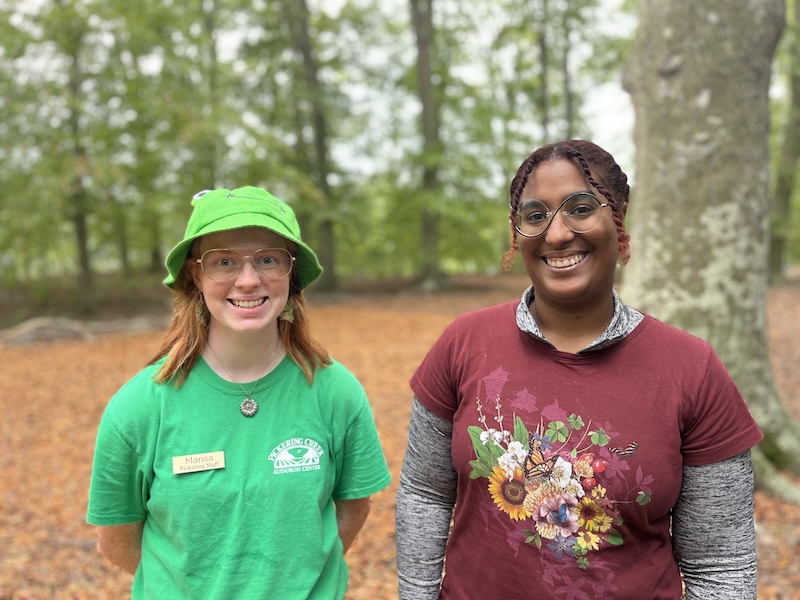

New Seasonal Staff at Pickering Creek Dive into the Season
The Spy Newspapers may periodically employ the assistance of artificial intelligence (AI) to enhance the clarity and accuracy of our content.

Nonpartisan and Education-based News for Centreville
The Spy Newspapers may periodically employ the assistance of artificial intelligence (AI) to enhance the clarity and accuracy of our content.
Environmental Concern (EC), a leading non-profit dedicated to all aspects of wetlands, is honoring the retirement of longtime leaders President Suzanne Pittenger-Slear and Senior Vice President Gene Slear. Together, they have guided the organization with vision and dedication for more than 25 years, leaving a legacy of restored habitats, healthier waterways, and enduring community partnerships across Maryland and the Mid-Atlantic region.
EC’s founder, Dr. Edgar Garbisch, developed the protocol for wetland restoration over 40 years ago. His vision and determination led to the creation of the nation’s first native plant nursery dedicated to wetland restoration, and positioning EC as a national leader in living shoreline techniques. More than 50 years later, his legacy of innovation and stewardship continues to inspire EC’s work.
As Senior Vice President, Gene Slear managed hundreds of restoration projects, pioneering the use of native plants to restore tidal and non-tidal habitats. A passionate advocate for living shorelines, Gene emphasized the importance of nature-based resilience in the face of extreme storm events. Working with EC’s wetland practitioners, engineers and scientists, Gene expanded Dr. Garbisch’s protocols to manage the more erosive conditions caused by climate change.
Among the many memorable projects during their tenure are:
Together, Suzanne and Gene leave EC well-positioned for its next chapter, with a committed team and a strong foundation for the future. Under their leadership, EC has created and restored hundreds of acres of wetlands in 14 Maryland counties and 5 neighboring states. Their work includes miles of living shoreline in the Chesapeake Bay watershed, replacing hardened structures with natural solutions that protect communities, improve water quality, and enhance habitat.
Reflecting on her tenure, Suzanne Pittenger-Slear shared: “Leading Environmental Concern alongside our talented staff and dedicated partners has been a life-changing experience. Gene and I are profoundly thankful for the lasting relationships we’ve built with colleagues, clients, and supporters, all of whom have been essential to EC’s success. It has been a privilege to contribute to Environmental Concern’s mission, and to witness the difference our collective efforts have made for wetland habitats across the region. As we transition from the St. Michaels campus to our new location in Trappe, we take great pride in EC’s role as a Founding Partner of the St. Michaels Nature Trail – a gift that will connect people with nature for generations. We are equally proud that EC’s former nursery will become one of the few public parks in Talbot County with water access.”
Board member Conrad Gordon praised their impact: “Suzanne and Gene’s pragmatic leadership has transformed Environmental Concern into a force for positive environmental change. Their legacy of hundreds of acres of restored habitat will continue to benefit our ecosystems for years to come.”
Board member Wes Tower added: “I am deeply grateful to Suzanne and Gene for their 25 years of dedicated service to Environmental Concern. Their passion and commitment have guided the organization through challenges and opportunities alike, always keeping the mission at the center. Because of their leadership, Environmental Concern is not only strong today but also prepared for an exciting new chapter of strategic growth and measurable outcomes. On a personal note, I’ve been inspired by their example and the way they’ve led with both vision and heart. Their legacy will be felt in the work we continue to do and in the many lives they’ve touched along the way.”
New Leadership for the Next Chapter
At EC’s annual board meeting, new officers were elected to carry the mission forward. Paige Cahall has been named President, and Joseph Miller has been appointed Vice President.
Ms. Cahall, who joined EC in 2013 as Financial Administrator and later served as Treasurer, brings years of expertise in fiscal management and non-profit leadership. She played a key role in shaping EC’s strategic and financial policies. “I am honored to step into the role of President of Environmental Concern,” said Ms. Cahall. “As I accept this responsibility, I am dedicated to furthering EC’s mission and building on its legacy. It is an honor to be leading such a great team of environmental stewards as we work together to strengthen partnerships, expand our outreach, and make a positive impact in the Chesapeake Bay watershed.”
Mr. Miller, a licensed landscape architect in Maryland, joined EC’s Restoration team in 2019. With graduate degrees in ecology and landscape architecture, he has contributed to projects ranging from watershed restoration to residential shoreline design.
“At Environmental Concern, the merging of environmental design and science is essential for successful restoration projects,” said Mr. Miller. “As Paige and I take on these leadership roles, we feel a tremendous responsibility to ensure the continued success of this organization for the benefit of the public and future generations.”
Looking Ahead
EC is expanding the nursery operation to meet the ever-increasing demand for native wetland vegetation and to strengthen the non-profit’s leadership role in native species horticulture and wetland restoration and education. This relocation unlocks fresh possibilities for growth and innovation, honoring the vision and legacy of all who have shaped Environmental Concern since 1972.
As EC begins this NEXT chapter, it remains steadfast in its 53-year mission: to create and restore wetlands, promote native plants, and create healthier shorelines for generations to come.
About Environmental Concern
Founded in 1972, Environmental Concern (EC) is a non-profit organization dedicated to improving water quality and enhancing natural habitats through wetland restoration, living shoreline creation, native plant propagation, and education. EC serves communities across Maryland and the Mid-Atlantic, fostering environmental stewardship and building resilience through nature-based solutions.
The Spy Newspapers may periodically employ the assistance of artificial intelligence (AI) to enhance the clarity and accuracy of our content.
Scientists are sounding the alarm about the plunging number of viable Osprey nests on the Chesapeake Bay this year. What is happening and what might it say about the health of the Bay? Join Chesapeake Forum at the Avalon Theatre in Easton on Tues., Nov. 4th for Lectures on the Shore: Our Disappearing Osprey, an expert panel discussion about some of the factors leading to this crisis.
Each spring, the skies above the Chesapeake Bay come alive with the return of ospreys – majestic raptors whose arrival signals the end of winter and the beginning of nesting season. But beneath this familiar seasonal rhythm lies a troubling story: the world‘s largest breeding population of ospreys is showing signs of distress. The recent loss of more than 90% of viable Osprey nests may be telling us something urgent about the health of the Bay itself.
Our panel of experts includes Greg Kearns, a Senior Park Naturalist/Scientist at the Patuxent River Park for over 40 years; David Reed, Executive Director of the Chesapeake Legal Alliance, and, Will Poston, menhaden Forage Campaign Manager. The panel will explore the complex relationship between ospreys and their primary food source Atlantic menhaden – a small nutrient fish who’s declining availability is triggering starvation, reproductive failure, and unprecedented reproductive short falls among nesting pairs of osprey. Salinity levels, warming waters, harvest, pressures, and water quality will also be examined for their contribution to this ecological unraveling.
Lectures on the Shore will be held at the Avalon Theatre in Easton, Tuesday, Nov. 4th from 6:30 – 8:30 PM. Enjoy light hors d’oeuvres, wine and soft drinks 30 minutes prior to the presentation. Tickets are $60 and are available at https://chesapeakeforum.org.
Chesapeake Forum is a nonprofit organization dedicated to providing lifelong learning opportunities for residents of the Eastern shore. It is a part of the YMCA of the Chesapeake. To receive Chesapeake Forum’s newsletter, please send your contact information to [email protected].
The Spy Newspapers may periodically employ the assistance of artificial intelligence (AI) to enhance the clarity and accuracy of our content.
Eastern Shore Land Conservancy is delighted to announce the expansion of Jim and Bo Earnest’s conservation easement in Caroline County, which now totals 678 acres, thanks to a partnership between ESLC, Maryland’s Department of Natural Resources, the U.S. Fish and Wildlife Service, and Ducks Unlimited. The expansion was funded through the North American Wetland Conservation Act (NAWCA) and through dedicated Program Open Space dollars—a conservation funding system that was cut dramatically during the 2025 Maryland General Assembly and will likely face similar budget-related threats in the future. The property boasts forests, migratory waterfowl habitat, agricultural fields, scenic value, and more than a mile and a half of Choptank River waterfront, protected with 100-foot forested buffers.
ESLC President & CEO Steve Kline said: “Bo and Jim’s easement protects wildlife, active farmland, and valuable natural resources. The Earnests have supported ESLC’s mission for decades, and they are always thinking of the next step for conservation whether that’s through a healthy forest stewardship plan, a restoration project, or a conservation easement.”
Owned by The Honorable Broughton M. Earnest (Bo) and his brother Jim, the now 678-acre ESLC easement is contiguous to both a 376-acre marsh (which the Earnests conveyed to The Nature Conservancy more than 50 years ago) and the Choptank River’s 30-acre Hog Island where Bo and his wife Ray have lived for more than 50 years. Raised in the D.C. area, Bo and Jim’s late father introduced them to “the magic of waterfowl hunting,” on the Eastern Shore beginning in the early 1950s. This led them to Hog Island, where a surrounding warren of marshes, impoundments, farm fields, and forests continue to welcome owls, terrapins, otters, deer, monarchs, muskrats, and thousands of waterfowl every year. “It is hard to find over 1,000 contiguous acres with over three miles of riverfront on the Choptank (or anywhere else on the Eastern Shore) which has been permanently preserved primarily for the benefit of wildlife, especially the migratory waterfowl which have used this acreage for winter habitat for thousands of years” reflected Bo. “Neither of us can conceive of a more valuable legacy than to perpetuate this environment which has meant so much to our families as well as for the wildlife which call Hog Island home.”
“The Earnests’ passion for conservation is inspiring,” commented ESLC Director of Land Conservation David Satterfield. “Not only have they donated land for public access, but they are exceptional stewards of their property through wildlife habitat protection and restoration efforts for waterfowl and upland birds. The legacy that the Earnests have built on this spectacular piece of land, including the restoration work they are planning, solidifies the Earnests as champions of conservation for the Eastern Shore.”
“ESLC and the landowners of the Choptank River watershed continue to show their commitment to serving as stewards of the River and its surrounding landscape,” said Joanna Ogburn, Principal and Founder of Envision the Choptank. “As a founding partner of Envision the Choptank, ESLC brings their strengths to the 45- member partnership, protecting over 10,000 acres to date within
the watershed. This recently expanded easement will help to maintain agricultural productivity and protect water quality and wildlife habitat for future generations, complementing the efforts of Envision partners all working towards these shared goals.”
To learn more about both donated and funded conservation easements, the Rural Legacy Program, or ESLC’s Program Open Space advocacy, please contact ESLC Director of Land Conservancy David Satterfield at [email protected] or ESLC Director of Land Use & Policy Owen Bailey at [email protected].
Established in 1990, Eastern Shore Land Conservancy’s mission is to conserve, steward, and advocate for the unique rural landscape of Maryland’s Eastern Shore, forever a special place of diverse and abundant natural resources and thriving rural communities.
The Spy Newspapers may periodically employ the assistance of artificial intelligence (AI) to enhance the clarity and accuracy of our content.
Along with partner Tall Timbers, ESLC is honored to receive a 2025 grant from the Cornell Land Trust Bird Conservation Initiative. Fourteen land trusts across the country received a total of $260,000 to be used for bird conservation. “We are incredibly grateful to Cornell for supporting us in this powerfully beneficial management practice, knowing it will greatly uplift the conservation value of our region,” commented ESLC Enhanced Stewardship Manager Larisa Prezioso. Prezioso will work with Tall Timbers’ Delmarva Prescribed Fire Coordinator & Game Bird Biologist Kyle Magdziuk to advance “biologically beneficial blazes,” an initiative to promote and accelerate the use of prescribed fire to enhance bird habitat.
“Prescribed fire is an often misunderstood and underutilized tool on the Eastern Shore,” commented ESLC President and CEO Steve Kline. “ESLC looks forward to equipping landowners with safe, responsible prescribed fire management plans so we can continue to enhance conserved lands and bring back that beloved quail call so many of us miss.”
Over time sprawl development, “edge-to-edge” commercial farming practices, and the compounding pressures of climate change have drastically reduced habitat for grassland and early successional birds like Northern bobwhite, Eastern meadowlarks, and grasshopper sparrows. According to the North American Breeding Bird Survey, 83% of grassland birds experienced significant population declines from 1966 to 2022, with Northern bobwhite quail suffering the largest population loss over the last 50 years, upwards of more than 90% decline in Maryland alone.
While many successful initiatives have restored crucial habitat, continued management has been a challenge since grasslands tend to transition back to forests when left alone. Historically, fire occurred every 4 to 10 years in this region, preventing this transition. Thanks to funding from Cornell, ESLC will work with Tall Timbers to maintain the Eastern Shore’s grassland spaces through the responsible use of prescribed fire.
Upcoming outreach activities include a 2026 “learn and burn” demonstration, creating grassland habitat management plans that utilize prescribed burning for conservation easement landowners, and compiling and distributing resources for landowners to manage their habitat with prescribed fire. “When applied safely, responsibly, and consistently,” Magdziuk explains, “prescribed fire mitigates the risk of wildfires, supports a balanced ecosystem with native plant and wildlife communities, and keeps the ecosystem healthy and resilient, while being one of the most cost-effective tools available.”
To learn more about ESLC’s prescribed burn initiative, please reach out to Larisa Prezioso at [email protected]. To learn more about Tall Timbers or about the brand new Eastern Shore Prescribed Burn Association, please reach out to Kyle Magdziuk at [email protected].
Established in 1990, Eastern Shore Land Conservancy’s mission is to conserve, steward, and advocate for the unique rural landscape of Maryland’s Eastern Shore, forever a special place of diverse and abundant natural resources and thriving rural communities.
The Spy Newspapers may periodically employ the assistance of artificial intelligence (AI) to enhance the clarity and accuracy of our content.
Today, the Chesapeake Monitoring Cooperative (CMC) kicks off its 10 year anniversary celebrations. Over the past 10 years, the CMC has partnered with over 100 organizations who are collecting water quality and benthic macroinvertebrate samples at 2,490 monitoring stations throughout the Chesapeake Bay Watershed.
“The Alliance is honored to lead the CMC project and work with so many of our community volunteers and partners over the years,” said Liz Chudoba, Water Quality Monitoring Initiative Director, Alliance for the Chesapeake Bay. “The collective impact of our efforts informs decision-making policies and supports communities across the watershed.”
Formed in 2015, the CMC began as a six-year cooperative agreement through the US Environmental Protection Agency’s Chesapeake Bay Program, to integrate community and volunteer monitoring data into the Chesapeake Bay Program partnership. The CMC team was awarded a second cooperative agreement in 2021, continuing the partnership for an additional six years.
The CMC is supported by five partner organizations: the Alliance for the Chesapeake Bay, the Izaak Walton League of America, the Alliance for Aquatic Resource Monitoring at Dickinson College, the University of Maryland Center for Environmental Science, and the Chesapeake Bay National Estuarine Research Reserve in Virginia at Virginia Institute of Marine Science. These organizations provide technical services to monitoring groups in the Chesapeake Bay region in order to ensure data are of known quality.
“The CMC has allowed the Chesapeake Bay Program to expand its knowledge base and better understand conditions throughout the watershed through broader engagement with the public,” said Dr. Peter Tango, Chesapeake Bay Monitoring Coordinator, USGS at the Chesapeake Bay Program Office. “This supports management of our ecosystems by working across local to regional scales to meet state and federal goals for water quality improvements.”
Historically, there were many sources of data, including data collected by volunteers, local governments, and NGO’s, that were not being used to track Chesapeake Bay and Watershed health at a broader scale. To address this issue, the CMC team established a quality assurance structure that aligns with state and federal regulatory decision-making processes and enables all data of known quality to be used together across the region. This structure not only helps existing groups, but also breaks down the barriers and enables more monitoring groups to become established in the watershed. To date, over 1.1 million data points have been uploaded to and are publicly accessible on the CMC Data Explorer.
“The CMC Data Explorer has been a game changer for sharing data,” said Mary Claire King, Citizen Science Coordinator at Buttonwood Nature Center, who organizes a volunteer water monitoring program in partnership with the Antietam Watershed Association. “Our monitoring program includes 28 testing sites, many of which are located on private property. The data explorer allows the landowners a chance to connect with the data collected from their property in real time. It also provides incredible graphs and visuals that we at Buttonwood and AWA use when working with the public to educate on the importance of keeping our local waterways clean. It is such a useful resource for our organizations and is very easy to use!”
Community volunteers and partners are the backbone of the CMC. With the support of generous individuals donating their days, evenings, and weekends, the CMC has increased temporal and spatial data collection throughout the watershed. These data support significant insights on watershed health from tidal estuaries in Virginia, to farms in Pennsylvania, to West Virginia trout streams, to Baltimore Harbor, to communities in Anacostia, to wetlands in Delaware, and forests in New York. No matter the reason individuals are collecting data, it is vital information being used to create positive change for local ecosystems and communities.
For more information about the Chesapeake Monitoring Cooperative, visit: https://www.chesapeakemonitoringcoop.org/.
For data in the Chesapeake Monitoring Cooperative, visit: https://cmc.vims.edu/data-explorer
The Spy Newspapers may periodically employ the assistance of artificial intelligence (AI) to enhance the clarity and accuracy of our content.
This year Pickering Creek has added three new trustees to its Board, while wishing its one departing Trustee well wishes.
Anne Walker served two terms on the Pickering Board of Trustees and has been the head of the annual Birdseed Sale and colead of the Mayapple Social for the last two years. Anne’s enthusiasm for connecting people with nature was a great benefit during her tenure on the board. She will continue to participate in Pickering activities as the chair of the birdseed sale for fall of 2025.
Jim Van Ness joined the Pickering board in late Spring. Jim served as Senior Associate General Counsel at the Office of the Deputy General Counsel for the Department of Defense from 1994 to 2019. Jim was admitted to the Iowa Bar in 1974, the U. S. Supreme Court Bar in 1978 and U.S. Court of Appeals for the Armed Services Bar in 1974. When asked about why he joined the Pickering Board, Jim mentions three things: “First, the Pickering Creek Audubon Center is protecting, preserving, and, where necessary, improving some 400 acres of native habitats and wildlife as the rest of Talbot County gets carved up by development. Second, these lands are generously managed as public property, available to anyone who wishes access the restorative powers of nature. Thirdly, Pickering Creek is responsible for introducing hundreds of school-age children—who might not otherwise get the opportunity—to the wonders of nature and the importance of caring for the planet we live on.”
Kathi Bangert joined the Pickering Board this August. Prior to retiring, Kathi served as Assistant Regional Director for External Affairs, US Fish and Wildlife Service (USFWS) Northeast Region and was responsible for overseeing USFWS communications from to Maine to Virginia with news media, Members of Congress, regional Native American Tribes, and federal/state partners. Early in her career Kathi spent significant time with the USFWS in the Chesapeake Bay office, making her initial connection with the Bay. Kathi serves the local community in a variety of capacities with the League of Women Voters, Building African American Minds, Master Gardeners and For All Seasons.
When asked why she was interest in Pickering Kathi shared, “I am inspired by Pickering Creek’s quest to connect community and nature for the well-being of both. The Center’s environmental education partnership with local schools is a central part of its mission. Yet, beyond nature camps and classroom learning, Pickering is as much for adults and families as it is for children. Whether one wishes to take a solitary meditative walk or join with others in a bird walk or night hike, there is something for everyone. I appreciate Pickering’s innovative and inclusive approach to outreach—one that does not simply invite people to the Center, but also actively tries to reach them where they live, work, and play. This outward-looking spirit helps to inspire and empower a diverse community to become stewards of nature in their own backyards and neighborhoods, thereby promoting greater access to the natural world for everyone.”
Erin Riggin joins the Pickering Board this August as well. Erin is a graduate of Kansas State University College of Veterinary Medicine, with a Doctor of Veterinary Medicine and University of Maryland, College Park, MD with a BS in Kinesiology. She currently works at Midshore Veterinary Service in Easton. Erin, an Eastern Shore native, says, “Growing up with what would now be called a “free range” childhood on Langford Creek in Kent County, I spent my days observing the wonders of the outdoors.”
She also shares, “Outdoor education programs were always a favorite of mine growing up. I looked forward to every field trip that was centered around being outside. Pickering Creek’s programs offer a unique window into the world of great outdoors for all ages. As a mother of two small children, I continue to be impressed with the inspiration, curiosity, and knowledge that the summer EcoCamp brings out in them. Hearing them recite the songs that they learned in camp together will remain a fond memory of mine.”
If you are interested in getting more involved with Pickering Creek you can get in touch with Mark Scallion at [email protected] or join one of the Center’s programs that is open to the public at www.pickeringcreek.org
The Spy Newspapers may periodically employ the assistance of artificial intelligence (AI) to enhance the clarity and accuracy of our content.

Waterfowl Festival Board of Directors present check to DU Conservation for a Continent program. In order from left to right: Deena Kilmon, Executive Director, Waterfowl Festival; Jake McPherson, Ducks Unlimited Managing Director of Development- Great Lakes/Atlantic Region; Julie Susman, President, Waterfowl Festival 2025, Austin Durrer, Waterfowl Development Committee Chairman; Chip Heaps, Waterfowl Conservation Committee Chairman; Ernest Burns& Jonathon Rondeau, Waterfowl Board of Directors; Taylor Deemer, DU Director of Development/MD-DE; Colin Perry, Amy Horne, and Kim Newcomb, Waterfowl Board of Directors.
The Waterfowl Festival announced today a $70,000 conservation investment to support DU’s Conservation for a Continent Campaign in partnership with the Maryland Department of Natural Resources and the U.S. Fish and Wildlife Service. These projects will restore wetlands on publicly accessible lands—ensuring that Maryland residents, sportsmen and women, birdwatchers, and future generations have access to natural and wild open spaces.This funding will directly benefit waterfowl, wildlife, water quality, and outdoor recreation at three high-priority sites: Browns Branch Wildlife Management Area (Queen Anne’s County), LeCompte Wildlife Management Area (Dorchester Co), and Blackwater National Wildlife Refuge (Dorchester County).
For more than 50 years, the Waterfowl Festival has celebrated the rich traditions of the Chesapeake Bay while advancing habitat conservation. This year’s gift, funded by the proceeds from the festival’s annual and iconic Premiere Night event, underscores the Festival’s renewed commitment to protecting the landscapes that sustain both wildlife and the way of life that makes the Shore unique.
“Supporting meaningful, strategic, and shovel-ready projects of this size ensures that our investment in conservation has lasting impact,” said Julie Susman, Board President, Waterfowl Festival. “These projects improve waterfowl habitat in some of the most important areas of the Atlantic Flyway while also enhancing public access, recreation, and the health of the Chesapeake Bay.”
The $70,000 contribution will help fund three major projects:
Browns Branch Wildlife Management Area (Queen Anne’s County) – $20,000 will restore 16.2 acres of marginal farmland into shallow emergent wetlands, improving habitat for waterfowl and shorebirds while reducing an estimated 826 pounds of nitrogen and nearly 39,000 pounds of sediment from entering the Bay each year.
LeCompte Wildlife Management Area (Dorchester County) – $20,000 will support the conversion of 16.6 acres of agricultural land into managed wetlands, enhancing habitat for migratory waterfowl and reducing more than 1,100 pounds of nitrogen and 59,000 pounds of suspended solids annually in the Nanticoke watershed.
Blackwater National Wildlife Refuge (Dorchester County) – $30,000 will leverage federal funding to restore 23 acres within the Refuge’s core 250-acre managed wetland complex. This work will sustain one of the most important wintering grounds for migratory waterfowl and improve water quality by reducing 1,800 pounds of nitrogen and more than 160 tons of sediment annually.
“The Chesapeake Bay’s wetlands are irreplaceable for waterfowl and people alike,” said Taylor Deemer, DU Director of Development/Maryland-Delaware. “The Waterfowl Festival’s investment is a powerful example of how conservation and community come together to make a lasting difference.”
Projects are expected to be completed by June 2026.
About the Waterfowl Festival
The Waterfowl Festival, a 501(c)(3) nonprofit organization based in Easton, Maryland, is dedicated to wildlife conservation, the celebration of waterfowl art, and the preservation of Eastern Shore heritage. Since its founding in 1971, the Festival has raised millions for habitat restoration and community programs across the Chesapeake Bay region. Learn more at www.waterfowlfestival.org.
The Spy Newspapers may periodically employ the assistance of artificial intelligence (AI) to enhance the clarity and accuracy of our content.
Cyclists of all ages and skill levels are invited to participate in the 21st Ride for Clean Rivers on Sunday, September 21 — your chance to ride the beautiful back roads of Talbot and Queen Anne’s counties in support of ShoreRivers’ work for thriving rivers cherished by all Eastern Shore communities.
Riders can choose from fully supported Metric Century (62-mile), 35-mile, or 20-mile routes. All routes begin and end at Chesapeake College in Wye Mills and include SAG support and rest stops with food and drink.
Staggered group send-offs at 8am and 9am include a police escort across Route 50. Upon returning to the college campus, riders and volunteers will enjoy a catered lunch and beer provided by Ten Eyck Brewery. Participants are also encouraged to join teams and create their own fundraising pages to boost support for their ride from others.
ShoreRivers extends special thanks to the following sponsors and partners: Dean & Nita Goodwin, Chesapeake College, Bike Doctor Kent Island, Ten Eyck Brewing Company, TCR Event Management, as well as volunteers from the Talbot Skipjacks 4-H Club.
A portion of the proceeds from this event support ShoreRivers’ science-based advocacy, restoration, education, and engagement programs. Registration prices will increase as the event nears, so sign up now! To register as a rider or sponsor, visit shorerivers.org/event/rideforcleanrivers2025.
ShoreRivers protects Maryland’s Eastern Shore waterways through science-based advocacy, restoration, education, and engagement.
The Spy Newspapers may periodically employ the assistance of artificial intelligence (AI) to enhance the clarity and accuracy of our content.