
MENU

Sections

  • Home
  • Education
  • Donate to the Centreville Spy
  • Free Subscription
  • Spy Community Media
    • Chestertown Spy
    • Talbot Spy
    • Cambridge Spy

More

  • Support the Spy
  • About Spy Community Media
  • Advertising with the Spy
  • Subscribe
January 20, 2026

Centreville Spy

Nonpartisan and Education-based News for Centreville

  • Home
  • Education
  • Donate to the Centreville Spy
  • Free Subscription
  • Spy Community Media
    • Chestertown Spy
    • Talbot Spy
    • Cambridge Spy
00 Post to Chestertown Spy Archives Ecosystem Eco Lead Ecosystem

Conowingo Dam Appeal Dropped, Allowing $340M Settlement To Go Forward—Maryland Matters

January 6, 2026 by Maryland Matters Leave a Comment

Maryland’s $340 million settlement with the owner of the Conowingo Dam can now move forward, after a group of Eastern Shore counties dropped their challenge of the deal.

The withdrawal came less than a month after the administrative appeal was originally filed. Officials at the Maryland Department of the Environment, which brokered the key settlement deal, had lobbied hard for the handful of counties to back down.

That’s because the appeal had the potential to derail or delay the funds from dam owner Constellation, which are designated for various environmental projects. The state negotiated to receive the funds in exchange for issuing the hydroelectric dam a crucial water quality certification, which it needs in order to obtain a 50-year license from the Federal Energy Regulatory Commission.

“We are very excited to move out of the courtroom and into action. After nearly a decade of legal challenges we can now put this $340M to work to accelerate progress on the Bay,” wrote Maryland Department of the Environment spokesperson Dave Abrams in a statement. “Thank you to the local governments who worked closely with us to reach this resolution. We are all on the same team and will work closely with them and other stakeholders as we move forward.”

After Maryland officials promised counties they could have input on the rollout of the environmental projects in the settlement, several counties pulled out in late December. Cecil County — which hosts the dam and has complained about the impacts of sediment build-up — was the final hold-out, but dropped out on Friday.

“Over the holidays, MDE and Cecil County Government held productive, transparent discussions that clarified the settlement and secured assurances on Upper Shore project focus, municipal reimbursement for sediment and debris damage, front-loading $18.7 million for dredging studies, and Cecil County’s participation in an advisory council with other Shore counties. As our concerns were addressed, we felt comfortable withdrawing our appeal,” wrote Cecil County spokesperson Robert Royster in a statement.

The counties had expressed frustration that they were not given input on the settlement arrangement until after it was made final. But the negotiations were confidential, because they were also meant to resolve litigation between the state, Constellation and several waterkeepers groups who intervened. The Eastern Shore counties did not intervene in that legal battle.

The appeal was filed by an advocacy group called the Clean Chesapeake Coalition, which includes many Eastern Shore county officials who have long voiced frustration with the dam’s impact on the environment, and specifically the Chesapeake Bay.

The dam, which was built in 1928, once trapped damaging pollutants racing down the Susquehanna River, which contributes about half of the bay’s fresh water, and serves as its largest tributary. But now, the reservoir behind the dam is essentially full, meaning it can no longer trap sediment, and can release large amounts during storm events, with the potential to bury underwater life, and carry harmful nutrient pollution along with it.

Under the settlement, Constellation will put tens of millions of dollars toward tree and underwater grass planting, improvements to fish passage, trash and debris removal and invasive species remediation.

But the agreement also includes provisions about an oft-discussed but controversial strategy for dealing with the dam’s sediment: dredging. Over the next 25 years, Constellation will pay $18.7 million into a fund focused on dredging. But first, all eyes are on an upcoming study from the U.S. Army Corps of Engineers, which will assess whether dredging the Conowingo reservoir is advisable.

If the Army Corps determines dredging is feasible, Maryland can use the funds from Constellation to conduct further study or begin the permitting process for dredging. If the Army Corps deems dredging inadvisable, Maryland can designate the money for other environmental purposes.

For now, though, Constellation will be focused on obtaining its 50-year license from FERC after a federal court reversed the last one. That occurred because Maryland had not issued a water quality certification for Conowingo, instead waiving its right to do so. This time, Maryland has issued the certification, and is aiming for its conditions to be incorporated into the dam’s new federal license to operate.

By Christine Condon – Maryland Matters, January 5, 2026

Maryland Matters is part of States Newsroom, a nonprofit news network supported by grants and a coalition of donors as a 501c(3) public charity. Maryland Matters maintains editorial independence. Contact Editor Steve Crane for questions: [email protected].
The Spy Newspapers may periodically employ the assistance of artificial intelligence (AI) to enhance the clarity and accuracy of our content.

Filed Under: 00 Post to Chestertown Spy, Archives, Eco Lead, Ecosystem

Dorchester and Kent Drop out of Challenge to $340 million Conowingo Settlement

December 23, 2025 by Maryland Matters Leave a Comment

Several Eastern Shore counties have withdrawn from an appeal of Maryland’s recertification for the Conowingo Dam, a challenge that the state feared could jeopardize a $340 million settlement with Constellation, the dam’s owner.

But the county that hosts the dam, Cecil, is moving forward with the complaint, which argues that counties on the Shore were improperly excluded from the recertification process. The appeal also bemoans the fact that the agreement itself does not guarantee that harmful sediment in the dam’s overflowing reservoir will be drained out.

The deal resolved years of legal wrangling between the dam owner and the state, plus waterkeeper groups that intervened in the litigation. In exchange for recertification — which is needed for Constellation to get a 50-year license from the Federal Energy Regulatory Commission to keep operating the hydropower plant at the dam — Maryland is set to receive $340 million from Constellation for environmental projects at the site. If all goes according to plan for the state, the federal license will incorporate Maryland’s conditions.

Several counties on the Shore had joined the appeal of the certification filed by an attorney for the Clean Chesapeake Coalition. But Maryland Department of the Environment officials lobbied counties to rescind their complaint, arguing that it could muddy the waters as the dam tries to get its new FERC license.

Officials also worried that an anticipated policy change from the Trump administration, undermining states’ recertification authority, could make matters worse.

After those conversations, Dorchester and Kent counties opted to abandon the administrative appeal, which MDE will ultimately rule on. Queen Anne’s has also withdrawn, according to the state and the Coalition, but that county did not respond to a request for comment.

“They [MDE] explained to us more about how a delay in this agreement going through could hamper some of the actions they want to do to clean up the bay,” said Dorchester County Council President Lenny Pfeffer. “We’d rather see some cleanup than no cleanup.”

Cecil County, though, is holding pat, said county spokesperson Robert Royster.

In a statement earlier this month, Royster expressed concern that county leaders didn’t play a role in the settlement, and said that the county’s water intakes south of the dam, including in Perryville, Port Deposit, and Havre de Grace, “continue to experience significant impacts from sediment and debris trapped behind the Conowingo Dam.”

Dorchester County officials also learned after filing the administrative appeal that “it wouldn’t be possible to change the negotiations between Constellation and the state,” because they occurred as part of the litigation, Pfeffer said.

“MDE has told us that they will be giving us a seat at the table going forward,” Pfeffer said.

Adam Ortiz, deputy secretary at the Department of the Environment, said the state has “committed to the parties that dropped the challenge that they can have an advisory role in the implementation of the projects.”

“We’ve had good conversations in recent weeks, and when good people talk, good things happen. So, we’re really glad that these counties have stepped back,” Ortiz said.

After nearly a decade of back-and-forth, state officials are eager to “get out of the courts and get to work,” Ortiz said.

Pfeffer said that his county council does not plan to renege on a $5,000 commitment to the attorney who filed the complaint, Charles “Chip” MacLeod. The money came from the county’s contingency funds, Pfeffer said.

Kent County also planned to send the same sum, said Ronald Fithian, president of the board of commissioners. But it’s unclear whether the funds were dispatched before the county reversed course, Fithian said.

Fithian said that the state promised to convene a meeting in January to discuss the Conowingo settlement with the counties — if they dropped the appeal.

“We just figured it might be better to work with them and go to this meeting,” Fithian said, “and see if we could recommend some ways that would make the bay a healthier place.”

By Christine Condon

The Spy Newspapers may periodically employ the assistance of artificial intelligence (AI) to enhance the clarity and accuracy of our content.

Filed Under: 00 Post to Chestertown Spy, Eco Lead

The Next Chapter for ShoreRivers

December 8, 2025 by ShoreRivers Leave a Comment

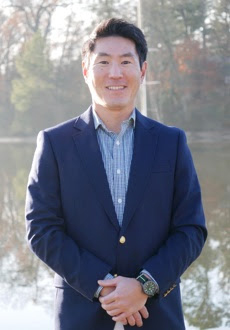
Scott Budden

After an extensive search and hiring process, ShoreRivers is proud to announce the selection of Scott Budden as the organization’s next Executive Director.

“ShoreRivers Governing Board is thrilled with our selection of Scott Budden as the organization’s new Executive Director,” says Marian Fry, Chair of the Governing Board. “Scott was chosen from a robust pool of applicants based upon his skills acquired from a diverse 18-year professional background, which includes his performance as the Deputy Director of Finance at ShoreRivers. His undeniable talent and deep familiarity with our organization and our communities are the perfect combination to lead ShoreRivers into its next chapter. We wish him well, and can’t wait to see how he takes on the role.”

Scott Budden was raised in Chestertown, MD, on the banks of Langford Creek. He attended Kent County Public Schools before graduating from Bucknell University in 2007 with a double major in Economics and International Relations and a minor in Spanish. After a 10-year stint in Washington, DC, as a corporate financial analyst for The Atlantic and Booz Allen Hamilton, he founded an oyster farm on Maryland’s Eastern Shore in 2015. Within a decade, Scott helped scale Orchard Point Oyster Co. to a nationally distributed brand.

With his passion for aquaculture and familiarity with both the business and non-profit worlds, Scott is a natural fit for ShoreRivers. He is a past appointee to the Maryland Aquaculture Coordinating Council and the Maryland Tidal Fish Advisory Commission, and has served on board and committees for non-profits like the Chester River Association (a ShoreRivers’ legacy organization) Oyster Recovery Partnership, Chesapeake Oyster Alliance, Maryland Sea Grant, and Washington College’s Innovation Plant.

“I am honored to have the opportunity to lead an organization that has meant so much to me — both personally and professionally — for years. To be at a helm that has been deftly steered by previous executive directors is a privilege. Isabel is leaving the organization on a path of continued success, and I look forward to stewarding it by supporting our talented staff in the years to come,” says Scott Budden. “Our rivers hold different meanings for each of us. For me, they represent our shared cultural history and, thanks to the continued work of ShoreRivers, and our generous funders and partner organizations, their future is in good hands.”

Beginning in the new year, Scott will take over for Isabel Hardesty, who has been with the organization for 14 years — five of which have been as Executive Director. During that time, the organization saw a significant growth period, with a 48% growth in staff (23 to 34 positions) and 68% growth in revenue ($4.4 to $7.4 million). With this increase in capacity and investment, ShoreRivers has solidified its reputation as the community-centered and solutions-oriented voice for clean water on the Eastern Shore. Leading a culture of trust, transparency, and tenacity will be a lasting hallmark of her service to ShoreRivers and the communities we serve.

“In addition to being knowledgeable and capable, Scott has an incredible combination of genuine kindness and determination. He knows our communities, he loves these rivers, and he will lead ShoreRivers with compassion, integrity, and focus,” said Isabel Hardesty.“After working closely with Scott for over a year, and knowing him personally for over a decade, I’m confident that I’m leaving ShoreRivers in the right hands.”

The Spy Newspapers may periodically employ the assistance of artificial intelligence (AI) to enhance the clarity and accuracy of our content.

Filed Under: 00 Post to Chestertown Spy, Eco Lead

ShoreRivers Hiring Executive Director

August 26, 2025 by Spy Desk Leave a Comment

ShoreRivers protects Maryland’s Eastern Shore waterways through science-based advocacy, restoration, education, and engagement. We are seeking a leader who can compassionately support and elevate a team of expert staff, collaboratively engage with the variety of stakeholders in our region, uphold the organization’s excellent reputation and financial stability, and communicate our vision of healthy rivers cherished by all communities. ShoreRivers’ next Executive Director will lead our impactful work by embodying our core values: solutions-oriented, optimistic, community-centered, and trusted.

ShoreRivers is a strong, regional Riverkeeper organization that formed from the merger of three local organizations in 2017. Our core focus is the waterways of the Chester, Choptank, Sassafras, Miles, and Wye rivers, Eastern Bay, and the Bayside Creeks. The Executive Director will be joining a 501c3 nonprofit organization with a 40-year history, $7 million budget, staff of 30+ professionals, and hundreds of volunteers. In 2024, ShoreRivers launched a three-year strategic plan that both honors our grassroots legacy and charts a course for us as a regional leader.

This position offers a competitive benefits package (see more below) and a salary range between $140,000–$170,000, based on experience. Position begins January 2, 2026, or a mutually agreed upon date. Employees work in-person with flexibility in their schedule when appropriate. This fulltime position is exempt salaried and “at-will,” and reports to a Board of Governors. The Executive Director will work out of both the Chestertown and Easton offices and must live on the Eastern Shore of Maryland within the communities we serve. This position requires flexibility to work longer hours, weekends, and travel as needed.

To apply, send your two-page resume and two-page cover letter to Deputy Director of HR & Culture Doug Mayorga at [email protected] by October 15, 2025.

In your cover letter, please address the following question: As Executive Director of ShoreRivers, how would you lead to maximize the protection of the Eastern Shore’s waterways at a time when critical protections are being rolled back and financial support from Federal and state sources is more uncertain?

The Spy Newspapers may periodically employ the assistance of artificial intelligence (AI) to enhance the clarity and accuracy of our content.

Filed Under: Archives, Eco Homepage, Eco Lead, Eco Notes

ShoreRivers Director to Step Down, Search for Successor Begins

July 25, 2025 by Zack Taylor Leave a Comment

Isabel Hardesty joined ShoreRivers in 2011, and has served as executive director since 2021.

ShoreRivers, a leading environmental organization dedicated to protecting the Eastern Shore waterways, announced that Executive Director Isabel Hardesty has resigned, effective at the end of this year.

Marian Fry, chairperson of the ShoreRivers governing board, expressed mixed emotions about Hardesty’s departure, noting her significant contributions to the organization’s growth and impact.

“Although she will be greatly missed, we wish her well in her future endeavors,” Fry said, adding that the board is actively seeking a strong candidate to succeed Hardesty and that a job announcement will soon be posted on the ShoreRivers website.

In an accompanying note to supporters, Hardesty reflected on her 14-year tenure with ShoreRivers, describing her decision to step down as bittersweet but necessary for her personal and professional growth.

“I am excited, happy, nostalgic, and sad all at once, but mostly energized by the prospect of change,” she wrote. “We are in an incredible period of stability and impact, which is why I feel confident this is a good time for me to launch my next phase, and for ShoreRivers to have a fresh perspective at the helm.”

In the note, Hardesty looked back fondly on the organization’s achievements, including its 2017 merger of legacy organizations, legislative wins, expanded educational programs, and a focus on inclusive community engagement alongside clean water initiatives.

Under Hardesty’s leadership, ShoreRivers evolved by adding capacities in communications, human resources, finance, and databases to the organization as it operated under a robust strategic plan.

“Elected officials recognize us during the general assembly, and the ShoreRivers brand is trusted, beloved, and in it for the long haul,” she wrote, and attributed its success to the staff, board, and, above all, supporters.

Hardesty began her career at ShoreRivers in 2011 as policy director and later served as Chester Riverkeeper, Regional Director, and Deputy Director before becoming Executive Director in 2021.

“Although she will be greatly missed,” Fry wrote, “and we wish her well in future endeavors, the board is already working to find an excellent candidate as her successor.”

Looking ahead, Hardesty plans to consult part-time with Due East Partners on strategic planning and leadership while spending more time with her family. She said she is committed to a smooth transition and will work closely with the board to identify and onboard a new director.

“I want to thank each and every one of you for making this organization and this job wonderful and impactful,” she wrote, encouraging supporters to keep an eye on the ShoreRivers website for updates on the leadership search.

The Spy Newspapers may periodically employ the assistance of artificial intelligence (AI) to enhance the clarity and accuracy of our content.

Filed Under: Eco Lead, Eco Portal Lead

Washington College Earns High Flyer Status for Bird Conservation

July 10, 2025 by Washington College News Service Leave a Comment

Washington College has successfully renewed its Bird Campus recognition from the Maryland Bird Conservation Partnership, reaching the prestigious High Flyer level. The Bird Campus program recognizes two or four-year colleges and universities committed to reducing threats to birds and actively participating in avian education and research. This achievement underscores the College’s ongoing dedication to environmental stewardship, having completed over 20 action points across four key areas: Habitat, Threats to Birds, Education and Engagement, and Sustainability.

The program is an initiative of the Maryland Bird Conservation Partnership, an expansion of the Bird City Maryland program that began in 2019 to encourage communities to enhance bird environments and educate the public on their contributions to a healthy community. Maryland stands out as the first state to offer a campus recognition program. Washington College initially earned its Bird Campus certification in May 2023, with significant work led by Chesapeake Conservation Corps member Fana Scott. Renewals are required every two years to ensure continued active participation. The town of Chestertown also recently received Bird City certification in October 2024.

“Getting High Flyer status as a Bird Campus from Bird City Maryland is a gratifying public recognition of the work done by Washington College to protect birds and raise awareness around what is needed for continued conservation,” said Maren Gimpel, associate director of Foreman’s Branch Bird Observatory at Washington.

As part of the College’s Center for Environment & Society (CES), the Observatory’s primary research focuses on monitoring the seasonal movements of migratory birds between their breeding and wintering areas. Located on the Chester River, a few miles north of Chestertown, MD, the Bird Observatory is nestled in a waterfront refuge on Washington College’s River and Field Campus. The land serves as an important stopover habitat for shorebirds and is home to thousands of migrating and wintering ducks and geese each year.

“From installing Feather Friendly collision deterrents on our buildings to the recognition of our River and Field Campus as an Important Bird Area, to buildings and grounds using Integrated Pest Management to reduce their use of pesticides, choices are being made across our whole campus to improve our environment for birds, and the natural world as a whole so that we all can enjoy its beauty and intrinsic value,” said Gimpel.

The College’s renewed certification highlights a range of impactful initiatives:

Reducing Threats to Birds: Washington College installed Feather Friendly collision deterrents on the porch windows at Semans-Griswold Environmental Hall in 2023, with the remainder of the building treated in August 2024. The Washington College bird club is actively surveying other high-risk collision locations on campus and fundraising for additional treatments. The College also serves as the official test site for the American Bird Conservancy’s bird-safe glass testing program.

Education and Engagement: The Foreman’s Branch Bird Observatory and the College’s River and Field Campus have hosted numerous lab classes, local bird club gatherings, and public education events. Faculty members incorporate avian topics into their coursework, and the Center for Environment & Society sponsors a National Audubon Christmas Bird Count each winter as a citizen science initiative.

Habitat Enhancement: The “Flyways Bench,” a functional art piece designed by Artist in Residence Deirdre Murphy, was installed at Semans-Griswold Environmental Hall. It depicts the migration of Least and Caspian Terns, both visible from the bench along the Chester River. The Washington College Campus Garden is a Bay-Wise Certified demonstration site, open to the public to explore best practices in ecological landscaping. Additionally, the entirety of the River and Field Campus was designated a MD-DC Audubon Important Bird Area in 2006, recognized for its large populations of breeding grassland birds like Northern Bobwhite Quail, and wintering/migrating species such as American Woodcock. The campus also earned points for its Tree Campus and Bee Campus certifications.

Sustainability Initiatives: Broader sustainability efforts on campus contributed to the High Flyer status, including a student-led compost team, a Back to Tap program promoting reusable water bottles, a food recovery network, and the campus’s use of integrated pest management by the buildings and grounds department.

“This recognition is a shining example of how the Center for Environment & Society’s  integrated approach to research, experiential learning, and community engagement is making a real impact,” said CES’ Lammot Du Pont Director, Valerie Imbruce. “Our goal has always been to prepare students to become thoughtful stewards of the environment while contributing solutions that improve both ecological health and quality of life. This achievement brings that model to life.”

For a comprehensive list of Washington College’s achievements as a Bird Campus, visit their page on the Bird City Maryland website. You can also learn more about sustainability efforts at Washington.

The Spy Newspapers may periodically employ the assistance of artificial intelligence (AI) to enhance the clarity and accuracy of our content.

Filed Under: Archives, Eco Homepage, Eco Lead

Bay Journal: FEMA Cancels $1 Billion for Flood Prevention Projects in Chesapeake Bay Region

May 20, 2025 by Bay Journal Leave a Comment

As Crisfield Mayor Darlene Taylor sees it, the low-lying Maryland town has no future unless it can hold back rising water. Computer models suggest that the adjacent Chesapeake Bay could get high enough by 2050 to trigger daily floods that are deep enough to stall cars on roads.

Hope arrived in the form of a federal grant program under the Federal Emergency Management Agency, created during the first Trump administration. The Building Resilient Infrastructure and Communities (BRIC) program helped rural communities like hers to invest in massive projects to fight disaster threats, ranging from wildfires to floods.

Crisfield officially got word from FEMA last July that it had secured $36 million from the program to launch the first phase of its massive flood-protection initiative. “Everything had lined up and everything was in place for this to be a highly successful project,” Taylor said.

A lot has changed since then. Trump returned to office in January, vowing to drastically shrink the size of the federal government. In a terse April 4 press statement, FEMA announced it was pulling the plug on the disaster-preparedness funding, not just for Crisfield but for all applicants and grantees, calling it “wasteful and ineffective,” though without citing evidence to support those claims.

The administration announced that any undistributed funds from the program’s inaugural year, 2020, through 2023 would be returned to the Disaster Relief Fund or the U.S. Treasury. The agency also canceled the 2024 funding opportunity, just days before the application deadline for that year’s $750 million allocation.

The reversal has left hundreds of communities nationwide scrambling to find alternative sources for the billions of dollars they had been promised. Among the six states and the District of Columbia in the Chesapeake Bay watershed, BRIC grants had been on track to disburse nearly $1 billion across about 350 applications, according to a Bay Journal analysis of FEMA’s database.

Among the region’s losses: $32 million to restore wetlands along the Patapsco River’s Middle Branch near Baltimore; $2.7 million to acquire 21 flood-prone properties in Scranton, PA; and $20 million toward finishing a floodwall in DC around the Blue Plains Advanced Wastewater Treatment Plant, the largest sewage plant in the Bay watershed.

And, of course, there’s Crisfield. With an annual budget of just $4 million, the town of 2,500 residents can’t afford to fight sea level rise without financial help from beyond its borders, Taylor said.

“We’re pretty much devastated,” she added. “Without this, we know that we will be in a really bad position to protect our citizens, protect our property, protect our community and really protect our way of life.”

Wasteful?

The FEMA announcement described the program as “more concerned with political agendas than helping Americans affected by natural disasters.” Many experts contend the opposite is true.

Recent studies suggest that investments in flood hazard mitigation yield a return of up to $8 in benefits for every $1 spent, according to the Association of State Floodplain Managers. Chad Berginnis, the association’s executive director, acknowledged that the BRIC program had flaws, but said it was making important strides in warding off disasters.

“I don’t [doubt that we] have debt issues in this country, but I take very strong exception to the FEMA press release that characterizes this program as wasteful and ineffective,” he said. “Those are just flat-out lies.”

Berginnis said he largely agreed with the findings of a recent Republican-led task force’s report, which called for reforming the BRIC program. The 61-page report offered a broad range of recommendations to improve the nation’s overall disaster response and preparedness efforts.

Among them: creating a pathway for smaller communities to obtain BRIC grants, so they don’t have to compete against “coastal elites” who have access to caravans of consultants and grant writers. During the 2023 grant year alone, about 75% of the program’s funding benefitted such “high capacity” applicants, according to the report.

But the report was notable also for what it didn’t say, Berginnis pointed out. It didn’t say anything about getting rid of BRIC.

‘The water doesn’t care’

The BRIC program was established by Congress through the Disaster Recovery Reform Act of 2018, which Trump signed into law in October of that year. Beginning in 2020, applicants could receive up to $50 million for projects designed to help communities reduce their exposure to catastrophes.

Such “pre-disaster” funding, backers say, is necessary now more than ever with climate change exacerbating a variety of threats and driving up the costs of “post-disaster” spending.

The abrupt cancellation of the program has drawn strong criticism, especially from Democratic lawmakers.

“When we talk about government cuts to environmental programs, I will caution that rising seas don’t care who is in the White House,” said Rep. Sarah Elfreth, a Maryland Democrat. “The water doesn’t care how a small town that experiences 90 days of flooding or more a year voted in the last election. Flooding will continue to devastate communities, even if the president does not believe in climate change.”

Some Republicans, while supportive of Trump in general, appeared to be quietly working to get the president to change his mind and restore at least some funding.

“We were made aware of this cancellation in funds and are reaching out to the appropriate federal agencies for a better understanding of this decision,” U.S. Rep. Andy Harris’s office told the Bay Journal in a statement. Harris, Maryland’s only Republican congressman, chairs the conservative House Freedom Caucus, and his district includes Crisfield.

His office noted that Harris had written a letter in support of Crisfield when the community was applying for BRIC funding. Harris remains “supportive of the city’s need to become more safe, resilient and prosperous by reducing the negative impacts of flooding,” according to the statement.

Because of the sluggish manner in which FEMA disburses funding, some of the grants now being cancelled date back to the program’s inaugural year in 2020. In many cases, communities have already expended millions of their own dollars designing, engineering and permitting projects that now may never see the light of day, Berginnis said.

For multiphase projects, FEMA said its regional offices will work with applicants on previously obligated projects to determine what it called the “best path forward,” adding that “this may include ending the project after the completion of Phase 1 or at another appropriate stopping point.”

In the April 16 FEMA memo, the administration also justified BRIC by pointing to its purported failure to produce “concrete results” and the distribution of the “majority of funding … to only a few states.”

Community impacts

From small-town mayors to state emergency management coordinators, officials have reacted to the administration’s action with shock and disbelief.

“I don’t know what facts they are looking at to call this [program] wasteful,” said Maryland Secretary of Emergency Management Russell Strickland. “I know of nothing in Maryland that I would call wasteful.”

His agency estimates that communities across the state stand to lose more than $80 million across 26 applications that were in FEMA’s approval pipeline. The impact remains “undetermined” for $8.7 million that was allocated to 17 projects but hadn’t been spent as of the April 4 announcement.

Meanwhile, 31 Maryland-based applications for the 2024 funding year were dropped. Those $70 million in requests would have included $36 million for the second phase of Crisfield’s flood project and $16 million for a long-planned effort to fight frequent flooding in Cambridge, another Eastern Shore community struggling to transition its economy from seafood to tourism.

“We’re in a holding patten now,” Strickland said, adding that he hopes Congress and the administration work together to create a replacement for BRIC. He also is waiting to see whether Maryland and other states take legal action to overturn the decision.

The South Baltimore Gateway Partnership, along with other partners, has raised $67 million to restore the first phase of what will ultimately be 11 miles of the shoreline along the Middle Branch of the Patapsco River. BRIC funding accounted for about $32 million of that total. About $5 million has been used for designing the project, but the rest stands to be clawed back, said Brad Rogers, the partnership’s executive director.

So, Rogers said, the wetlands to be added along the shore by MedStar Harbor Hospital will be scaled back from 12.3 acres to 8 acres. And instead of simultaneously launching another project at the BGE Spring Gardens campus in Ridgely’s Cove, that phase will be delayed until more funds are raised.

“We are saddened that the federal construction funds won’t be available going forward, but we are confident this will still be a terrific project,” Rogers said. “We’re not being deterred. We’re just moving forward on a slightly different timeline.”

In Virginia, the affected projects included $12 million to upgrade Richmond’s water treatment plant and $24 million to repair and modernize Portsmouth’s Lake Meade Dam, which holds back the city’s main drinking water reservoir.

In Pennsylvania, outcry followed the cancellation of FEMA’s $2.5 million award to the city of Scranton to acquire 21 flood-prone properties and demolish 18 homes standing on them. The properties were set to be repurposed into infrastructure to help prevent future flooding, city officials say.

“You have people that are in limbo,” Scranton Mayor Paige Cognetti said. “Going forward, we are always going to have natural disasters. It’s absolutely untenable that cities and municipalities won’t have access to federal dollars to fend off and prevent [them] but also prepare [for them].”

Many of the places impacted by the program’s cancellation abound with Republican voters. For example, in Crisfield’s main voting precinct, Trump won a 56% margin of victory in last November’s election.

Plans there call for installing a tidal flood barrier that will surround most of the city as well as adding sewers, pump stations, water-retention facilities, tide gates and wetlands. The goal is to ensure protection from up to 5 feet of flooding above ground level — akin to the inundation from Superstorm Sandy in 2012.

Several residents recently completed coursework in a “resilience academy” program, hosted by the city and several partners. As part of their final project, three younger residents — all under 20 years old — pitched a plan to share knowledge with a “sister city” facing similar flooding issues.

“I live in this area,” said Emily Napier, indicating a point on the map near downtown, “and we flood on a daily basis.”

Dennis Marshall was on hand to collect his wife’s certificate in her absence. He owns a vacation rental in town that he says could benefit from the project.

“People come down here, and if they have to wear boots, they aren’t coming back,” he said. But Marshall added he is far from confident that the flood project, if built, would deliver the results it promises. “If it works, it’s fine,” he noted. “That’s the problem.”

Does he regret voting for Trump now that the Republican president has nixed the city’s massive windfall? “I think if he did it, he did it for a reason,” said Marshall, clad in a black Trump T-shirt.

Barbara Mete, another enrollee in the three-month resilience academy, moved to Crisfield about six years ago after retiring from a job in New York. She hoped the course would give her a deeper appreciation for her new home and the estuary at its doorstep. In the wake of the loss of funding, she is deeply concerned about her community’s future, she said.

Her message to Trump and FEMA? “Please think about the people who live here and the children that will come after your administration,” Mete said. “Nature is the key. If we take care of her, she will take care of us.”


By Jeremy Cox, Bay Journal

The Spy Newspapers may periodically employ the assistance of artificial intelligence (AI) to enhance the clarity and accuracy of our content.

Filed Under: Eco Lead, Eco Notes

The Solar Land Rush—A farmer’s perspective with Judy Gifford

March 18, 2025 by James Dissette Leave a Comment


http://

Over the past 50 years, the pursuit of renewable energy has been driven by advocates who see large solar arrays as a crucial step toward reducing dependence on fossil fuels..

Critics, however, argue that the land available for solar arrays is limited, and the large-scale expansion of solar farms could compete with agricultural use, potentially reducing the amount of land available for crops and livestock. This concern is especially pressing for small farms, which may struggle to retain their land amid increasing demand for solar installations.

Judy Gifford, a small farm owner near Kennedyville has been watching the proliferation of solar on the Eastern Shore for a decade.

“Several years ago, the American Farmland Trust estimated that we were losing about 2,000 acres of farmland a day nationwide. I’m sure that number is even higher now. The problem is, people just assume we have endless land—it’s this attitude of, “Oh, we can build here, we can build there.” But the cumulative effect is reaching a tipping point,” she says.

Gifford and other small farmers on the Eastern Shore feel the pressure of allowing solar fields on farmland. The State’s renewable portfolio standard requires that 14% of its energy —whether consumed or purchased—must come from solar.

“14% is an arbitrary number, not based on science, and the consultants they’ve relied on have had some questionable figures. But regardless, the state is pushing ahead, even though our energy policy is a mess and this won’t solve it.”

Gifford sees a broader impact on the Easter Shore with the proliferation of solar fields: Less farmland means less grain production, and the Shore already imports grain for the $5 billion poultry industry. If rising costs drive chicken farms out of Maryland, it could devastate the Eastern Shore economy.

“Here in Kent County, we’ve worked hard to preserve our farmland. We respect and protect it. But now, developers are circling because they see open space as an opportunity to make money. Solar companies are offering outrageous sums for leases, which makes it harder for local farmers to compete,” Gifford says.

The Spy recently interviewed Judy Gifford to talk about how solar arrays imapct rural land use on the Eastern Shore.

Judy Gifford owns and operates St. Brigid’s Farm in Kennedyville and is a board member of Kent Conservation and Preservation alliance, treasurer and board member Colchester Farm CSA, and former member Northeast Sustainable Agriculture Research and Education Administrative Council.

This video is approximately nine minutes in length.

The Spy Newspapers may periodically employ the assistance of artificial intelligence (AI) to enhance the clarity and accuracy of our content.

Filed Under: Archives, Eco Homepage, Eco Lead

Intense Maryland Energy Debates in Annapolis Fill a Single Afternoon

February 7, 2025 by Maryland Matters Leave a Comment

For the last few years, the nuclear energy industry has stood on the precipice of the Maryland energy policy debate, waiting for its close-up.

Industry leaders and their lobbyists have repeatedly talked about how important nuclear is to the state’s power portfolio. They have implied, without saying so outright, that nuclear, which accounts for 40% of the energy generated in the state, and 80% of its carbon-free energy, ought to get greater recognition from Maryland policymakers — along with state subsidies.

On Thursday, the head of the industry’s national trade association, the Nuclear Energy Institute, got more than an hour in the House Economic Matters Committee to boast about nuclear’s potential, as state lawmakers wrestle with an energy shortage, spiking prices, clean energy goals and climate mandates.

“The value of nuclear is you get all of this very reliable, clean power,” Maria Korsnick, the NEI CEO, testified. She later told lawmakers, “The point of my being here is to be helpful to you.”

The Calvert Cliffs nuclear plant in Southern Maryland has been a workhorse for five decades and is likely to be relicensed for several more decades sometime in the 2030s. But scientists and engineers are also developing more compact nuclear technologies that don’t require so much space and water to operate, which are often called small modular reactors (SMR).

A package of bills from legislative leaders designed to generate more energy in Maryland and reduce ratepayer costs, includes giving nuclear energy “tier 1” status, making it eligible for certain state clean energy subsidies. But House Economic Matters Chair C.T. Wilson (D-Charles), an architect of the just-introduced measures, said he invited NEI to speak to his committee not to hype nuclear power, but to inject a dose of reality, because the newer technologies still won’t be ready for several years.

“It’s a reminder to people it’s not a magic word,” Wilson said in an interview. “It’s got to be planned. It’s much more challenging than saying the word ‘SMR.’ It wasn’t to sell it.”

The nuclear briefing was part of a long day of hearings in the Economic Matters Committee on hot energy topics. The panel also heard testimony on legislation that would scale back a controversial natural gas infrastructure program, and on a massive bill to promote the generation of clean energy in Maryland.

In a way, it was a microcosm of the energy debates that will dominate the rest of the General Assembly session in a single afternoon.

A range of Maryland policymakers believe nuclear needs to become a bigger part of the state’s clean energy portfolio, especially as other technologies like solar and wind struggle to fully realize their potential.

“Nuclear has the opportunity to play — or to be — part of the solutions, like never before,” Korsnick told Economic Matters Committee members Thursday.

She laid out some of the new technologies that are being developed, answered questions about nuclear plant safety and security, the disposition of nuclear waste, the nuclear workforce, and steps states are taking to incentivize nuclear energy. Korsnick did not come with a specific ask of lawmakers, but did say that states and local communities are increasingly embracing nuclear power, where once they feared and shunned it.

“When I say nuclear is going to be thriving, it’s not because we’re pushing for it, it’s because people are pulling for it,” she said.

Boosting nuclear energy is part of the bill that the committee heard later in the day, the Abundant Affordable Clean Energy – Procurement and Development Act, sponsored by Del. Lorig Charkoudian (D-Montgomery). That bill would ease state regulatory hurdles for relicensing the Calvert Cliffs plant in the 2030’s (though the federal government takes the lead in that process).

Charkoudian’s bill also seeks to boost battery storage in the state, taking energy generated during off-peak hours and holding it in reserve for when there’s greater consumer demand. It would also ensure that whatever electric power is generated from offshore wind in federal waters off the coast of Ocean City remains in Maryland, and it would seek to dedicate a greater portion of state energy taxes assessed on data centers to more relief for utility ratepayers.

Charkoudian conceded the complexity of her legislation, and said tweaks and amendments are still being made.

“When you have a hundred different agencies and stakeholders and people working on a bill, it’s never going to be perfect,” she said.

But most of the individuals who testified on the bill were generally supportive, though Frederick Hoover, chair of the Maryland Public Service Commission, which regulates utilities, warned it could lead to more battles over where to site clean energy installations in the state.

Ambitious as Charkoudian’s bill is, it may be subsumed by the forthcoming debate over the House and Senate leaders’ legislative package on energy, and Thursday’s hearing on the bill was remarkably speedy, all things considered.

In fact, the hearing about the other bill on the committee’s docket, to place limitations on the state’s STRIDE program to repair and improve natural gas infrastructure, was far lengthier and more contentious. The bill, from Del. Elizabeth Embry (D-Baltimore City), would require gas companies to focus on safety when making upgrades to gas pipelines and other infrastructure.

The STRIDE law, which took effect in 2013, provides incentives to gas utilities to make a range of infrastructure improvements, which are paid for with fees on ratepayers’ gas bills. But with utility bills rising, critics of STRIDE have argued that gas companies are pushing forward on infrastructure work that may not be necessary, adding needless costs to consumers’ bills — especially as the state looks to move away from fossil fuels.

“Utilities generate higher profits by spending extra money with the government’s approval,” said David Lapp, who heads the Maryland Office of People’s Counsel, which represents consumers’ interests on utility matters.

Proponents of the legislation said it would emphasize community safety while saving ratepayers money.

“This bill does not repeal STRIDE,” Embry told her colleagues Thursday. “It’s a modest bill. It makes modest changes to the current law.”

But gas companies — and some Republicans on the committee — made the opposite argument, and the Republicans also suggested that Embry’s bill, as the state pushes to meet strict climate mandates, is secretly designed to kill off the natural gas industry.

Mark Case, a vice president at Baltimore Gas & Electric, warned that limiting the program — and the surcharges — could hinder the gas companies’ ability to replace aging industry that could pose a danger to communities. He said that since the inception of STRIDE, the company has typically replaced about 42 miles of pipe a year.

“These are not 5-year-old pipes where we’re going in and saying, ‘let’s go replace them.’”

Washington Gas lobbyists came with Cynthia Quarterman, who was the administrator of the federal Pipeline and Hazardous Materials Safety Administration under former President Barack Obama. She said Maryland must “stay the course [with STRIDE] to catch up to other states” and that upgrading gas pipelines is “of the utmost importance.”

But Laurel Peltier, who assists low-income ratepayers through her work for AARP, told Maryland Matters that the STRIDE program has become perverted.

“The issue with gas delivery and STRIDE overall is, ratepayers have become ATMs and gas utilities have their PINs,” she said.

By Josh Kurtz

The Spy Newspapers may periodically employ the assistance of artificial intelligence (AI) to enhance the clarity and accuracy of our content.

Filed Under: Eco Lead

Maryland Levies Fines on Perdue, Valley Proteins for Environmental Violations

August 21, 2024 by Bay Journal Leave a Comment

The Perdue AgriBusiness soybean processing plant in Salisbury, MD, added machinery without a permit, leading to more air pollution, according to the Maryland Department of the Environment.

Two major agricultural companies ramped up operations recently on Maryland’s Eastern Shore, and the environment paid a price, according to the Maryland Department of the Environment.

One case involves the agency’s second-largest cash penalty in its history while the other has reopened a long-running pollution saga that local environmentalists hoped had been resolved.

Perdue AgriBusiness, a subsidiary of poultry giant Perdue Farms, landed in hot water after state officials say the company expanded its Salisbury soybean processing facility without a permit or proper air-pollution controls. That resulted in a $12 million settlement announced in July by MDE and the Maryland Attorney General’s Office.

Perdue’s plant, situated a couple blocks away from its parent company’s headquarters, extracts the oil from soybeans to be used in cooking, among other uses.

Perdue applied for a permit in 2017 but withdrew the application the following year after MDE indicated it would require additional review. The company went ahead anyway with the installation of the new machinery in September 2017, followed by a second round in May 2019, according to the settlement agreement.

After the plant’s expansion, the hexane emissions, state officials say, exceeded the 40-ton annual threshold to be considered a new “major source” of pollution, MDE alleged. Hexane is a volatile organic compound, a major ingredient in ground-level ozone that can worsen an array of breathing problems from asthma to emphysema, experts say.

MDE records show annual VOC emissions increased at the facility by 28% from 2017 to 2019, from 246 tons to 315 tons.

“Everyone must follow the rules which are in place to keep Marylanders safe. When Perdue failed to comply, it was the community who suffered the undue burden, so there must be meaningful penalties,” said Attorney General Anthony Brown. “I am glad that Perdue has accepted responsibility and will be investing in the surrounding neighborhoods moving forward.”

The settlement calls for Perdue to pay an $8 million fine to the state. The only larger civil penalty in MDE’s history was the $29 million settlement in 2018 with Volkswagen over the auto manufacturer’s installation of “defeat devices” on certain vehicles, aimed at circumventing emissions tests.

Perdue also must install $3.5 million in pollution-reduction measures at the plant, including electrifying diesel-fired equipment, and contribute $400,000 to Salisbury for a tree planting campaign in areas with poor canopy coverage.

In separate press statements, the two sides left a muddled picture about when and how the problem came to light. MDE’s legal complaint says that agency staff and Perdue representatives “met at various times” to discuss the cause of the emission increases. It wasn’t until correspondence on April 11, 2022, however, that Perdue “finally admitted” it had installed the equipment without a permit, MDE alleged in a legal complaint.

Meanwhile, Perdue spokeswoman Kate Shaw said in a statement that “The discrepancy was discovered in May of 2020, as part of our air permit renewal process.” Her statement doesn’t indicate who discovered the discrepancy or whether state inspectors were aware of it at the time. She added, “We take full accountability for what occurred. The individuals who did not reapply for the permit are no longer with the company.”

When asked for clarification via email, Bill See, another Perdue spokesman, replied, “Our original statement stands on its own.”

In a separate case, MDE charges that Darling Ingredients, owner of the Valley Proteins poultry rendering plant in Dorchester County, has violated its October 2022 consent decree. Under that settlement, Darling Ingredients agreed to pay $540,000 to the state while fixing wastewater and stormwater problems at the troubled plant.

“I would say this facility is in no better shape than it was in 2021 when we filed the lawsuit,” said Matt Pluta, the Choptank Riverkeeper and director of riverkeeper programs at ShoreRivers, one of the environmental groups whose lawsuit triggered the decree. “In fact, it’s probably gotten worse.”

A few months after the settlement was signed, MDE renewed the plant’s discharge permit, allowing a nearly four-fold increase in the amount of wastewater it can release into the Transquaking River, a nutrient-impaired Chesapeake Bay tributary. Environmentalists had pushed MDE to impose tougher limits and not let the company expand until showing it could meet them, but the agency didn’t do so.

Problems have piled up since that approval. MDE inspectors say they uncovered 51 violations of the decree’s requirement to maintain at least 2 feet of freeboard – the distance from the surface of the wastewater to the top of the holding pits. In May, MDE announced plans to fine Darling $15,000.

The Texas-based company formally contested the fine, arguing that all the exceedances fell under an exception in the decree for lagoon levels to rise because of heavy rainfall.

MDE also contends that the plant has been hauling away production waste from the lagoons without going through the complete treatment process. Farmers use the material, known as “dissolved air flotation,” to fertilize their fields. But in adjoining Caroline County, the practice has sparked an outcry from neighbors about foul odors and prompted county commissioners to enact a moratorium on its storage.

Darling representatives have told the state they believe their current permit allows the hauling to continue. Ongoing upgrades to the wastewater treatment plant, required as part of the 2022 decree, will substantially reduce, if not eliminate, such hauling, they say.

“We have responded to the MDE and share its commitment to resolving this issue through the established MDE process,” Darling spokeswoman Jillian Fleming said in a statement.

The agency notified Darling in June that it was referring the hauling matter along with other recent violations to the state Attorney General’s Office.

By Jeremy Cox

The Spy Newspapers may periodically employ the assistance of artificial intelligence (AI) to enhance the clarity and accuracy of our content.

Filed Under: Eco Lead, Eco Portal Lead

  • 1
  • 2
  • 3
  • 4
  • Next Page »

Copyright © 2026

Affiliated News

  • Chestertown Spy
  • Talbot Spy
  • Cambridge Spy

Sections

  • Sample Page

Spy Community Media

  • Sample Page
  • Subscribe
  • Sample Page

Copyright © 2026 · Spy Community Media Child Theme on Genesis Framework · WordPress · Log in