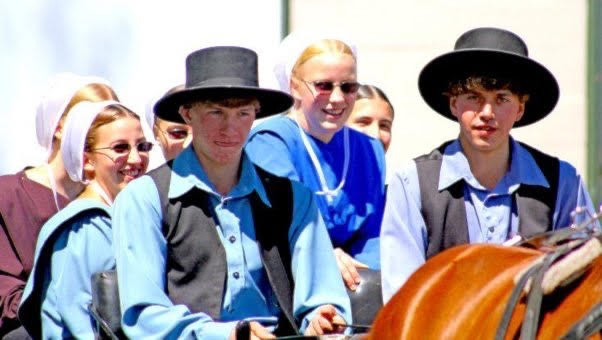

 I’ve bumped into a word and a concept I previously knew nothing about: rumspringa. It’s an Amish word and concept that refers to a time in the life of Amish teenagers in which they face fewer restrictions on their behavior and are less subject to the Ordnung—the community norms that traditionally govern Amish life. In essence, rumspringa permits Amish adolescents to taste English ways and gives them the opportunity to choose the lifestyle they wish to adopt as adults.
What a concept! Exposure to new ideas and different cultures at the very moment we’re coming into our adult selves can only serve to strengthen our understanding of our place in the world. I can’t help but wonder that if I had experienced rumspringa, would I have chosen a different path in life? Maybe, in fact, I did and just didn’t know it at the time. After college, I joined the Peace Corps and went to live and work in a small village in Tunisia. I experienced another culture, spoke a different language (two, in fact), and spent considerable time in quiet reflection. When I came home six years later, I had a still-incomplete but better understanding of who I was and my place in the world.
Now that I’ve officially been pegged as “elderly” by the next generation in our family, I’m not only allowed to sit on higher chairs on the beach, but I’m also empowered to ruminate on the many roads in my life—the ones taken and the ones not taken. To be honest, or as honest as I can be, I’m reasonably satisfied with the course and direction of my life. I have made mistake, some egregious, but I’ve learned from them and survived. I’m in a good town with good friends and I’m in a good marriage. My past mistakes are the rainy days in an otherwise relatively sunny life. Now in my dotage, I’m still imperfect but happy.
Sometimes at night when I can’t sleep, I choose a specific time in my long-ago life and try to remember everything about it. My little elementary school in Pittsburgh, my posh boarding school, my tumultuous college. My days in that little Tunisian village. My years when I spent too much time away from home working overseas, and, when I finally decided to give that up, the years I spent counseling, teaching, and coaching boys in a wonderful secondary school in the Washington suburbs. I lived in an old farmhouse on campus, and my dog and I would commute to work across green playing fields. I was surrounded and supported by colleagues and friends who became family.
In Amish culture, there is no prescribed time limit to rumspringa; its length is indeterminate, a matter of personal choice. It simply continues until the adolescent decides to become a member of the Amish Mennonite Church and is baptized as such, accepting all the responsibilities that decision entails. In other words, when you’re ready to choose your life, you choose it, and at that point, you own it.
There is so much we all take for granted. Rumspringa turns that notion on its head and enables us to consciously accept our place in the universe. I always remember what Archimedes said when he grasped the principle of the lever: “Give me a place to stand and I will move the Earth.” The opportunity to consciously choose that place makes a lot of sense to me.
I’ll be right back.
Jamie Kirkpatrick is a writer and photographer who lives in Chestertown. His work has appeared in the Washington Post, the Baltimore Sun, the Philadelphia Inquirer, the Pittsburgh Post-Gazette, the Washington College Alumni Magazine, and American Cowboy Magazine.
His new novel, “The Tales of Bismuth; Dispatches from Palestine, 1945-1948” explores the origins of the Arab-Israeli conflict. It is available on Amazon.

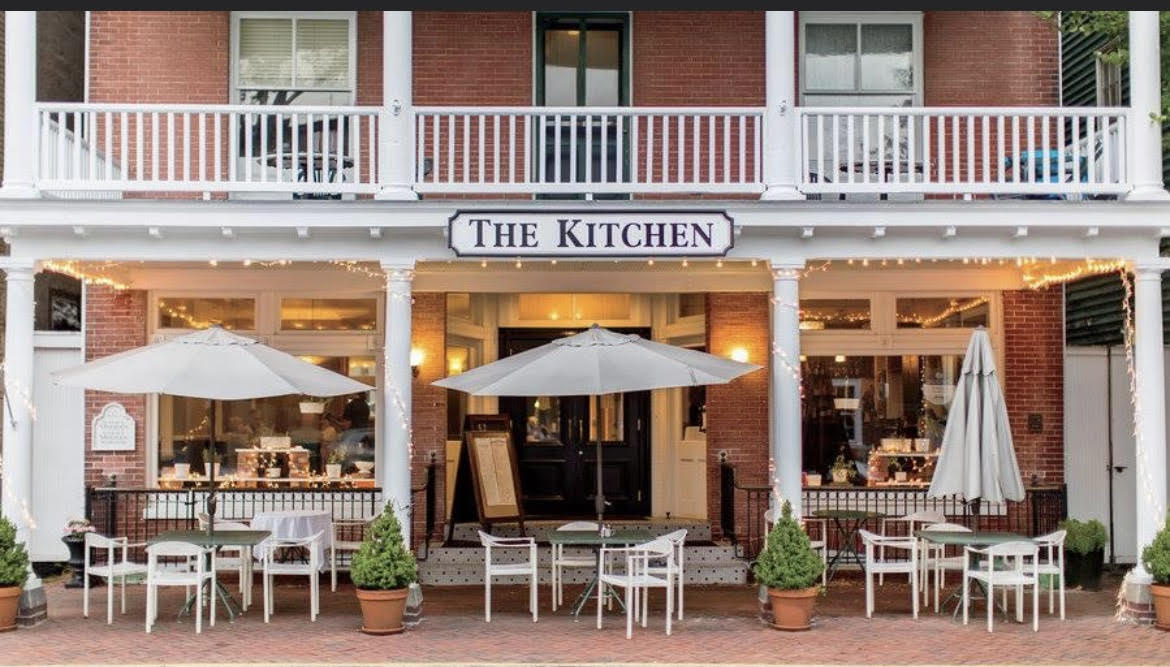 Remember this: “Sometimes you want to go where everybody knows your name”? Back in the day, Thursday night was sacred. No matter where I was, I went to Boston, to that little step-down watering hole named “Cheers” where everybody—Sam, Coach, Woody, Carla, Norm, Cliff, Frasier, Rebecca, and Diane—not only knew each other’s names, but everybody else’s, too. Alas; NBC shuttered “Cheers” on May 20, 1993; it’s probably still serving beers in reruns somewhere, but it’s just not the same…
 If June is the threshold of summer, July is its screened porch. It might be sweltering out in the backyard, but on the porch, a slowly rotating ceiling fan keeps the heat at bay while we sip our iced tea or lemonade and watch the fireflies put on their evening show.
 A couple of months before he died, my dear friend Marty said to me, “Getting old isn’t for sissies.” That was several years ago, but now I know how right Marty was. Simple movements I used to take for granted—stepping into my pants. tying my shoes—now take considerable time and planning. Getting up from a chair often requires a Herculean effort and maybe a handhold. I’m stiff or sore in places I didn’t even know I had; nothing bends or turns like it used to. What to do?


 Florida gets a bad rap these days: its hurricanes are scary and its political tilt is a bit unsettling (remember all those hanging chads?). Then there’s that infamous classified document storage facility at Mar-a-Lago, a list of banned books as long as I-95, and I just saw a gecko the size of a French poodle. Not exactly the promised land. On the other hand, it has been a fickle spring up north, so when a wedding invitation arrived in our mailbox, we said, “Yes!” and packed our bags. And today, sitting on the lanai that overlooks the golf course, feeling both the warm early morning sun and a cooling breeze on the back of my neck, I must admit that I’m beginning to understand the snow bird’s call. The fish is fresh, the limes are plentiful, and I’ve yet to see a raindrop or a snow shovel.