MENU

Sections

  • Home
  • Education
  • Donate to the Centreville Spy
  • Free Subscription
  • Spy Community Media
    • Chestertown Spy
    • Talbot Spy
    • Cambridge Spy

More

  • Support the Spy
  • About Spy Community Media
  • Advertising with the Spy
  • Subscribe
March 14, 2026

Centreville Spy

Nonpartisan and Education-based News for Centreville

  • Home
  • Education
  • Donate to the Centreville Spy
  • Free Subscription
  • Spy Community Media
    • Chestertown Spy
    • Talbot Spy
    • Cambridge Spy
5 News Notes

Queen Anne’s Court Verdict Protects Vulnerable Kent Island Ecosystem from Development

December 11, 2025 by James Dissette Leave a Comment

Court agrees Queen Anne’s County Commissioners’ approval of Chesterhaven Beach development plan is against state law

In a win for clean water and habitat, on Friday, Dec. 5 the Queen Anne’s County Circuit Court decisively ruled in favor of environmental organizations over a long-standing dispute involving the Chesterhaven Beach development proposal on Kent Island. The property, which had been proposed for the development of dozens of new houses, includes an ecologically significant mix of forests, wetlands, and fields overlooking the Chester River that feeds into the Chesapeake Bay.

The development proposal, which has been a source of litigation for over 30 years, would have circumvented environmental laws and allowed dwellings to be built on a vulnerable 101-acre waterfront ecosystem. The property owner claimed that he had “grandfathered” rights to build 186 residential units, despite laws that limit residential density in this sensitive area to just one unit per 20 acres. The developer’s argument was rejected by the courts in 1992, but it became just the start of numerous unsuccessful legal challenges.

Last week, the Queen Anne’s County Circuit Court once again ruled in favor of environmental protection and clean water after a group of environmental partners challenged the latest Chesterhaven Beach development attempt in July 2024.

“Time and again, this developer has wasted everyone’s time trying to convince someone – anyone – that he somehow has grandfathered lots that do not exist,” said Queen Anne’s Conservation Association Executive Director Jay Falstad. “And time and again, the Courts have ruled against him. With this latest decision, hopefully the matter is now settled.”

The developer wanted to build 90 homes on the 101-acre waterfront property, which is almost entirely within Maryland’s Critical Area where state law limits development near tidal water. Perhaps most concerning, the proposal was approved by the Queen Anne’s County Commissioners, who claimed the property qualified as a “growth area” despite the state’s Critical Area laws.

The decision drew an immediate challenge from the Queen Anne’s Conservation Association, Chesapeake Bay Foundation, Chesapeake Wildlife Heritage, and several adjacent neighbors, who raised six individual claims for summary judgment against the proposal. Maryland’s Critical Area Commission (CAC) also raised red flags with the proposal, including the development’s size, and that no application or notice had been provided to the CAC, in accordance with state law. CAC intervened in the case on Jan. 29, 2025.

After hearing the case, the Court found all six of the plaintiff’s arguments persuasive, including the failure of Commissioners and Chesterhaven Beach to give the CAC the required notice of the comprehensive rezoning that the project needed to move forward. The Court also agreed that Commissioners illegally adopted the rezoning request two years after the adoption of the County’s Comprehensive Plan, where such designations are required to be identified. The summary judgment in favor of the plaintiffs underscores the legal finding that intense development is not permitted on this property.

“This proposal completely disregarded the health of the Chesapeake Bay and was simply against the law,” said Chesapeake Bay Foundation Advocacy Director Alan Girard. “We are pleased and encouraged that the Queen Anne’s County Circuit Court ruled against this dangerous, illegal development plan and upheld Maryland’s commitment to protect our land and water.”

Maryland’s Critical Area law protects land within 1,000 feet of high tide or tidal wetlands to minimize the harm of new development on Bay water quality, habitat, and wildlife.

The Chesterhaven Beach property includes 1.6 miles of vulnerable and ecologically important shoreline on the Chester River and Piney Creek. The property’s mix of forests, marshes, and wetlands supports wildlife, naturally filters polluted stormwater runoff, and is vital to Maryland’s resilience against flooding and climate change.

“In the end, this landowner should do what every other landowner is required to do in Queen Anne’s County: follow the Comprehensive Plan, follow the law, and follow the process of the Critical Area Commission,” Falstad said.

QACA was represented by its longtime attorney Jesse Hammock and Parker|Counts of Easton, Maryland.

The Spy Newspapers may periodically employ the assistance of artificial intelligence (AI) to enhance the clarity and accuracy of our content.

Filed Under: 5 News Notes

Easterseals’ Camp Fairlee: A Talk With Ken Sklaner and Sallie Price

December 10, 2025 by James Dissette Leave a Comment


For nearly seven decades, Camp Fairlee has stood as one of the most vital and inclusive spaces on the Eastern Shore — a place where children, adults, and seniors with disabilities experience independence, friendship, outdoor adventure, and the deep confidence that comes from being seen and supported. Operated by Easterseals Delaware & Maryland’s Eastern Shore, the camp, near Rock Hall, remains a rare constant in a field where programs often come and go. And its home, the historic Fairlee Manor, carries a story as remarkable as the mission it now serves.

Ken Sklenar, president and CEO of Easterseals Delaware and Maryland’s Eastern Shore, has led this affiliate for the past 13 years, bringing with him over three decades of experience across the Easterseals network nationwide. His journey to leadership was rooted in a simple motivation: to see the mission in action.

“I get the opportunity every day to see the great work that we’re doing,” he said. “To interact with participants, to see the progress they make… that’s what it’s all about for me.” His decades with Easterseals have given him a front-row view of the organization’s evolution. “Easterseals today versus 10, 15, 30 years ago is a very different organization. We adjust our programs based on the science of supporting people with disabilities, and on what’s truly beneficial.”

That evolution began long before Sklenar arrived. Easterseals itself was born from the effort to care for children with polio in the early 20th century. After World War II, as thousands of young service members returned home with disabilities, the organization expanded to serve adults as well. Today, Easterseals is a network of 70 affiliates nationwide. Remarkably, the Delaware–Eastern Shore affiliate is one of the largest despite serving a region with a relatively small population. “That says a lot about our community,” Sklenar notes. “We continue to grow because we meet real needs.”

Sallie Price, director of Camp Fairlee, still speaks of camp with the awe of someone whose entire life reshaped around the experience.

“I worked one summer at Kentucky Easterseals as a college student,” she recalled. “It changed my life. I realized everybody should have the opportunity to go to camp, not just able-bodied or privileged people.”

That summer became the start of a vocation. Price now oversees a year-round operation that serves campers from age six into their eighties. For many, camp is not just recreation — it is their vacation, the week they plan for all year long.

Registration begins in October because preparation takes months. “Families wait for our application,” Price said. “They plan their summer around our schedule.”

Each year, the camp recruits a full seasonal workforce: caregivers, lifeguards, chefs, housekeepers, dishwashers, program specialists, nurses, and international counselors who live at the camp for three months. Staff receive eight days of intensive training before the first camper arrives.

Camp Fairlee supports participants with a wide range of abilities and medical needs. To ensure accessibility, staffing is tailored to each camper, from one-to-one assistance for people needing help with bathing, dressing, or feeding, to more independent groups operating at two-to-one or three-to-one ratios. Campers include individuals with autism, Down syndrome, cerebral palsy, brain injuries, and other physical or developmental disabilities.

They work, go to school, drive, attend day programs, and at Camp Fairlee, they paddle canoes, fish, swim, make pottery, sing around campfires, and try things they’ve never tried before.

“It’s independence, it’s confidence — that’s what camp gives,” Price said. “And it’s for everyone.”

Beyond the summer season, the camp offers weekend respite programs, rentals to mission and church groups, and year-round support services.

Like many disability-service organizations nationwide, Easterseals faces its greatest challenge in staffing. The shortage of nurses, therapists, and direct support professionals, worsened by the pandemic, continues to affect organizations everywhere.

“We’re playing catch-up as a country,” Sklenar said. “People retired or left the field during COVID, and it’s been very challenging to rebuild the workforce.”

Yet Camp Fairlee continues to attract staff who step into the work with purpose. Price asks each applicant the same question: What makes you jump out of bed in the morning?
One young woman recently answered, with all the clarity of her 18 years: “I want to help people.”

“For me,” she said, “that’s everything.”

The camp’s setting, Fairlee Manor, is itself a piece of Kent County history. The 263-acre property, part of a 1,900-acre tract laid out in 1674, includes the early 19th-century Fairlee Manor House, an unusual five-part brick-and-plank dwelling listed on the National Register of Historic Places. Built primarily between 1825 and 1840, the house reflects architectural techniques rarely seen in Maryland, including mortised plank wings and symmetrical telescoping extensions.

In 1953, philanthropist Louisa d’A Carpenter donated the farm to Easterseals, establishing a legacy of adaptive reuse that continues to benefit thousands of families.

“The house is preserved through an adaptive use that makes an important contribution to helping the handicapped,” notes its National Register documentation. Camp Fairlee remains a living example of how history can be honored not by freezing it, but by allowing it to serve.

Sklenar emphasizes that Easterseals wants every resident of the region to understand one simple truth: anyone, at any point in life, may need their services.

“We are a great resource for the communities we serve,” he said. “We want everyone to know who we are, because if they ever need us, we’ll be here, and if we can’t provide what they need, we’ll help them find it.”

To find out more about Camp Fairlee and Easterseals of Delaware go here.

This video is approximately ten minutes in length.

The Spy Newspapers may periodically employ the assistance of artificial intelligence (AI) to enhance the clarity and accuracy of our content.

Filed Under: 1 Homepage Slider

In Kennedy’s Rooms By James Dissette

November 22, 2025 by James Dissette Leave a Comment

Note: This recollection was published twelve year ago. While I recall more details, I thought it would be worth letting it stand as is and sharing once more. —James Dissette

On Thanksgiving Day in 1963, six days after the Kennedy assassination in Dallas, I watched the 27 second Zapruder film in its unexpurgated entirety, projected onto the wall of a living room of a friend’s house in Washington, DC.

The following day, Life Magazine would present to the world a cluster of black and white images lifted from the 8mm color film taken by Abraham Zapruder in Dealey Plaza that fateful Friday in November. In a way, those are the images we all recall most easily. Somehow, black and white stripped the images down to the core tragedy of the event.

Fifty years later, Jedediah Wheeler, a friend and classmate from those days, tells me that we had watched the film together in a house where only two years earlier the young President had held his Inauguration dinner. He’d been celebrating his narrow election over Nixon in the same living room I witnessed a recording of his death.

Five days earlier, in Wallingford, Connecticut, my roommate and I were being interviewed by a local ABC News affiliate rushing to put together a collage of JFK memories and background stories. At the time, we were living in John Kennedy’s old room at The Choate School.

Six months earlier I was failing French at a boys’ school in Dallas, Texas, and begging the gods to swing in on their savior wires, gather me up and deliver me from cowboys speaking in tongues. Armadillos and blood red rain from panhandle dust did not encourage any affection for the area. It was not a good time in my life.

The arc from French class in Dallas to watching the Zapruder film in Washington DC, delineates a surreal trajectory of experience in my life, so much so that I actually began to doubt its reality or at least wonder if I had embellished or diminished it so much that my current memory might be misshapen, a mere hint of its original minting. Memory is a little like a perpetually rewoven coat—the one you might be wearing today might have little resemblance to the one you bought.  It spurred some research and reconnections.

“Well, all we seem to have left from the demolition of Choate House is a chair. I think there was a door at one time, but no telling where that is,” says Choate Archivist, Judy Donald. “But we do have some footage of your November 1963 interview. I remember seeing it. You were a bit flummoxed, a deer in the headlights.”

That was a nice way of saying that I appeared to be having a meltdown on television news.

 …

 Wallingford, Connecticut on the Quinnipiac River was a far cry from the bleak cityscape of 1960s Dallas, Texas. I arrived there in July, 1963 for a “make it or break it” summer school session—my grades in Texas, except English, were lower than basement dirt and except for Ian Fleming and learning how to throw a hard breaking curve ball, school was a reoccurring rendezvous with boredom, dreary uniforms, Latin choir and long bus rides. And bus rides led back to home. And home was one long dirge of disappointment braided with alcoholic violence, unidentifiable emotions and dark, unexpected actions.

In other words, I was highly motivated to succeed in summer school and it became easier when I discovered that my French instructor could actually speak English, although I failed to learn why I needed to learn La Marseillaise. Maybe it was my last name.

Choate House, The Choate School, Wallingford, Ct. Kennedy's room was to the right of front door, first floor. The dorm has since been demolished.

Choate House, The Choate School, Wallingford, Ct. Kennedy’s room was to the right of front door, first floor. The dorm has since been demolished. This image is of a postcard.

At summer’s end, with passing grades, I was enrolled at The Choate School and assigned to a first-floor room in Choate House, probably one of the original buildings on campus and not destined for many more years of use.  It had an ancient mustiness to it, trembling radiators, strange faux-Victorian lacy curtains and dank common room furniture from the 1940s. It was not quaint and I sensed winter was not going to be a cheer-fest.  The eight or so rooms had metal bunk beds, two desks, two chairs. The rest was left up to our imaginations or parents who wanted to ease our Spartan pain. Embarrassing to admit, I asked the kindly dorm-master if I could have a nicer room on the third floor. He declined. His antidote for my disappointment was revealing that “President John Kennedy was in that room. Maybe some of it will rub off on you.” It did.

Kennedy anecdotes are part of the warp and weave of Choate history. We knew about his penchant for practical jokes and we also knew that his behavior got him into serious hot water. Even a school with blue-ribbon creds rooted deep in the soil of what is often considered WASPish excess and elitism, did not take lightly his serial pranksterism.  After Kennedy and his cohorts blew up a toilet with a cherry bomb, George St. John, one of the iconic New England prep school headmasters, had had enough of the boy’s behavior and called for an emergency chapel meeting to declare an end to “mucking” about from these unruly boys. It is said that St. John, towering in the pulpit above the student body, held up piece of the destroyed toilet and shook it in JFK’s direction. Kennedy, undeterred, dubbed his group of friends “the Muckers Club” and continued to flout the rules with pranks until their dismissal from school and eventual reinstatement after a visit by Joseph Kennedy with a promise to the headmaster that “Jack” would behave.

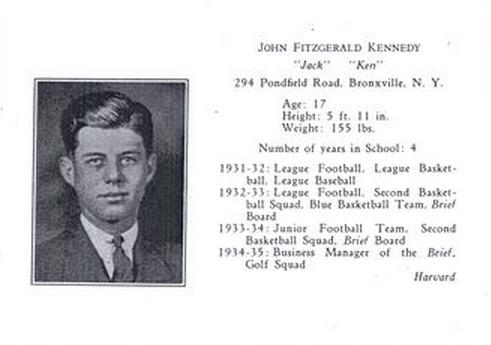
John Kennedy's Senior photo in the 1935 Choate yearbook.

John Kennedy’s Senior photo in the 1935 Choate yearbook.

I was recently told that Joe Kennedy might have made a gift of a needed movie projector to the school at that time. Perhaps it was to thank the headmaster for his patience, a patience that seems in retrospect worthwhile as the young Kennedy shifted gears more toward academics, or at least farther away from practical jokes. The headmaster would note later that he had become fond of the boy’s wit and spirit and conveyed to his son and successive headmaster, Seymour St. John, how much he’d respected how the young Kennedy had succeeded.

 …

 Late November in Connecticut is a perpetual dusk of erratic weather—black ice, brittle leaves fluttering over dead winter lawns, and a wind that devours wool and spits it out as wet snow. On Saturday, November 23rd, life itself was funereal. President Kennedy had been killed in Dallas. Except for a few boys wandering from the Winter Exercise building, students were in their dorm master’s living rooms watching the nonstop flood of news pouring in from Dallas and Washington news bureaus.

We were all processing the assassination. There was a weird, unspeakable dread that crept into us like the November cold, slid into us like an icy serpent to coil around our hopes and expectations. Everything was altered. The world of adults, the parents we innately trusted as children to keep life magically in order, took on a new dimension of vulnerability. It was if we suddenly awoke to a different movie of the world. Little did we realize what awaited us in the next seven years.

My dorm, Choate House, sat on a shallow valley’s shoulder, as did most of the central campus of larger dorms, library and dining hall. It was uphill from where I was walking that day and I remember the wind was blinding. As I crested the hill and lifted my head for a moment to get my bearings I was startled to see a truck with a media logo parked in front of our dorm. I quickened my pace, passed the truck, followed cables from the truck up through the front door and into the room I shared with a kid named Ned Palmer. Ned was sitting on the lower bunk bed under arc lights. A huge camera was perched on top of a tripod. Our room was flooded with blinding white light. It was easy to see that this was not going to be good. I looked at Ned. Ned looked at me.

“It’s the room,” he mouthed, giving me a heads-up.

My stomach dropped three floors. Of course, the Kennedy room. News team, News. Me in the news. Heart racing. No breathing. Panic started to creep in as I was ushered in to sit next to my roommate. White light, people in profile, voices instructing us to look toward our left, then to our right.  In one second I’d lost contact with the English language and any semblance of projecting a confident expression. I was a mind-blown mess falling into a pit of adolescent awkwardness with nothing to grab.

“So I see you boys have been reading Kennedy’s “Profiles in Courage,” the reporter announced as he pulled it from our bookshelf. I looked at Ned. Got nothing but deer eyes in the headlights. I had nothing. I’d never seen the book before. Did the reporter plant it? Someone had to say something. Suddenly it was no longer Eastern Standard Time. It was Universal Time, and each second thumped like heartbeat.

“Um, we are thinking about reading that for extra credit, “ I blurted, or something similar.  Right after I join the circus, find a plastic surgeon and change my name, I thought. We were devastated.  We are 15, we don’t know anything, go away, we wanted to scream.

Mercifully, by the time the piece came out it had been heavily edited. Most of the babbling had been cut. While my roommate seemed to retain a kind of stoic acceptance of the interview, even then I was aware that I appeared as if I were sitting in the front row of Judgement Day and things were not looking up. How does one answer a question like—“So what does it feel like to be in President Kennedy’s old room?” I don’t remember what I answered but I’m sure it wasn’t what I was feeling. The room and the question made me profoundly sad. 28 years before that question was asked, John Kennedy might have been sitting in the same spot making plans for Thanksgiving. I didn’t know how to say it then. I’m not sure I know how to say it now.

•••

Jedediah “Jed” Wheeler and I became friends during the early months of our freshman year. I don’t remember the circumstances but would venture to say that we shared a streak of youthful sarcasm if not full-blown comic cynicism (without the scornful inference).  We did not seem to gravitate toward the cliques that naturally self-construct within any group of people about to spend four years together in the sequestered social environment of boarding schools. Much has been written or suggested about the cruelty of cliques or the dissolution of the privileged. I didn’t see any of that. I saw kids whose family names were universally recognized along with kids like me from middle class family. We all struggled over our classes, played football and baseball, had meals and daily chapel together. Perhaps I am romanticizing, but I don’t remember hearing about one fight. We were far from the boys in Lord of the Flies.

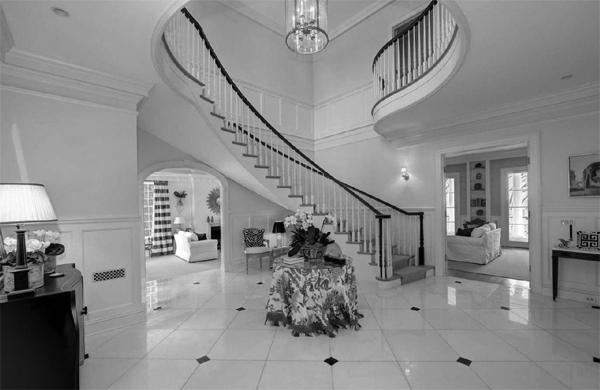
 As Thanksgiving approached, many of us with families too far away for short vacations looked forward to friends’ invitations. Jed invited me to Washington D.C to spend Thanksgiving with his mother, brother and two sisters.  My outstanding memory of that place—aside from Jed’s elegant and gracious mother— was its majestically sweeping staircase. It was cinematic. It begged for Greta Garbo. The ceilings were cathedral, the rooms like caverns of sunlight.

The Wheeler home in Washington, DC as it appears currently. The living room where the Zapruder film was shown appears at right.

The Wheeler home in Washington, DC as it appears today.  The living room where the Zapruder film was shown appears at right.

Jed and I were playing a game of Stratego after Thanksgiving dinner. As we moved our spies and scouts about trying to avoid bombs and capture flags, a family friend arrived and asked, “do you boys want to see a film?”

Hank Suydam was a Washington bureau chief at Time-Life. I remember him as being galvanic and having one of those energy fields that parted clusters of people as he walked through crowds. Jed recalls him as a “swashbuckler” journalist. He’d covered the Freedom Riders, the Jimmy Hoffa jury tampering case, the Bay of Pigs invasion, and was instrumental in Time-Life’s acquiring the Zapruder film on November 23, the day after the assassination. Time-Life bought the original and one copy.

Hank Suydam was walking around with the Zapruder film in his coat pocket and we were about to see one of the most important documents in American history projected on the Wheeler’s living room wall.

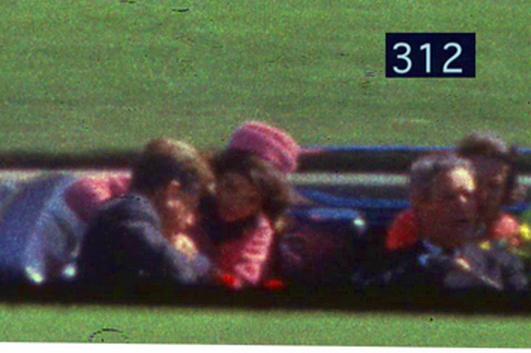
And there we were, Thanksgiving Day, the 6 of us, Jed, Jed’s two sisters and a brother, his mother, Hank Suydam, and me, watching as the wall of their living room burst into a half minute of terror, blood spray and the heartbreaking frenzy of Jackie Kennedy’s panicked reach for help.

Screen Shot 2013-11-19 at 2.45.45 PM

Zapruder Film Frame 312

To say that 27 seconds is a sliver of time is not to understand how that tragedy magnified the moment into a full stop, and plucked it out of the river of fluid moments to suspend it like a dark amulet over the brocade of history.

It is possible we watched the original Zapruder film, but more likely we watched its copy. Nevertheless, what we witnessed that day was more than the world would see for quite a while and more than our hearts and minds would ever want to experience again.  It did not seem as vague as subsequent media showings over the years. It was saturated with color and sharply defined.

Some curtain of naiveté about the world had been brutally ripped down to reveal a wider and more complex horizon of dark and dangerous possibilities.

To discover recently that the young President of the United States had celebrated his 1961 Inauguration in the same room added such a horrible counterpoint to that time 50 years ago that only now am I making room in my psyche to accept it.

Jed’s father had been a friend of JFK’s at Choate and his mother, Jane, had long been a staunch supporter of the Senator’s bid for the White House and had hosted many social events on his behalf at the Wheeler residence. To this day I cannot imagine her suffering as she watched that film on the wall of the room where he once celebrated the first day of his Presidency. In the same room, we witnessed his last.

As Jed wrote to me recently, “and then we went back to school.” I could hear his old voice saying that. By intonation, he’d gone to the meta-story. He was saying, “we went back to school to learn, but what we’d experienced that day in Washington was so profoundly sad, bizarre and powerful that it would flicker within us, just slightly out of focus like a handheld home movie, for the rest of our lives.

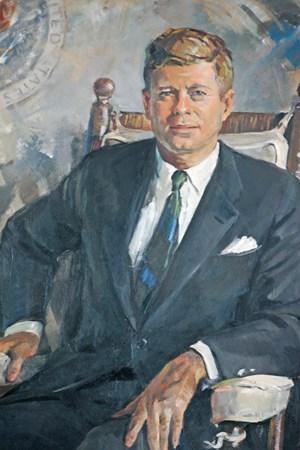
Portrait of John F. Kennedy by William F. Draper, commissioned by The Choate School. Although Kennedy could not attend the the presentation he sent a recording to then headmaster Seymour St. John.

Portrait of John F. Kennedy by William F. Draper, commissioned by The Choate School. Although Kennedy could not attend the the presentation, he sent a recording to then headmaster Seymour St. John.


..

The Spy Newspapers may periodically employ the assistance of artificial intelligence (AI) to enhance the clarity and accuracy of our content.

Filed Under: 00 Post to Chestertown Spy, 3 Top Story

Big Brothers Big Sisters of the Eastern Shore (BBBSES) Giving Tuesday Celebration: FriendsGiving Bingo.

November 21, 2025 by James Dissette Leave a Comment

Big Brothers Big Sisters of the Eastern Shore (BBBSES) is bringing the warmth of the season to Queen Anne’s County with a special Giving Tuesday celebration: FriendsGiving Bingo.

Community members are invited to gather with friends, enjoy good food and festive fun, and make a meaningful impact on local children—all in one joyful evening at Ten Eyck Brewing Company on Tuesday, Dec. 2.

This cheerful night of bingo, prizes, and community spirit kicks off at 6:30 p.m. at Ten Eyck Brewing Company (205 Grange Hall Rd, Queenstown, MD 21658). Every ticket and game card purchased helps fuel BBBSES’s mission to ensure children facing adversity are matched with caring mentors who help them discover their potential and brighten their path forward.
“Giving Tuesday is a beautiful reminder of what we can achieve when we come together,” said Executive Director Jessica Mimms. “FriendsGiving Bingo is the perfect way to celebrate kindness, connection, and community. Every dollar raised supports local children and provides encouragement they need to thrive. FriendsGiving bingo is a fun night out that truly changes lives here in Queen Anne’s County.”
Through customized development plans for each child served, BBBSES is seeing local youth grow in remarkable ways. Children are building confidence as they discover their strengths, developing competence through new skills and supportive guidance, and strengthening their sense of caring as they form meaningful, positive relationships. Together, these qualities empower youth to believe in themselves, make healthy choices, and contribute to their community with pride.
By attending FriendsGiving Bingo, guests are helping ensure local youth have the stability, support, and encouragement they need to grow emotionally, academically, and socially.


EVENT DETAILS
  • What: FriendsGiving Bingo Fundraiser
  • When: Giving Tuesday, December 2, 2025 — 6:30 p.m.
  • Where: Ten Eyck Brewing Company (205 Grange Hall Rd, Queenstown, MD 21658)
  • Tickets/RSVP: www.shorebiglittle.org/friendsgiving
For more Information or to make your own donation, please call 410-543-2447 or visit www.shorebiglittle.org. Keep updated on the latest agency highlights and news by following BBBSES on social media, Facebook @BBBSES, Instagram @shorebigs, and X @ESBigs

The Spy Newspapers may periodically employ the assistance of artificial intelligence (AI) to enhance the clarity and accuracy of our content.

Filed Under: 5 News Notes

ESWA Launches First Holiday Book Festival at Cult Classic Brewery, Dec. 13

November 6, 2025 by James Dissette Leave a Comment

The Eastern Shore Writers Association (ESWA) will host its first-ever Holiday Book Festival on Saturday, Dec. 13, from 11 a.m. to 4 p.m. at Cult Classic Brewery, 1169 Shopping Center Rd., just off U.S. 50. The event brings together more than 30 authors from across Delmarva for book sales, signings, readings, and giveaways—plus on-site gift-wrapping for holiday shoppers.

Now in its 40th year, ESWA is best known for its Bay to Ocean Writers Conference each March and the annual Bay to Ocean literary journal. “We wanted to add something new that serves writers and invites the public in,” said festival coordinator Brent Lewis. “Book festivals can feel stuffy; this one is meant to be fun.”

In addition to ESWA’s own Bay to Ocean Review, literary tables will include the Baltimore Review and Poetry X Hunger, a nonprofit poetry initiative that raises funds to combat food insecurity. The author lineup spans genres—poetry, children’s books, history, and fiction—reflecting the region’s wide-ranging literary community.

Lewis said the choice of venue was deliberate. Cult Classic is a brewery, restaurant, bar, and performance space known for concerts, comedy, and off-beat community events. It also hosts a regular author series, a popular book club, and a monthly writers’ group. “We leaned into a place that already supports the arts,” Lewis said. “Come for the hospitality—stay to meet writers you know and discover new ones.”

Headlining authors include Jim Duffy, whose Secrets of the Eastern Shore project and six regional history/travel books have a devoted following; David Healey of Chesapeake City, author of some 20 titles including Civil War and World War II thrillers and essays; and inspirational novelist Amy Schler. For several emerging writers, Lewis noted, the festival will mark their first chance to meet readers face-to-face.

With brick-and-mortar bookstores dwindling in many Shore towns, organizers see the festival as a practical boost. “Authors have fewer places to share their work,” Lewis said. “This creates a lively, local option—and books make great gifts.”

The ESWA Holiday Book Festival is open to the public. Attendees are encouraged to enjoy Cult Classic’s food and beverages while browsing signed titles from Delmarva writers.

For media inquiries or to schedule interviews, contact Brent Lewis at 410-310-8216 or [email protected].
More information: ESWA (easternshorewriters.org) and Cult Classic Brewery (cultclassicbrewing.com).

The Spy recently interviewed Brent Lewis about the Holiday Book Festival.

This video is approximately five minutes in length.

The Spy Newspapers may periodically employ the assistance of artificial intelligence (AI) to enhance the clarity and accuracy of our content.

Filed Under: 1A Arts Lead, 6 Arts Notes

John Lewis: Guiding Gunston’s Next Generation

October 7, 2025 by James Dissette Leave a Comment

http://

When John Lewis arrived at The Gunston School sixteen years ago, he wasn’t yet the seasoned Head of School he is today; he was a young educator drawn to what he calls “the ecosystem of school,” a living, breathing network of teachers, students, and ideas that thrive when curiosity and purpose align.

Lewis grew up in Montgomery County and attended a large public high school before heading to Georgetown University, where baseball first brought him to campus. But academics quickly took hold. “I became more of an academic than an athlete,” he says. His work as a resident assistant awakened a deeper interest in education, which led to his first teaching post at Culver Academies in Indiana.

From there, Lewis’s path wound through international schools in Quito, Ecuador, and Singapore, experiences that deepened his understanding of cultural and educational diversity. He went on to earn master’s degrees from both Harvard and Columbia before returning to the U.S. to take on leadership roles in New Jersey schools. When a headhunter called about “a little school in Maryland looking for a young leader,” he followed his instincts east—and never looked back.

Sixteen years later, Gunston’s wooded waterfront campus just outside Centreville reflects Lewis’s philosophy of education as both intellectual rigor and ethical grounding. “We’re a community of choice,” he explains. “Families come because they believe in our values—academic excellence, personal attention, and environmental stewardship.”

While he trained as an English teacher, Lewis now teaches AP Government, a course he calls perfectly suited to today’s ever-changing political landscape. “There’s never a day without a major headline to discuss,” he says. The class keeps him close to students and grounded in the daily pulse of learning.

Lewis emphasizes that Gunston’s strength lies in its intimacy: a culture where no student can truly get lost, where teachers and students share respect for each other. “High school kids are a lot of fun,” he says. “Watching ninth graders arrive uncertain and leave as confident young adults; that’s the best part of this job.”

As both educator and parent, and now that his own daughter is now a Gunston student, Lewis experiences the school from both sides. “It’s wonderful to see her challenged and supported by the same teachers I work with,” he says.

Throughout his role as Head of School, Lewis holds close to his mantra : “The question ‘Where do I want to go?’ really begins with ‘Who am I?’ When students understand themselves, they make better choices—for college and for life.”

For those who have never visited the 75-acre campus along the Corsica River, Lewis encourages them to stop by.  For more about The Gunston School, go here.

This video is approximately nine minutes in length.

The Spy Newspapers may periodically employ the assistance of artificial intelligence (AI) to enhance the clarity and accuracy of our content.

Filed Under: Archives, Spy Chats

Art and Missiles: A Children’s Book for Ukraine

August 24, 2025 by James Dissette Leave a Comment

Today is Ukraine’s Independence Day commemorating its 1991 sovereignty from the Soviet Union. For me it has personal resonance.

In October 2023, I received a short email that filled me with dread.

“Sketches will be late. Missiles.”

For several months I had been working with Yana Holubiatnikova, an artist in Kherson, Ukraine, a city devastated by the seven-month Russian occupation in 2022, the destruction of Khakhovka dam, and the daily barrage of missiles and drones. I understood then that in Ukraine, survival was measured only by the day.

Once home to 300,000 people, Kherson saw 220,000 flee as refugees, many to Poland. About 80,000 stayed behind—whether by choice, necessity, or sheer refusal to leave. But numbers cannot convey what survival there means: the heartbreaking knowledge of children stolen, the discovered proximity of torture houses, the erosion of safety in every street.

“I haven’t moved anywhere, I’m staying in Kherson, working both at home and in the workshop,” she wrote after the occupation.

Long silences and reports of continued assaults on Ukraine became the daily context of our communication as we worked together conjuring the art for a children’s book.

I came to know Yana that spring, after the Russian occupation ended, when I was contracted to design a children’s book raising awareness and support for Ukraine. As part of the agreement, I was to help select a Ukrainian artist to create more than a dozen color illustrations for the manuscript by Dr. Janice Cohn, a children’s book author and psychotherapist. Janice, a donor to the Ukraine Children’s Action Project (UCAP), contacted the organization’s co-founder, Dr. Irwin Redlener to see if they could recommend a Ukrainian artist. She was then put in touch with UCAP’s Regional Director, Yuliia Kardash, who spent many hours researching artists who might be suitable for the project, and finally recommended Yana. After reviewing Yana’s work, Janice and I agreed she was the perfect choice. Our correspondence began soon after.
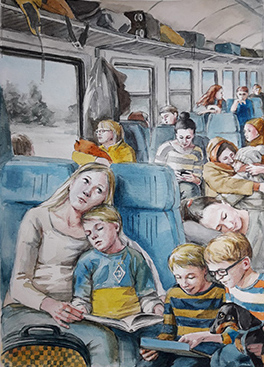
Early in our communication, Yana described painting as both her livelihood and her way of searching for meaning. Over the past year she had mounted three solo exhibitions—two in Kyiv and one in Nikolaev—while also contributing to group shows in Kyiv and Odessa. She often works on four canvases at once, drawing inspiration from masters such as Michelangelo, Velázquez, Toulouse-Lautrec, Modigliani, Fechin, Alma-Tadema, and Vermeer.

Yana Holubiatnikova

In one email, I asked Yana how she survived the Russian occupation. She emailed back only, “We did the things we loved”, which I assumed meant that painters painted, musicians played music and others spent time engaging with family. Because other questions went unanswered, we no longer talked about the war.

“When I go home and see a car with the inscription 300 (means killed soldiers or citizens), I understand at what price the number 11 (of November, when Kherson was unoccupied),” Yana wrote.

And so began a fourteen-month, on again/off again project that transformed Janice’s and my concern over illustrations into constant worry about the artist’s life.

In my experience, traditional book design, whether for publishing houses or self-publishers, usually requires only a modicum of consultations, two or three sets of proofs and a final approval. Working on what would become titled Freedom Pancakes for Ukraine became an unexpected project not only because of our communication difficulties and issues about sending payment to a Ukrainian citizen, but that I had immersed myself in the daily concern for one woman, her son, and a whole nation’s safety.

Since neither of us spoke the other’s language, Yana and I labored through a translation app to agree on how each illustration would appear using both her innate artistic intuition and scene requirements (complex positioning of multiple people, expression, etc.) on our part. And, for all I knew, despite cross-checking, a word in the Ukrainian app expressing “joy” could have been slang for “potato.”  But she was kind, and rather than pointing out a translation problem simply asked for clarification. Some of the illustrations would take several more versions.
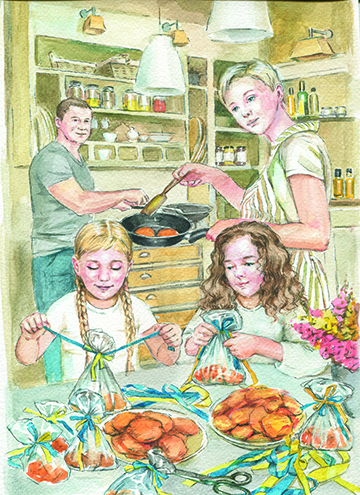
Another surprise at the front-end of the project was that Yana would be using watercolors instead of oils or other medium we had seen in her work. Watercolors are notoriously difficult or impossible to revise or modify, but despite this, we saw that her watercolor work displayed a sense of vibrancy that evoked more hope than the despair of war, fitting since the book was about acts of kindness, not the suffering of war, although that tone was always in the background. Also, watercolors dried faster, and Yana could handle them to transport them for scanning in Kherson.

Still, sometimes we wouldn’t hear from her for more than two weeks, all of us surmising the worst outcome as we searched through Ukrainian news sources for reports of heavy strikes in the Kherson region. Then:

“The entire area along the river is under fire. In the area where I live, shells arrive, but rarely. A big problem for people is hunting them with drones. There are few people in the city. Shops, hospitals, police, volunteer centers are open.”

…

When Russia’s invasion of Ukraine began in 2022, Janice  felt the same helplessness many of us did—yet she chose to answer her anguish by writing a children’s book. Janice turned to what she knows best: stories that heal. She is the author of several acclaimed children’s books, including The Christmas Menorahs: How a Town Fought Hate, the true story of a Montana community standing together against bigotry and hate. She has also written Why Did It Happen? Helping Children Cope in a Violent World and other works that center on compassion, resilience, and moral courage.

“When the war in Ukraine began, I grappled with my own sense of helplessness. I thought of the Ukrainian children caught up in the war, and American children and how they’re affected by a world with so much violence,” Janice said,

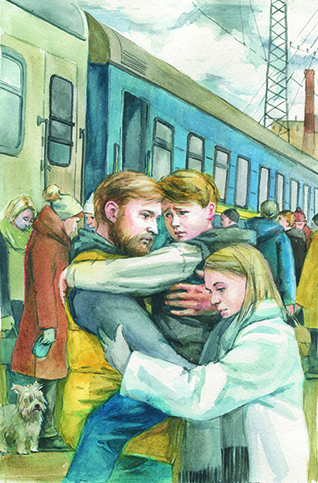
Janice’s new narrative grew out of her “conviction that kindness and compassion can steady children in even the darkest times, and that in helping others, we often find our own resilience.” The book became a parallel story about two children, a boy, Artem, escaping Ukraine with his mother, and a girl, Hannah, in America who became determined to raise funds for the war-torn country. Chapters became counterpoint narratives about each child’s experience.

Janice’s friend, Merrill Silver, a writer and English as a Second Language (ESL) teacher, who taught a number of Ukrainian refugees, introduced her to Paolo Volpati-Kedra, who volunteered with World Central Kitchen, at the beginning of the war, to help feed the Ukrainian refugees (mainly women and children) who were pouring into Poland.

He vividly described to Janice his experiences and observations with mothers and children at the Welcoming Center where he was stationed, which provided food, succor and kindness to the often traumatized refugees.

Janice and Merrill also came up with the idea of a favored Ukrainian dish—potato pancakes, “deruny”, to become the central metaphor for Hannah’s fundraising sale, echoed by a moment with Artem at World Central Kitchen when Chef Paolo reaches out to show kindness to the boy.

For Janice, the book became more than a story—it became a reminder that even small acts of care can repair the world. Yana eventually received some copies of the book.

After the book was published under Janice’s imprint, Le Chambon Press, named to honor the town in the south of France that saved hundreds of Jewish children and adults from the Nazis in occupied France during World War Two, our communication with Yana continued to be sporadic.

In early June, after receiving the books, Yana wrote:

“I received the books. I wanted to make a video with words of gratitude, but I didn’t have time, these days are very difficult for me. After a strong shelling my rabbit was concussed, he doesn’t move, I’m treating him. And there were other problems. I am very grateful to you.”

We were dismayed by the news. The rabbit had been her companion throughout the war. Six weeks later, a brief message arrived: “I am ok. My rabbit lived.” For Yana, survival is counted in such moments. And now her work, Freedom Pancakes for Ukraine, makes its way to children across the globe as a reminder that even in desperate times, kindness endures.


To find out more about the book, go here.

For more about Ukraine Children;s action Project, go here

For more about World Central Kitchen, go here.


The Spy Newspapers may periodically employ the assistance of artificial intelligence (AI) to enhance the clarity and accuracy of our content.

Filed Under: 3 Top Story, Archives

From Grief to Growth: Another Healing Journey at Camp New Dawn

August 19, 2025 by James Dissette Leave a Comment

http://

One of the Spy’s favorite summertime engagements is with Compass Regional Hospice’s Camp New Dawn, a grief retreat for children held annually at Camp Pecometh near Centreville. In past summers, we have attended daily activities and grief workshops but this summer we wanted to take part in the commencement that included the children and their family members. The video includes Camp New Dawn Director Rhonda Knotts, Counselor Georgia Wilkerson, Camp Coach/Mentor Jane Anthony, and Assistant Director Mark Wade, a few of those who honored the children who attended.

For 31 summers, Camp New Dawn has welcomed grieving children, teens, and families from across the Mid-Shore to a retreat where they can share loss, build coping skills, and discover they are not alone. The four-day, three-night camp, hosted by Compass Regional Hospice, has become a lifeline for families navigating the isolating experience of grief.

“Most of us don’t talk about our grief in everyday life,” said Camp Director Rhonda Knotts. “Here, you don’t have to explain why you feel the way you do. Just being with others who are grieving makes the world a little brighter.”

Each day at Camp New Dawn blends activities, workshops, and group sessions that help campers identify and express their grief. This year’s program included testimony from a 19-year-old who lost her mother at 12 and went on to publish a book of poetry about her loss. “The kids were in awe,” Knotts recalled. “Kids listen to kids.”

From there, campers joined in centering exercises with singing bowls and superhero yoga stances before breaking into groups to discuss coping skills. “You can’t expect anyone—let alone kids—to sit in a support group for 90 minutes straight,” Knotts said. “So we create variety: inspiration, movement, conversation. It’s about meeting them where they are.”

The camp’s success depends on its volunteers and the generosity of the community. Donations range from art supplies and drinks to home-cooked meals. One supporter provided pounds of homemade macaroni and cheese for a Friday night dinner, “because kids love mac and cheese,” Knotts said with a smile.

That generosity extends beyond supplies. Nearly one-third of this year’s adult “buddies”—volunteers who are paired one-on-one with a camper—were once campers themselves. Others return year after year, transformed by the experience. “Our hope is that volunteers leave wanting to shout it from the rooftops,” Knotts said.

Georgia Wilkerson, a longtime Compass hospice nurse, has volunteered at Camp New Dawn for more than 20 years. Today, she helps lead grief groups.

“Showing up is the hardest part,” she said. “Once they’re here, we praise their courage and then guide them through activities that give language to what they’re feeling. A tummy ache, a headache—it might be grief. We help them connect the dots.”

For some children, words aren’t enough, so counselors use art, music, and color to help them express feelings. “What color is your grief?” Wilkerson might ask. “Sometimes that opens the door.”

Since its founding in 1994, Camp New Dawn has remained central to Compass’s mission. Knotts said the organization’s leadership is committed to its future. “Not every hospice has the resources to run something like this,” she said. “But our CEO told me recently: as far as she’s concerned, we’ll do whatever it takes to make sure Camp New Dawn never dries up.”

For the hundreds who have passed through its doors, the camp offers more than activities and meals. It offers connection, resilience, and hope. As Knotts put it: “Grief is universal. But when you share it, healing becomes possible.”

For more about Compass Region Hospice, go here.


The Spy Newspapers may periodically employ the assistance of artificial intelligence (AI) to enhance the clarity and accuracy of our content.

Filed Under: 1 Homepage Slider, Archives

Compass Offers Volunteer Training October 21 and 23

July 31, 2025 by James Dissette Leave a Comment

Compass will be offering a two-day training session this October for individuals interested in becoming patient care volunteers. We are especially looking for volunteers in Caroline County to help support local families.

Training Dates: October 21 & October 23
Time: 9:00 a.m. – 4:00 p.m.
Location: Hope & Healing Conference Room, Barnette Center
255 Comet Drive, Centreville, MD 21617

Patient care volunteers provide companionship to patients, give caregivers much-needed breaks, assist with administrative duties, and support grief services. We’re also seeking Veteran volunteers to participate in our We Honor Veterans program.

The training will cover a wide range of topics, including:

  • Introduction to hospice care
  • The end-of-life journey
  • Spiritual care in hospice
  • Stages of grief
  • Effective communication
  • Family dynamics
  • Stress management and caregiver self-care

Compass depends on the support of more than 200 volunteers of all ages who give their time in meaningful ways. In addition to patient care roles, we are also seeking volunteers for Compass Closet (formerly Estate Treasures), our upscale thrift shop that helps fund patient care.

Whatever your reason for volunteering, there’s a place for you at Compass.

For more information on volunteer opportunities, or to register for our upcoming fall training, contact Jessica Sheubrooks at [email protected] or 443.262.6045.

The Spy Newspapers may periodically employ the assistance of artificial intelligence (AI) to enhance the clarity and accuracy of our content.

Filed Under: Archives, Health Notes

Roots of Classic Rock Coffee House Performance by Kathy Jones July 31

July 4, 2025 by James Dissette Leave a Comment

Back by popular demand, Church Hill Theatre’s own Kathy Jones will take us on a journey through rock’s transition from Folk music and early Rock ‘n Roll to the Classic Rock era. Kathy performs with her guitar on a riser in the middle of the theatre, creating a cozy, warm vibe that’s interactive with the audience, even taking on a few requests. Her coffeehouses are pop-up, one-night only, and short notice events. This one is free to the public but donations to CHT will be accepted.

Kathy’s last coffeehouse sold out, so please make a reservation quickly. Table seating is available for small groups, but these go fast. Refreshments, including coffee, will be available for purchase. The show begins at 7:00 pm and will last approximately two hours. Ticket reservations for Thursday, July 31 are available at the CHT website: churchhilltheatre.org.  The theatre is located at 103 Walnut Street in Church Hill, MD.  Call the office at 410-556-6003 if you have questions.

Kathy has serious singing chops, from years with Sweet Adelines groups, gigs in Key West and St. Augustine and lead roles in musicals such as Matilda, the Musical, Fiddler on The Roof, and The Little Shop of Horrors. You can catch her with other CHT favorites singing for CHT’s supper at a Ram’s Head Give Back Night in Stevensville on July 16 from 4 to 6 pm. Kathy is the Chairperson of the Church Hill Theatre. She resides on Kent Island with her husband, Bruce.

For more about Church Hill Theatre go here.


The Spy Newspapers may periodically employ the assistance of artificial intelligence (AI) to enhance the clarity and accuracy of our content.

Filed Under: 1A Arts Lead, 1C Commerce, Senior Notes

  • 1
  • 2
  • 3
  • …
  • 9
  • Next Page »

Copyright © 2026

Affiliated News

  • Chestertown Spy
  • Talbot Spy
  • Cambridge Spy

Sections

  • Sample Page

Spy Community Media

  • Sample Page
  • Subscribe
  • Sample Page

Copyright © 2026 · Spy Community Media Child Theme on Genesis Framework · WordPress · Log in