
MENU

Sections

  • Home
  • Education
  • Donate to the Centreville Spy
  • Free Subscription
  • Spy Community Media
    • Chestertown Spy
    • Talbot Spy
    • Cambridge Spy

More

  • Support the Spy
  • About Spy Community Media
  • Advertising with the Spy
  • Subscribe
February 14, 2026

Centreville Spy

Nonpartisan and Education-based News for Centreville

  • Home
  • Education
  • Donate to the Centreville Spy
  • Free Subscription
  • Spy Community Media
    • Chestertown Spy
    • Talbot Spy
    • Cambridge Spy
1A Arts Lead

Spy Art Review: Centennial Salute to a Printmaking Icon by Steve Parks

January 15, 2026 by Steve Parks Leave a Comment

A couple dozen chairs were set up for an audience expected to attend a panel discussion with five artists for the opening of the “Transference: Color in Print” exhibit at the Zach Gallery in downtown Easton on Jan. 9. The seating was short by a factor of at least five as an estimated 125 people showed up for the occasion. Standing room was augmented by one or two who chose to sit on the gallery floor.
Surely many of those attending were friends of these artists or admirers of their work. But the late Robert Rauschenberg, the centennial of whose birth on Oct. 22, 2025, is being observed at events all over the art world, was the absentee honoree. Many, if not most, in the audience had seen the current show at the Academy Art Museum, dominated by his legendary100-foot-long “Chinese Summerhall” photographic print. Each of the artists whose works line the walls of the Washington Street gallery said they were deeply influenced by Rauschenberg.
While only a few pieces seemed to directly reflect one example or another of Rauschenberg’s free-ranging creativity in most any visual art medium, together their works picked up on aspects of his groundbreaking techniques in printmaking and transference involving all manner of sources, from drawings and photographs to found-on-the-street flotsam.
Moderated by Anke Von Wagenberg, a former Academy Art curator and currently in charge of curating international collaborations at the American Federation of Arts, the panel of artists fielded questions from her and from members of the audience who demonstrated appreciable expertise of their own.
Stephen Walker, a classically trained artist with a master’s degree from the University of Memphis, cited Andy Warhol and his silkscreens of celebrities in entertainment and politics – from Marilyn Monroe to Mao Zedong – along with Rauschenberg, for expanding his printmaking horizons and to “run with it” in a variety of techniques. In this show, his serigraph entitled “Gauze” oozes a textured, multihued arrangement of that thin, translucent fabric often used in bandages.
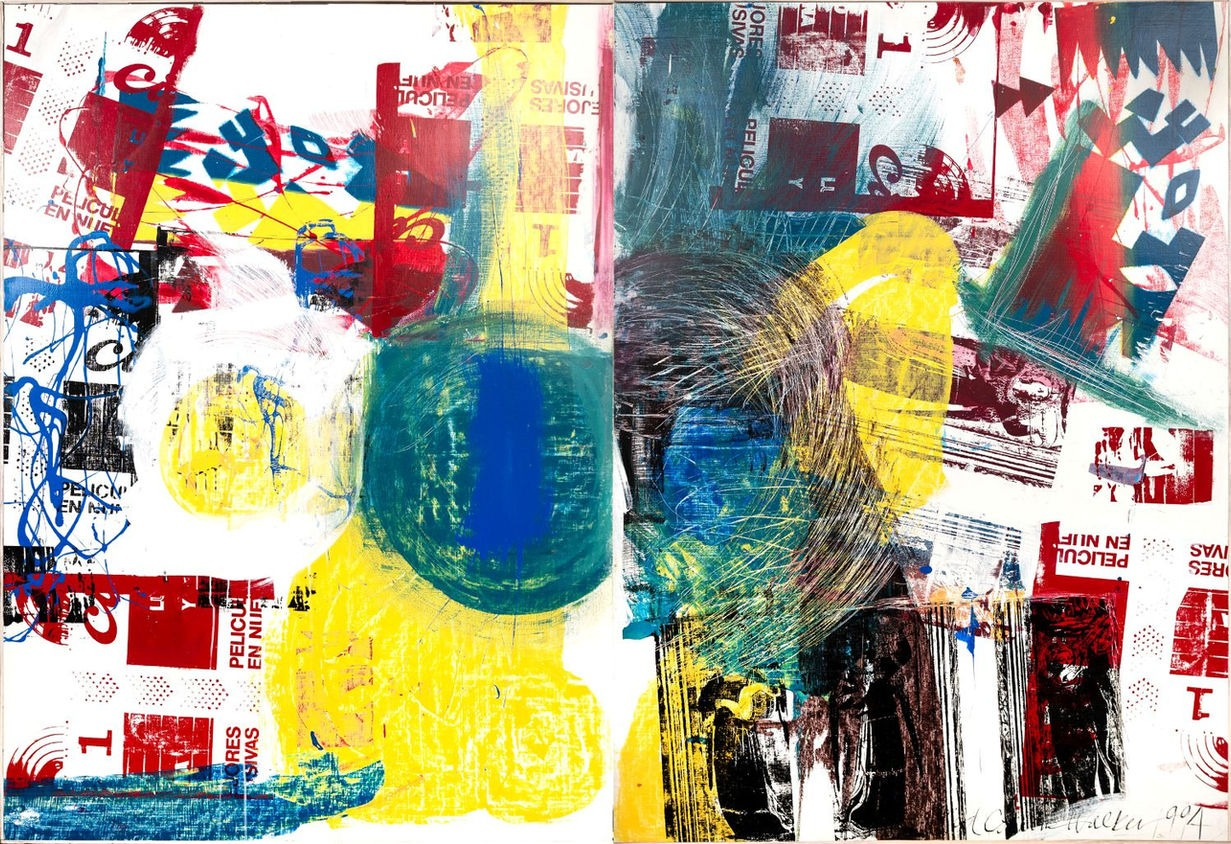
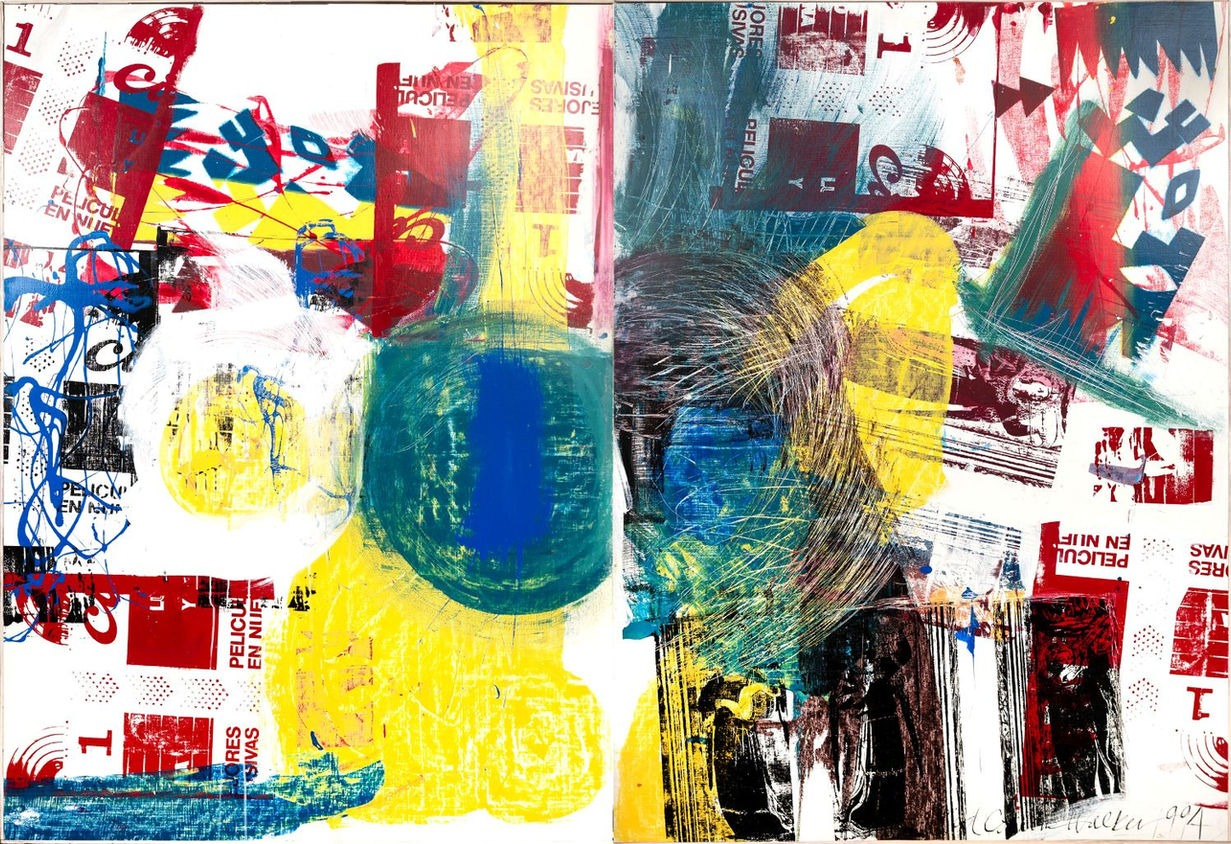
Saturn’s Gate” by Cid Collins Walker at the Zach Gallery

Cid Collins Walker said Rauschenberg “influenced me and generations of artists” – almost directly so in her case as she worked for years with Larry Wright, Rauschenberg’s master printmaker. Other influences extended to the performing arts, including designs for Merce Cunningham’s dance company. In this show, her giant serigraph diptych “Saturn’s Gate,” combining print-media transference with colorful abstract shapes on a mahogany surface, is among the most Rauschenberg-inspired pieces, along with her “Homage to Billie Holiday and Marcel Duchamp,” a nod to both performing and visual art.

Rosemary Cooley, a world traveler who spent decades abroad, is likely more familiar with China than Rauschenberg and his collaborator, Donald Saff, on assembling “China Summerhall,” in that she spent four years living in Shanghai. There she studied with an ink-painting master from whom she learned myriad printmaking techniques. Her skills are keenly displayed on her four-square monoprint images on special Arches paper that suggests a whirling galaxy and dying stars, proving that what she learned and mastered in China “satisfies my urge to paint.”
“Transference allows you to do that,” Sheryl Southwick added by way of explanation to the panel audience. As a member of Aqua Regia Press at Anne Arundel Community College, “We all have our own stones,” she said, referring to the flat limestone slabs used for transferring images drawn separately on paper or other material, then applied by chemical process and firm pressure to create a lithograph. Southwick teaches lithography in Academy of Art classes and has exhibited her work there and at Easton galleries, including in this show at the Zach. Her “Floating Monotype” depicts scattered puzzle pieces that appear to be airborne above an abstract background.
Kevin Garber joked that as a teacher and master printer at Washington University in St. Louis, he could “steal ink and paper for my own work,” some of which is part of the Whitney Museum of Art collection in New York. He’s on his own now, supplying material for his prints out of his St. Michaels studio, including many of birds. One of them in the Zach show struck me, a Baltimore Ravens fan, as a sad-sack profile of an ornithological mascot following the team’s recent crushing defeat by the Pittsburgh Steelers that ended its season.
The Zach Gallery show complements the Rauschenberg exhibit running through early May at the Academy Art Museum. See them both if you haven’t already.
‘TRANSFERENCE: COLOR IN PRINT’
Through Feb. 28 at Zach Gallery, Prager Family Center for the Arts, 17 S. Washington St., Easton. zachgalleryeaston.com (See “100 Years/100 Feet of Rauschenberg at the Academy” on the Home Page under “Spy Highlights.”)

The Spy Newspapers may periodically employ the assistance of artificial intelligence (AI) to enhance the clarity and accuracy of our content.

Filed Under: 1A Arts Lead

Spy Art Review: 100 Years/100 Feet of Rauschenberg at the Academy by Steve Parks

December 18, 2025 by Steve Parks Leave a Comment

Born a century ago in Texas, Robert Rauschenberg lived and worked most of his life in New York City and Captiva Island, Florida, where he died at 82 in 2008. He would have turned 100 on Oct. 22, 2025, which accounts for the Rauschenberg centenary commemorations at art institutions all over the globe. Certainly not the least of these is “Rauschenberg 100: New Connections” at Easton’s Academy Art Museum – the centerpiece of which is “Chinese Summerfall,” a 100-foot-long photographic frame-by-frame panorama shot and assembled in 1982-’83.

Due to the scale and delicate handling it requires, this singularly epic exhibit all its own is rarely displayed in public. So how did it land in Easton, you ask? Donald Saff, Rauschenberg’s collaborator on “Chinese Summerfall,” lives in Oxford, also home to his studio, where parts of the 100-foot-long photograph, among several other of the artist’s major projects, were put together.

At the time, 1982, Rauschenberg was working closely with Saff at the University of South Florida in Tampa, where his Graphicstudio was located. Rauschenberg was already renowned for, as he put it, “connecting art to life,” which incorporated brushstrokes, snapshots, fabric, everyday found objects, plus newspaper and magazine clippings into collage commentaries he called “Combines” – a hybrid he invented by melding aspects of painting, sculpture, and photography.

“Chinese Summerfall,” however, is a purely photographic endeavor, the artist described as a “compositional tale unrolled according to its own appetite. What is already there dictates what comes next,” he said, before adding: “The witness – my camera – recorded not everything we saw, just everything we looked at.”

Indeed, there is a randomness to what Rauschenberg and his camera “looked at” in his 100-foot photo winding its way around AAM’s Lederer Gallery – encompassing urban alleys, ill-lit hotel rooms, wall paintings and statuary fragments next to utility poles. But there are manipulated scenes, too – a gnarled tree trunk spliced against a mountain vista at the start of the ribbon of photographs, while midway through, a pair of spoked wheels superimposed over a section of the Great Wall of China, concluding with understated irony – a sideways huddle of chickens.

A potential political controversy was averted, Saff recalls, when Chinese authorities objected to a blurry image of Lenin and Stalin together. When asked to relinquish the negative, Saff surrendered an unexposed roll of film instead.

Across the hall in the Healy Gallery, 30 framed stills from Academy Art’s permanent collection include a few that didn’t make the cut for the 100 feet of “Chinese Summerfall.” But most instructive is the large printer’s proof typical of the 8-to-10-foot sections into which the finished Rauschenberg Foundation project was divided before final assembly.

As a follow-up to “Chinese Summerfall,” Saff also collaborated on the Rauschenberg Overseas Culture Initiative which brought the artist’s work to nations isolated from the influence of Western democracies, including the Soviet Union, East Germany, Cuba (then ruled by Fidel Castro), Chile (under dictator Pinochet), and Venezuela, now much in the news.

The ROCI world tour culminated in a 1991 National Gallery of Art exhibition in Washington, after which Roschenberg was awarded the Hiroshima Prize for Peace through Art. About that time, Saff moved to Oxford, where he opened Saff Tech Arts, representing, along with Rauschenberg, other such innovators as Roy Lichtenstein, Nancy Graves, and James Turrell.

For a wider appreciation of Rauschenberg as America’s and perhaps the world’s most original and relatable post-World War II artist, consider a visit to his adopted hometown to take in “Robert Rauschenberg’s New York: Pictures From the Real World” at the Museum of the City of New York, running through April 19, 2026. The show traces his evolution from photography into an integration of painting, sculpture, and found-object hoarding to create a new art form of collage mosaics.

Steve Parks is a retired New York arts critic now living in Easton.

‘RAUSCHENBERG 100: NEW CONNECTIONS’
Through May 3, 2026, Academy Art Museum, 106 South St., Easton.

Related programs: Pianist Thomas Moore performs “White Paintings and Silent Music – John Cage and Robert Rauschenberg in the 1950s,” Friday, Jan. 16, 2026; the artist’s son Christopher’s lecture: “Robert Rauschenberg’s Photographic Legacy in Context,” Saturday, Feb. 21, and collaborator Donald Saff’s lecture: “Robert Rauschenberg in China and the Overseas Cultural Interchange,” Friday, March 27, all at 6 p.m. Other current AAM exhibits: “Clay: The Power of Repetition,” through Feb. 15, 2026, and “The Skin of Water,” through Feb. 22, academyartmuseum.org

The Spy Newspapers may periodically employ the assistance of artificial intelligence (AI) to enhance the clarity and accuracy of our content.

Filed Under: 00 Post to Chestertown Spy, 3 Top Story, Spy Highlights, Spy Journal

Spy Review: A Choral Rose for Christmas by Steve Parks

December 6, 2025 by Steve Parks Leave a Comment

Easton Choral Arts Society

Easton Choral Arts Society played its annual Christmastime songfest, “A Winter Rose,” before a full house in its new concert venue, St. Mark’s United Methodist Church, on Friday night, Dec. 5, ahead of a matinee encore performance on Saturday.

Moving from its longtime home at Christ Church in the Arts District of downtown Easton, St. Mark’s can accommodate a larger audience as well as more performers – singers and instrumentalists – upfront. Not to mention easier parking.

Some of those advantages were evident on opening night: First, a sold-out concert drawing 312 fans of choral music, plus 10 professionals as guest instrumentalists accompanying the 75-voice chorale.

Conducted by artistic director Alexis Ward, the concert opened with Tchaikovsky’s “Waltz of the Flowers” from “The Nutcracker” performed by the instrumental ensemble of Rebecca Silverstein on flute, violinists Joel Alarcon, Martin Monnett, Sachiho Murasugi and Daniel Seymour; violists Merideth Buxton and Nevin Dawson; cellist Denise Nathanson, pianist Ellen Grunden and Stephanie Stabley on percussion.

Next, with assistant director Amy Morgan accompanying on piano, prepare yourself for the lush impact of so many voices singing in ecclesiastical harmony on Michael Praetorius’ “Lo, How a Rose E’er Blooming,” followed by the boisterous familiarity of “Deck the Halls” and, completing the flowery triptych, “The Rose,” released in 2017 by Ola Gjeilo embracing the thorny enigma of the fragile beauty of its bloom.

Amanda Manning, Siroon Topjian and Carys Pokrywka give the rest of the chorus a breather while they sing a sweet “Cherry Tree Carol,” topped off with the first of two audience sing-alongs: the traditional English carol “The Holly and the Ivy.” and later “O Christmas Tree” whose tune was borrowed by James Ryder Randall for “Maryland, My Maryland,” which was the state’s anthem from 1939 to 2021. The General Assembly retired it due to its conspicuous Confederacy leaning. (One stanza refers to President Lincoln as a “despot” and the Union Army as “Northern scum.”) Happily, “O Christmas Tree” – also known by its German title “O Tannenbaum” – is free of politics.

Between the sing-alongs, tenor Patrick Mason delivers Herbert Howells’ “A Spotless Rose” as a flawless lullaby to a blessed newborn, followed by the full choir on Cecilia McDowall’s “Of a Rose” cantata. Various vocal sections trade places according to each piece’s choral arrangement, accompanied by a small instrumental ensemble.

“On This Silent Night,” a 2022 song by Sarah Quartel conjuring the creature comforts of a warm fire on a wintry night, is an SATB arrangement for four voices – soprano, alto, tenor, bass. It leads off a set that includes two songs of ancient Catalonian and Cornish traditions, “Cold December Flies Away” and “The Holly Bears a Berry,” respectively.

“The Huron Carol,” Canada’s beloved 17th-century ode to Christmas, features soprano soloist Justina Holte with melodic back-up by Amanda Manning, Jillian Downes and a full chorus, will have you feeling “It’s Beginning to Look a Lot Like Christmas,” written by Meredith Willson, best known for the Broadway classic “The Music Man.” Crooner Perry Como later amended the lyric to “Beginning to Look a Lot Like Christmas.”

Soloist Scott Clausen stands in for Frank Sinatra in the holiday hit originated by the late Chairman of the Board, “Mistletoe and Holly,” in an arrangement by artistic director Ward, leading to the concert’s penultimate carol, Irving Berlin’s “White Christmas,” ubiquitous this time of year. There was even a little snow on the ground Friday night. The rousing finishing number, “Here We Come A-Wassailing,” may leave you a-humming all the way home from “A Winter Rose.”

With its roomier home base, you can expect an even larger Easton Choral Arts Society as early as its next concerts, “The Wings of Song,” April 24 and 25, 2026, celebrating aviation and the human longing to rise above it all.

ECAS president Emily Moody, who also sings alto with the company, announced that auditions will no longer be required to become a choir member. “To join in our singing,” she said, “you only need a love of music and a willingness to practice and learn.”

Of the recruitment of new singers, artistic director Ward added, “If you love great music, good people, and the feeling of being part of something meaningful, come sing with us this season.”

A WINTER ROSE’ HOLIDAY CONCERT

Easton Choral Arts Society’s opening night at its new home, St. Mark’s United Methodist Church, 100 Peachblossom Rd., Friday, Dec. 5. A second concert at 4 p.m. Saturday, Dec. 6.

Steve Parks is a retired New York arts critic now living in Easton.


The Spy Newspapers may periodically employ the assistance of artificial intelligence (AI) to enhance the clarity and accuracy of our content.

Filed Under: 00 Post to Chestertown Spy, 1A Arts Lead

Spy Review: MSO’s Opera-Flavored ‘Holiday Joy’ by Steve Parks

December 5, 2025 by Steve Parks Leave a Comment

The Mid-Atlantic Symphony Orchestra’s Grammy-winning music director, Michael Repper, nominated for two more Grammys to be awarded in 2026, led the first of three “Holiday Joy” concerts Thursday evening, starring guest soloists from the opera circuit, soprano Kresley Figueroa and baritone Jonathan Patton.

Jonathan Patton

Following an opening medley of seasonal favorites, including Rachael Yokers’ flute-solo mating call in “Let It Snow, Let It Snow” by Sammy Cahn and Jule Styne, Patton and Figueroa showcased their vocal and acting chops on arias from timeless operas that, nevertheless, span three centuries. 

 The accomplished young soloists – Figueroa performed in MSO’s 2024 New Year’s Eve concert and Patton is making his Mid-Atlantic Symphony debut – are paired in the Bei Mannern/Liebe Fuhlen aria from Mozart’s “The Magic Flute” with lyrics translating in English: “Men who feel the call of love/Do not lack a gentle heart” coupled with “To return that gentle feeling/Is a woman’s finest art.” Next, portraying Escamillo, Patton’s lyrical and dramatic range is delivered with the jaunty bravado of a bullfighter on “Votre Toast” (better known as “March of the Toreadors”) from Bizet’s Carmen.” 

Wrapping up the aria triple play, Figuero, perhaps autobiographically, sings the role of a budding soprano longing for opera superstardom in the polonaise from “The Barber of Seville” by Geronimo Gimenez. She makes her dream seem like a sure bet in this popular zarzuela – Spanish for comic opera.

   Hanukkah, which begins on Dec. 14, was rated an instrumental affirmation just before the Act I closing number, “Sleigh Ride,” conducted by the highest bidder of the pre-concert fund-raising dinner, vice chairman Philip Davis. He was assisted by staff consultant Mary Lou Tietz who supplied a whip to crack on the imaginary horses drawing the imaginary sleigh. (Despite the audible cracking sound, no actual horses were whipped.)

Kresley Figueroa

 After intermission, Figueroa returns to deliver a warmly felt Beverly Hills memory opener to “White Christmas,” before outdoing Bing Crosby on the greatest Yuletide hit ever written by a Jewish lyricist, Irving Berlin. (Personally, like Maestro Repper, I favor Mel Torme’s “The Christmas Song,” also making the “Holiday Joy” playlist, featuring a soulful horn solo by Beth Lunt in place of Nat King Cole’s tender reminiscence. Meanwhile, Christmas observers native to the Northern Hemisphere are reminded that Dec. 25th falls on the calendar, “In the Bleak Midwinter”: “Earth stood hard as iron, water like a stone” as written by Gustav Holst and soulfully sung by Patton. 

   On a lighter vein, “Little Bolero Boy” makes fun of what Repper calls two of the most monotonous tunes ever written – “Bolero” by Maurice Ravel and “Little Drummer Boy” by Katherine Kennicott Davis. Percussionist Dane Krich kept the beat going, and going, and going. 

    Figueroa and Patton cap the “Holiday Joy”  celebration with a stagecraft reading of “ ’Twas the Night Before Christmas” by Bill Holocombe, with full orchestral accompaniment directed by an effervescent Repper.
                                                  ***
If you missed Thursday’s performance and can’t make to the next two concerts on Saturday in Lewes and Sunday in Ocean City, you can catch the MSO Brass Quintet in the holiday spirit at 7 p.m. Friday, Dec. 19 at Community Church in Ocean Pines; 3 p.m. Saturday, Dec. 20 at Ellsworth United Methodist Church in Rehoboth Beach, and 4 p.m. Sunday, Dec. 21 at Christ Church in Easton. Also, at Christ Church, toast the arrival of 2026 with an early New Year’s Eve concert at 7 p.m., Dec. 31, of course, with the MSO and guest soprano Viviana Goodwin.

‘HOLIDAY JOY’ MSO CONCERT CELEBRATION

Thursday evening at Todd Performing Arts Center, Chesapeake College, Wye Mills. Upcoming performances; 7:30 p.m. Saturday, Cape Henlopen High School, Lewes, Delaware, and 3 p.m. Sunday, Ocean City Performing Arts Center. midatlanticsymphony.org

Steve Parks is a retired New York arts critic now living in Easton.


The Spy Newspapers may periodically employ the assistance of artificial intelligence (AI) to enhance the clarity and accuracy of our content.

Filed Under: 00 Post to Chestertown Spy, 1A Arts Lead

Spy Review: Cinematic Classical Gas, by Steve Parks

November 24, 2025 by Steve Parks Leave a Comment

From chamber music to movie scores, many high-brow composers could do it all. Chesapeake Music’s Sunday matinee “Interlude” performance – its final 2025 concert – featured five whose works, richly presented by the Catalyst Quartet, originally played in venues ranging from concert and opera halls to movie and TV screens.
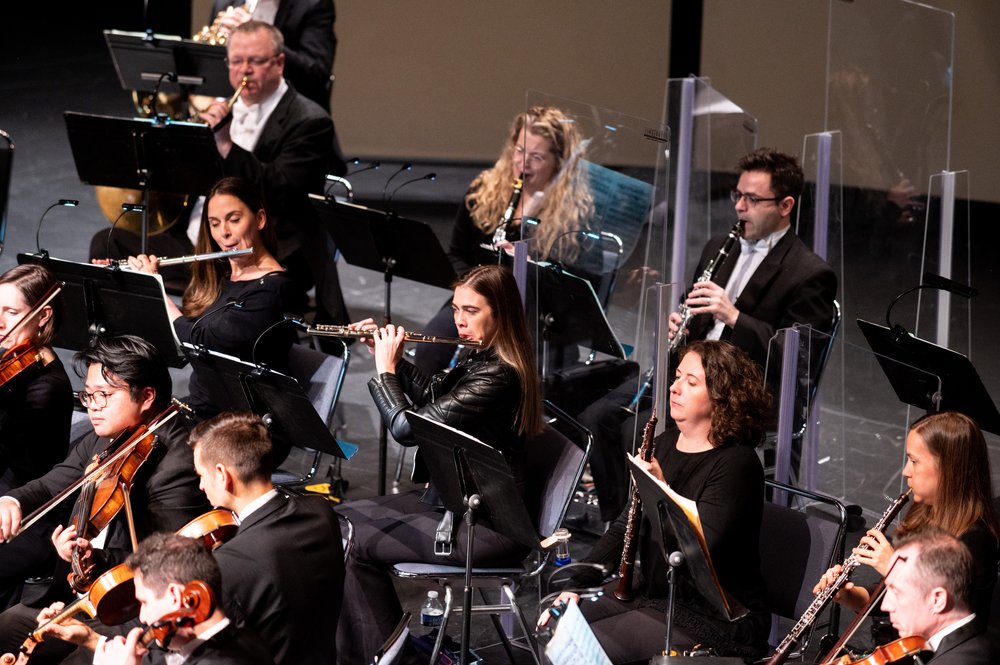
The program opened with John Adams’ “Fellow Traveler,” a short piece written as a birthday gift to his friend and collaborator Peter Sellars, with whom he wrote the 2005 opera “Doctor Atomic” about the life and career of Robert J. Oppenheimer – also the title character in “Oppenheimer,” winner of the 2024 best picture Oscar. The “father of the atomic bomb” was later investigated for communist sympathies, which made him a so-called “fellow traveler.” In his opening remarks, cellist Paul Rodriguez thanked Adams for his permission to play the piece, which is given only sparingly.

“Fellow Traveler” weaves together echoes of Adams’ “Son of Chamber Symphony” and his best-known opera, “Nixon in China,” also created with Sellars. His work is characterized by a minimalist style of repeating patterns mixed with the late Romantic influences of Mahler and others. Violinist Ali Fayette led much of the piece’s melodic theme, such as it is.

More minimalism followed with the next two selections by Max Richter and Baltimore native Philip Glass. Richter’s six-minute “On the Nature of Daylight” from his 2004 “The Blue Notebook” album may sound familiar to viewers of the popular streaming series “The Handmaid’s Tale” with its cycles of introspective harmonies, from a mournful all-stings opening to a brief violin solo deftly played by Karla Donehew Perez, introducing a new rhythmic theme.

Glass’ 18-minute String Quartet No. 3, written as a score for Paul Schrader’s 1985 film “Mishima: A Life in Four Chapters” about Japanese novelist Yoika Mishima, reflects each of the life chapters in six movements, building toward a finale of swelling bursts of energy climaxed by heaving sighs of relief – or is it regret? – led by the Catalyst violinists, including Fayette, who said Mishima was radicalized by Japan’s leanings to the West throughout decades of war in Afghanistan.

Two longer compositions comprised the second half of the concert, starting with Bernard Herrmann’s 20-minute “Echoes for a String Quartet.” In terms of music for the cinema, Herrmann’s award-winning career ranks among the greatest in the 20th century with credits spanning from Orson Welles’ “Citizen Kane” (1941) to Martin Scorcese’s “Taxi Driver” (1976). His string quartet figuratively echoes musical hallmarks from his illustrious career – short phrases repeated again and again while posing in varied dynamic tempos and dramatic situations which, as violinist Perez said, “makes you feel like you’re in a movie.” To that end, its emotional rollercoaster is tempered by thoughtful passages performed with delicate expression by cellist Rodriguez and violist Paul Laraia.

Of the five composers on the “Cinematic Refuge” program, Erich Wolfgang Korngold’s string quartet was the most classically “classic,” if you will. His 1933 quartet in four movements is considered the most “Viennese” in his body of work. It opens with an allegro of weeping and laughing sensibility followed by a larghetto of deeply felt melancholy followed by an intermezzo laced with his typically melodic charm and closing with a highly spirited and sweepingly danceable waltz. Quite Viennese, indeed, in violist Laraia’s words, “Romanticism as he colorfully created later in Hollywood.

But the stars of Sunday’s matinee were the four on-stage collaborators who so skillfully delivered precise, well-practiced and in-the-moment spontaneity

CATALYST QUARTET: ‘CINEMATIC REFUGE’

Chesapeake Music concert, Sunday, Nov. 23, Ebenezer Theater, Easton. chesapeakemusic.org

Steve Parks is a retired New York arts critic now living in Easton.

The Spy Newspapers may periodically employ the assistance of artificial intelligence (AI) to enhance the clarity and accuracy of our content.

Filed Under: 1A Arts Lead

Spy Review: MSO Salutes 3 of the All-Time Greats by Steve Parks

November 7, 2025 by Steve Parks Leave a Comment

It’s not unusual that a guest conductor will bring a different vibe in his choice of a classical repertoire to present to a one-time-only audience. But it is a bold step to promote the concert as “Echoes of Greatness.”

For much of his three seasons as music director of the Mid-Atlantic Symphony Orchestra, Michael Repper has mixed in works by lesser known composers – often discovered or rediscovered after decades and even a century of obscurity, underrecognized in their lifetimes as minority or female artists.

George Jackson, a native and resident of London whose Stateside contract as music director of the Amarillo (Texas) Symphony was extended in 2024 for three years, says his program “resonates with the legacy of three of history’s most extraordinary composers – Beethoven, Mozart and Mendelssohn – who represent the great orchestral voices of Vienna, Germany and London.” For his guest gig, Jackson conducted a full plate of music by this trio among the foremost long-dead European composers of all time. Together, their masterpieces comprise about as hearty a meat-and-potatoes menu as you can digest – but with a bit of a twist.

The concert opens with a Beethoven overture. He wrote a great many of them, presumably to keep himself solvent. His genius was not evident in some of those pieces. But the Coriolan Overture to the opera “Fidelia” is an exception. (Among his many attributes as a conductor, Jackson is noted for his fluency in operatic scores.) Beethoven sticks to “Fidelia’s” two dramatic themes: the title Roman Empire general’s quest for revenge against his usurpers and his mother’s plea for him to avoid an inevitably tragic end. Sudden bolts of C minor chords pulsate with Coriolan’s rage, featuring the bombast of timpani (Dane Krich) and brass, led by principals on trumpet (Guy McIntosh) and horn (Anne Nye). The tender E-flat major sonata theme of the mother’s fears for her son’s fate, conveyed by lower strings (viola and cello principals Yuri Tomenko and Katie McCarthy), brings to mind, in part, the immortal symphonies Beethoven wrote before and after the overture – Symphony No. 3 (“Eroica”), possibly inspired by Mozart’s Symphony 39, which follows Coriolon on the program, and the thunderous Fifth.

The opening of Mozart’s Symphony No. 39, written at a feverish pace with two other of his late symphonies, demonstrates how far ahead of his time Mozart was regarding clarinets. Barely accepted as an orchestral instrument in his time, the clarinet is prominently featured in what’s also known as his “Eb” symphony, led in this concert by Brian Tracey along with Eric Black. The melodically stated introduction morphs into a pastoral-themed, violin-led allegro echoed by the horns and oboe principal Dana Newcomb. A slower A-flat movement follows with elaborations of earlier themes, concluding with a lively minuetto with a clarinet solo liberally sprinkled with flute accompaniment led by Mindy Heinsohn.

The single-theme finale is considered the most Haydn-inspired movement Mozart ever wrote, perhaps as an ode to his friend and mentor, although its imaginative variations suggest the compositional dexterity of Beethoven, with its sudden silence preceding a final rush of violins plus woodwinds, including principal bassoonist Terry Ewell, toward a spirited finish.

By then, it’s high time for an intermission break for the players and the audience as well. It’s also time for the youngest of 19th-century greats to be heard. Felix Mendelssohn was only 15 when he completed his astonishingly mature First Symphony in 1824. A bold and stormy opening movement in C minor shows his youthful respect for elders with its near-deathbed elegy to Beethoven. The second movement minuetto sounds more like a scurrying scherzo than a courtly dance, setting the stage for a finale bursting with violin counterpoint paced by concertmaster Kimberly McCollum and associate Paula Sweterlitsch in a salute to Bach, who also inspired impressionable young Felix.

While Mendelssohn later downplayed his child-prodigy brilliance – even rewriting parts of his Symphony No. 1, the orchestral gem stands today as a bridge linking the stately Classical legacy to the new-age Romanticism.


‘ECHOES OF GREATNESS’
Mid-Atlantic Symphony Orchestra concert guest conducted by George Jackson of classical masterpieces by Beethoven, Mozart and Mendelssohn at Easton Church of God, Thursday night, Nov. 6. Final two concerts 7:30 p.m. Friday, Nov. 7, Ellsworth United Methodist Church, Rehoboth Beach, and 3 p.m. Saturday, Nov. 8, Community Church, Ocean Pines, MD. midatlanticsymphony.org

Steve Parks is a retired New York arts critic now living in Easton.

The Spy Newspapers may periodically employ the assistance of artificial intelligence (AI) to enhance the clarity and accuracy of our content.

Filed Under: 00 Post to Chestertown Spy, 1A Arts Lead

Spy Review: Dracula’s Brides Seek Vengeance by Steve Parks

October 31, 2025 by Steve Parks Leave a Comment


“Dracula: A Feminist Revenge Fantasy,” like many in Kate Hamill’s extensive body of work, is adapted from a classic novel – in this case Bram Stoker’s blood-thirsty saga. But, as the most-produced American playwright in the 2024-25 season, her portfolio is dominated by other familiar titles, ranging from Pride and Prejudice and Little Women to The Scarlet Letter and The Odyssey. More along the lines of her radical take on Dracula is Hamill’s much-in-demand regional hit, Ms. Holmes and Ms. Watson, her stage adaptation of a 2020 film of the same title.

In Dracula, feminist vengeance is first characterized by Liv Litteral as Mrs. Renfield, an asylum inmate who rambles so incoherently that no one but her doctor pays her any mind – until much later when she lucidly declares: “So long as men have power over us, they will use it.” Barely clad in what amounts to a loose-fitting hospital gown, she struggles to jot down in chalk (even before the play starts) warnings about, we suppose, deadly consequences of Count Dracula’s toxic, hard-bitten masculinity. Perhaps only in Mrs. Renfield’s lost mind, the action flashes back to Transylvania, where the Count, portrayed as a menacingly loud yet suave night owl by N.F. Thompson, sics his vampirical “brides” Megan Bradley and Katelyn Masden on a self-absorbed London barrister, an uptight wimp as played by Max Brennan (even though Brennan doubles as fight captain).

Back home in England, the lawyer’s wife Mina (Shae Reid), a vulnerably dependent pregnant woman who catches on quickly, is entertained by her once-confident close friend Lucy (Cavin Moore), unwillingly falling under the sway of her domineering fiancé, Dr. George Seward, who runs the asylum harboring Mrs. Renfield. Next, we’re introduced to the most colorfully imposing figure – rivaling even the Count – vampire hunter Dr. Van Helsing, played by Lily Sanford like a stylishly well-armed cowboy (female) who is sworn to preserve Englishmen and women medical access to blood of all types. (Costumes by Jeri Alexander.)

Directed with an antic sense of humor and mock horror by Iz Clemens (Factory Project’s 2024 production of A Streetcar Named Desire is among her previous credits), Dracula is embellished by eerie lighting and sound design by Joe Fox and Ray Nissen, respectively. There is next to no set design, other than a chalk-inscribed alternate version of the Lord’s Prayer on the front edge of the platform upon which most of the action takes place. Scenes shift back and forth from one end of Europe to the other – England and Transylvania – with no hint of locale. Just a series of boxes moved on and off the darkened stage with a pillow and sheet for a bed.

But aside from the play’s attention-grabbing relevance to current social issues, one of this farcical horror’s better Halloween lines is incisively delivered by a blustery Zack Schlag’s Dr. Seward: “You can say this phenomenon is caused by poltergeists or hobgoblins or tiny glowing worms from Planet Bellybutton . . .” Meanwhile, the feminist vengeance-seekers may or may not have achieved their #MeToo moment. Any such reveal would be a bloody spoiler, as British villains or heroines would likely put it.

‘DRACULA: A FEMINIST REVENGE FANTASY’ opened on Thursday night and continues at 7 on Halloween night, Friday, Oct. 31, and Saturday, Nov. 1, at the Avalon Theater, 40 E. Dover St., Easton. avalonfoundation.org

Steve Parks is a retired New York theater critic now living in Easton.

The Spy Newspapers may periodically employ the assistance of artificial intelligence (AI) to enhance the clarity and accuracy of our content.

Filed Under: 00 Post to Chestertown Spy, 1A Arts Lead

Spy Review: A Rousing Chesapeake Season Opener by Steve Parks

October 2, 2025 by Steve Parks Leave a Comment

Renaissance String Quartet

The season debut of  Chesapeake Music’s popular Interlude concert series marked the return of the New York City-based Renaissance String Quartet – friends for a decade or more who honed their skills at the Juilliard School and the prestigious Perlman Music Program. The foursome – violinists Randall Goosby and Jeremiah Blacklow, violist Jameel Martin, and cellist Daniel Hass – were joined in Sunday evening’s chamber concert by pianist Zhu Wang and Chesapeake Music’s co-artistic director, violist Catherine Cho.

Goosby made his Ebenezer Theater debut two years ago, featured with piano wunderkind Wang in a memorable “Stars of the Next Generation” concert. Goosby returned later in 2023, performing with members of the internationally acclaimed Orion Quartet and other seasoned musicians as part of the annual Chesapeake Chamber Music Festival. 

The Renaissance foursome played the opening night program with major assists from their former teacher and mentor, Cho, who fulfilled Mozart’s two-viola requirement for his famous String Quintet No. 4 in G Minor. And Wang brought his keyboard virtuosity to bear in Brahms’ masterpiece, the Piano Quintet in F Minor, Op. 34. 

The concert opened with what Goosby promised was a piece probably no one in the audience had heard before, though it was composed about 90 years ago. Price’s String Quartet No. 1 was almost lost forever, rescued just before the demolition of her former summer home near Chicago in 2009 – nearly 70 years after her death. It was discovered alongside dozens of other scores that had never been published or performed publicly – many of which had been recorded and played in concert. The 17-minute, two-movement string quartet begins with gentle flourishes that build subtly toward a boldly declarative finish. The highly romantic second movement, with a charming theme introduced by violinist Goosby, accented by pizzicato changes of tempo, leads to a dreamy sequence that brings to mind a tearfully tender lullaby.

The Mozart quintet features his signature repetitive mini-themes throughout which go from typical G minor pathos in the allegro opening to dire suggestions of danger and melancholy in the second – played with animated conviction by cellist Hass and amplified by the dual violists. The third movement adagio features mournful exchanges expressively delivered – as if in conversation by violinists Blacklow and Goosby with violists Cho and Martin. The final movement presents a conundrum ranging from dirge and lamentation at the start before switching abruptly to G major ebullience in an it’ll-all-work-out finale executed with optimistic flair by this engaging quintet. 

Following intermission, the best of Brahms was performed with the gusto and commitment it deserves by the Renaissance String Quartet plus one – pianist Zhu Wang, a multi-award winner on an international scale.

Written in his early prime years, ages 29 to 31, and first performed four years after he started, the piano quintet is often referred to as the “crown jewel” of Brahms’ chamber music career. But it hardly came easy. Brahms composed it first as a quintet with two cellos and next as a two-pianos sonata, before settling on what became the piano quintet standard – string quartet plus piano.

The allegro opening in sonata form makes near equal use of all the instruments in a unison theme. And throughout, the piano and strings play a similarly equal role. The second movement, andante, presents a storytelling theme that again, as in the Mozart quintet, brings the piano in expressive conversation with the strings. Wang carries the burden with calm and aplomb as he is one player engaged with four others in a piece that Brahms once wrote for a pair of pianists.

By the third movement we begin to expect something’s afoot thematically as a hint of intrigue and danger emerges in an apprehensive piano segment delivered by Wang accompanied by a plucking heartbeat strummed by cellist Hass.

In the finale, apprehension turns to tumult as the tempo builds into presto intensity, thunderously deployed by each of the fever-pitch five, culminating in a fiercely intense climax to this stirring chamber masterpiece. 

A notable footnote: Goosby, who’s become something of a Chesapeake Music audience favorite, also performed with fellow quartet musicians and chatted with students Thursday as part of the BAAM (Building African American Minds) Afterschool Program, and again Friday at Mace’s Lane Middle School in Cambridge.

CHESAPEAKE MUSIC INTERLUDE CONCERT

Sunday evening, Sept. 27, Ebenezer Theater
Prager Family Center for the Arts, Easton.
chesapeakemusic.org

Steve Parks is a retired New York arts critic now living in Easton.


The Spy Newspapers may periodically employ the assistance of artificial intelligence (AI) to enhance the clarity and accuracy of our content.

Filed Under: 1A Arts Lead, Archives

Spy Review: A Bold MSO Season Opener by Steve Parks

September 26, 2025 by Steve Parks Leave a Comment

 The Mid-Atlantic Symphony Orchestra bills its 28th season, 2025-26,  as one of “Bold Voices, Eternal Resonance.” It’s hard to beat Beethoven for eternal resonance. And as for bold voices, Bartok certainly comes to mind. But for a surprise entry opening night Thursday at the Easton Church of God, music director Michael Repper turned to a 19th-century composer whose music is largely new to 21st-century listeners.

 Emilie Mayer (1812-1883) was one of the first European women to make her mark as a composer of orchestral music. But her Symphony No. 1, performed by the MSO, and her entire classical canon – including seven other symphonies along with piano sonatas and chamber works – was all but forgotten after her death. Never mind that she was hailed as the “Female Beethoven” and in popular demand for her Romantic repertoire, especially in her native Germany.

The evening opened with Bela Bartok’s Romanian Folk Dances he created as a way to overcome post-World War I depression. Inspired by tunes he heard during trips to Transylvania, the piece runs seven minutes or so, played orchestrally. In such a short span – one of the bits is 30 seconds start to finish – the tunes fly by almost indiscernibly one from another. Better to consider them a single folk instrumental ranging in tempo and temperament from fast to slow, gleeful to wistful. While strings set the tempo, reeds rule the temperament – especially flutes (led by Mindy Heinsohn) – which moved Bartok to get over his funk.

The Bartok appetizer whets our palate for a main course. And Emilie Mayer does not disappoint. For a first symphony, each of the four movements are mature, diverse in style and way ahead of her time, having debuted in Berlin in 1847. The opening adagio/allegro energico morphs from contemplative to bombastic. Energetic for sure.  The slower second movement gives us and the players time to catch our breath before it grows in emotional intensity. A satisfyingly lively and rhythmic scherzo leads to a finale testing every part of the orchestra to peak at the climatic close of what for me and most of the audience was a triumphant debut, sadly, for a long dead and neglected composer. My suggestion going forward is to bring Mayer back to musical life with one of her later pieces: Repper mentioned her “Faust Overture” – if not for this season, perhaps next.

After intermission, the “male” Beethoven, one of Mayer’s early classical music heroes, proved his “eternal resonance” in a spirited performance of his Symphony No. 7, which the master himself called one of his greatest works. 

The odd-numbered genius can hardly be surpassed in Symphonies 5, 7 and 9, compared to which even the estimable No. 4 is a dud. And for my money (which I am not betting on) his Symphonies 7 and 9 outrank even the fabled 5th. There is not a moment in the 7th that permits your attention to wander for one note. It must be a thrill for someone who can play for a living to perform with a full and entirely capable orchestra of fellow musicians by a conductor who knows how to lead.

So the particulars: The distinctively familiar opening, with a single note repeated thrice, establishes the movement’s prevailing theme, picking up the pace feverishly to a dramatic finish that would bring a less informed audience to its feet in bravo appreciation. The second movement allegretto settles into an almost lullaby cadence before bursting into a declarative resolution offset by the playful exuberance of the presto scherzo to follow.  

  The allegro con brio finale begins as if it’s at the fantastic finish line, though it’s way too soon to go home. Bow-to-string lightning bolts and thunderous drumbeats are about to strike, led by concertmaster Kimberly McCollum and associate Paula Sweterlitsch, along with violist Yuri Tomenko, cellist Katie McCarthy, bassist Chris Chlumsky , and timpanist Barry Dove. 

Coming up in early November is “Echoes of Greatness” with guest conductor George Jackson leading the MSO in a program of Mozart and Mendelssohn symphonies and a Beethoven overture.

MID-ATLANTIC SYMPHONY SEASON OPENER

Easton Church of God, Thursday night. Upcoming performances of the same program, 3 p.m. Saturday, Sept. 27, Epworth United Methodist Church, Rehoboth Beach; 3 p.m. Sunday, Sept. 28, Ocean Pines, Md. midatlanticsymphony.org

Steve Parks is a retired New York arts critic now living in Easton.


The Spy Newspapers may periodically employ the assistance of artificial intelligence (AI) to enhance the clarity and accuracy of our content.

Filed Under: 1A Arts Lead

Water’s Edge and the Underground Railroad by Steve Parks

September 5, 2025 by Steve Parks Leave a Comment

As remarkable and important as the Water’s Edge Museum collection of Ruth Starr Rose paintings and prints may be, its provenance is even more so. Dating back to a time when women had just recently won their right to vote and when Jim Crow laws sought to deny all human rights to African-Americans, Rose – a white woman – created, as she put it, “a record of the life of Negroes of the Eastern Shore. It had never been done,” she wrote, “and is still unique in the annals of art.”

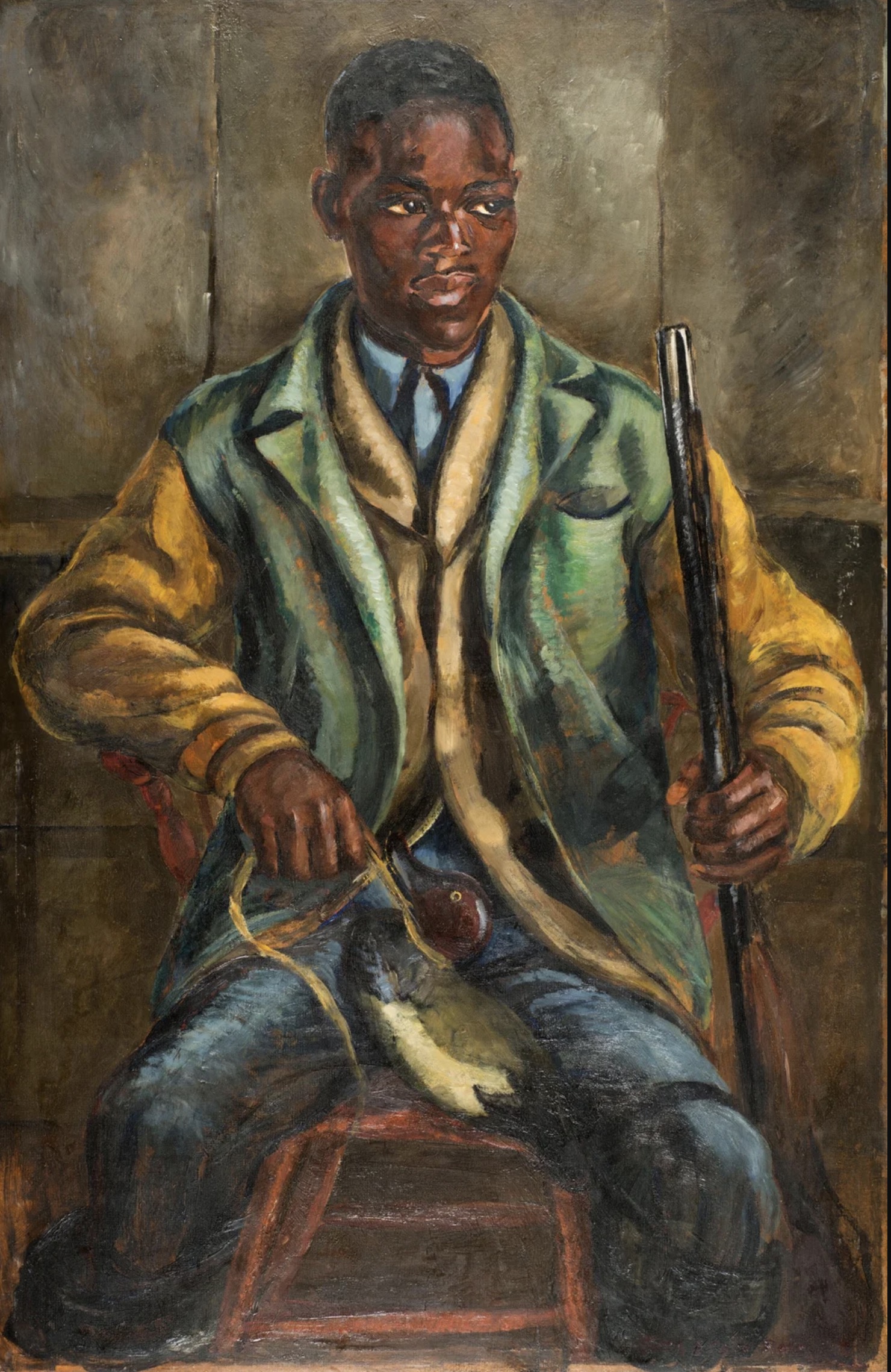
Bernard Moaney as a duck hunter, 1931

While art depicting people of color is no longer “unique” to this collection at the museum located on the Tred Avon’s edge in Oxford, it most likely was the case in 1933 when she wrote about her work. Moreover, it’s hard to imagine that anyone else could have achieved such a legacy. In the early decades of the 20th Century it was rare for black artists or women artists of any color to gain much notice. And her access to an isolated community with every reason to mistrust white strangers is itself remarkable. There were black artists whose success at the time was hard-earned – from Jacob Lawrence in fine art to Paul Robeson in performing arts – they won their notoriety in metropolitan capitals of the United States, principally New York City.

By comparison, Rose, the daughter of staunch Wisconsin abolitionists, won the trust of all-black communities of Talbot County at a time when the Eastern Shore – before any Bay Bridge was even dreamed of – was a geographic backwater. Yet she made friends with residents of The Hill in Easton, the historic neighborhood of free African-Americans dating back before the Civil War, as well as Unionville and Copperville settled by veterans of the war that won their emancipation.

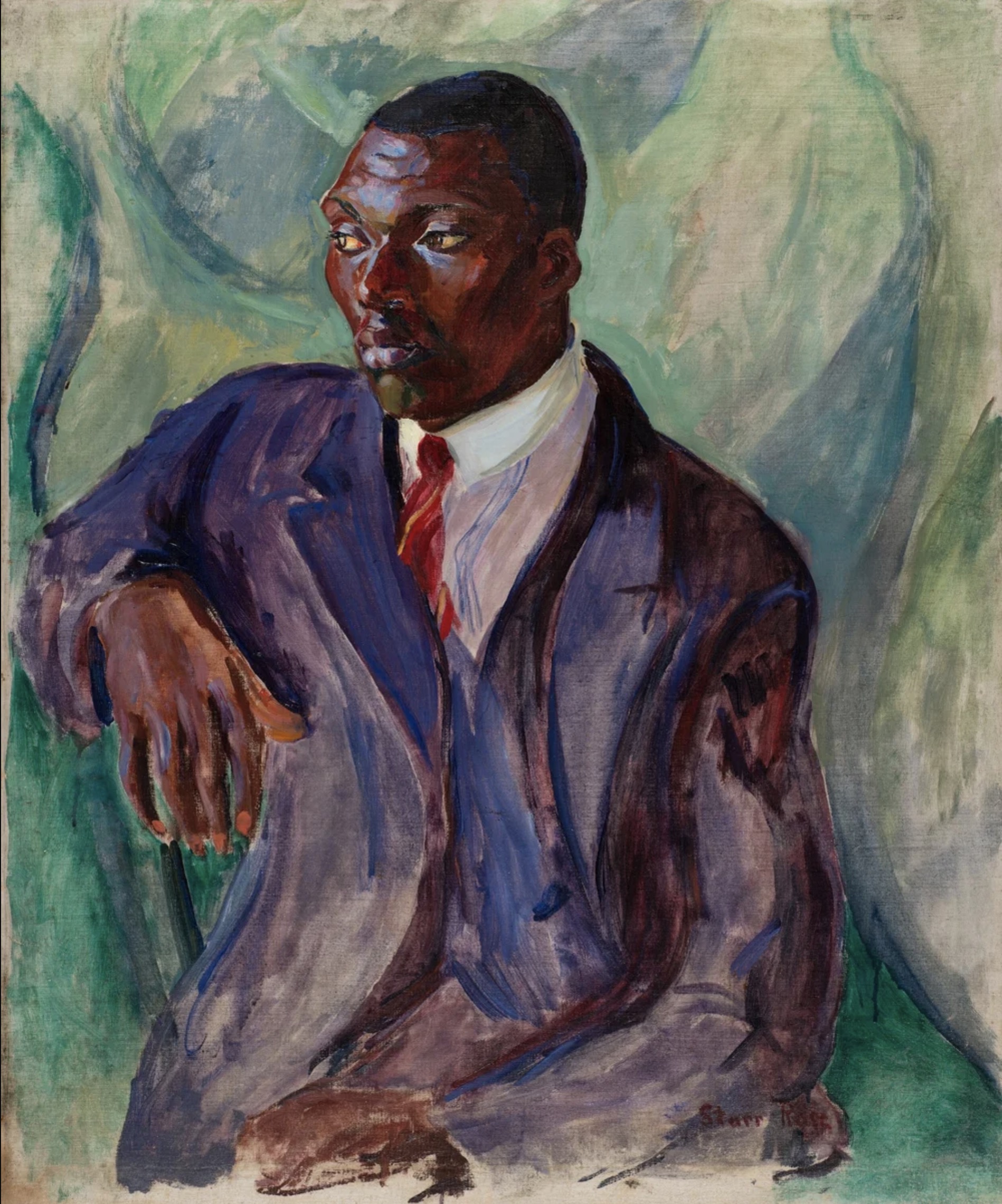
Rose attended their AME churches regularly and developed her appreciation of spirituals performed by people she regarded as friends and neighbors. Among the oil portraits she painted were those of Isaac Copper, namesake of the founding family of the village bearing his surname, and Bernard Moaney, whose descendant, George Moaney, narrates the five-minute video “The Afterglow of Ruth Starr Rose” by Talbot Spy that can be seen on the Water’s Edge website, You Tube or talbotspy.org. He’s also a founding member and genealogical adviser to the museum.

Even in major museums of the world, George Moaney notes, “You don’t see a black person in their paintings except in the background as servants” or, more recently, in portraits of celebrities and political figures, notably Muhammad Ali and President Barack Obama. Before 2015, when the Rose collection surfaced, “Our family didn’t even know these images existed.” The unveiling of the works by Rose (1887-1965) marked, he said, “the first time I had seen on the Eastern Shore black and white people coming together for a cultural event.”

Of her 1933 color serigraph “Jonah and the whale,” featured four years later at the Paris International Exposition, Rose wrote: “Long ago the slaves sang, ‘If the Lord delivered Jonah from the belly of the whale, He will deliver me.’ And these words came too: The Negro race has been delivered from dangers and torments worse than Jonah knew. They have been given a vision of the freedom that can finally be complete.”

But there is much more to see and experience at the Water’s Edge Museum. In its special exhibits gallery, “Black Watermen in the Chesapeake” opens later this month. In the hallway just outside, pause to view “Victoria Park as a Civil Right.” In 1848, about a decade into her 63 years and seven months reign – surpassed only by the 70-year monarchy of Elizabeth II – Queen Victoria granted an “urban botanical garden” for the people of Antigua and Barbuda, part of the British Empire until 1981. The garden, she wrote, serves as open space “for the healthful enjoyment of air and space” for the people of the Caribbean island colony – now a nation.

Be sure, then, to step outside to the Water’s Edge botanical garden. Replete with flowers, plus basil, bell pepper, cucumber and tomato plants, the fruits of which are composted. Besides the staff, the garden is tended, in part, by visiting elementary to middle school children who “learn about environmental justice that is denied to those who live in food desert neighborhoods,” said Sara Park, co-director of Water’s Edge along with Ja’lyn Hicks.

Water’s Edge was awarded a certificate of recognition from the Talbot County Council for the “pictorial history and artifacts on display [portraying] a resilient people who lived their lives, and loved and fought for their country and continued to forge ahead, despite the obstacles and hardships faced.” Council member Keasha Haythe, who had attended the museum’s anniversary celebration earlier in February, commented on the recognition: “Thank you for telling these stories. Having a grandfather who was a waterman, it’s important to tell stories of the heritage, history, and diversity that we have in Talbot County.”

Coincidentally or not, this occurred at the same council session in which a motion to rescind the county’s declaration supporting the goals of diversity, equity and inclusion (DEI) was defeated. However, following Trump administration threats to deny federal funding for expansion of the Easton Airport, the council voted in June to delete all mention of DEI goals in its official statements.

Isaac Copper in a suit, 1931

Nevertheless, Kay Brown, the museum’s assistant director, continues her work as manager of the Middle Passage Port Marker Project. Oxford is the only UNESCO-documented Middle Passage port on the Eastern Shore with no sign declaring that this is where slave ships docked to deliver its human-bondage cargo for sale. It’s a distinction shared in part just across the Tred Avon River where the Bellevue Passage Museum is planning and raising funds to build a space to tell the story of one of the country’s oldest African-American waterfront communities, which became self-sufficient following the Civil War abolition of slavery. The goal is to add on to one of the few remaining historic buildings available, located next to the Oxford-Bellevue Ferry dock. For now, the museum is a virtual one where you can view photos, artifacts and documentation of Bellevue’s own water’s edge past. In partnership with the museum in Oxford, the two would comprise a ferry-linked match in presenting an immersive educational and heritage tourism experience.

***
For more on slavery to self-sufficiency and the Eastern Shore’s witness to both, the Harriet Tubman Freedom Center in Cambridge is exhibiting “Harriet: A Taste of Freedom” through Sept. 30. Curated by Larry Poncho Brown, a Baltimore-based artist, through interpretive works by 40 artists whose visions know no bounds as they are both local and international. The art ranges from portraiture to abstract imagery. In that sense, it’s almost as varied as Tubman’s remarkable life’s work – starting as a runaway slave herself who returned time and again to free family and other fellow slaves in Dorchester County to freedom at least as far north as Philadelphia. And she literally fought for freedom in the Civil War, having recently been promoted posthumously to the rank of general.

While you’re at it, and especially if you haven’t already visited, drive a few miles out of town to the Harriet Tubman Underground Railroad National Historical Park. The visitors center there serves both as a stand-alone attraction with exhibits and films changing from time to time with the goal of orientation as a gateway to the multi-state Harriet Tubman Underground Railroad Scenic Byway. Tubman is quoted as saying, “I never ran my train off the track and I never lost a passenger.”

FROM RUTH STARR ROSE TO HARRIET TUBMAN

Water’s Edge Museum, 101 Mill St., Oxford. watersedgemuseum.org; Bellevue Passage Museum, online only bellevuepassage.org
Also, “Harriet: A Taste of Freedom,” Harriet Tubman Freedom Center, 3030 Center Dr., Cambridge, through Sept. 30 (possibly extended through December); harriettubmanfreedomcenter.com; Harriet Tubman Underground Railroad Visitors Center, 4068 Golden Hill Rd., Church Creek, nps.gov/htu

Steve Parks is a retired New York arts critic and editor now living in Easton.


The Spy Newspapers may periodically employ the assistance of artificial intelligence (AI) to enhance the clarity and accuracy of our content.

Filed Under: 1A Arts Lead

  • 1
  • 2
  • 3
  • …
  • 8
  • Next Page »

Copyright © 2026

Affiliated News

  • Chestertown Spy
  • Talbot Spy
  • Cambridge Spy

Sections

  • Sample Page

Spy Community Media

  • Sample Page
  • Subscribe
  • Sample Page

Copyright © 2026 · Spy Community Media Child Theme on Genesis Framework · WordPress · Log in