MENU

Sections

  • Home
  • Education
  • Donate to the Centreville Spy
  • Free Subscription
  • Spy Community Media
    • Chestertown Spy
    • Talbot Spy
    • Cambridge Spy

More

  • Support the Spy
  • About Spy Community Media
  • Advertising with the Spy
  • Subscribe
February 27, 2026

Centreville Spy

Nonpartisan and Education-based News for Centreville

  • Home
  • Education
  • Donate to the Centreville Spy
  • Free Subscription
  • Spy Community Media
    • Chestertown Spy
    • Talbot Spy
    • Cambridge Spy
1A Arts Lead Arts Arts Portal Lead

Mystery Artist: Who Knows Anything about this Mid-Shore Painting and Painter

June 11, 2024 by The Spy Leave a Comment

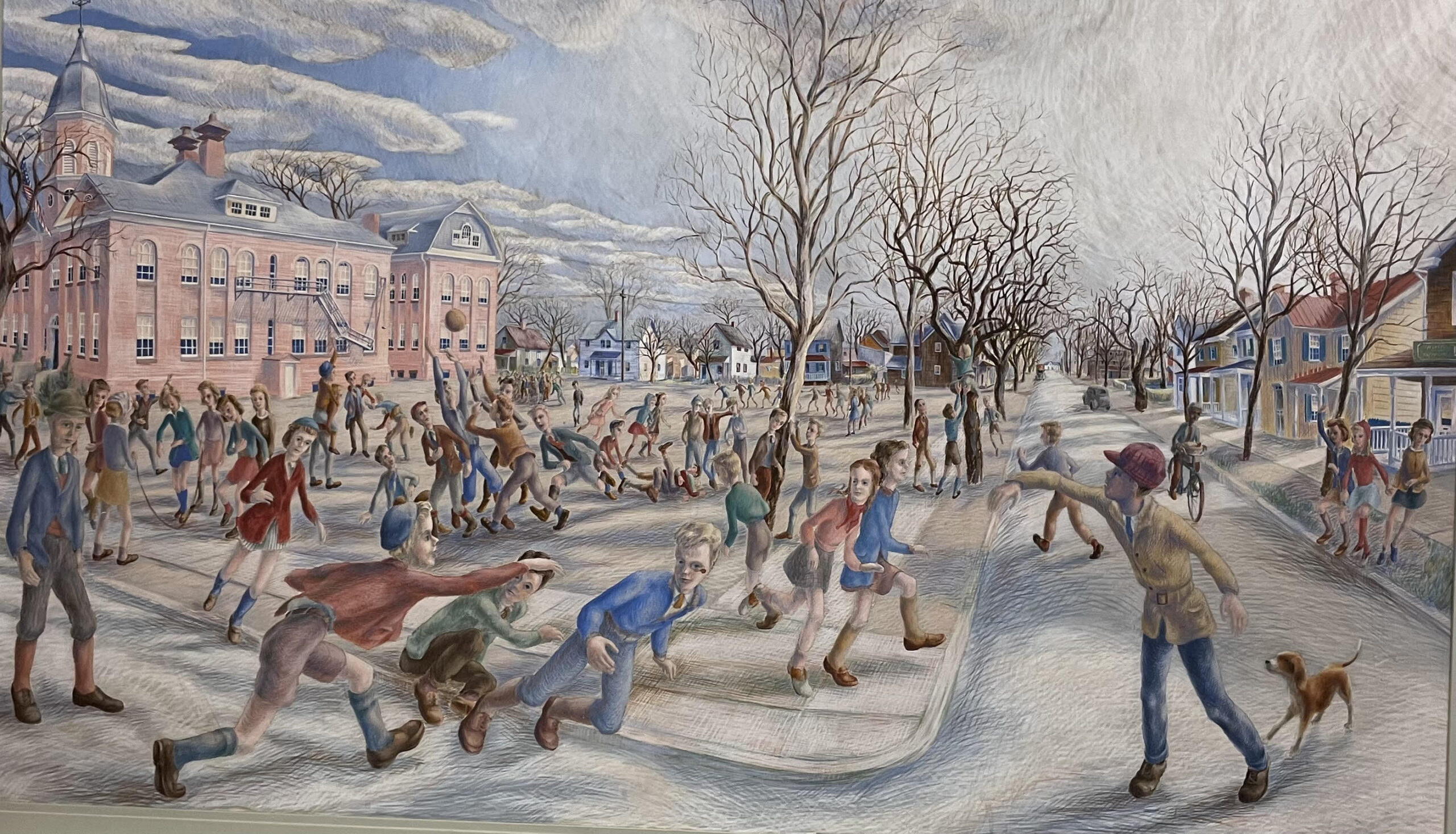
In an upcoming Spy interview with Greg Zimmerman about the future of the site where the Talbot County Health Department is currently is located, he send along to us a remarkable painting of the same spot but almost 100 years earlier. It now hangs in the Maryland Room at the TAlbot County Free Library in Easton.

Sadly, no one at the Library, Talbot County Historical Society, nor the few art experts the Spy contacted over the last few weeks have any additional information about the artist or other circumstances related to this rare view of life on the Hill.

We would welcome any and call tips from the Spy readership to solve this puzzle.

The Spy Newspapers may periodically employ the assistance of artificial intelligence (AI) to enhance the clarity and accuracy of our content.

Filed Under: 1A Arts Lead, Arts Portal Lead

Virtuoso Cellist Sterling Elliott to Perform at the Chesapeake Chamber Music Festival By James Carder

June 10, 2024 by Spy Daybook Leave a Comment

Cellist Sterling Elliott

“Perfect intonation, style, and total involvement.”

“His discernible love for the music won over the audience.”

Praised for his musicality, sensitivity, dexterity, and performing ease by audiences and critics alike, the 25-year-old American cellist Sterling Elliott will be featured in three concerts at the 2024 Chesapeake Chamber Music Festival held at the Academy Art Museum. in Easton, Maryland. A child prodigy, Elliott began playing the cello at the age of three. He made his orchestral concerto debut at the age of seven and has since received numerous prestigious awards and performed with the world’s leading symphony orchestras. A graduate of The Juilliard School in New York City, he currently is pursuing an Artist Diploma at Juilliard under the direction of renowned cellists Joel Krosnick and Clara Kim.

Chesapeake Music audience members will remember Sterling Elliott’s exciting recital with pianist Elliot Wuu in 2022. The two musicians will be reunited at this year’s Festival performing Claude Debussy’s famous Rêverie in an arrangement for cello and piano (Saturday, June 15). Sterling Elliott will also perform Brahms’ beautiful and majestic first piano trio (with Sahun Sam Hong and Max Tan on Thursday, June 13). He will take the demanding, virtuosic first cello part in Luigi Boccherini’s String Quintet in A Major (with Catherine Cho, Max Tan, DanielPhillips, and Marcy Rosen on Friday, June 14). The last opportunity to enjoy Elliott’s stellar stage presence and joyous musicianship will be at the Festival Finale on Saturday, June 15, where, in addition to Debussy’s Rêverie, he will perform Arthur Foote’s A Night Piece and Scherzo for Flute and String Quartet (with Tara Helen O’Connor,Daniel Phillips, Max Tan, and Catherine Cho).

Asked what he envisioned his future as a classical musician to be, Elliott replied: “My goal as an artist has always been to simply share my passion with audiences across the globe. However, as my career develops and I can expand further on the idea of my role as an artist in society, I would like my ultimate goal in music to be focused on furthering music’s reach in all communities.” To that end, he takes seriously his standing in the classical music world as a Black role model. “Along with performing in concert halls, I frequent smaller communities and educational settings in which my position as a role model and an inspiring figure becomes clearly evident to other people of color.” “It brings me great satisfaction to be at a point in my career where I have the freedom to open up my agenda to several artistic engagements in under-resourced communities which might have a little budget for public music education, let alone a traveling guest artist.” In recognition of this commitment and of his astounding success as a classical musician, in March 2024 Sterling was awarded the highly coveted Sphinx Medal of Excellence and a $50,000 career grant, the highest honor bestowed by the Sphinx Organization – a non-profit dedicated to the development of young Black and Latino classical musicians. The award was presented in recognition of Sterling’s artistic excellence, his outstanding work ethic, and his ongoing commitment to leadership and his community.

And when he is back home, he loves working on, and building cars. “That’s what I love to do – be in the garage all day.”  In Easton, his love for his art, his total involvement with his music, will win over the audience.

For program information and to purchase tickets, go to https://chesapeakemusic.org/festival/.


The Spy Newspapers may periodically employ the assistance of artificial intelligence (AI) to enhance the clarity and accuracy of our content.

Filed Under: 1A Arts Lead, Arts Portal Lead

Concert Review: Chestertown’s National Festival by Steve Parks

June 9, 2024 by Steve Parks Leave a Comment

The National Music Festival, now in the orchestral phase of its two-week residency at Washington College, performed one of its signature apprentice-and-mentor concerts Saturday night, anchored by Felix Mendelssohn’s Symphony No. 3, better known as “The Scottish Symphony,” conducted by festival artistic director Richard Rosenberg.

Richard Rosenberg

Most of the players in these symphonic concerts are talented young musicians who are on the cusp of professional careers. Coming from about 30 states and a dozen countries, they auditioned for a spot in the festival to be mentored by seasoned professionals and teachers who perform among them in major concerts on campus at the Decker Theatre concert hall. First up was Friday night’s program featuring Mahler’s Symphony No. 4, with soprano soloist Caitlin Redding, whose usual concert venues are in Barcelona, Berlin and other European arts capitals.

I wondered why several men in the lobby on Saturday, waiting for the pre-concert talk to begin, wore kilts. But then it dawned on me. Of course, the “Scottish Symphony” was the final piece for what turned out to be an all-Scottish program. The first of the evening – Overture in C, Opus 1, No. 2 by Thomas Erskine, the 6th Earl of Kellie – is a title linked to the 12th-century Scottish castle. Erskine was famed for his talent as a composer but also for notoriety as founder of an all-male drinking club. His music fell into obscurity in modern times. So its performance in the festival was something of a curiosity.
Written in the 1760s for a comic opera that made its way to London’s Covent Garden Royal Opera House, the overture in three movements bears some resemblance to a symphony, but not quite full blown. Its sprightly opening creates a see-saw aural effect as written for the string section, broken only by occasional brass and clarinet shoutouts.  The more solemn second movement resembles a strings-only weeping fit that settles into a soothing melody only to switch back and forth before the third movement’s rhythmically danceable motif presents a catchy, if repetitive, melody. Conductor Elisabeth Thomas and the mostly strings orchestra deliver a coherent interpretation of a flawed and outdated museum piece of an overture. An “underture,” if you will.
The difference in quality of composition takes a notable leap with Alexander Campbell Mackenzie in his Pibroch Suite for Violin and Orchestra, ably conducted by Britney Alcine. (Pibroch is associated with Scottish bagpipe music, but no bagpipers were in play Saturday night.) Though his music largely fell out of favor after Mackenzie’s death in 1935, a 1997 recording by Malcolm Stewart and the Royal Scottish National Orchestra brought new attention to the piece’s robust and physically challenging intensity. Although technically written for violin and orchestra, one of the most outstanding contributions by the latter were harpist Eric Sabatino’s dreamy embroidery as violin soloist Emma McGrath endeavored to bring us to tears,  playing her melodrama that ends the first-movement “Rhapsody” with a whispering whistle of bow-on-string.
The middle “Caprice” movement is indeed capricious – given the abrupt changes from dramatic violin pyrotechnics to a tender folk motif that enlivens the full orchestra – brass section and all –  with the opportunity to be more than a mere supporting cast. The final “Dance” movement begins with a chattering solo passage by McGrath, up and down the scale at a flawlessly furious pace with rare breaks from the lead. She looked at times as if she was about to cry herself – maybe from exhaustion at the extraordinary volume of notes to execute, leading to a thunderous finish with all strings on board, led by mentor concertmaster Dane Goode and, of course, the star soloist.
Most remarkable was that McGrath only started to learn the piece a few weeks earlier when the scheduled violin soloist had to drop out. The standing ovation she earned required an encore appearance to take one more bow.
Intermission gave a welcome break, not just for the audience, but for the final performance of the evening with such a tough act to follow. Fortunately, Richard Rosenberg was conducting a piece that more fully engaged the whole orchestra, which proved up to the challenge. Swollen to its fullest extent with upwards toward 90 musicians made for a richer sound than you can expect these days from even the finest professional orchestras whose players all must be paid.
The orchestra got to show its muscle in the somber opening Andante, followed by the sound-and-fury of the aptly named Allegro “agitato” that concludes the first movement. The relatively brief Vivace second movement, introduced with barely a pause, a Scottish folk music theme both in melody and rhythm, which grew in intensity and pace to something of a gallop. The third movement Adagio, suggesting a pastoral scene with a thunderous interlude that subsides before alternating in pace and mood again. Another very brief pause signals the final movement’s serialist Allegro starting with the “guerriero,” which sounds and signifies a combative stance. It’s followed by an Allegro “vivacissimo,” vibrantly fast-paced as if reacting to danger or strife. The Allegro “maestoso,” builds to a triumphant finish heralded by an all-brass bugle call or in this case, trumpet and horn, with patriotic fervor.
There’s another week of the festival ahead. Besides the orchestral concerts, there are intimate chamber music performances, free “Lunchtime Bites” recitals and outdoor pop-up concerts in various Chestertown locations, as well as master classes and open rehearsals. Rehearsing for concerts in a week or less gives the apprentice musicians experience they will need as professionals performing in ensembles ranging from string or brass quartets to full symphonic orchestras.
This year’s cast of mentors include Brazilian guitarist Camilo Carrara and violinist McGrath, who traveled from Australia, where she is concertmaster of the Tasmanian Symphony Orchestra. They join mentors who have been with the festival since its 2011 inception: Dana Goode (violin), Jared Hauser (oboe), Jeff Keesecker (bassoon), Tom Parchman (clarinet) and Jennifer Parker-Harley (flute).
Among the upcoming festival concerts are Friday, June 14, featuring a Rossini overture and Emilie Mayer’s Symphony No. 1, and the June 15 Saturday night finale culminating in the Ravel orchestration of Mussorgsky’s “Pictures at an Exhibition,” with Rosenberg conducting.
NATIONAL MUSIC FESTIVAL
Through June 15 in and around Gibson Center for the Arts, Washington College, and other Chestertown locations. nationalmusic.us

The Spy Newspapers may periodically employ the assistance of artificial intelligence (AI) to enhance the clarity and accuracy of our content.

Filed Under: 1A Arts Lead, Arts Portal Lead

Concert Review: Chamber Music Fest Opening Night, by Steve Parks

June 8, 2024 by Steve Parks Leave a Comment

The Chesapeake Chamber Music Festival celebrated its 39th annual opening night on Friday with a diverse medley of classics performed by its longtime lineup of globally acclaimed musicians along with scene-stealing guest artistry by a young Grammy-nominated string quartet known for its dressed-for-fun virtuosity.

The only apparent hitch in the evening had nothing to do with the music. On a relatively last-minute decision, the concert – and possibly the entire festival – was relocated from its Ebenezer Theater home base to the auditorium in nearby Academy Art Museum. More on that later.

Opening night, billed as an “Extravaganza,” mostly lived up to that superlative, beginning with Richard Strauss’ Sextet in Strings, Opus 85, featuring two paired violins, violas and cellos with co–artistic directors Marcy Rosen (cellist) and Catherine Cho (violist) joined by the aforementioned string ensemble, the Aizuri Quartet: violinists Emma Frucht and Miho Saegusa, violist Brian Hong and cellist Caleb von der Swaagh. (No strangers to Easton, they were finalists in the Chesapeake Music International Concerto Competition a decade ago at the Avalon Theater.) The lush Strauss sextet that opened “Capriccio,” the final opera he wrote, introduces  a somber motif passed among the players. Picking up the pace dramatically and without pause, the six string players turned seamlessly to searing passages with violin calls and viola responses, concluding with dual cello solos revisiting the opening theme, this time in a major key.

pianist Leva Jokubaviciute

Next up, and to me the highlight of the concert, was Clara Schumann’s Piano Trio in G minor, Opus 17. As pianist Leva Jokubaviciute observed in her opening remarks, Schumann was recognized as one the finest pianists of her 19th-century time but also – rare for that era – as an accomplished composer. She wrote remarkable piano pieces that she played as well or better than anyone of either gender of which this piano trio is regarded as her masterpiece.

After cellist Rosen took charge to rearrange the chairs and music stands to her liking, the wistfully melodic opening allegro gave way to high-drama string interchanges and tumbling piano keystrokes suggesting an intemperate demand for resolution that grows more and more impatient as if throwing serial fits. The mood turns distinctly lighter in the second movement with strings taking the lead early in an almost cheerful demeanor. The piano introduces the third movement Andante tenderly as the melody is taken up by Todd Phillips’ violin, suggesting a let-it-be acceptance. The final movement advances with renewed confidence and determination through perky strings amplified by expressive piano overlay before racing toward an assertively optimistic conclusion.
After intermission, the guest Aizuri Quartet proved their mettle in Schubert’s famously melodramatic “Death and the Maiden” String Quartet No. 14 in D minor. Severely ill at the time he wrote it, Franz Shubert was fully aware he was dying, which accounts for the ferocity of his composition as well as the attacking of strings by the Aizuri foursome. Taken from a song Schubert had written years earlier, a young girl asks Death to pass her by. Moods shift inexorably between dark and light throughout the piece, expressed alternately by angry fortissimo and placid (or resigned) pianissimo. The spirited first movement brings to mind parrying and thrusts as if fencing for notes – or for one’s life.
Throughout, moods shift from lyricism to agitation and back again, rendered by each player, with brief solo violin turns of almost screaming vocalizations of despair to the percussive heartbeat of cello pizzicato. The final movement mimics a chattering exchange among the four in musically disparate states of their duel with Death before returning to agitation at a galloping pace to the end.
So who was the winner of the evening? Everyone who attended. And the best news is there is much more to come.
Festival concerts that follow the opening-night triple play include Saturday night’s “Personal Perspectives,” with festival co-artistic director Cho performing Mozart’s Duo for Violin and Viola with her husband, violinist Phillips. Also on the program is Schubert’s counterintuitively lighthearted Piano Trio No. 1 in B-flat major composed just a year before his death. In between is a short work commissioned for the Aizuri Quartet, Reena Esmail’s Zeher (Poison) for String Quartet, combining South Asian and Western themes. The guest ensemble returns Sunday with Fanny Mendelssohn Hensel’s String Quartet in E-flat major, recognizing the unsung sibling of Felix, who – due to conventions of the time – is credited with writing six of his big sister’s songs. Next is Schubert’s Fantasia for Piano
Four-Hands in F minor, considered one of his greatest hits. Wrapping up the late matinee program is Erno Dohnanyi’s Piano Quintet No. 1 in C minor, Opus 1, written when the composer was 17. It so impressed Johannes Brahms that he performed its premiere himself.
The festival resumes on Thursday next week with Haydn’s “London” Symphony for Flute, String Quartet and Piano. It’s followed by Pietro Bottisini’s Andante and Variations for Flute, Clarinet and String Quartet, featuring perennial festival contributors Tara Helen O’Connor and J. Lawrie Bloom on the woodwind instruments. Brahms puts the final notes on the evening with his Piano Trio No. 1 in B  major, Opus 8, with Sahun Sam Hong on the ivory. Next Friday’s concert puts the spotlight on winners of Chesapeake Music’s most recent biennial International Concerto Competition, the Amara Trio – Christina  Nam (violin), Nagyeom Jang (cello) and Kevin Jansson (piano) – likely reprising their prize-winning number, Shostakovich’s challenging Piano Concerto No. 2 in E minor, Opus 67, preceded by 20th-century composer Rebecca Clarke’s Piano Trio. The opener for the evening, Luigi Bocchereni’s String Quintet in A major, composed by the virtuoso cellist, brings two other cellists to the fore – Rosen and young Sterling Elliott, who wowed Chesapeake Music audiences twice before, followed by young Oregon-born  composer Kenji Bunch’s “Vesper Flight for Flute and Piano,” a 2021 work commissioned by flutist O’Connor in memory of her parents.
The Festival Finale next Saturday night begins with “A Night Piece and Scherzo for Flute and String Quartet” by American composer Arthur Foote who favored late European Romanticism, Claude Debussy’s “Reverie” arranged for cello and piano, performed by Elliott and his “Rising Stars” partner Eliot Wuu, “Serenade for Clarinet, Cello and Piano” by Danish composer Emil Hartmann inspired by Scandinavian folk tunes and, finally, Elgar’s Piano Quintet that approaches or achieves orchestral proportions.
Something old, something new, something unexpected. That’s the mark of the latest iteration of this distinguished chamber festival.
On a practical note: Ticket holders should pay attention to their emails or text messages. It’s possible that week 2 of festival concerts may switch back to the Ebenezer. According to Bluepoint Hospitality, which owns and operates this and other downtown Easton arts-related businesses and restaurants, the Ebenezer “needed repairs on the former church built in 1856.” Stay tuned.
Chesapeake Chamber Music Festival
Through Sunday and next week through June 15, Thursday-Saturday, Academy Art Museum (or possibly in week 2, at Ebenezer Theater), both in downtown Easton. Concerts start at 7:30 p.m. except Sunday at 5:30. chesapeakemusic.org
Steve Parks is a retired New York arts critic now living in Easton.

The Spy Newspapers may periodically employ the assistance of artificial intelligence (AI) to enhance the clarity and accuracy of our content.

Filed Under: 1A Arts Lead, Arts Portal Lead

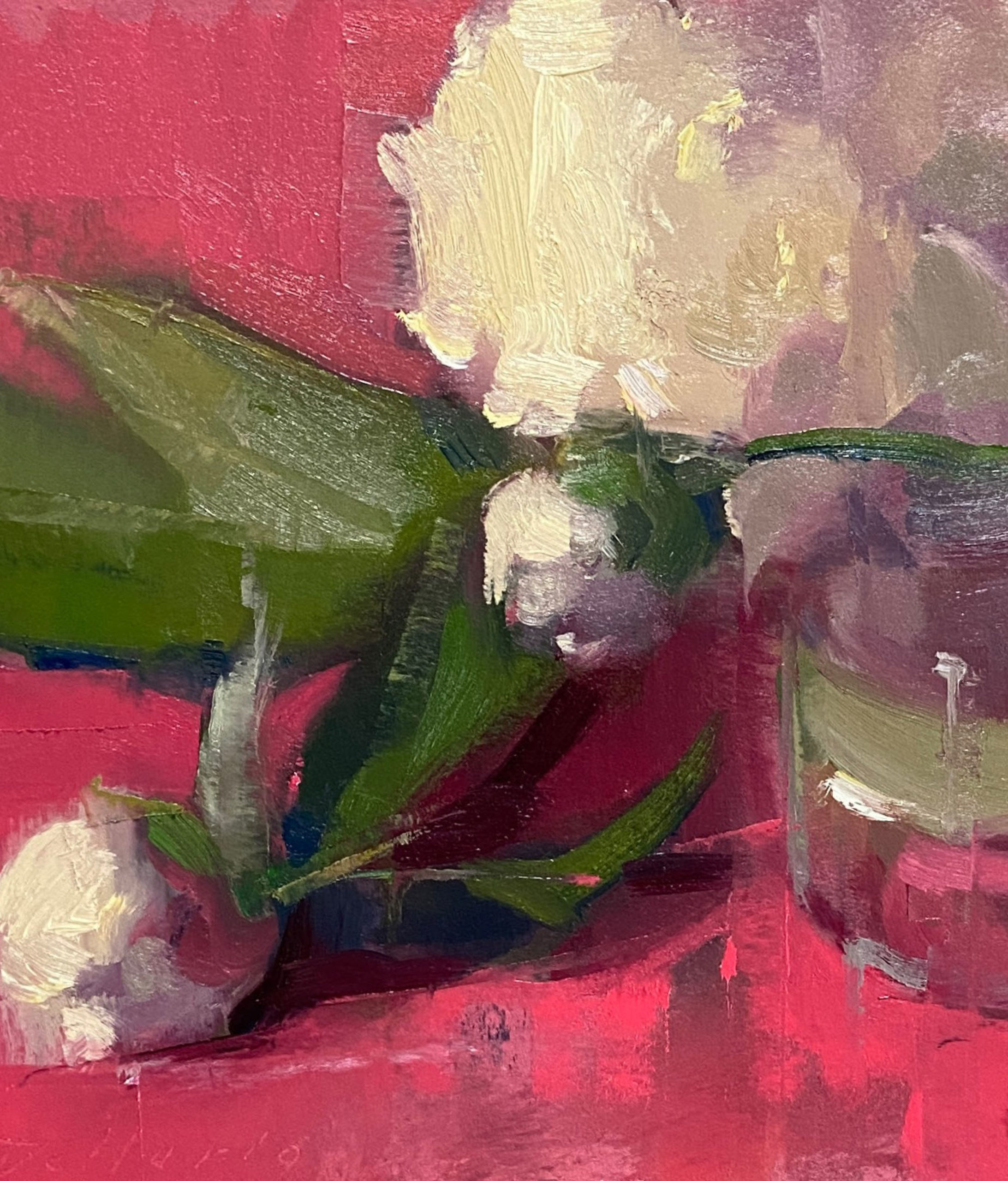
From CPA to Creative Leader: Bernard Dellario Ignites a New Era of Art Education at the AAM

May 29, 2024 by Val Cavalheri Leave a Comment

For Bernard Dellario, art has been a lifelong passion that defied expectations. “Art was always my love. I don’t know where it came from,” he said in a recent interview with the Spy. “Because I didn’t have any direction from parents, peers, or people I grew up with – no one in my family was artistically inclined. I just, for some reason, loved to do it.”

Dellario is bringing that passion to the Academy Art Museum as their new Adult Educational Coordinator.

Bernard Dellario

Though drawn to creative expression, Dellario didn’t initially plan an artistic career path. To him, art classes were just an aside in college after deciding that art alone wouldn’t pay the bills. “I figured I needed a more lucrative career first. Finance checked that box. I went on to become a CPA.” And for almost 40 years he did just that, never giving up his creative side and continuing to develop his artistic style when he could. 

However, Dellario’s muse could not be denied forever. Now fully retired, he can focus on his artistic development.

Moving to the Washington D.C. area also proved pivotal for cultivating Dellario’s artistic voice. “If I hadn’t landed there, I wonder if I’d have found the same path,” he said. “Being exposed to so much incredible artwork really lit my fire.” He began taking art classes, and the instructors recognized his innate talents. “They kept nurturing me, so I took as many classes as possible – at least once a week, sometimes weekends too.” “I was voraciously learning.” He credits those instructors for profoundly impacting the artist he has become. 

But that same guidance and instruction stoked a passion Dellario didn’t even know he had. It was one serendipitous moment that unlocked Dellario’s own teaching abilities. “I was in a figure drawing class with a really good instructor everyone wanted,” he said. “One day, he asked me if I would sub for him. I agreed, but I was freaking out!” However, leading that first session was revelatory: “I ran the class for my peers and found out I was pretty good at teaching.” 

But more than just teaching, Dellario wanted to give others what he got from his teachers—inspiration and encouragement. Identifying and nurturing budding artistic talents has become one of Dellario’s greatest joys. “Oh yeah, I’ve found budding artists,” he said. And when he does, he’s compelled to elevate them: “I nurture them further and try to give them opportunities.” 

He cited examples like sponsoring two promising painters to join the prestigious Washington Society of Landscape Painters, where he serves as president. Another student who just won first place at a Plein Air event in Pennsylvania sent him an email thanking him for his support and mentoring. “I saw her potential. I knew she was going somewhere – and she is.” 

Bernie Dellario Expressive Landscape

In his new role as Adult Education Coordinator for the Academy Art Museum, Dellario hopes to fan that creative spark for learners of all ages and backgrounds. “We’ll have about 30 different offerings this spring/summer,” he said, “classes like pysanky egg art, bookbinding, rug hooking – expanding beyond the traditional painting and drawing.” He aims to engage diverse artistic interests: “I want to appeal to a broader audience, with a broader range of interests, and get more people here doing different things.”

Reducing barriers to entry is also a priority. “We’ll offer introductory classes where supplies are provided,” he said. “If someone wants to try something new but doesn’t want to invest in all the supplies upfront, it’ll be easy to just sign up and dive in.” Making art education accessible is very important to Dellario’s vision.

Bernie Dellario – Alla Prima Still Life

Besides accessibility, Dellario is also on a mission to find great talent for AAM by bringing in acclaimed artists from around the region and country to teach workshops and classes. “Whenever I see somebody that might be good, I ask, ‘Hey, do you want to come teach at the Academy?’ I’ve added new people locally who hadn’t considered teaching before and others from nearby areas who can easily come share their expertise.” 

PleinAir painting is one of Dellario’s artistic passions, which he aims to cultivate further at the Academy. To that end, he has Charles Newman and Hiu Lai Chong, two award winners from Plein Air Easton, teaching workshops. However, he doesn’t like to limit himself to any one discipline. “Any good artist should be able to tackle any subject,” Dellario stated. “I like figure drawing, still life – I want to be versatile across different media and approaches.”

This versatility is something he strives to instill in his students as well. “When I’m teaching, I always offer for students to come paint alongside me after the lesson,” he said, understanding the immense value of hands-on learning from an instructor. He can typically be found on Fridays doing just that: “I coordinate outdoor painting sessions,” he said. “I love it when it’s nice to just get outside and paint.” Whether teaching or painting, Dellario is always open to inspiration. “I never know when it will hit me – I may be at the grocery store buying fruits and veggies to eat, then decide to paint them instead! It just happens.”

It is precisely that innovative vision and enthusiasm for creativity that is a perfect fit for Dellario as the Academy’s new artistic leader. “We’re going to have so many fresh offerings taught by instructors who are true experts in their craft,” he said. “My advice? Consider what the Academy has in store. We’re committed to making art education accessible, enriching, and inclusive for everyone.”

If Bernard Dellario’s winding journey is any indication, the Easton community has an abundance of inspiring afternoons of artistic exploration ahead under his guidance.


The Spy Newspapers may periodically employ the assistance of artificial intelligence (AI) to enhance the clarity and accuracy of our content.

Filed Under: 1 Homepage Slider, Arts Portal Lead

A Night of Immersive Entertainment in Old Havana

May 21, 2024 by Val Cavalheri Leave a Comment

On June 1st, the Oxford Community Center (OCC) will be transformed into a world straight out of Cuba in the 1950s when it hosts One Night in Old Havana. And it promises to be an event like no other. The brainchild of Oxford resident Jennifer Leps, the evening will be a throwback to a different time and a different place. This extraordinary undertaking will come to life thanks to the efforts of The Factory, a thriving community arts hub in Easton. We recently sat down with Maggii Sarfaty, Art Director of The Factory, to delve into the magic behind the scenes, one that will metamorphose an ordinary space into an extraordinary realm.

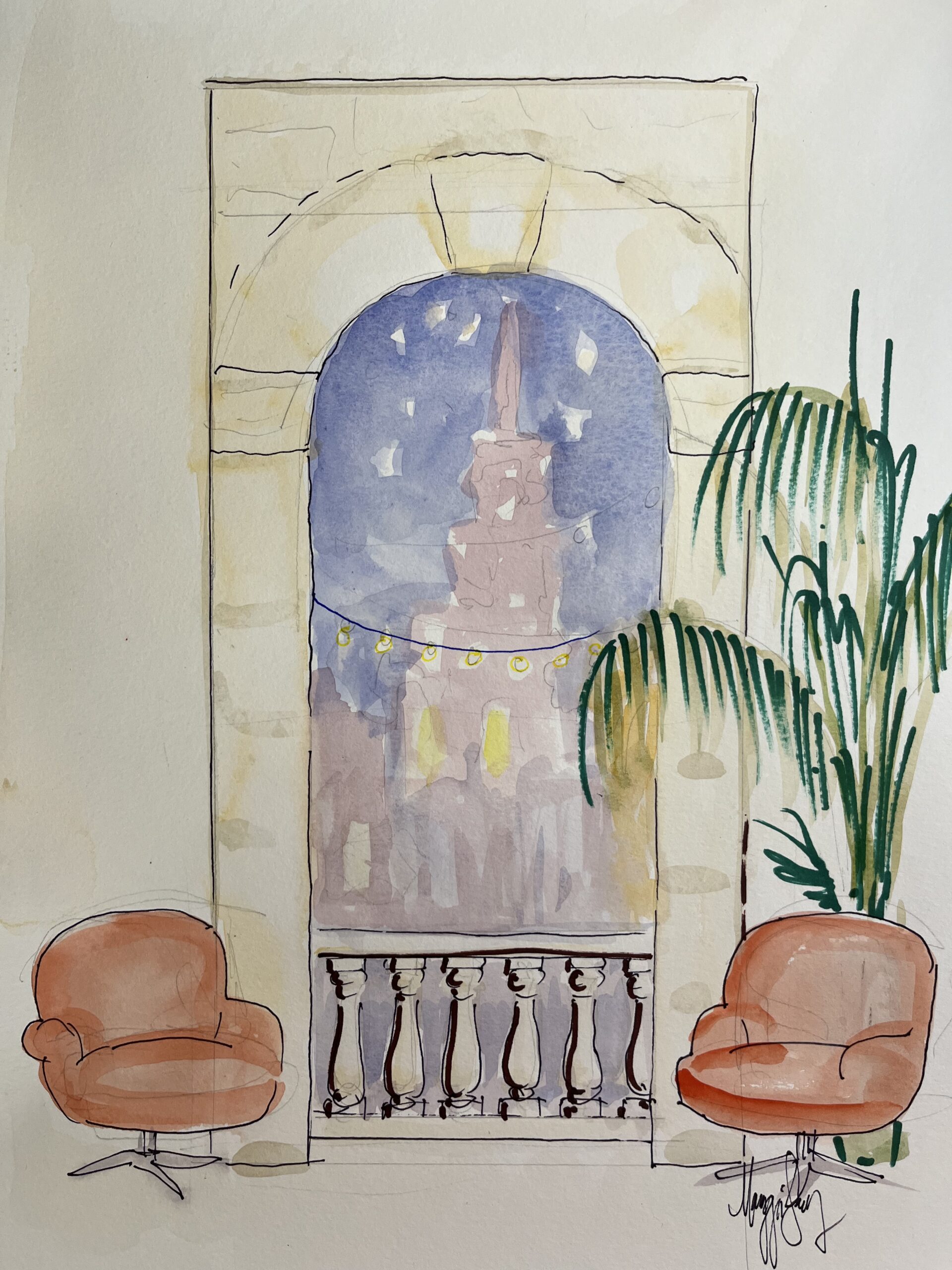
As Sarfaty explained, her role is wonderfully multifaceted: conjuring props, painting backdrops, sculpting entire environments from scratch – all with one goal: crafting an unforgettable experience. “I put my thinking cap on and use my expertise in art to capture the true vibe,” she says of her creative process. For One Night in Old Havana, that vibe is one of sultry Cuban flair from a bygone era.

Make no mistake, this isn’t some casual party setup. It’s an all-encompassing ‘takeover’ by The Factory, complete with professional actors, dancers, musicians, and more. The ‘more’ includes 4-time US Pro-Am champion and dance instructor Scott Lazarov, who will demonstrate what made him a champion (along with Leps herself) and lead the attendees in a salsa lesson. “People won’t just be entertained – they’ll be fully immersed and transported,” Sarfaty says. 

Immersion is something The Factory is well-known for doing. People might remember them for putting on the Halloween experience, Stage Fright, at the Avalon for the past couple of years. Sarfaty explains: “We are a performing arts center. We have a fabulous costume shop with a rental capability for anybody in our community who can just come in and borrow something.” Besides the extensive costume shop, they also have a wonderland of props and set pieces, rehearsal space, and educational programs.

Which is perfect for this event because crafting such an authentic experience requires an array of elements. For that, both OCC and The Factory reached out to the community to create partnerships. “We’re going to have fabulous Cuban-themed food, catered by the Ivy Cafe,” Sarfaty said. Specialty cocktails primed to set the mood are also on the menu created by The Factory’s board member, Jaime Windon, founder of Lyon Rum Distillery. Of course, what would a Havana night be without a fine cigar? To answer that call, OCC reached out to Port of Call, a cigar shop in St. Michael’s that will be providing cigars and teaching attendees how to roll their own. A lounge has been set aside for those wishing to indulge in the cigars in true old Havana tradition.

No detail is overlooked to create a fun tropical vibe. “The people from Garden Treasures have volunteered to graciously lend us some beautiful palms and tropical plants,” said Sarfaty. “I think it’ll add a lot of fabulous fun tropical vibes.” 

But that’s not all: “We’re going to keep it dark and bring some of our set pieces, lighting, accessories, lamps, and a vintage bar. And we’re going to set the rooms up sort of differently.

You’ll feel like you’ve arrived at a hotel in Havana. And there are places to go and things to see and do.”

Vintage cars will add to the nostalgic atmosphere: “You can’t have One Night in Old Havana without having some beautiful vintage cars. So the OCC Cars and Coffee guys will bring some fabulous antique cars to help set the mood.”

For this event, guests are also asked to wear their best Caribbean ‘look.’ But no worries, The Factory has you covered two ways. Look for their ‘Walk-in Costume Rental.’ “We have a great collection of Panama hats and Cuban shirts for the gentlemen, even Panama suits if you want to go the whole look. For the ladies, there are various options in all sizes. And if it needs alterations, we can do that too.”

Think you might want to take it up a notch? Then, be sure to check out their ‘Luxury Styling Session.’ “It includes hair and makeup done by the Studio Salon at the Tidewater,” said Sarfaty, “It also includes styling by The Factory’s Lead Costumer, Arianna Pistelli. We’ll work with you while you have nibbles, champagne, water, or tea. You’ll try on some of our fun, beautiful costumes and pick out your look. We’re also going to create a ‘fascinator’ (headpiece) that you’ll get to keep that will be pure fun. It won’t be a Carmen Miranda basket. But we will do some beautiful things with florals and citrus fruits and add some rhinestones and feathers. You’ll get to keep that to remind you of the evening.” 

You’ll want to look good because photographers will be there to take photos. Surprise guests may even make an ‘appearance.’ “Look for ‘Marilyn Monroe’ or ‘Katharine Hepburn’ to show up. Ernest Hemingway might be there doing some writing, and even the artist Frida Kahlo will create a painting of the event, which will be available for purchase, with proceeds going to The Factory and the OCC. There will also be mini fashion sketches of you in your look and in your headdress. It’s going to be fabulous.”

The evening will also feature live entertainment, including ” musical director Ray Nissen, working with some pre-recorded music and performing live percussion bits through the night.” There are other musical surprises that we’re not allowed to talk about. You’ll just have to come out and see for yourself.

So, One Night in Old Havana promises an extraordinary journey to 1950s Cuba for those seeking thrilling escapism and entertainment. As Sarfaty summed it up, “Some people complain that there’s not enough to do here on the Shore. And here is a night where you’ll have fun and see fun things happening. There will be dancing, some live music, and delicious food. You’re going to be entertained! Why not come out?”

And remember, what happens in Old Havana stays in Old Havana!

Tickets for this special event can be purchased at oxfordcc.org, with a portion received as a tax donation. 

For more information about costumes and styling packages for this special event, go to The Factory: https://perfectstorm.my.canva.site/havana


The Spy Newspapers may periodically employ the assistance of artificial intelligence (AI) to enhance the clarity and accuracy of our content.

Filed Under: 1A Arts Lead, Arts Portal Lead

Dar Williams & Friend Together in Song at the Avalon by Steve Parks

May 6, 2024 by Steve Parks Leave a Comment

“I won’t forget when Peter Pan came to my house, took my hand
I said I was a boy
I’m glad he didn’t check
I learned to fly, I learned to fight
I lived a whole life in one night.”
–“When I Was a Boy,” Dar Williams
She was born Dorothy Snowden Williams. One of her big sisters, Julie or Meredith, first mispronounced her name. Dar instead of Dorothy. And it stuck. For life. It’s just as well. Her parents had thought about naming her Darcy, after the character in Jane Austen’s “Pride and Prejudice.” But he was Mr. Darcy. When asked in a phone interview if that’s why she identified as a boy in the song she wrote and recorded on her album, “The Honesty Room” in 1993, Williams replied with a sly smile in her voice: “Maybe.”

Dar Williams

But how did she learn “all the tricks that boys know,” as she wrote in “When I Was a Boy”? She didn’t have brothers to mimic. But the Mount Kisco, New York, neighborhood she grew up in “was filled with boys,” she said, adding that she was more interested in their games – such as football. More than playing with Barbie, we suppose. She was also into garbage and where it went. A teacher told Dar that she might grow up to be a “garbage-olist.” She sort of has. More on that later. For now, just know that she’s playing the Avalon Theater Saturday night, May 11,

Her first love in the arts was theater. Maybe because she grew up acting and dressing like a boy “with short hair and all. I was very theatrical,” she says, as if she might’ve auditioned for the tomboy role of Anybodys in “West Side Story.” Moving to Massachusetts in 1990 to explore a career in theater, she worked as stage manager for the Opera Company of Boston, but soon turned to music, writing her own songs. “When I Was a Boy” led off her self-produced “Honesty Room” album. Williams had enough talent and good luck to attract the attention of Joan Baez, for whom she opened in the early ’90s. Baez was impressed enough to record some of Williams’ songs herself.
So then, Dar Williams had a career. “Joan went out of her way to be a mentor,” Williams says. In the realm of folk music, who could possibly have a better mentor? “She was sisterly,” Williams recalls with love and gratitude. “She modeled for me how to be on the road and enjoy it all and find a home away from home wherever you are.”
Williams seems to be paying it forward during this “Spring Colors Return” tour with Heather Maloney, who in her 30s is 20 years or so younger than Dar. Easton is their ninth stop in 10 days and nights on this road odyssey, which ends in Hawaii after a six-week break. They shared the driving throughout the South before winding up at the Avalon. “We share ideas for audiobooks to listen to, and Heather jumps out of the car to remove a cone that’s placed for our parking spot or calls ahead if we don’t know where the venue’s parking lot is.”
On stage Saturday night, Williams will sing some of her songs and Maloney some of those she’s written “and we’ll sing a few together,” Dar says.
Aside from writing music, Dar Williams is also an author of a few non-fiction books, including “What I Found in a Thousand Towns: A Traveling Musicians’ Guide to Rebuilding America’s Communities – One Coffee Shop, Dog Run & Open-Mike Night at a Time.” Her theme is the recovery of downtowns across the U.S. that were drained by the crush of malls and big-box stores. Easton is on her list of favorite small-town downtowns, possibly because there was never a mall here. And now there probably never will be.
<
When the tour ends in late June, the singer-songwriter and budding “garbage-ologist” moves on to her next gig – the annual River Roads Festival in Easthampton with a full day of music Sept. 7 headlined by Dar Williams, along with Cheryl Wheeler, Haley Heynderickx, Gail Ann Dorsey, Paula Cole, the High Tea duo and more artists. But the garbage mission comes into play the next day, as concert-goers and performers turn out to clean up the shoreline of the Connecticut River with the help of Connecticut River Conservancy, for which the festival concert raises money.
“Playing music is very abstract,” says Williams. “Getting my feet wet wading into the river is really grounded.”
When asked if she has a list of songs she considers must-play numbers on her tour, Williams says she has about 10 songs that would qualify, of which she may play two or three. She likes to mix it up, especially with a talented fellow singer-songwriter on the bill with her. But if Dar reads this story, she may consider “When I Was a Boy” my request. Among other songs that might be on her top-10 list are “Beauty of the Rain,” “Fishing in the Morning,” “The Great Unknown,” “It Happens Every Day,” “Mercy of the Fallen,” “The One Who Knows,” “So Close to My Heart,” “You Rise and Meet the Day” and “February.” Williams’ most recent album is “I’ll Meet You Here,” 2021; Maloney’s most recent is “Soil in the Sky,” 2019.
If you miss Saturday’s Avalon concert and can’t make it up to Massachusetts for River Roads, you can book a cruise next fall, October 2025. “Rhine, Women & Song” features Dar Williams, Susan Werner and Heather Maloney. Apparently, Dar loves rivers and the road.
Dar Williams in Concert With Heather Maloney
8 p.m. Saturday, May 11, Avalon Theatre main stage, 40 E. Dover St., Easton.
avalonfoundation.org; River Roads Festival, Easthampton, Mass., Sept. 7. riverroadsfestival.com; “Rhine, Women & Song” Rhine River cruise, Oct. 7-14, 2025. fanclubcruises.com/event/rhine-women-and-song

The Spy Newspapers may periodically employ the assistance of artificial intelligence (AI) to enhance the clarity and accuracy of our content.

Filed Under: 1A Arts Lead, Arts Portal Lead

Spy Music Review: Concerto to Die For by Steve Parks

April 5, 2024 by Steve Parks Leave a Comment

Cellist Amit Peled

A remarkable evening of music and reflection opened appropriately with what amounts to a prayer.

The lyrics to the hymn inspired by Sibelius’ tone poem “Finlandia,” performed by the Mid-Atlantic Symphony Orchestra Thursday night in Easton, came instantly to mind with the first notes of the beloved middle movement of this piece about peace.

“My country’s skies are bluer than the ocean
And sunlight beams on cloverleaf and pine
But other lands have sunlight, too, and clover
And skies are everywhere as blue as mine
O hear my song, thou God of all the nations
A song of peace for their land and for mine.”

In a concert anchored by the performative genius of an Israeli-American cellist, peace inevitably came to mind there as well. But it was principally the music that spoke to appreciative listeners in Saints Peter and Paul High School’s auditorium. “Finlandia” is a 19th-century musical commentary on the Russian Empire’s oppression, continued under the Soviet Union, of neighboring Finland – now a member of NATO in defensive response to war-criminal misdeeds by Vladimir the Terrible.

The eight-minute “Finlandia” was but an appetizer for much more to savor and to mull over on the drive home from this rewarding concert.

Next up was an until-recently undiscovered masterwork by Florence Price, the first African-American woman composer to have her symphony (No. 1 in E Minor) performed by a major U.S. orchestra. Her three-movement “Ethiopia’s Shadow in America” breaks the era of slavery into “The Journey” from homeland captivity to being chained and shipped into a life as two-legged chattel, followed by “Struggle and Resistance,” which captures the loss of liberty and far worse before morphing into a resolve to overcome. Then, finally, it moves to a hopeful “Celebration of Heritage,’ in an emancipation nation clinging to racist hangovers.

Price’s “Ethiopia’s Shadow” was recorded on the New York Youth Symphony album that won the musicians and Michael Repper, now music director of the MSO, 2023’s Grammy for Best Orchestral Performance. The three movements – capture, slavery and emancipation – are marked by what-will-come-next trepidation in the first instance. The second connotes both resignation to hardships – somber notes of lost humanity and a resilience that comes from somewhere within as the higher strings and woodwinds strike a tone of getting ahead rather than getting even. Finally, a lilting passage introduced in a clarinet solo by Wendy Hatton suggests a brighter future in which dancing is one of freedom’s rewards.

Post-intermission, Repper ceded his usual role of introducing the final piece on the program to the soloist who plays most of the notes in Dvorak’s Cello Concerto widely acclaimed as the best ever written. Turns out that Amit Peled, a cello professor at Baltimore’s Peabody Conservatory, whose professorship hardly begins to encapsulate his accomplishments as an artist, loves to tell stories about the pieces he plays. The dramatic effect was so profound that I could not possibly take in the concerto without references Peled made spinning in my head as the wordless magic of his playing or Dvorak’s genius in composing it – probably both – influenced my perception of the music and musicianship.

According to Peled, Dvorak was hopelessly in love with a lass named Josephine who, like himself, was a Czech native. He offered his hand to her. But Josephine’s father insisted that he marry his older daughter instead. Meanwhile, Dvorak had accepted the challenge of writing a cello concerto, which he previously thought all but impossible. After writing a promising first movement, he decided to sail to Europe and his homeland to visit Josephine, who he heard was sick. En route, he wrote a second movement, inspired by the prospect of seeing her again, and then wrote a third upon his visit. But on his return voyage, he learned that Josephine had died. He tore up the third movement and the astonishing one we hear today of which Peled tipped us all with a musical spoiler by playing the note he cues just before a dying response from Josephine – in this case delivered by concertmaster/first violin Kim McCollum.

Aside from his storytelling, Peled’s utter mastery of this complex and athletically challenging concerto was spellbinding. An introspective opening quickly eclipsed by a bold orchestral statement featuring horns and woodwinds establish a grand entrance for the soloist, who shows who’s in charge with higher-register notes than you’d expect from a cello, played with violin dexterity mixed with cello/bass authority. While full orchestral outbursts periodically gave Peled a chance to catch his breath and rest his bow arm, he showed a knack for coming in just on the heels of a supporting instrumental phrase, such as by Dana Newcomb on oboe. You’d think the cello and oboe were one.

In the final movement, Josephine’s death note follows Peled’s lead, punctuated by a gentle pluck of a single string. Sprightly folk melodies of their shared Czech roots ease any maudlin preoccupations with death to instill a celebration instead of life.

The performance is indeed a celebration of life as interpreted through music.

Mid-Atlantic Symphony Orchestra

Spring concert series: Thursday, April 4, Saints Peter and Paul High School, Easton. Also, 3 p.m. Saturday, April 6, Epworth United Methodist Church, Rehoboth Beach, and 3 p.m. Sunday, April 7, Community Church, Ocean Pines.

midantlanticsymphony.org

Steve Parks is a retired New York arts critic now living in Easton.

The Spy Newspapers may periodically employ the assistance of artificial intelligence (AI) to enhance the clarity and accuracy of our content.

Filed Under: 1A Arts Lead, Arts Portal Lead

Unlock the Art of Storytelling: Writers Gather at Chesapeake College

March 6, 2024 by Brent Lewis Leave a Comment

The Bay to Ocean Writers Conference, one of our region’s most popular and anticipated literary events, is being held this Saturday, March 9, at Chesapeake College in Wye Mills and there are just a handful of tickets still available.

Hosted by the Eastern Shore Writers’ Association, this 27th annual edition of the BTO conference will continue the organization’s tradition of providing attending writers of every genre and level of experience first rate educational experiences and a chance to socialize with likeminded logophiles and storytellers.

Katie Aiken Ritter, an Eastern Shore novelist, editor, and mentor, believes that BTO allows for the rare occasion to “be with one’s clan. Not blood relatives, no – but it’s a clan of people in love with books and storytelling, people enthralled with that solitary art of word wrangling coming together.”

The day’s schedule offers thirty-two different 50-minute workshops and classes over six tracks – Fiction, Nonfiction, Poetry, Craft and Editing, Publishing and Marketing, and Specialty sessions – to choose from and are designed to help attendees hone their craft while interacting with exceptional session presenters.

Founded in 1985, the Eastern Shore Writers Association, or ESWA, is a “nonprofit, all-volunteer organization supporting writers, other writers’ groups, and the literary arts across the Delmarva Peninsula and the Eastern Shore.” Made up of authors and members of the support systems that authors need, part of the group’s ongoing mandate is to “provide opportunities for members to share (their) experiences with other writers about every facet of converting ideas, feelings, hopes, dreams, and opinions to the printed word.”

Regarding BTO, conference chair and ESWA Executive Director Tara A. Elliot says that what this gathering gives to working and aspiring authors is something that can’t be found anywhere else: “unique, substantive, in-depth seminars given by some of the most knowledgeable and skilled presenters…in this beautiful area we all love.”

Michele Chynoweth and John DeDakis

The Eastern Shore and the Delmarva region have always been places that inspire creative types – writers and artists and musicians and their ilk – and even going back to early ESWA pre-BTO conference efforts in the 1980s it was noted that our area has contributed much to the American literary scene including works from Frederick Douglass, John Barth, James Michener, William Warner, Douglass Wallop, and Lucille Fletcher. Organizers have dedicated the 2024 Bay to Ocean Conference to Gilbert Byron, “the Thoreau of the Chesapeake.”

The first BTO was held in February 1998 at Easton’s Avalon Theatre. Program coordinators were aiming to start “a spirited dialogue about the merits of this area’s prodigious volume of regional literature,” an ideal that has evolved into a more encompassing and inclusive approach to planning the event in the succeeding decades. Presenters at that first event included the esteemed environmentalist, author, and longtime Baltimore Sun columnist, Tom Horton, the historian and writer Eric Mills, and Helen Chappell, a well-known journalist and author of many books and stories including The Oysterback Tales and the Eastern Shore-based Sam and Hollis mystery series. Speaking in character on the history and culture of the Eastern Shore, Talbot County’s David Foster made an appearance as Maryland’s iconically acerbic H.L. Mencken. After a break for dinner there was a performance of Chesapeake Bay-centered songs and tales with performers including Rock Hall’s Tom McHugh. The day’s keynote speech was given by Jonathan Yardley, the Pulitzer Prize-winning book critic for The Washington Post.

The keynote speaker at this weekend’s 27th annual event will be Maryland’s award-winning Poet Laureate Grace Cavalieri. Cavalieri, the longtime host of public radio’s “The Poet and the Poem,” recently published her twenty sixth book, The Long Game, Poems Selected and New and is also an accomplished playwright. Tara Elliot is excited to share Cavalieri, one of her heroes, with attendees and says the 92-year old headliner is “the most energetic, inspiring speaker I’ve ever heard. She’s a living dynamo and she’ll be bringing her experience and uplifting message to share with attending writers.”

This year’s returning instructors include the Spy-contributing columnist, short story writer, and essayist Laura J. Oliver, poet Nancy Mitchell, and the novelist, editor, and writing coach John Dedakis. Author, editor, book reviewer for the New York Journal of Books, and this year’s ESWA Legacy Award winner, Judy Reveal, will also be among the encore presenters at this year’s conference. As always, there are also a number of new faculty participants scheduled to teach classes and lead workshops.

The award-winning poet and novelist Pat Valdata, who, along with David Healy, the author of nearly 30 novels and nonfiction books, will be leading a class on using history and family stories as a writing tool, says that BTO is a “friendly, low stress conference where it is easy to meet other writers in a congenial atmosphere.”

Robert Whitehill, past presenter, screenwriter, and author of the bestselling Shore-centric Ben Blackshaw thriller series of books is impressed by the “depth and breadth of knowledge” from BTO instructors as well as the ambitions of the attendees looking to be inspired and to improve their writing skills.

Jean Burgess, who has a new novel, The Summer She Found Her Voice, coming out in the spring has attended the conference as both a student and a speaker says that what stands out for her is the excellent balance BTO provides between “interesting, diverse presentations and networking with fellow writers.”

Tara Elliot says that paying close attention to the million little moving parts of the conference is what make for a successful BTO. Her committee’s strong partnerships with ESWA, Chesapeake College, loyal volunteers, local educators, and supporting business people like Kathy Harig from Oxford’s Mystery Loves Company who will be selling the books of conference presenters throughout the day all contribute to staging a literary event that “tries to exceed expectations at every opportunity.”

Tickets can still be purchased at the Bay to Ocean Writers Conference link at https://www.easternshorewriters.org/.

There aren’t many left so don’t delay.

Brent Lewis is a native Chesapeake Bay Eastern Shoreman. He has published two nonfiction books about the region, “Remembering Kent Island: Stories from the Chesapeake” and a “History of the Kent Island Volunteer Fire Department.” His most recent book, “Stardust By The Bushel: Hollywood On The Chesapeake Bay’s Eastern Shore”won a 2023 Independent Publishers award. His first novel, Bloody Point 1976, won an Honorable Mention Award at the 2015 Hollywood Book Festival. He and his wife Peggy live in Centreville, Maryland.

The Spy Newspapers may periodically employ the assistance of artificial intelligence (AI) to enhance the clarity and accuracy of our content.

Filed Under: 1A Arts Lead, Arts Portal Lead

Spy Arts Diary: From Classical Leap Year to O.C. Movie Mecca by Steve Parks

February 29, 2024 by Steve Parks Leave a Comment

Michael Repper conducts the Mid-Atlantic Symphony Orchestra

Not that I ever put much forecasting faith in a groundhog who may or may not see his shadow on Feb. 2. But this time, maybe blinded by the TV klieg lights, Punxsutawney Phil couldn’t see a thing. Nevertheless, his early spring prediction has long passed us by. Yet winter now seems to be ebbing and spring may yet arrive for good sometime between two momentous events on the music and sports calendars.

First up – delayed one day because of the Leap Year Feb. 29 –  is the Elizabeth Loker International Concerto Competition, which has gained worldwide attention in this edition of the Mid-Atlantic Symphony Orchestra annual event pitting young musicians, ages 12 to 25, for a cash prize and a chance to play with a full professional regional orchestra – the MSO. This year, however, in just the second season of maestro Michael Repper’s time as music director of the Easton-based orchestra, the competition has been expanded to a whole night of orchestral concerto competition with three finalists performing solo portions of their repertoire with the MSO under Repper’s baton.

This live competition among a trio of accomplished young musicians who have survived two previous rounds, which included a blind judging of tapes by a record 155 competitors to narrow the global field to 20 semifinalists among whom Repper selected the three finalists performing on March 24 at Chesapeake College’s Todd Performing Arts Center at Wye Mills. 

The finalists are Sophia Geng of Andover, Massachusetts, performing Tchaikovsky’s Violin Concerto in D major; harpist Rebekah Hou of Cleveland, who will play Ginastera’s Harp Concerto, followed by cellist Alejandro Gomez Pareja on Shostakovich’s Cello Concerto No. 1. The three finalists compete for recognition as the top-prize winner for what has become a prestigious international competition, but also a cash prize of $5,000 with awards of $2,500 and $1,500 going to second and third finishers.

A three-person panel of jurists will decide the final awards: They are Edward Polochick, music director of Lincoln’s Symphony Orchestra of Nebraska, James Kelly, executive director of the D.C.-area National Philharmonic Orchestra that performs at the Strathmore Music Center in North Bethesda, and Sachi Marasugi, concertmaster of the Salisbury Symphony Orchestra of Maryland’s Salisbury University.

Awards will be announced shortly after the 3 p.m. concert at Chesapeake College.

midatlanticsymphony.org

As for the second momentous event marking, hopefully, the end of winter, the Eastern Division Champion Baltimore Orioles open at home for the first time in years against the Los Angeles Angels at Oriole Park at Camden Yards, 3 p.m. March 28. The O’s seek to improve their 101-win season by advancing far enough in the post-season to win the World Series for the first time in 41 years. The 2024 season also marks the 70th season of the Orioles’ return to major league baseball in 1954. The team lost 101 games that year but finished next to the last in the American League. We trust that whatever celebrity the new Oriole front-office brass chooses to sing the National Anthem will be forewarned of the roar of “O!” from the fans on the vocal beat of “Oh, say can you see!” It’s one of the hippest traditions in local MLB traditions ever. Baltimore owns the anthem. Check it out at Fort McHenry.

mlb.com/orioles

***

Just as winter loosens its grip – it’s not even spring on the calendar yet – Chesapeake Music launches its spring-summer season, the first ever with recently retired Don Buxton not in charge. An Interlude Concert brings Ensemble/132, a rotating collection of 11 American soloists and chamber musicians, to the resplendent Ebenezer Theatre stage at 2 p.m. March 10 with a quintet. Pianist Sahun Sam Hong, violist Luther Warren, cellist Zachary Mowitz, and violinists Abi Fayette and Stephanie Zayzak present a program of Haydn Piano Trio in A Major, Robert Shumann’s “Carnaval” arranged by Hong for piano quartet, followed after intermission by Coleridge-Taylor Perkinson’s String Quartet No. 1 “Calvary” and Stravinsky’s “Petrouchka,” also arranged by Hong for piano quintet.

This Interlude Concert previews the astounding musicianship you can expect from Chesapeake Music’s upcoming marathon Chesapeake Music International Chamber Competition on Saturday, April 13, and the annual Chesapeake Chamber Music Festival, June 7-15, for whom the promotional phrase “experience the extraordinary” is well deserved.

Judges have already selected finalists for the chamber competition in April. Vying for the top juried prize and an audience choice award are five young professional chamber ensembles, including two violin, cello, and piano trios, a pair of quartets featuring two violins along with a cello and viola. Another quartet is all saxophones – soprano, alto, tenor and baritone. 

The day-long competition opens at 11 a.m. and continues through 6 p.m. with a break for late lunch/early dinner. Each chamber group in the competition plays a complete set of music. Judging begins after the final performance, and results are announced later that evening.

The nine-day, 39th annual Chesapeake Music Chamber Festival program has yet to be announced. The festival is led by co-artistic directors cellist Marcy Rosen and violinist-violist Catherine Cho, with several festival regulars returning year after year along with some notable guest performers.
chesapeakemusic.org

                                                                                       ***

For the second year in a row, the Ocean City Film Festival welcomes John Waters, widely known as the “Pope of Trash” and lately as the self-described “Filth Elder” of American movie-making – this time for its eighth annual edition of this cinematic celebration at the beach. Native Baltimorean and lifelong resident of Charm City, Waters appears live for a screening of his movie “Hairspray,” which also launched his hit Broadway musical. The film will be accompanied by Waters’ live commentary at 8 p.m. Saturday, March 9, at the Ocean City Performing Arts Center. 

Expect him to recall the under-the-boardwalk inspiration for “Hairspray,” which challenges both racism and “sizeism” as the teen heroine Tracy Turnblad (Ricki Lake) and her mom, played by drag queen Divine, aim to promote acceptance and diversity. In his teens, Waters attended live performances of the after-school T.V. dance and top-40 program, “The Buddy Deane Show” in Baltimore. An all-white cast of teen regulars populated the Buddy Deane cast, which, once a month, declared “Negro Day” so black kids could show off their dance moves. But Deane’s producers refused calls to integrate, and the host called it quits. At a “Buddy Deane Show” reunion in the 1980s, Waters was inspired to create his most mainstream hit in his filmography of culturally edgy, to say the least, movies.

But there’s so much more to the star director promising “Hair-Raising Fun!” Among the eclectic lineup of feature films is “Ali vs. Ali,” from Iran, about a fan who embarks on a globe-trotting quest to meet Muhammad Ali, and “American Meltdown,” the “best picture” winner of the 2023 Chattanooga Film Festival, a “coming-of-age” movie about a young woman who, struggling to pay the rent after losing her job, befriends a pickpocket named Mari. Dozens of shorts range from “Heritage Award: Waterfowl Festival,” about the 2022 accolade bestowed on the Easton-based festival held each November since 1971, to “Salted Earth,” spotlighting the invisible threat of saline inundation poisoning water and land alike in the looming co-disaster of rising sea-levels in the Mid-Atlantic region. 

Check it out – more than 100 films, including shorts.

ocmdfilmfestival.com

Steve Parks is a retired New York arts writer and editor now living in Easton.


The Spy Newspapers may periodically employ the assistance of artificial intelligence (AI) to enhance the clarity and accuracy of our content.

Filed Under: 1A Arts Lead, Arts Portal Lead

  • « Previous Page
  • 1
  • 2
  • 3
  • 4
  • …
  • 9
  • Next Page »

Copyright © 2026

Affiliated News

  • Chestertown Spy
  • Talbot Spy
  • Cambridge Spy

Sections

  • Sample Page

Spy Community Media

  • Sample Page
  • Subscribe
  • Sample Page

Copyright © 2026 · Spy Community Media Child Theme on Genesis Framework · WordPress · Log in