
MENU

Sections

  • Home
  • Education
  • Donate to the Centreville Spy
  • Free Subscription
  • Spy Community Media
    • Chestertown Spy
    • Talbot Spy
    • Cambridge Spy

More

  • Support the Spy
  • About Spy Community Media
  • Advertising with the Spy
  • Subscribe
March 4, 2026

Centreville Spy

Nonpartisan and Education-based News for Centreville

  • Home
  • Education
  • Donate to the Centreville Spy
  • Free Subscription
  • Spy Community Media
    • Chestertown Spy
    • Talbot Spy
    • Cambridge Spy
Ecosystem Eco Portal Lead Local Life Centreville Best

Centreville Passes Historic Plastic Bag Ban Ordinance

July 21, 2023 by The Spy Leave a Comment

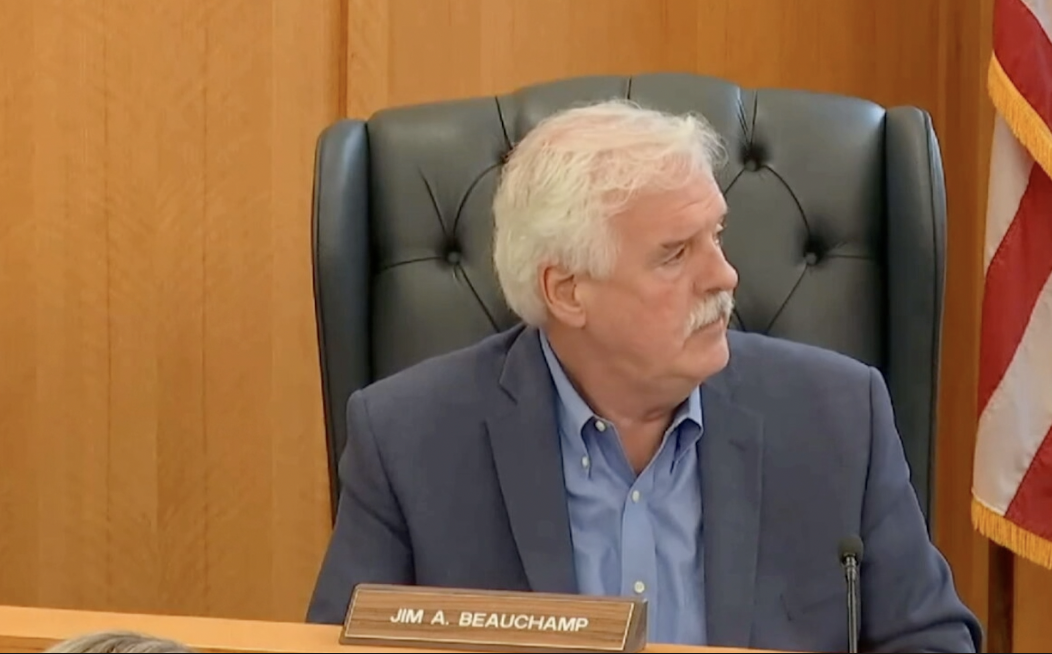
While Centreville Council Member Daniel Worth had to recuse himself due to a potential conflict of interest, the four remaining members voted 4-0 to pass a historic plastic ban ordinance that goes into effect next year. As a result, Centreville will join Chestertown and Easton municipalities, which already have similar rules in place.

After hearing a final public comments, including concerns about restaurants possibly paying a disproportionate cost for the implantation of the ban, Council members shared some of their thoughts before the roll call. The Spy was able to capture some of those highlights last night.

Queen Anne’s County will be debating a county-wide ban in the months ahead.

This video is approximately 12 minutes in length.

The Spy Newspapers may periodically employ the assistance of artificial intelligence (AI) to enhance the clarity and accuracy of our content.

Filed Under: Eco Portal Lead, Centreville Best

Governor Wes Moore Unveils Two Major Environmental Initiatives on the Mid-Shore

July 21, 2023 by Maryland Matters Leave a Comment

Say “task force” and most Marylanders’ eyes are sure to glaze over. And yet, these dull sounding instruments of government can often be major drivers of important policy.

On Thursday, Gov. Wes Moore (D) and several key members of his administration traveled to a steamy Eastern Shore to announce two policy initiatives that will be shaped, at least initially, by new task forces — one to strengthen protections to the Chesapeake Bay, the other to boost Maryland’s oyster industry. The administration officials visited a seafood packing plant and a farm for good measure.

The daylong visit began at the state’s pristine Wye Island Natural Resources Management Area in Queenstown. There, Moore, Lt. Gov. Aruna Miller (D) and Natural Resources Secretary Josh Kurtz planted an oak tree along the Wye River, and Moore later signed an executive order creating the Governor’s Council on the Chesapeake Bay and Coastal Bays Watershed.

The new task force is being assembled as Maryland and the six other Chesapeake Bay watershed jurisdictions — Delaware, New York, Pennsylvania, Virginia, West Virginia and the District of Columbia — scramble to meet federal pollution reduction goals for the Bay and look ahead to a new regional strategy on Bay cleanup that is expected to be finalized next year.

Moore described the effort as a novel approach that places a greater emphasis on science and data, brings more stakeholders to the table and will pay as much attention to the environmental developments along shorelines and in shallower areas of the Bay and its tributaries as scientists currently do to the tributary’s deepest points.

“The Chesapeake Bay coalition is about more than just protecting a body of water,” he said. “It’s about how we come together to solve big problems.”

Moore said he hoped other Bay states would adopt Maryland’s model as they develop newer guidelines and protections. While Moore did not specifically say who would serve on the new council, he told reporters, “We see the build-out starting in very short order,” and said in addition to state officials, he wanted to ensure that the task force includes “people who are going to tell us their on-the-ground experiences.” He said he also expects the council to regularly provide “metrics” as it works its way toward developing state policy recommendations.

Later in the day, Moore and his entourage traveled to the University of Maryland Center for Environmental Science Horn Point Laboratory in Cambridge, site of an oyster hatchery, where he signed a second executive order, creating the Oyster Shell and Substrate Task Force. The task force is an outgrowth of 2022 legislation, spearheaded by Sen. Sarah K. Elfreth (D-Anne Arundel) and Del. Brian M. Crosby (D-St. Mary’s), to bolster the state’s oyster population and aquaculture.

“The task force will be led by all sectors of the economy,” Moore said. “We’re going to build a table that’s big enough for every stakeholder to have a seat.”

As he did at Wye River, Moore described the health of Maryland’s oyster population as integral to the health of the Bay — and ultimately, to the health of the state economy. Oysters are bivalves that serve as natural filters for water pollution.

“Our oysters can go shell to shell with oysters from every other state,” Moore said. “But it goes beyond there. It’s about the workers [in the industry]. It’s the researchers. It’s the shuckers. Maryland won’t be outshucked by anybody.”

After signing the executive order, Moore and several members of his cabinet — Miller, Kurtz, Agriculture Secretary Kevin Atticks, Planning Secretary Rebecca Flora, Environment Secretary Serena McIlwain, and Secretary of State Susan C. Lee — tossed oyster larvae that had been cultivated at the hatchery into a large tank of water, where they are expected to find purchase in shells at the bottom of the tank. Ultimately, the larvae are expected to grow into full-grown oysters. Every week, Horn Point dumps about 45 of these tanks with growing oysters into the Bay or its tributaries.

Republican lawmakers from the Eastern Shore attended both events and expressed cautious optimism — sprinkled with some skepticism — that Moore’s new task forces would be as inclusive as the governor promised and that they would produce the results that their constituents desire. But they saw Moore’s desire to solicit a full range of opinions as a hopeful sign.

“I’m anxious to see what the details are,” said Del. Steven J. Arentz (R-Upper Shore), at the Wye River event. “I do think it’s a great idea.”

Moore noted that Thursday’s trip was the 14th time that high-ranking officials had been to the Shore since he took office six months ago. Arentz also took that as a positive sign.

“If the governor’s going to show up here a lot he’s going to start to understand the concerns of the people who live here,” he said.

At the Horn Point lab, Sen. Johnny Mautz (R-Middle Shore) called the governor’s remarks “right on point.” But he said his constituents would be looking for signs that the administration is looking to let the free market thrive for watermen.

r.

“My constituents are very leery of the government saying it’s here to help,” Mautz said. “We want accountability. We want oysters. We want a clean Bay. We don’t want political achievements.”

Moore’s visit to the Shore Thursday included stops at J.M. Clayton Seafood Company in Cambridge, where he picked crabs alongside dozens of workers, and at a regenerative crop farm outside Easton.

Earlier this week, Mautz wrote to Moore, warning that local crab processors were being threatened by cheaper, imported crab meat, and urged the governor to use his influence with the Biden administration to push for federal tariffs on the imports. He said lump crab meat from Venezuela was selling for $11 to $12 per pound, and local crab processors, which as recently as last year were selling their product at $45 to $48 a pound, had dropped their prices to $32 a pound in an effort to compete.

“This is a very real and direct threat to our local processors, who need our support in renewing demands for federal tariffs,” Mautz wrote. “Although this situation is not new, it has been exasperated [sic] by inflation, which is driving consumers to the lower cost imports. Meanwhile, our processors are being forced to lower prices at the same time their costs of production are increasing.”

By Josh Kurtz

Editor’s note: DNR Secretary Josh Kurtz is no relation to Josh Kurtz of Maryland Matters.

The Spy Newspapers may periodically employ the assistance of artificial intelligence (AI) to enhance the clarity and accuracy of our content.

Filed Under: 2 News Homepage, Eco Portal Lead, News Portal Highlights

Introducing New Washington College CES’s Director Dr. Valerie Imbruce

June 21, 2023 by James Dissette Leave a Comment

For Dr. Valerie Imbruce, the journey to becoming Director of Washington College’s Center for Environment and Society (CES) began with an undergraduate trip to the remote cloud forests of Ecuador and found its way to researching the provenance of exotic fruits and vegetables in Chinatown.

Dr. Valerie Imbruce

In Ecuador, she developed a keen interest in the local flora. “I really got interested in tropical plants and their taxonomy, so I did a study of trailside vascular plants—those that can grow large and stand up straight because they have a vascular system with hardened cellular tissue—as opposed to algae and mosses—so I learned botanical nomenclature and how to identify plants by collecting them and making pressings of them for herbarium specimens,” she says.

Her early fascination with botany resulted in a field guide of tropical plants to educate visitors at the ecotourist lodge where she did her research.

“It was satisfying. I was learning. I was sharing what I learned with others. So, I decided that I wanted to pursue graduate studies. I started off in a master’s program and was then offered other opportunities to enroll in a PhD and become fully funded, working out that piece of graduate education.”

That led her to PhD work at the New York Botanical Garden, the preeminent place in New York to study botany and eventually to study the markets of Chinatown through the lens of food justice.

“My interest in tropical plants morphed into considering the plants we eat, and how that connects us to different environments. I started thinking about the mechanics of how plants are grown and distributed and how certain types of plants become culturally important and then economically important to feed groups of people. I wound up doing an in-depth study of Chinatown in Manhattan.

Fascinated by the cultural diversity expressed in the Chinatown markets, Imbruce began to explore the connection between market and vendor produce and how they were acquired: how did they get there?

“The streets of Chinatown have tables full of fresh produce. All these different Brassica species, from the mustard family of plants, like bok choy, Shanghai choy, yu choy, right? All of these vegetable species that come from East and Southeast Asia. These were not products that you could find readily in other places, and so, what I did was follow those, use fruits and vegetables as objects to follow their pathways of travel. Where do they come from? How do they get to the city where people are orchestrating these networks of exchange?

Imbruce identified a diverse network of entrepreneurs, from street vendors to international farmers, who utilize their social connections to establish trade systems tailored to Asian American audiences and cultures. Notably, these activities are concentrated in New York, which, due to its massive trade volume, is recognized as the produce capital of the United States. Eventually, she investigated one group in Honduras that developed an Asian vegetable export business in the Comayagua Valley, a prime region for agro-exports. They cultivate crops like Chinese eggplant, bitter melon, and chives, targeting markets on the East Coast of the US.

“You might look and say, well, we’re so good at supplying all of this food. We have food at low cost everywhere, but who is “we”? Where are the access points to what kinds of foods? Are they nutritious foods? Are they culturally appropriate foods? And is the cost relative to any one person’s income for those? So that’s where the justice angle comes in, for food systems. How is food exchanged to meet our needs?” Chinatown’s food system grew out of necessity at time in the US’s history when the Chinese Exclusion Act prohibited immigration from China and there was much anti-Chinese sentiment.

Now Dr. Imbruce focuses on her work as Director of CES. Six months into her role, succeeding Dr. John Seidel’s tenure as Director, Imbruce describes her role as requiring work on several different planes combing stewardship and education.

“I have come as a steward for what has been built, which is an incredible academic center that has positions and programs in place that are very much in line with how I see undergraduate education and how I see the “environment” in society. It’s that blending that brought me here, the natural and the cultural, and I think it is important to retain. So, part of my mission right now is shoring up things we have and filling positions at CES.”

One ongoing stewardship project is Harry Sears’ gift of 5,000 acres to the College. The River and Field Campus (RAFC) is a 10-minute drive down the Chester River and includes river frontage, forest, wetlands, grasslands, and agricultural lands. The campus is intended to serve as an educational and scientific research site. Presently, it houses two significant programs: the Foreman’s Branch Bird Observatory and the Natural Lands Project. Recently, further development of the site has been underway.

“Part of what I’ve been doing over the past couple months is helping expand those programs. For example, at Foreman’s Branch, we’re going to be breaking ground on a new bird banding station within the next year, and we’ll have a new facility where we can host educational workshops and host tour groups. There are tons of students who come to learn, Washington College students as well as area K through 12 students and bird enthusiasts of all kinds.”

While immersed in academics and directorship tasks, Imbruce won’t be sidelining her years of teaching skills. Reaching beyond her love for the world of academics and intellectual ideas, the new CES Director wants to create practical applications and discover audiences who can benefit from the bridge being built between the College and “the rich natural and human resources of the region.”

Imbruce plans to teach during her directorship and to develop a community food systems class with the hope of learning more about the various organizations in Kent County that work on food security issues—from ‘how people feed themselves when they need help to the kind of restaurants and supermarkets and shops in the area.’

“I would like to take a holistic look at our food system and find community-based projects that students can engage with,” she says. “My feeling is not just saying this is what we choose to study as students or academics, but to ask the community “what do you want?”

For more about CES, go here. The Center for Environment and Society is located at 485 S. Cross Street. Contact email: [email protected]

Dr. Imbruce received her Ph.D. from the City University of New York, where she participated in a collaborative program with the New York Botanical Garden. Her dissertation focused on food systems.

The Spy Newspapers may periodically employ the assistance of artificial intelligence (AI) to enhance the clarity and accuracy of our content.

Filed Under: 1 Homepage Slider, Eco Lead, Eco Portal Lead

The Mid-Shore Faces Code Red

June 8, 2023 by Maryland Matters Leave a Comment

Photo by Spy Agent 7

As of Wednesday, a majority of Maryland is under an air quality advisory due to smoke wafting in from raging wildfires in Eastern Canada, and state environment officials are warning that Marylanders should limit their exposure outside.

“Fires over Quebec continue to produce prodigious smoke which is being continuously funneled on northerly flow towards the Mid-Atlantic. Presently a concentrated plume of smoke is working south through Pennsylvania and New York towards the eastern half of Maryland,” according to the state’s Department of the Environment’s most recent air quality forecast discussion.

The smoky air began rolling in Tuesday evening, bringing in fine particles that are lung irritants, according to the U.S. Environmental Protection Agency.

High concentrations fine particles brought in through wildfire smoke can lead to a variety of symptoms, ranging from “relatively minor (e.g., eye and respiratory tract irritation) to more serious health effects (e.g., exacerbation of asthma and heart failure, and premature death),” according to the EPA.

Additional health effects attributed to short-term wildfire smoke exposure includes coughing, phlegm, wheezing, and difficulty breathing.

While more Northern cities are experiencing the brunt of the smoke and suffering from reduced air quality due to the wildfires in Canada, Maryland is catching a fair amount of smoky air.

Air quality is indicated through the air quality index (AQI), a metric that ranges from 0 to 500 AQI, with lower numbers meaning better air quality, according to AirNow, a partnership between federal environmental and health agencies. “Good” air quality index ranges from 0 to 50.Maryland Department of the Environment reports that most of Maryland is experiencing “unhealthy” air quality due to wildfires in Canada. Credit: Maryland Department of the Environment

In Maryland, Garrett and Allegany counties are under a “moderate” air quality advisory, at 89 AQI, the Maryland Department of the Environment reports. In this area, people who are uniquely sensitive to air quality are recommended to reduce outdoor excursion.

At 112 AQI, Washington County’s air quality is considered “unhealthy” for sensitive groups, which includes children, older adults and people with respiratory disease or heart disease. These groups are recommended to take precautions and limit prolonged outdoor exertion, according to AirNow

All of Maryland’s remaining counties and Baltimore City are under a Code Red at 151 AQI, meaning that all residents should limit prolonged outdoor exertion and sensitive groups should avoid outdoor activities, according to AirNow.

The governor’s office released a list of tips to keep healthy during poor air quality:

• If you have lung or heart disease, stay indoors.
• Air conditioning can improve the air quality indoors.
• Masks (like N95s, KN95s) will reduce the particles that you breathe, but they can also make it harder to breathe.
• Be alert for breathing problems in children, especially children with lung problems like asthma.
• Check on neighbors and relatives with chronic health problems.

“The health and safety of Marylanders is our top priority. We will continue to monitor the situation and provide updates as more information is available,” Gov. Wes Moore (D) said in a statement.

Current projections from the state environmental department indicate that some reprieve from smoky air is likely to arrive between Thursday and Friday, when a majority of the state is expected to move from an “unhealthy” air advisory to “unhealthy for sensitive groups.”

By Danielle J. Brown

The Spy Newspapers may periodically employ the assistance of artificial intelligence (AI) to enhance the clarity and accuracy of our content.

Filed Under: 2 News Homepage, Eco Portal Lead

Maryland Restarts Water Quality Permitting Process for Conowingo Dam

June 3, 2023 by Maryland Matters Leave a Comment

Maryland environmental officials are restarting a controversial permitting process that would eventually enable Constellation Energy to continue operating the Conowingo Dam for another half century.

The future of the dam along the Susquehanna River, considered a significant source of Chesapeake Bay pollution, has been the object of regulatory wrangling and litigation for several years.

In December, a federal appeals court vacated a decision by the Federal Energy Regulatory Commission (FERC) to grant Constellation a license to keep generating hydroelectric power at the dam.

The judges in the U.S. Court of Appeals for the D.C. Circuit ruled that FERC had violated the federal Clean Water Act in giving the permit, after the state of Maryland and Constellation scrapped a water quality certification process they had originally agreed to. That agreement between the state and Constellation prompted a coalition of environmental groups, led by Waterkeepers Chesapeake and the Lower Susquehanna Riverkeeper, to sue; the court agreed with them that FERC “had no authority to issue a lease based on a private settlement arrangement” between the state and the national energy giant.

The court ordered that FERC merely grant Constellation an annual license for Conowingo Dam until the legal and procedural issues can be resolved.

On Thursday evening, officials at the Maryland Department of the Environment notified Constellation and the environmental groups that launched the lawsuits that the agency would renew the process for awarding Constellation a water quality permit. That permit, which was originally issued in 2018, is necessary for FERC to grant the 50-year license to Constellation to continue generating hydropower at the dam.

In a letter from MDE Assistant Secretary Roberta James to attorneys representing the parties in the lawsuit, the state said it was giving Constellation and the environmental groups 60 days to respond, offering them “the opportunity to supplement that information [from the 2018 review process] by providing any new, updated, and relevant information which the parties would like the Department to review.”

Separately, Maryland Matters has learned that MDE is also opening a 30-day comment period for members of the public to express their views about water quality issues at the dam in writing. The agency would then begin to assemble the feedback from the public and the parties in the lawsuit in August and would issue a renewed permit, with potentially different standards and guidelines from the original permit, at an undetermined date.

“Ensuring a revitalized Chesapeake Bay for the benefit of all Marylanders is a top priority,” Maryland Environment Secretary Serena McIlwain said in a statement. “As we move ahead with the reconsideration of the 2018 Water Quality Certification we will be transparent, we will welcome input and we will work collegially with all parties for a healthier and more vibrant Bay.”

Conowingo Dam is a major regional energy installation, but it also plays an important role in the health of the Chesapeake Bay. It is designed in part to catch much of the sediment and nutrient pollution that comes from upriver in Pennsylvania, which, according to federal and regional environmental regulators, is the source of much of the agricultural pollution that in the bay.

However, powerful storms can tax the dam’s capacity, pouring millions of pounds of pollution into the Susquehanna and the Chesapeake — potentially jeopardizing Maryland’s attempts to meet the federal government’s pollution reduction goals for the bay.

Two months ago, all 10 members of Maryland’s congressional delegation wrote to McIlwain, urging her to ensure that environmental protection measures for the Susquehanna River and Chesapeake Bay watershed are central to any new licensing agreement that FERC would consider for the dam.

“As you know, the Chesapeake Bay is both a national treasure and an economic engine for our region, and for decades the federal government and watershed states have worked together to clean up this vital resource,” the lawmakers wrote.

By Josh Kurtz

The Spy Newspapers may periodically employ the assistance of artificial intelligence (AI) to enhance the clarity and accuracy of our content.

Filed Under: Eco Lead, Eco Portal Lead

Consumer Guide Criticized for Saying ‘Avoid’ Chesapeake Oysters

May 27, 2023 by Bay Journal Leave a Comment

The Chesapeake Bay’s oyster population is still a long way from what it once was, but lately it’s shown signs of a rebound. Maryland and Virginia watermen harvested more of the bivalves in the most recent season than they had in more than three decades.

So why is Seafood Watch, a widely consulted guide to sustainable seafood, recommending that people avoid eating wild-caught oysters from the Bay?

The Monterey Bay Aquarium, which produces Seafood Watch, isn’t saying. A spokesperson for the California aquarium declined a request for an interview to answer questions about its draft report, which includes a recommendation to shun oysters from Maryland or Virginia.

“At this time, we are not able to comment on the draft assessment as the report may change based on feedback we receive in the public comment period,” the spokesperson said by email.

The aquarium was taking feedback through May 22. Since making its draft report public in April, it has received an earful from watermen, fishery managers, scientists and even other conservationists. Critics contend it erroneously portrays the Bay’s oyster population as overfished and poorly managed, a characterization they say even in draft form is hurting the region’s seafood industry.

“They have no idea what they’re doing,” said Robert T. Brown Sr., president of the Maryland Watermen’s Association, “… and they’re interfering with people’s livelihoods.”

Since 1999, the Monterey Bay Aquarium’s Seafood Watch program every few years has been offering what it says are science-based recommendations on which fish and seafood across the United States are sustainable “best choices” or “good alternatives” — and which should be avoided because of the risk of that species’ depletion or of harm to the marine ecosystem. It distributes about 2.5 million printable online guides every year aimed at influencing the purchasing decisions of nonprofit organizations, businesses and consumers.

Based on its last assessment in 2018, Seafood Watch currently rates oysters from Maryland and Virginia a good choice, despite some concerns, for those who care about sustainable seafood.

The new draft assessment downgrades those recommendations, citing “high concern” for the abundance of oysters in both states and deeming their public fisheries management ineffective. It even finds fault with the methodology Maryland has used in assessing the abundance of its wild oyster stock and whether it’s being overharvested.

Officials with the Maryland Department of Natural Resources say no one from the aquarium contacted them in developing the new assessment, and they were stunned to learn of the “avoid” recommendation.

“There’s missing information, there’s outdated information. They have misinterpreted information, and they have failed to live up to their own standards of using the best science and collaborating,” said Kristen Fidler, assistant DNR secretary for aquatic resources.

Agency officials defended the state’s oyster management, which they say is based on a science-driven stock assessment that has been reviewed favorably by a panel of outside scientists.

Mike Wilberg, a fisheries scientist with the University of Maryland Center for Environmental Science who led the development of DNR’s stock assessment, said he thought the Seafood Watch drafters applied an overly broad and uneven brush when rating the sustainability of oyster stocks along the East Coast. He said they failed to appreciate the complexities of the Bay’s oyster population and how it varies from one place to another.

“Some of the things we were criticized for [by Seafood Watch] are things we were praised for in the expert review of our stock assessment,” he noted.

“I applaud their efforts to get consumers to make conscious decisions [about sustainability],” Wilberg added. “Unfortunately, with all this stuff, the devil is in the details.”

Roger Mann and Mark Luckenbach, a pair of veteran oyster biologists with the Virginia Institute of Marine Science, likewise contend that the Seafood Watch ratings of their state’s fishery are “based on old data and are entirely inappropriate.” The data cited by the report’s drafters in deeming oyster abundance “a high concern” was more than a decade old, they pointed out.

JC Hudgins, president of the Virginia Waterman’s Association, said that the Virginia Marine Resources Commission and members of the seafood industry “do a lot to keep the Eastern oyster a sustainable species,” even as the state’s harvest from public fishery areas in the 2022–23 season topped 300,000 bushels for the first time in 35 years.

Since 2018, when Seafood Watch rated Virginia oysters a good choice, the fishery has steadily improved every year, Hudgins said. Last year, he noted, reef surveys found oyster densities at levels not seen since before diseases struck in the late 1980s and triggered a catastrophic decline in population and habitat.

Brown, head of the Maryland watermen’s group, said he believed the Maryland oyster recommendation was also based on outdated information. In the six-month 2022–23 season that ended March 30, watermen harvested more than 600,000 bushels, the most since 1986–87.

In the recently ended season, Brown said, “a lot of people were still catching their limits [early] at the end of the season. That’s telling you we had plenty of oysters there.” He also noted that since the first stock assessment in 2019 that found widespread overharvesting, the state has reduced daily catch limits. “We’ve got a good management plan,” he said.

Even conservationists, who have at times voiced their own criticisms of oyster management in the Bay, have qualms about the draft Seafood Watch recommendation.

Allison Colden, the Chesapeake Bay Foundation’s Maryland director and a fisheries biologist, said she thinks the aquarium may be jumping the gun because a fresh update of the state’s oyster population is due to be completed and released within a matter of weeks. She noted that conditions for oyster reproduction and survival have been on the upswing lately, with very low mortality rates from the once-devastating diseases MSX and Dermo.

Even so, Colden said, the Seafood Watch assessment “does highlight some of the lingering concerns CBF has had and still has with the fishery.” Though only a few areas are still experiencing overfishing, one of those is Tangier Sound, where the majority of Maryland oysters are harvested.

And while oyster reproduction has been good to excellent the last few years, Colden said, caution is warranted because the fishery has undergone boom and bust cycles in the past.

Colden said she was in wholehearted agreement with another Seafood Watch recommendation — a blanket endorsement of farmed oysters as a “best” choice for consumers concerned about the sustainability of the reef-building bivalves.

“We have long recommended that consumers choose farmed oysters from the Chesapeake Bay,” she said, “because that eliminates any possibility of concerns about sustainability or about oyster recovery.”

But even there, Maryland officials say, the Seafood Watch guides don’t make it clear enough that their “avoid” recommendation doesn’t apply to the state’s farmed oysters.

“We have a successful and growing oyster industry, both wild and aquaculture,” Fidler said. The “avoid” recommendation “could be incredibly damaging to the industry and really a major and unnecessary setback, especially with all the progress we’ve made.”

by Tim Wheeler

The Spy Newspapers may periodically employ the assistance of artificial intelligence (AI) to enhance the clarity and accuracy of our content.

Filed Under: 2 News Homepage, Eco Portal Lead, News Portal Highlights

Supreme Court Rules against EPA on Wetlands Protections

May 26, 2023 by Maryland Matters Leave a Comment

The U.S. Supreme Court in a major environmental decision on  Thursday overturned the Environmental Protection Agency’s definition of wetlands that fall under the agency’s jurisdiction, siding with an Idaho couple who’d said they should not be required to obtain federal permits to build on their property that lacked any navigable water.

All nine justices agreed to overturn the 9th Circuit Court of Appeals’ ruling that endorsed the Biden administration’s broad definition of waters of the United States, or WOTUS, the term for what falls under federal enforcement of the Clean Water Act.

But they published four separate opinions that showed a 5-4 split in how far they would allow federal jurisdiction to extend, with the conservative majority ruling to significantly narrow federal agency power.

“It is a substantial change to the way wetlands have been regulated under the Clean Water Act” since the law’s 1972 enactment, said Ashley Peck, an environmental litigator and water quality adviser at Holland and Hart LLP. “It looks like it will eliminate jurisdiction for a huge amount of wetlands, particularly in the arid West.”

Conservative Justice Brett M. Kavanaugh and the court’s three liberals concurred with the ruling in favor of Idaho landowners Michael and Chantell Sackett, but objected to the majority’s narrow new standard, which they said introduced more uncertainty and would hurt water quality.

The Sacketts had sought to build on a piece of their property separated by a 30-foot road from a tributary to Priest Lake in the Idaho panhandle. Lower courts held they needed federal environmental approvals because of their land’s connection to Priest Lake.

The Supreme Court heard oral arguments in their appeal in October.

‘Continuous surface connection’ test

Writing for the court’s majority, Justice Samuel Alito said the Clean Water Act applies only to wetlands with a “continuous surface connection” to the navigable waters like streams, lakes, oceans and rivers that are indisputably covered by the law.

The Biden administration’s definition — that said an area with an ecologically “significant nexus” to a navigable waterway was subject to Clean Water Act enforcement — would put nearly all waters and wetlands in the country under federal jurisdiction, with little room for state enforcement, Alito wrote.

Wetlands must be virtually indistinguishable from the navigable waters for federal jurisdiction to apply, he wrote.

That standard would limit the EPA and Army Corps of Engineers’ authority to regulate wetlands, even in areas where no one had disputed federal power.

Alito, who was appointed to the court by President George W. Bush, praised the Clean Water Act for effectively curtailing water pollution. But he said the law “is a potent weapon” with severe penalties, and its power should be checked.

The text of the law uses both the terms “navigable waters,” which has a well-known definition, and “waters of the United States,” which does not, Alito wrote.

The EPA, Army Corps of Engineers and various courts have held that waters of the United States can include tributaries to navigable waters and even dry land with an ecological connection to those tributaries.

The inclusion in the statute of “navigable waters” means Congress was focused on the permanent lakes, rivers, streams and oceans that are generally included in that definition, even if some wetlands can also be regulated under the law, Alito wrote.

“Although we have acknowledged that the CWA extends to more than traditional navigable waters, we have refused to read ‘navigable’ out of the statute,” Alito said.

Some adjacent wetlands can still be considered waters of the United States, Alito said. But for the federal law to apply to a wetland, it “must be indistinguishably part of a” covered water, he wrote.

The ruling represents a sweeping shift in wetlands regulation, even for a conservative court with a recent history of restricting federal regulations.

“This was a broader brush than I expected,” Peck said. “This is always a possibility with this court, for certain, but I wasn’t necessarily expecting to have the whole regulatory regime upended.”

In a statement, President Joe Biden called the decision “disappointing.”

“Today’s decision upends the legal framework that has protected America’s waters for decades,” he said. “It also defies the science that confirms the critical role of wetlands in safeguarding our nation’s streams, rivers, and lakes from chemicals and pollutants that harm the health and wellbeing of children, families, and communities.”

The Chesapeake Bay Foundation said Thursday that the decision means thousands of isolated wetlands unique to the Bay watershed, which may only flow during certain seasons or after it snows or rains, lose protection from being dredged and filled without a permit.

According to the Bay Foundation, some states in the Bay watershed — Maryland, Pennsylvania, and Virginia — have state regulations that could offer some coverage for wetlands that the EPA can no longer regulate. But loopholes, waivers, and limited enforcement by state officials could leave wetlands at risk. The danger is greater in Delaware and West Virginia, which mirrored federal law in lieu of establishing their own state protections, according to the organization.

Chesapeake Bay Foundation Vice President of Litigation Jon Mueller issued a statement about the decision:

“This dangerous decision risks damaging decades-long efforts by multiple states, federal agencies, and local jurisdictions to restore the Bay and its waterways. States without strong wetlands protections could now abandon their Chesapeake Clean Water Blueprint responsibility to reduce nitrogen, phosphorus, and sediment pollution in those areas because they are no longer covered by the Clean Water Act,” he said. “…Far from clarifying which waters are protected by the Clean Water Act, this ruling only sets us up for continued litigation and uncertainty while limiting our ability to protect and preserve the natural wonder we all treasure. The Bay, its tributaries, and the 18 million people living in its watershed deserve better.”

Kavanaugh and liberals band together

Kavanaugh, with the court’s three liberals joining, wrote that a continuous surface connection to navigable waters was not strictly necessary for wetlands to fall under federal jurisdiction. Waters can be adjacent without that connection, they said.

Kavanaugh, in a notable departure from the usual alliance on the court, said the majority rewrote the law and introduced new questions about wetlands that have long been subject to federal jurisdiction.

“The Court’s new and overly narrow test may leave long-regulated and long-accepted-to-be-regulable wetlands suddenly beyond the scope of the agencies’ regulatory authority, with negative consequences for waters of the United States,” he wrote.

Kagan blasts judicial policymaking

Justice Elena Kagan wrote a separate concurring opinion with fellow liberal Justices Sonia Sotomayor and Ketanji Brown Jackson that criticized the court for policymaking.

Drawing parallels with her dissent in a decision last year that restricted the EPA’s power to regulate carbon emissions at existing power plants, Kagan wrote that the court’s conservatives simply substituted their policy preferences for what Congress actually enacted.

The majority in this case invented a standard that laws that impact private property must have “exceedingly clear language,” Kagan wrote, putting “a thumb on the scale for property owners,” and disregarding the public interest in clean water.

“A court may not rewrite Congress’s plain instructions because they go further than preferred,” she said. “That is what the majority does today in finding that the Clean Water Act excludes many wetlands (clearly) ‘adjacent’ to covered waters.”

Lengthy legal fight

The case is part of a decades-long legal conflict to define the reach of the Clean Water Act.

Alito’s majority opinion referenced the years of shifting definitions and the uncertainty provided in various court cases and agency regulations, calling it “the persistent problem that we must address.”

In general, agricultural interests, home builders and Republican officials have argued that the federal regulations impose an undue burden and should be applied narrowly.

“The Supreme Court just ruled that Biden’s overreaching WOTUS interpretation is unconstitutional,” Missouri Attorney General Andrew Bailey, a Republican, said on Twitter. “This is a huge win for farmers across America.”

Environmental groups and Democrats have argued for a broader definition that they say allows the federal government to offer important protections.

“Federal protections that don’t depend on local politics or regional polluter influence are essential to vulnerable and disadvantaged communities nationwide,” Jim Murphy, the director of legal advocacy for the National Wildlife Federation, said in a statement “The court’s ruling removes these vital protections from important streams and wetlands in every state.”

Murphy called on Congress and state governments to adopt stronger standards.

The ruling doesn’t necessarily limit the issue’s long-running uncertainty, Peck said. While it settles federal jurisdiction for now, states, especially in the West, may decide to strengthen their own clean water laws and regulations, she said.

Reaction from Congress

Several Republicans in Congress responded to the ruling with enthusiasm.

“The Supreme Court’s decision is clearly a decisive win for America’s farmers, small businesses, property owners, and those who help build our infrastructure,” U.S. House Transportation and Infrastructure Chairman Sam Graves of Missouri and Water Resources and Environment Subcommittee Chairman David Rouzer of North Carolina said in a joint statement.

“This is great news for rural America!” Minnesota Republican Pete Stauber, the chairman of the U.S. House Natural Resources Subcommittee on Energy and Mineral Resources, tweeted.

“I’m glad to see the Supreme Court rightfully and unanimously blocked Biden’s ill-conceived #WOTUS rule,” U.S. Sen. Joni Ernst of Iowa wrote on Twitter. “This is a big WIN for Iowa, where nearly every industry is impacted.”

“Kansans are best positioned to conserve our land and natural resources,” Kansas Republican U.S. Rep. Ron Estes said. “And they don’t need Biden’s bureaucrats 1000 miles away to regulate the rainwater that accumulates in ditches in rural parts of our state.”

Fewer Democrats publicly commented on the ruling, but Senate Environment and Public Works Chairman Tom Carper of Delaware said the decision undermines the EPA’s ability to effectively regulate water pollution and puts “America’s remaining wetlands in jeopardy.”

“I strongly disagree with the Court’s decision, and I am deeply concerned about the future impacts of this case on clean drinking water, coastal and flood-prone communities, and wildlife across our nation,” Carper said.

By Jacob Fischler. Danielle E. Gaines contributed to this report. 

The Spy Newspapers may periodically employ the assistance of artificial intelligence (AI) to enhance the clarity and accuracy of our content.

Filed Under: Eco Lead, Eco Portal Lead

Maryland Court finds County Erred in Waiving Forest Conservation Law

May 19, 2023 by Bay Journal Leave a Comment

An effort to prevent development of one of the last large, unprotected forests near the upper Chesapeake Bay has won a signal victory, but too late to spare some of its oldest trees from the bulldozer.

A Harford County Circuit Court judge ruled May 9 that the county’s planning and zoning officials improperly granted developers permission three years ago to remove 49 large “specimen” trees while developing a business park in a 326-acre tract known as Abingdon WoodsHarford Investors LLP and BTC III I-95 Logistics Center LLC received county approval in 2020 to clear 220 wooded acres for the construction of four large warehouses, restaurants, shops, a hotel and gas station. As part of the plan, the county also waived a requirement in its forest conservation ordinance that would have required the developers to preserve trees that were notable specimens because of their size and age.

The county allowed the removal of 49 of 85 such trees after the developers asserted that it would be a hardship to keep them.

The Chesapeake Bay Foundation and some residents living near Abingdon Woods filed suit in 2020, arguing that the county failed to follow the Forest Conservation Act, the 1991 state law on which the county’s ordinance was modeled. Harford Circuit Judge Diane Adkins-Tobin at first dismissed the case, ruling at the time that the county’s sign-off on a developer’s forest conservation plan could not be appealed until the entire project was approved.

But in 2022, Maryland’s highest court — now called the Maryland Supreme Court — ruled that a developer’s forest conservation plan could be challenged in court and sent it back for reconsideration. The Harford judge then ordered a temporary halt to construction until she could hear and decide the case, but clearing at the site had already begun.

In January, when the case came up for a hearing, the county — which had until then defended its decision — switched its position and asked the judge to send the issue back to the county to reconsider.

In her May 9 opinion, Adkins-Tobin did just that. She declared that the county had not made any findings of fact, as required by the law, to justify waiving the preservation of all specimen trees.

The Bay Foundation hailed the latest ruling as a “major victory.”

“The judge’s ruling sends a message to counties and developers that there must be a clear factual basis for granting waivers from the state’s requirements to protect forested land,” said Paul Smail, the organization’s attorney.

“Most developers won’t suffer hardship,” Smail added, “by preserving forests and large trees that benefit residents’ physical and mental health, the enjoyment of their property, and improve water quality.”

Tracey Waite, chair of the Save Abingdon Woods Coalition, said the rulings set important precedents for preserving trees and forests.

“These court actions and decisions have kept hope alive even as trees were being cut down,” she said.

Before work was stopped at the site, though, the developer felled 22 of the specimen trees.

“Families of turkeys were seen running out of the woods and through suburban neighborhoods looking for cover,” she said. Polluted runoff into the stream called Haha Branch also was observed after rainstorms, she added.

The Bay Foundation’s lawyer noted that project opponents had tried and failed to prevent the start of tree clearing until the case could be resolved. He said he and his clients are now weighing what recourse they have for the loss of those trees.

Meanwhile, the court has yet to rule on a separate related lawsuit challenging the Maryland Department of the Environment’s decision to let the developer build across wetlands and a stream.

Harford County spokesman Joe Cluster said officials are still reviewing the ruling in the Bay Foundation lawsuit and weighing their next step. That decision comes at a time when Republican County Executive Bob Cassilly, who took office in December, has expressed reservations about the environmental impacts of e-commerce-related warehouse development in the county.

At Cassilly’s behest, the county council in April approved a three-month moratorium on warehouse projects while officials weigh what if any new limits or requirements they want to place on them. That has at least temporarily held up another large warehouse project proposed on Perryman Peninsula near the Bush River, a tributary of the Chesapeake Bay.

Waite said that during the moratorium, her group and others hope to persuade the county to alter its development laws to permit distribution centers larger than 200,000 square feet only on land zoned for industry — which would prevent construction of what she called “mega-warehouses” at Abingdon Woods and Perryman Peninsula.

“There’s every reason to keep fighting,” she said.

By Tim Wheeler

The Spy Newspapers may periodically employ the assistance of artificial intelligence (AI) to enhance the clarity and accuracy of our content.

Filed Under: Eco Lead, Eco Portal Lead

  • « Previous Page
  • 1
  • 2
  • 3
  • 4

Copyright © 2026

Affiliated News

  • Chestertown Spy
  • Talbot Spy
  • Cambridge Spy

Sections

  • Sample Page

Spy Community Media

  • Sample Page
  • Subscribe
  • Sample Page

Copyright © 2026 · Spy Community Media Child Theme on Genesis Framework · WordPress · Log in