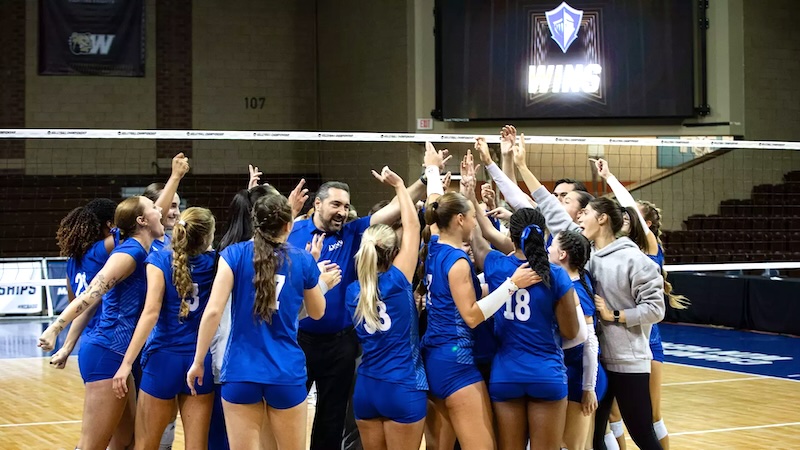


I was flipping through channels last month and stopped at the NCAA Women’s Volleyball championship. I was surprised that a women’s volleyball game was televised on national television.
Women’s sports have a way to go, but they have made progress. The Women’s National Basketball Association (WNBA) has become a popular spectator sport.
All of the women playing were physically beautiful. Some wore make-up and earrings and had their hair tied back, others let their natural beauty shine through. After each point they formed a circle and held hands to support each other. Their performance, athleticism, comradery, and appearance made them all stunning.
It allowed me to think about how the view of women’s beauty has changed over the centuries. Athletics for women was often discouraged in my time.
In the Victorian era, the ideal woman was characterized by a very small, corseted waist, rounded shoulders, and a generally subservient and dainty appearance. Any form of strenuous activity was discouraged, believing it could harm a woman’s reproduction or general health.
In the 1950s the hourglass figure was the ideal, with a philosophy that women do women’s work and stay away from sports.
The aversion to female athleticism came from norms that associated strength, aggression, and competition with masculinity. Women who excelled in sports were often questioned about their femininity.
But changes in the viewpoint of feminine beauty started with the women’s movement (which resulted in Title IX). The consensus about women’s beauty has increasingly become athletic-friendly. Beauty now embraces strength. Traditional views that women should not engage in physical effort have dissipated.
There has also been an increase in collaborations between major beauty brands and female athletes and sports leagues (like the WNBA). These partnerships redefine beauty to include strength and athleticism.
Media coverage of women’s sports, especially around major events like the Olympics, have brought female athletes into the public eye, allowing their athletic prowess to be viewed and appreciated. It promotes a more inclusive view of beauty that celebrates the diverse forms and capabilities of women.
We still have a way to go, models tend to be very slim and appear unhealthy.
But I like the direction in which we are headed.
Angela Rieck, a Caroline County native, received her PhD in Mathematical Psychology from the University of Maryland and worked as a scientist at Bell Labs, and other high-tech companies in New Jersey before retiring as a corporate executive. Angela and her dogs divide their time between St Michaels and Key West Florida. Her daughter lives and works in New York City.
Write a Letter to the Editor on this Article
We encourage readers to offer their point of view on this article by submitting the following form. Editing is sometimes necessary and is done at the discretion of the editorial staff.