
MENU

Sections

  • Home
  • Education
  • Donate to the Centreville Spy
  • Free Subscription
  • Spy Community Media
    • Chestertown Spy
    • Talbot Spy
    • Cambridge Spy

More

  • Support the Spy
  • About Spy Community Media
  • Advertising with the Spy
  • Subscribe
March 4, 2026

Centreville Spy

Nonpartisan and Education-based News for Centreville

  • Home
  • Education
  • Donate to the Centreville Spy
  • Free Subscription
  • Spy Community Media
    • Chestertown Spy
    • Talbot Spy
    • Cambridge Spy
1 Homepage Slider Archives Point of View Laura

My Inspiration Now and Always By Laura J. Oliver

December 1, 2024 by Laura J. Oliver Leave a Comment

My eldest, ever-practical daughter, who has made England her home, where she and her husband are raising their two boys, 6 and 7, wants to know what I want for Christmas. She is organized and dutiful. She will have all her gifts ordered and delivered to every family member in North America weeks before December 25. She could run a Fortune 500 company or perhaps a small country.

I’m in awe of this kind of efficiency. I’m also squeamish.

I don’t like thinking about what I want for gifts, looking up links, sending suggestions that will make the life of this person I love so much easier. I feel like I’m placing an order.

I try to flip this around. “What would YOU like?” I ask. “What are the boys into?” When I was visiting this summer, the boys were racing their bikes up a backyard ramp at breakneck speed in order to sail over their father’s prone body lying in the grass on the other side. Sort of an extreme trust-fall experiment. That made me squeamish, too.

“I’ve already bought your gift for them,” my daughter says. “I’ll send you a link so you know what you got them. Don’t worry. They’ll know it’s from you. I put your name on it.”

But it’s not from me.

I understand her thinking. She doesn’t want money spent on stuff the kids already have or that she doesn’t need. She returned the ring light I sent in what I thought was a burst of genius gift-giving during the pandemic within minutes of opening it. She simply had no use for it. She texted the news as I rode an escalator to the second floor of Macy’s. I cried in Sheets and Bedding.

“But what can I get them?” I protest. I want every gift to be personal, meaningful, and a surprise. She is, however, wearing me down. Plus, our roles are reversed now. I’m not in charge. Remember how you used to say, “You’re not the boss of me?” to friends and siblings bossing you around?

That ship sailed to England 15 years ago.

So, determined to be thoughtful, I start poking around on the internet for toys, and I find myself distracted from my mission by stuff for myself! A subscription to “The Atlantic!” To “Smithsonian!” A soft new robe! Woah—here’s a link—maybe I’ll just flag this one.

But the process is a little like Christmas when I was 14 and told my mother I wanted a record player and a hair dryer. About a week before Christmas, I found both waiting to be wrapped in the spare room. Exactly what I wanted.

I was so depressed. Might as well skip Christmas. Who cared?

Gift giving and receiving is pressure. I get that. It’s just that when you are inspired it’s the best feeling ever. Generosity is at our core. Some of the best gifts in my family history prove that.

Best gift surprise: shortly after my parents divorced and Mom and my sisters and I were still adjusting to the change, my older sister and I rushed downstairs Christmas morning to find we’d each been given a cat. My sister’s gift was a classy white Persian kitten. Mine was a giant striped alley cat who’d been around the block a few times—doing God knows what. Probably time in the joint. How Mom had found, purchased, and kept two cats a secret from us, I’ll never know. I’m sure she was compensating for our father’s absence.

Dad’s gone. How ‘bout a cat?

Best gift ever: My daughter-in-law entered my life shortly after I sold a book to Penguin Random House. That new-family-member Christmas, I still didn’t know her well. When I opened the gift she had made me (made me), I cried. It was a framed piece of original artwork. She had excised a phrase from my book’s dedication to my children, Audra, Andrew, and Emily, in calligraphy onto a background pattern so subtle that I initially didn’t recognize what it was. “My first and best stories,” it read. When I looked carefully at the background, I realized she had somehow laid the inscription over a collage of images of everyone I love. “My inspiration now and always.”

Did you know that different parts of your brain light up when you quietly feel into things that make you happy as opposed to things for which you are grateful? Try it. Stimulation of different parts of the brain initiates a subtly different feeling. Happy is a gift you asked for arriving just as requested! Yay!

Grateful is the surprise that blows you away.

Grateful feels better.

We had several Christmas traditions growing up, and one was the reading of “The Littlest Angel” around the fire on Christmas Eve. In the story, a 4-year-old cherub is having difficulty adjusting to heaven. He sings off-key, whistles irreverently, and constantly tumbles head over heels in the clouds. He swings on the Golden Gate, his halo is usually askew, he’s late to choir practice, and his white robe is grubby. Called before the Angel of the Peace to explain his mischief, the Littlest Angel confesses that he is homesick for trees to climb, brooks to fish, soft brown dust beneath his feet. He’s sorry he’s a disruption, but there’s just nothing for a 4-year-old boy to do in paradise. Yes, it’s beautiful, but so was Earth.

When asked what would make him happy, he asks for one thing: a small wooden box he’d kept under his bed, and lo and behold, the box appears. Suddenly, the Littlest Angel is the model of decorum. His behavior is impeccable.

Soon, heaven is abuzz with the news that a baby is about to be born, and the archangels are gathering their gifts. The Littlest Angel has nothing to offer until he remembers the box. It is all he has, all that he loves. He slips it among the magnificent, gilded presents of the other angels at the foot of the throne of God, then recognizes too late what a shabby and worthless offering he has placed amidst the glory. Mortified, he tries to retrieve it just as the hand of God moves over the mountain of gifts and chooses his to open.

Inside the box are two perfect white stones found playing on a muddy riverbank with his friends on a long-ago summer day, a butterfly with golden wings, and a sky-blue eggshell from a nest in the olive tree next to his mother’s kitchen door. At the bottom is a worn collar from a dog who had died in absolute love and infinite devotion– all keepsakes from the life he so loved.

The cherub hides his eyes in grief and humiliation, and then suddenly, the voice of God rings out, proclaiming his to be the most pleasing gift of all.

The box begins to glow, then shine with a brilliant light, blinding the heavenly hosts so that only the Littlest Angel sees it rise up, and up, and up until it becomes a star in the celestial firmament. The star heralding the birth of the baby, leading everyone home.

I come by my unreasonable desire to give meaningful gifts honestly. I spend all week trying to make something beautiful for you.


Laura J. Oliver is an award-winning developmental book editor and writing coach, who has taught writing at the University of Maryland and St. John’s College. She is the author of The Story Within (Penguin Random House). Co-creator of The Writing Intensive at St. John’s College, she is the recipient of a Maryland State Arts Council Individual Artist Award in Fiction, an Anne Arundel County Arts Council Literary Arts Award winner, a two-time Glimmer Train Short Fiction finalist, and her work has been nominated for a Pushcart Prize. Her website can be found here.


The Spy Newspapers may periodically employ the assistance of artificial intelligence (AI) to enhance the clarity and accuracy of our content.

Filed Under: 1 Homepage Slider, Archives, Laura

The Physics of Hope By Laura J. Oliver

November 24, 2024 by Laura J. Oliver Leave a Comment

Human beings claim to be the only species on the planet capable of feeling awe. I’d add to that distinction an amazing capacity to hold contradictory beliefs and experiences simultaneously. 

The Trinity comes to mind. 

That we will laugh again after a devastating loss.

That we are divine in origin yet hurt each other every day.  

That light is both a wave and a particle. 

A lot of things in my life feel contradictory, such as irreparable rifts with people I love. Case in point: Aren’t “love” and “irreparable” contradictory?  

And the election feels like this to a lot of us. People we are related to, people whose company we enjoy, and people we respect did not vote as we did. And that feels contradictory. How can I like you so much and not think the same way? It’s funny, isn’t it? It’s easier to accept a difference in spiritual beliefs than this political one. Wait. It is a difference of spiritual beliefs. And it’s not easier. And ironically that’s what brought my ancestors and perhaps yours here in the first place. 

In visiting a first cousin who lives in England last summer, I discovered that her husband, a research historian with time on his hands, had documented our grandmother’s family tree back to the Mayflower. Our 10th great-grandfather, Francis Cooke, and his son John, had boarded the Speedwell, which set sail with the Mayflower on August 5, 1620, but Speedwell leaked so badly they had to turn back for refitting. Both ships set out a second time, with Speedwell leaking so badly that again, both ships turned back just 100 leagues past Land’s End, and Speedwell was sold. Twenty people returned to London, but eleven passengers from Speedwell boarded the Mayflower. (Ultimately, the leaks proved to have been sabotage by sailors trying to escape their year-long contracts.) Francis and John entered Cape Cod Harbor on November 11, 1620, so I’m guessing they participated in the first Thanksgiving. In 1621, however, Thanksgiving was simply a meal shared with the Wampanoag to celebrate a bountiful harvest.

The celebration had no religious context for the first couple of years, then it occurred to the grateful they should be thanking the divine. That annual tradition continued informally for over 200 years until President Abraham Lincoln issued an official proclamation in 1863 designating Thanksgiving as our annual national day of gratitude. A day all the states were to stop and give thanks in the middle of a war to dissolve their union….

And in what feels to be a further contradiction, this same President had signed off on the largest mass execution in the nation’s history not two years before, hanging 38 boys and men who fought for their tribal lands in the Sioux Uprising. It was the day after Christmas 1861. The decision and the vision defy imagination.

Even more contradictory, Lincoln commuted the sentences of 262 similarly convicted warriors, studying the evidence in each man’s case and absolving them one at a time. 

We had united in arms to free ourselves from a monarchy only 88 years before, yet here we were already in the middle of a Civil War, half of us trying to break that union and half to preserve it. During this time of contradictory alliances, even within the same family, Lincoln freed the slaves, executing one minority and liberating another.

Human beings are complex, which means humanity is complex. How could it be otherwise? We are driven by neural wiring, hormones, cultures, personalities, the damage we carry, maybe by the very stars under which we were born. 

Your nose is pressed against the glass of now, staring through the present at a future that is yet to be determined. In quantum physics, we could say we are in superposition, which is a phenomenon where an object (the future) has the potential to occupy multiple different states at once, but the object’s actual state is unknown. It’s everywhere and nowhere. In essence, anything could happen because the future is only a wave of could-be. 

  Although we do not understand why, observing the wave collapses the wave. The wave becomes particles— the stuff of matter, the stuff of which stars are made, we are made, and from which everything we call future follows. 

Consciousness is creative. Attention is a powerful tool. Where will you place yours?

How many miracles have you experienced in your life? Every one of them, by definition, contradicted circumstances. The impossible happened! Inexplicably, against all odds—from no way, a way appeared. 

Mom used to look at me when I was grieving over a loss and say, “Life is long.” Other times, presented with the same situation, the response was, “Life is short.”  And both were true.

The rift in our nation has a lot of people satisfied that we have corrected our course and others struggling to believe we are going to be okay. I stand in remembrance that we have healed once before, when the red and the blue were the blue and the grey. I’m in awe.

Place your attention on truth and hope, beloveds.

The future is in superposition. 

Collapse the wave.


Laura J. Oliver is an award-winning developmental book editor and writing coach, who has taught writing at the University of Maryland and St. John’s College. She is the author of The Story Within (Penguin Random House). Co-creator of The Writing Intensive at St. John’s College, she is the recipient of a Maryland State Arts Council Individual Artist Award in Fiction, an Anne Arundel County Arts Council Literary Arts Award winner, a two-time Glimmer Train Short Fiction finalist, and her work has been nominated for a Pushcart Prize. Her website can be found here.
The Spy Newspapers may periodically employ the assistance of artificial intelligence (AI) to enhance the clarity and accuracy of our content.

Filed Under: 1 Homepage Slider, Archives, Laura

Food Friday: Gather Together

November 22, 2024 by Jean Sanders Leave a Comment

Next week our family will be gathering around an improvised table at a rented lake house, ready to share another Thanksgiving meal. Our cooks and bakers have varying levels of experience and expertise, as our ages range from 4 to 74. Thanksgiving is a forgiving meal. There are reliable dishes no matter the skill set or what disasters may happen in the kitchen. And there will be a few bottles of Beaujolais Nouveau which can sparkle over any surface flaws.

Gravy and the mashed potatoes, are always tasty window dressing and camouflage. We can pile mounds of potatoes decoratively, and pour lashings of warm, cosmetic gravy. We will have the annual debate about dressing or stuffing; we do not stuff the turkey’s cavity with a tasty and aromatic combination of bread, celery and pecans, yet we still call our heaping casserole dish of steaming, bread-y goodness – stuffing. You do what your family dictates. And later on we can all meet in the kitchen for pilgrim sandwiches.

Here it is, just a week before Thanksgiving and the family has not yet voted on the dinner rolls. Growing up, we had Pepperidge Farm Parker House rolls for ceremonial dinners. When we moved to North Carolina, those same Parker House rolls were an acceptable substitute for homemade biscuits when serving warm ham biscuits, with a mild spicy brown mustard, thin slices of onion, and a sliver of Swiss cheese. Yumsters. Or should we bake Pillsbury Crescent rolls? We do have 2 ovens in the rental house, so we should cook, and bake, at full capacity. Carbs are us, after all. I could also consider baking some homemade yeast rolls, but I have a couple of crafts I want to make with the younger folks. I might just delegate the baking.

Though I will probably whip up a batch of corn bread to go with the vat o’chili we are bringing with us for on our first supper at the lake house, and it will be the basis of our stuffing-slash-dressing. That is easy, unglamorous home baking. Happily, I can easily bake it since it does not require yeast or kneading or ingredient weighing. And it is something we can cheerfully eat at breakfast, lunch and dinner. Every day. We go through mountains of cornbread when whenever we gather, which validates my time spent in the kitchen.

Here is the Mark Bittman’s recipe for cornbread – the easiest recipe of all – leaving me time to get back to planning the crafty pinecone-turkey place cards and the hand-printed turkey wreaths. Mark Bittman’s Corn Bread

Our little house is in the smack in the middle of a pecan orchard, and there a bumper pecan crop this year. Consequently, the squirrels are having a drunken convention in our back yard. There are thundering squirrel hooves tearing across the roof all day, as they leap from tree to roof, to another tree, with balletic abandon. Squirrelly boys scoff at the pedestrian rations in the bird feeder. This might be the perfect year for us to learn to harvest some home-grown pecans, before the wretched rodents bury every one.

Here is the Food & Wine recipe for cornbread stuffing that we will use this year: Food & Wine Dressing Corn Bread and Pecan Dressing

Instead of roasting the turkey, as usual, this year we are going to try spatchcocking it. We have only tried this method once before, but we have acquired a couple of dark meat eaters, and we don’t want to overcook their portions. I can’t watch that spatchcocking process, it looks too painful, so I might organize a walk around the lake with my fellow crafters.

And that purple sweet potato pie? Our social media influencer’s targeted audience will be chattering about it all afternoon. The vivid purple, the color of ripe beauty berries, is meant for Instagram, more than the uniform green bean casserole, the beige turkey, or my blandly unoriginal orange pumpkin pie. Purple Sweet Potato Pie https://www.eatingwell.com/recipe/268752/purple-sweet-potato-pie/

Have a picture perfect Thanksgiving. Cook with abandon. Gobble, gobble!

“To each other, we were as normal and nice as the smell of bread. We were just a family. In a family even exaggerations make perfect sense.”
–John Irving

The Spy Newspapers may periodically employ the assistance of artificial intelligence (AI) to enhance the clarity and accuracy of our content.

Filed Under: 1 Homepage Slider, Archives

Radcliffe Creek School awarded grant to support students with ADHD and anxiety

November 20, 2024 by Spy Desk Leave a Comment

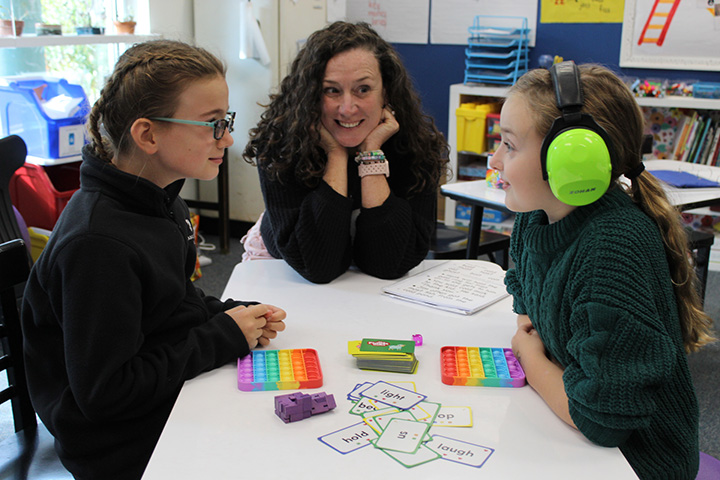
RCS students Addison and Emma using Sensory Resource items during instruction time with Mrs. Simon, English and Orton-Gillingham Teacher at Radcliffe Creek School.

Radcliffe Creek School (RCS) was recently awarded a grant from the Queen Anne’s County Mental Health Committee (QACMHC) to provide the School’s faculty and parent community with resources to support students with Attention-Deficit/Hyperactivity Disorder (ADHD) and anxiety in the classroom and at home. This grant will fund a new Sensory Resource Room at RCS, expand the School’s Social-Emotional Learning (SEL) Library, continue the SEL program for older students, as well as support a full day of training with parents and teachers on ways to support mental health in neurodivergent children.

The new Sensory Resource Room at RCS will be filled with tools and equipment for teachers to check out for their classrooms as needed, helping students calm and regulate their sensory systems. When a child is in a heightened state due to an issue like anxiety, it can interfere with a student’s ability to be present in the classroom setting. Depending upon whether a child’s body is overly sensitive to sensory stimuli or seeking more sensory input, this equipment will help students regulate their bodies to be more available for learning. Debbie Cohee-Wright, a special education learning specialist at RCS, explained, “At Radcliffe Creek School, we recognize the needs of our students and how sensory integration will enhance their learning experience based off their own individual needs and strengths. The new Sensory Resource Room will enable our teachers to have the appropriate tools at their fingertips for ease and accessibility throughout their day.”

Equipment in the Sensory Resource Room will include noise-canceling headphones, weighted lap and shoulder pads, indoor hanging sensory chairs, bean bags, chair bands, fidgets, white noise machines and sound-absorbing wall panels. The integration of these resources will support students by addressing their fine motor skills, gross motor skills, social skills, cognition and play skills.

Additionally, this grant will allow the expansion of the School’s SEL library and continued SEL curriculum for older students, as well as a speaking event to be hosted for RCS parents and teachers in early 2025 with Dr. Vincent Culotta, an expert in mental health and neurodivergent children. Head of School Peter Thayer explained, “We remain grateful to QACMHC for their continued support of our school and for making these important educational and therapeutic mental health resources available to our parents, faculty and students.”

This is the second year in a row that QACMHC has awarded a grant to Radcliffe Creek School. “The Queen Anne’s County Mental Health Committee is excited to see Radcliffe Creek School utilizing the grant funds from us to reach the goal of maintaining their social-emotional learning program “Brain Talk” as well as faculty training, supplying the sensory room, and adding to their social-emotional learning library,” stated QACMHC President, Kelly Phipps. “The scheduled visit of Dr. Vincent Culotta to train faculty in helping students with ADHD and anxiety in the classroom will further enrich Radcliffe Creek’s program. The committee is proud to be a part of the school’s dedication in educating their students on achieving and maintaining sound, positive mental health.”

To learn more about the immersive, individualized education program offered at Radcliffe Creek School, as well as the school’s robust transportation program, visit www.radcliffecreekschool.org online or call 410-778-8150.


The Spy Newspapers may periodically employ the assistance of artificial intelligence (AI) to enhance the clarity and accuracy of our content.

Filed Under: 7 Ed Notes, Archives, Ed Homepage

Mass Transit By Laura J. Oliver

November 17, 2024 by Laura J. Oliver Leave a Comment

If you were walking your labradoodle on the other side of the avenue, I’d look like I’m just staring at the ground, perhaps listening to a book on Audible, perhaps “James,” by Percival Everett, which, if you haven’t read it yet, stop reading this immediately and go get a copy.

I’m actually praying over a dead squirrel. And before you say “just” a squirrel, consider that he has hidden 10,000 acorns in the last six weeks and will remember and return for 90 percent of them. Next time you’re searching for your cellphone, a little respect, please. Ask a squirrel.

I can’t tell what got him. It seems squirrels have only one successful predator: cars. But he’s perfect. No visible trauma. It looks like he’s sleeping—his eyes are closed, his little feet are relaxed, and his tail is a gray plume on the dry maple leaves.

“I am so, so, sorry, squirrel,” I whisper.

I hope it looks like I’ve just paused for a moment so Leah-dog can sniff the Bachner’s boxwoods while I actually stand there and pray that death didn’t hurt or scare him and that he is scampering through the oaks in heaven with his squirrely ancestors.

But truthfully, I’m also grossed out.

Why is it that things that are perfectly fine when alive become instantly unnerving when dead? The minute the spirit leaves the body, it becomes something else.

I had to drive to Cambridge last week to record more episodes of “This is How the Story Goes” for NPR station WHCP. It’s over an hour’s drive through fetching farmland, big sky over big fields, but a lot of big things had died on the side of the road. Things that were cute when animated and scary when vacated. A raccoon, several deer (one just a fawn), a fox, a possum and several squirrels. And I’m speeding by at 65… okaaay, 75 mph, praying a dead-animal prayer for each, including for a bag of mulch that had fallen off a truck and only looked like something dead.

Dead things grieve me unreasonably. Me of all people! I don’t even believe in death as an ending—not even as a change of address—only as a change in accessibility—for now. A change in mass, vibration, and visibility. Death blindfolds us to a greater reality. How will I get your attention, say the people who still love you from the other side of now. But love doesn’t go anywhere. At least not anywhere that it can’t come back from instantaneously upon request.

I’ve only seen two dead people, the most recent being my mother. That experience was less unnerving than numbing. Having been called by the staff of her assisted living facility and informed she was “actively dying”—a horrible term, but I’m not sure I have a better one—I had tried desperately to get there before she left for parts unknown. I had wanted to see her off, to hold her hand, to be there for her last breath as she was there for my first. To say thank you one more time for everything in between.

But I was minutes too late. Minutes. The midnight call, a lazy security guard at a locked facility, a red traffic light, and an inattentive nurse, all conspired to thwart a timely arrival.

So, when I rushed up the stairs and into my mother’s room, only her body was there. The figure on the bed wasn’t her, and she wasn’t nearby. This may be only because of the opaque nature of my own soul; maybe she was standing right there, saying, “It’s okay, Laura, my brother Ralph showed up! My big sister Lenora! Then Mom and Dad invited me to come with them, so I have to go–will check on you later.”

Maybe. But while I gazed at what had been my mother, I sensed no one in the room at all.

I sat down and tried to take it in. That she was gone. That I had missed her time of departure. That I was an orphan. That the person in the bed I’d left earlier that day was a body now and that person and body are not the same thing.

I called a funeral home, sitting on a straight back chair in the silent room. It was after midnight and the holiday season. All available employees were out on other calls. Couldn’t say when they would get there. Probably hours into the night—maybe by 2:00 am or 3:00 am. Maybe by 4:00.

I sat by her side for another hour. The whole facility was silent. Sleeping. Dreaming. Christmas garlands still draped the doors. Holiday lights twinkled on Christmas trees in the hall. Classical music played softly in the dimly lit room. Silent night, holy night. Lonely night.

Total privacy, no one coming or going, and Mom so thoroughly absent. The assisted living facility had supervised this transition a million times, and I had overnight guests at home who would be waking soon. It felt as if sitting there served no purpose. So, I left.

I left. And I feel bad about that now. Really bad. What on earth was I thinking? Of course, I should have stayed, protected her no matter how tired I was, how numb. Is this why I am so grieved by everything that dies now?

When I was a child, Mom told me that the moment she knew, deep down in her bones, that we are not our bodies and yet we live on, was the moment she saw the body of her own mother. The minute I saw her, I knew she wasn’t there. It wasn’t her; she had left, yet she was in no way gone.

Left and gone. Not the same thing.

Know this as sure as you know the name that I gave you.

 When it’s my turn, I won’t be able to leave if even one of my kids is in the room. So maybe I’ll do what Mom did and leave while they are at a stoplight, sleeping, or putting a baby to bed.

And I’ll say to them what Mom must have said to me as I rushed to her side that last night—

 Love you. Have to go.   

 Will be in touch.


Laura J. Oliver is an award-winning developmental book editor and writing coach, who has taught writing at the University of Maryland and St. John’s College. She is the author of The Story Within (Penguin Random House). Co-creator of The Writing Intensive at St. John’s College, she is the recipient of a Maryland State Arts Council Individual Artist Award in Fiction, an Anne Arundel County Arts Council Literary Arts Award winner, a two-time Glimmer Train Short Fiction finalist, and her work has been nominated for a Pushcart Prize. Her website can be found here.


The Spy Newspapers may periodically employ the assistance of artificial intelligence (AI) to enhance the clarity and accuracy of our content.

Filed Under: 1 Homepage Slider, Archives, Laura

The Sun Also Rises By Laura J. Oliver

November 10, 2024 by Laura J. Oliver Leave a Comment

When I was little, when you were little, there were some specialized forms of torment a friend or older sibling could indulge in that were extraordinarily irritating —by design.

Like this move: pinching your cheeks, wagging your face back and forth, while exclaiming, “What a pretty little pony face!”

Was that a thing? Or did that just happen to me?

It was a real ninja move– sort of an endearment but a painful one. And what is a pony face anyway? The result of wearing a ponytail? I’m looking in the mirror…could be.

Then there was the setup. On cross-country road trips, Mr. Oliver’s sister, only 13 months younger, relentlessly whispered, “You’re stupid.”  in the backseat, her voice inaudible to their parents. This could be ignored the first few times, but by Oklahoma, this stealthy maneuver required a punch in the tormenter’s slender bicep which was met by a satisfied and very audible, “He hit me!”  (Followed by a whispered, “Gotcha,” as her brother was admonished from the front seat of the car.)

But this form of harassment could break the most disciplined among us–having every statement out of your mouth repeated. These exchanges degenerated quickly.

Talk about irritating!

Talk about irritating.

See?

Eventually, the victim would attempt to turn the tables, announcing with a triumphant smirk, “I’m an idiot,” waiting for that sentiment to be echoed, which, of course, it wasn’t. There was only one idiot in the room at that point.

The original repeater of language was Echo, an Oread, a mountain nymph in Greek mythology. Zeus had ordered the loquacious Echo to distract his wife Hera with conversation while Zeus pursued earthly pleasures. Hera figured out the subterfuge and to punish Echo for her role in the deception, Hera deprived the nymph of speech, leaving her only the ability to repeat the last words of others.

Later, when Echo fell hopelessly in love with Narcissus, she couldn’t tell him. Unable to speak, she watched him fall in love with himself. Over time, her inability to express herself caused her to fade away, to shrivel into nothingness, until all that was left of her was a disembodied voice.

A real echo is a disembodied voice with a different origin story and message.

When we were little, there was a place above the marsh where, if you called out over the grasses and cattails, the red-winged blackbirds, and the heron’s nest, you could hear a faint echo of your voice. No scientific explanation (a high bank on the other side) could make the phenomenon less than cool. Less than super cool. And eerie.

And a hundred and twenty-five years ago, when my grandmother was a girl, she too found an echo. At the northeast corner of the pasture of her father’s farm—near the wooded hill they called the Lost Eighty, she and her siblings could yell or even talk normally, and their voices would come back loud and exact.

Intrigued, the kids set out to find the source of the echo. For years, they searched the Lost Eighty for the one particular tree or knoll that repeated their words, but they never found the source of the magic.

Why? Because it’s everywhere. In one form or another, whatever you send out returns to you. Your life itself is an echo, an energy rebound. This means that in a world where you clearly have no control, you still have a choice.

You can choose what you think and the feelings those thoughts generate. You can choose the words you write, speak aloud, and the energy you share.

The primal brain, the reptilian brain at the base of the ancient brain stem, is ego-centric. It interprets everything as inner-directed. This is why when you spontaneously stop to help the man who has dropped his keys, you feel good—as if someone has helped you. It is why you will never feel good repeating gossip or bad news. You will internalize only unkindness. You will feel only despair.

So, in a world you can’t control, choose what you say and choose what you do. In the words of Rachel Stafford:

Today, I will choose love. Tomorrow, I will choose love. And the day after that, I will choose love. If I mistakenly choose distraction, perfection, or negativity over love, I will not wallow in regret. I will choose love until it becomes who I am.

Becomes who I am.

Who I am.

You can’t save the world, but you can help the lost tourist from Delaware, the elderly man who is confused at Target’s self-checkout, the stressed-out mother with the crying toddler who clearly needs to go ahead of you in line.

You can give a 100 percent tip to your waitress. And you can say thank you even for the losses you can’t understand, because panic is a five-letter word but so is trust.

So is trust.

So is trust.

You can wallow and ruminate. You can note that it’s getting dark earlier. Or you can remember the sun will continue to rise.

When it feels as if all that was good has been buried, know hope is a seed.

Be the light.


Laura J. Oliver is an award-winning developmental book editor and writing coach, who has taught writing at the University of Maryland and St. John’s College. She is the author of The Story Within (Penguin Random House). Co-creator of The Writing Intensive at St. John’s College, she is the recipient of a Maryland State Arts Council Individual Artist Award in Fiction, an Anne Arundel County Arts Council Literary Arts Award winner, a two-time Glimmer Train Short Fiction finalist, and her work has been nominated for a Pushcart Prize. Her website can be found here.



The Spy Newspapers may periodically employ the assistance of artificial intelligence (AI) to enhance the clarity and accuracy of our content.

Filed Under: 1 Homepage Slider, Archives, Laura

Under a Dinosaur Sky By Laura J. Oliver

November 3, 2024 by Laura J. Oliver Leave a Comment

When our mother turned 60, my sister living in Virginia, secretly drove up for the celebration and hid in my coat closet. Mom thought she was just coming over for a birthday dinner with her Maryland daughters. When she opened the closet to put her jacket away, my hidden sister leaped out, yelling “Surprise!”

Not our finest moment. Mom practically had a heart attack.

I mean, really. She had to sit down.

Surprise affects our brain chemistry with noradrenaline, a hormone released when we are startled, and the fact that surprise intensifies emotion by 400 percent may be why I remember not only this, but another long-ago winter night I would not recall otherwise.

Surprise may also be learning’s secret sauce. Each new piece of information is a surprise that enlarges my world, and what pleases me even more is that once I possess a new interesting fact, I can share it.

(Did you know that research shows the scent of women’s tears lowers aggression in men? Tears drop levels of testosterone. But the response is only generated by tears of emotion, not watering eyes from cutting onions.) If only men could be exposed to the tears of every mother, wife, sister, and daughter before the order for ground troops. How many tears need to be shed for world peace?

The surprise of new information opens up the brain like the dome of an observatory. Did you know that when dinosaurs reigned, they were looking at a different sky? It takes the Earth approximately 230 million years to orbit the center of the Milky Way, so in their heyday dinosaurs roamed the other side of the galaxy. The arrangement of stars overhead was not what you see now. In fact, in the sky they saw, Saturn had no rings, but it kind of didn’t matter.

An asteroid called K2 was heading their way.

Surprise…

One of my first surprises was not as dramatic as the obliteration of most species on Earth, but it was life-altering. In first grade at Lake Shore Elementary on Mountain Road, where there was no lake, hence, no shore, and not a mountain in sight, I met a six-year-old classmate named Becky. One day I asked Becky where she lived, and being a six-year-old, she drew the map to her house in the air. We were standing in front of the brick, one-story school in sight of the flagpole. “You go out the school driveway and do this,” she said, making an upside-down L-shape turn to the left with her finger.

I was not only surprised, I was stunned.

That couldn’t possibly be correct. Because to get to my house, you drove out of the school driveway and turned right. I simply had no paradigm in which anyone lived in a different direction or neighborhood other than my own.

As insignificant as that exchange with Becky seems now it was my first revelation that the world was bigger than my experience of it. That not everyone lived on my road or inside my head. That not everyone sees the same sky.

Surprise.

Not long after that, I saw surprise in action at home. It had been snowing all day, and we’d been stuck in the house—dusk fell early, by 4:30 or so. It must have been just before Christmas or Mom’s birthday in February. It was certainly the season of gift giving. She had built a fire and closed the cream-colored curtains against the stone-gray twilight. Dad had gone out in the bitter cold several times—perhaps to bring in firewood or to brush snow off the car.

Having grown up on a farm, gone to college on scholarship, and put all their money into building Barnstead, the contents of my mother’s jewelry box were sparse, and luxuries were few. Mom owned necklaces made of cowrie shells my father brought home from the war in the Pacific, her college sorority necklace, and a locket that held their photographs, but little else, and nothing of value.

I was constructing a house made of pop cycle sticks and Elmer’s Glue at the maple dining room table when my father casually asked my mother, “Think the snow has stopped?

“Turn on the flood light. Take a look,” he suggested.

I put down the glue and ran to the picture window, too. The floodlight beamed down on the yard from what had been the hayloft. If you looked up into the light as the flakes swirled down, it was as if you were inside the storm.

Mom flipped on the switch, pulled the curtain aside, and gasped. A smiling snowman stood caught in the glistening spiral of this blanketed landscape. Instead of sticks, his arms had been sculpted in front of him, and a diamond ring sparkled in his cupped snowy palms.

Surprise.

Saturn will not always wear the icy diamonds that encircle her now. Most planetary rings last a mere 40 million years. My mother’s ring is gone, as is Barnstead, as is childhood, as are the parents who made me.

What has stayed with me is the delight and surprise of learning something new.

The world will always be bigger than my experience of it. But each time I discover another piece of her magic, I will come looking for you.


Laura J. Oliver is an award-winning developmental book editor and writing coach, who has taught writing at the University of Maryland and St. John’s College. She is the author of The Story Within (Penguin Random House). Co-creator of The Writing Intensive at St. John’s College, she is the recipient of a Maryland State Arts Council Individual Artist Award in Fiction, an Anne Arundel County Arts Council Literary Arts Award winner, a two-time Glimmer Train Short Fiction finalist, and her work has been nominated for a Pushcart Prize. Her website can be found here.


The Spy Newspapers may periodically employ the assistance of artificial intelligence (AI) to enhance the clarity and accuracy of our content.

Filed Under: 1 Homepage Slider, Archives, Laura

Capturing stillness: The Photography of Beth Horstman

October 23, 2024 by Val Cavalheri Leave a Comment

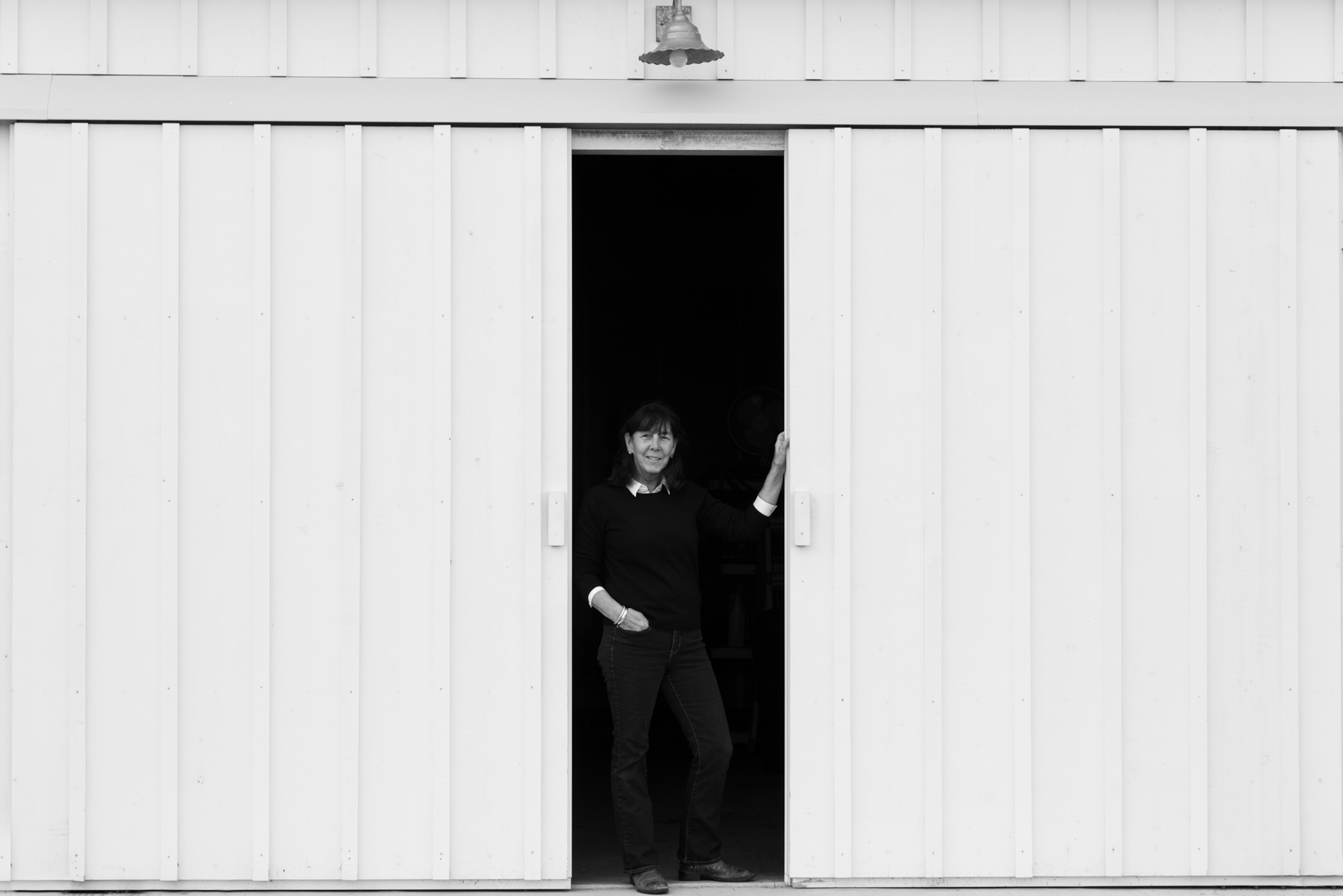
On exhibit now and through the end of the month at Adkins Arboretum, Mary-Land Scapes features the works of Beth Horstman and Joan Machinchick, both artists exploring the simplicity and richness of the Eastern Shore. While Machinchick’s watercolors highlight the lushness of the area, Horstman’s approach to photography uses symmetry, negative space, fog, and a balance of black-and-white and color images to reflect her connection to the landscape.

Horstman’s journey into photography began early. “I’ve had a camera since I was 12,” she said. Initially, her subjects were family moments and vacations, but her work took on new life after raising her children. “When everybody left home, it gave me the opportunity to start really looking at simple things that made me feel good.” After moving to the Eastern Shore 10 years ago, Hortsman found a new setting for her photographic exploration. “There’s so much space and character that it was like a photographer’s paradise.”

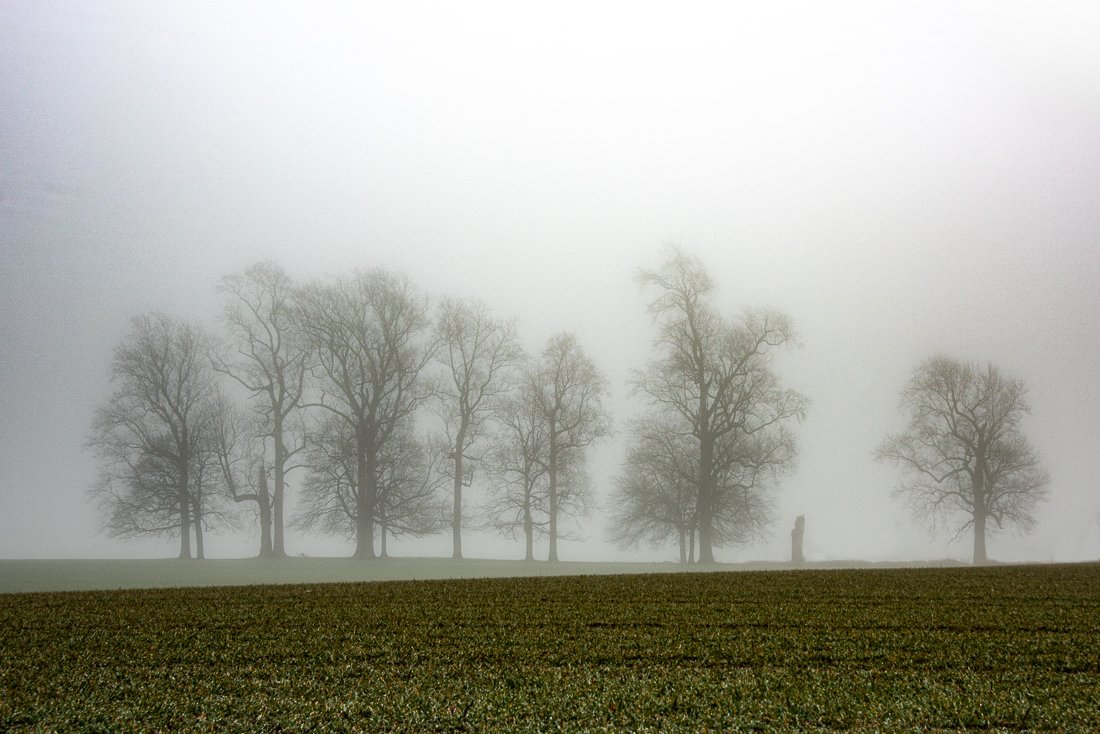
That spaciousness defines Horstman’s artistic approach. Her preference for isolating subjects and using minimalism is central to her work. “If I can isolate something that attracts me, she says, “I pursue it.” It’s all a way for her to block out distractions, allowing the viewer to focus on the subject without overwhelming detail. “I like the simplicity of one or two, maybe three things, but they all have to go together. That’s why I like fog—it allows me to block out what’s behind the subject.”

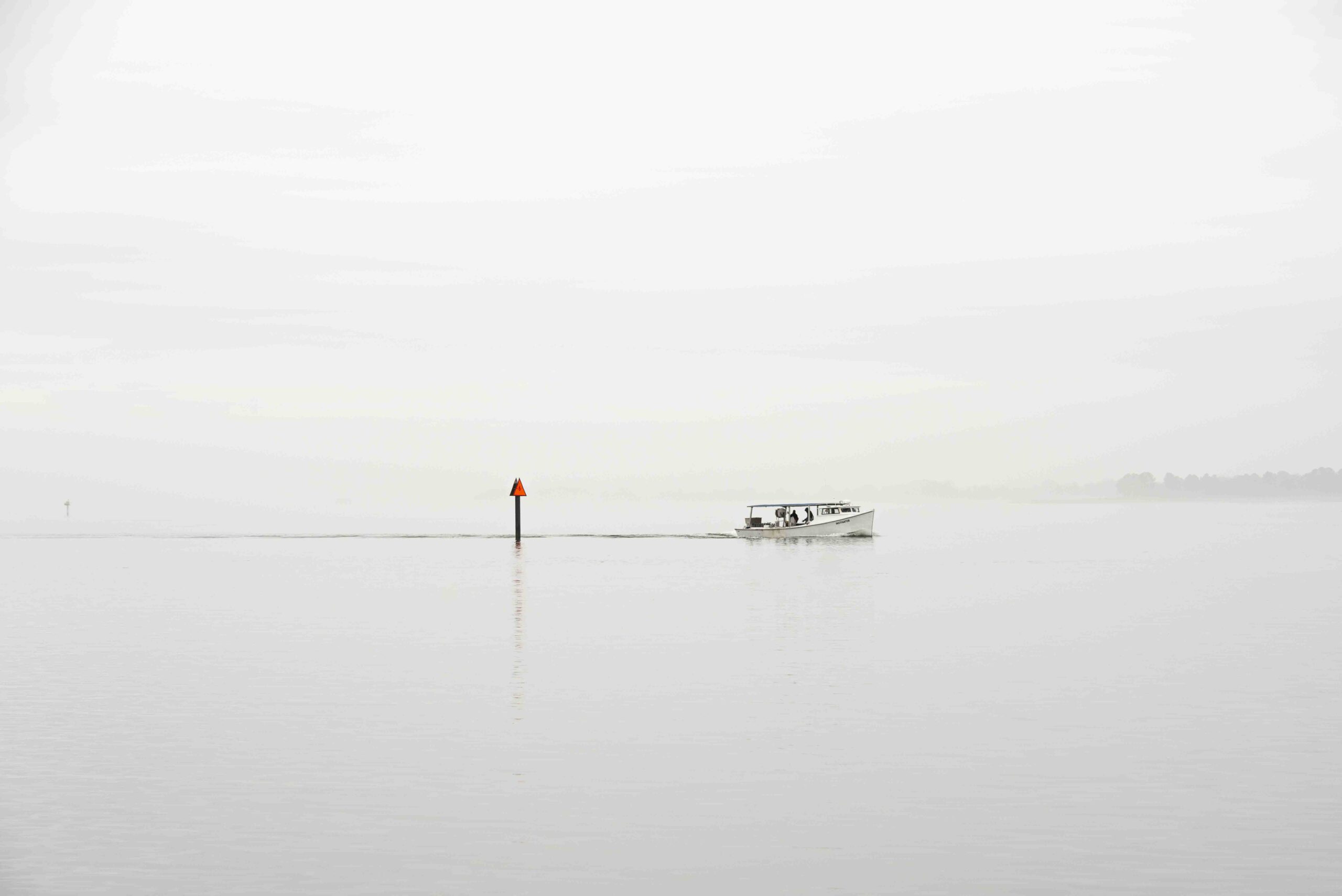
Though she’s also drawn to color, for Horstman, black-and-white photography has offered a unique way to convey this simplicity by not distracting the viewer. “However, when color is really strong, it shows something you want to look at.” She illustrates this balance with an example from her portfolio: “I have a photograph of a fishing boat coming through Kent Narrows, and it’s a color photograph, but there are maybe two colors in it—one of them being this super strong red marker. The color plays a role in the photograph, but it’s not overwhelming.”

This delicate balance between simplicity and power is a hallmark of Horstman’s work. She strives for images that offer viewers a visual reprieve. “I guess it’s just that your eye isn’t darting everywhere,” she explains. “It doesn’t take a lot of energy to look at it—it just feels calm. When there’s too much going on, I want to move on.”
Horstman’s creative process is guided by instinct. “It’s definitely a gut feeling,” she says. “I can look at one photo and know it’s exactly what I was aiming for, but another one might feel too colorful or not quite right.” This intuitive approach was fully displayed when she created a series of photographs inspired by her mother’s love of gardening. “My mother was in a care facility, and I wanted her to have a piece of spring inside with her. So, I took photos of greens——and blew four up to 30 by 30 squares. It’s like looking out a window, and they’re printed on metal, so the color really pops.” This series remains one of her favorites, not only for its visual impact but also for its personal connection.

Horstman is also drawn to trees, a frequent subject in Horstman’s photography, each chosen for its personality and how it complements the surrounding environment. “I look for trees that have character,” she says. “Sometimes they’re symmetrical, sometimes they’re not, but they always catch my eye. One of my favorites is a lone cypress tree at Nasawango Creek—it’s just this little tree living happily in the river, with woods behind it. I was able to blur the background and isolate that tree. It’s things like that, moments of solitude in nature that make me want to document them.”

While this article focuses primarily on Horstman’s work, it’s important to note the contributions of Joan Machinchick to the Mary-Land Scapes exhibit. Although the decision to exhibit together came about through Adkins Arboretum, it was a fitting match. While their mediums are different—photography and watercolor—their shared appreciation for nature ties their work together. “Joan’s paintings are so different from my photographs, but we both love nature, and that comes through in our work. For example, her gardens are domestic, and I love that about them. But they still capture the essence of the Eastern Shore.” 

The Mary-Land Scapes exhibit is not just a celebration of the visual beauty of the region but also explores its historical and environmental richness. For Horstman, the Eastern Shore holds a special place in her heart, dating back to her childhood. “We’d drive down here and sail for the weekend,” she says. “When we moved here ten years ago, it felt like coming home. 

As for what’s next, Horstman is content to keep sharing her work at her own pace. “I’ve been shy about putting my work out there,” she said. “But my mission is to share it- and let people experience it.” Early next year, she’ll showcase her work again at Out of the Fire in Easton, continuing to explore the themes of stillness that define her photography.

In a world that often moves too fast, Horstman gives viewers a moment to pause, reflect, and connect with nature in its purest form. Through her lens, even the most ordinary subjects—like a lone tree or a fishing boat—take on new significance, reminding us of the quiet strength and beauty of simplicity.

Mary-Land Scapes will be on view at Adkins Arboretum through October 26, 2024. Her work can be seen at: https://bethhorstman.com

The Spy Newspapers may periodically employ the assistance of artificial intelligence (AI) to enhance the clarity and accuracy of our content.

Filed Under: 1 Homepage Slider, Archives

Connected By Jamie Kirkpatrick

October 22, 2024 by Jamie Kirkpatrick Leave a Comment

Not all that long ago, if I told you I was a “connected” guy, you might think I was a made friend of Tony Soprano. But now, when I say I’m connected, I really mean I’m at the mercy of a thousand different electronic gizmos or smart phone applications that have been designed by tech-savvy kids half my age to make my life better, easier, simpler. For example, these days, I can set my home thermostat remotely; now, on a frosty morning, I can snuggle down under the covers and turn up the heat from my phone so that when I go downstairs, everything will be toasty. Or this: the smart coffee cup my daughter-in-law gave me for Christmas last year knows how to keep my morning joe at a constant temperature so even when I’m sitting on my front porch in chilly weather, my coffee always stays fresh and piping hot. Or this: I could drive to Timbuktu and back and never get lost because Waze will tell me how to get there, turn by turn. Not all that long ago, I would have needed a little helper in the shotgun seat navigating me across Mali by reading an extra-large, three-fold AAA map upside down. “Turn here!” and suddenly, I’m lost in Mozambique.

Think I’m yearning for simpler times? Not by a long shot! When I was a kid, our black and white tv had three channels and rabbit ears. Now, I need to ask one of the grandkids to turn on the damn set and then navigate through a myriad of platforms and channels so I can watch a football game. Heck, I could even open a multiscreen platform and watch five games all at the same time if I were so inclined. The fact that my eyeballs would be spinning in circles like Jerry Colonna’s isn’t the point; NFL Sunday is there if I want it.

It used to be that the Continental Divide was somewhere atop the Rocky Mountains. Not anymore. Now it’s the hands of young people like my eleven year-old grandson who know what I need and how to get it. The other night, when all the little kids were in bed, four adults spent an hour trying to find a way to download a particular movie we wanted to watch. By the time my friends figured it out, I was asleep, too.

We are indeed living in a brave, new world. The only problem is that I’m cowardly and old. My wife has tried to convince me that we would save a bundle of money if we gave up our home cable service, but I’m afraid that if we do, we’ll never find reruns of the Andy Griffith Show, or that the fees we’ll pay for all those new streaming services will make our current investment in basic cable look paltry in comparison, Sigh.

The days are getting shorter, and I’m not just talking about hours of daylight. I mean my own days are getting shorter. If being connected is this complex, then maybe it’s time for me to head for the Himalayan hills and join a monastery. I could spend my days chanting and studying ancient texts that reveal the true meaning of life. Nah; I’d miss NFL Sunday.

Believe me: I’m doing everything I can to make peace with all this new technology. Now, when I sit shivering on the front porch on one of these chilly October mornings, I’m delighted my coffee will stay piping hot while I watch Andy, Barney, Aunt Bea, and Opie whistling away their best lives down in Mayberry from my phone.

I’ll be right back.


Jamie Kirkpatrick is a writer and photographer who lives in Chestertown. His work has appeared in the Washington Post, the Baltimore Sun, the Philadelphia Inquirer, the Pittsburgh Post-Gazette, the Washington College Alumni Magazine, and American Cowboy Magazine.

His new novel, “The Tales of Bismuth; Dispatches from Palestine, 1945-1948” explores the origins of the Arab-Israeli conflict. It is available on Amazon.


The Spy Newspapers may periodically employ the assistance of artificial intelligence (AI) to enhance the clarity and accuracy of our content.

Filed Under: 3 Top Story, Archives, Jamie

Adkins Arboretum Mystery Monday! Guess the photo!

October 21, 2024 by Adkins Arboretum Leave a Comment

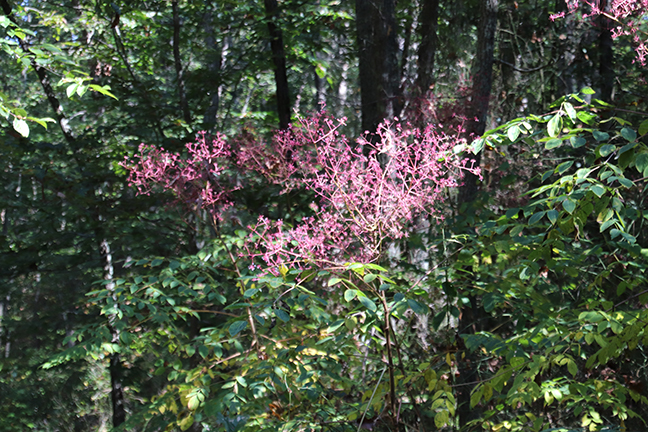
Happy Mystery Monday! Can you guess what is pictured in photo below?

The answer to last week’s mystery is devil’s walking stick, Aurelia spinosa, pictured in photo below.

Devil’s walking stick is a deciduous tree/shrub with a viciously spiny trunk. It is native primarily to the eastern half of the US. A member of the ginseng family, it is sometimes called Hercules club, prickly ash, or angelica tree.

Devil’s walking sticks spread by rhizomes underground, creating clonal thickets. They are found in upland and lowland woods and prefer moist soils. They’re commonly found at edges of streams and are classified as shade intolerant. Devil’s walking sticks are used as a unique ornamental in landscape plantings thanks to its decorative foliage and large flower clusters, and distinctive Fall color.

They are monoecious, meaning the tree has both male and female flowers in large clusters. The adult flowers and fruit provide nectar and food for a variety of insects and wildlife. The flowers are panicles (about 12-18 inches) occurring at the end of the branches. They are aromatic with a lemony scent. Devil’s walking stick flowers have insane pollinator action!

Mystery Monday is sponsored by the Spy Newspapers and Adkins Arboretum.

The Spy Newspapers may periodically employ the assistance of artificial intelligence (AI) to enhance the clarity and accuracy of our content.

Filed Under: Archives, Food and Garden Notes

  • « Previous Page
  • 1
  • …
  • 4
  • 5
  • 6
  • 7
  • 8
  • …
  • 21
  • Next Page »

Copyright © 2026

Affiliated News

  • Chestertown Spy
  • Talbot Spy
  • Cambridge Spy

Sections

  • Sample Page

Spy Community Media

  • Sample Page
  • Subscribe
  • Sample Page

Copyright © 2026 · Spy Community Media Child Theme on Genesis Framework · WordPress · Log in