
MENU

Sections

  • Home
  • Education
  • Donate to the Centreville Spy
  • Free Subscription
  • Spy Community Media
    • Chestertown Spy
    • Talbot Spy
    • Cambridge Spy

More

  • Support the Spy
  • About Spy Community Media
  • Advertising with the Spy
  • Subscribe
March 11, 2026

Centreville Spy

Nonpartisan and Education-based News for Centreville

  • Home
  • Education
  • Donate to the Centreville Spy
  • Free Subscription
  • Spy Community Media
    • Chestertown Spy
    • Talbot Spy
    • Cambridge Spy
00 Post to Chestertown Spy 1 Homepage Slider Archives

Rauschenberg at 100: An Eastern Shore Connection By Val Cavalheri

November 26, 2025 by Val Cavalheri Leave a Comment

You don’t expect a garbage bag in Easton’s dormant downtown storefront windows to be the reminder of a major museum exhibition, but that’s exactly the point. People walked by, puzzled. “Is it an antique shop? What is this?” For the Academy Art Museum’s Executive Director Charlotte Potter Kasic, the bag wasn’t trash. It was a playful nod to Robert Rauschenberg.

“Our team has had fun with the downtown ‘takeover.’ The windows have continued to evolve, and we’ve been going in and changing things each week.” For her, that storefront prop is an easy entry point to the man himself—a way of saying that he used everyday objects on purpose, making art people recognized.

But most people walking past Easton’s storefront windows have no idea that this was Rauschenberg’s language—or that he has a real connection to this area. And that is why the Museum is opening Rauschenberg 100: New Connections on December 11, an exhibition that will remain on view through May 3, 2026 and place Easton right in the middle of his worldwide centennial celebration.


Robert Rauschenberg

“Do you know who Robert Rauschenberg is?” Kasic asked as we began talking. “It’s interesting. A lot of people in our community do not understand what a powerful artist, change-maker, and influencer he was.”

“Rauschenberg was an incredible sculptor, artist, collaborator, printmaker—and, turns out, photographer,” she said. “He was one of those essential culture makers at Black Mountain College. He worked with John Cage. He worked with Merce Cunningham. He and Jasper Johns were lovers. He had a marriage and a son. He was a really interesting guy.”

His work, she said, grew out of a desire to re-ground abstract expressionism into things people recognized. “He wanted to make everyday art for the everyday person. Things had gotten so abstract people didn’t understand it anymore.”

From there, Kasic shifted to what the exhibit means for the Museum itself. “One of the things I’ve been saying about our identity is that, to do good things, there has to be a trinity. We need to be honest with our origin story—founded by artists, for artists. We need regional specificity, and we need excellence.”
And that’s when the local connection comes into focus.

Rauschenberg worked closely with artist, art historian, and master printmaker Donald Saff, known for his collaborations with Roy Lichtenstein, James Turrell, and others. After an illustrious career at the University of South Florida, Saff moved to Talbot County and continued working with these major artists at Saff Tech Arts, his studio in Oxford. “Rauschenberg was making this work right here in Talbot County, which is insane to me,” Kasic said.

That history leads directly to the centerpiece of the show: Chinese Summerhall, the hundred-foot-long color photograph Rauschenberg made during a 1982 trip to China.

“It was a cultural exchange,” Kasic said. “He was trying to mend the woes of society through understanding one another through art. And that also happens to be very timely right now.”

Apparently, Rauschenberg isn’t new to the Museum; they’ve had pieces connected to this project for years. Their Rauschenbergs include more than twenty related works—test prints, studies, and editions that show how the project developed. “Our work is really only interesting when you realize in context that, yes, they’re limited editions in their own right, but really it was all leading up to this monumental piece,” she said.

Bringing that piece to Easton, however, was not simple. There are only four of the hundred-foot works in existence: one at the Guggenheim, one in Florida, one with the Rauschenberg Foundation, and one at the National Gallery.

“We went to the University of South Florida, because that’s where it was made,” she said. “They agreed to loan it to us. We were full ahead for the show. And then the main contact person suddenly no longer worked there, and the loan fell through.”

That changed the entire exhibition plan. “Without the 100-footer, this story falls flat,” she said. “Everything was leading to that.”

Curator-at-large Lee Glazer then stepped in. “Lee wouldn’t take no for an answer,” Kasic said. “She went to the Rauschenberg Foundation and told them, ‘Our loan just fell through, and the National Gallery and the Guggenheim said no. Will you loan us yours?’ So it was like our last chance. And she got it.”

And that’s how the rarely exhibited photograph will now be seen in Easton. It documents Rauschenberg’s first journey to China and his creative partnership with Saff.
Another piece of the exhibit is the documentary the Museum commissioned, featuring local Talbot residents Saff and George Holzer, walking through how Chinese Summerhall came to be—starting with Saff nervously driving Rauschenberg around Tampa and getting lost.

“I finally got up enough nerve and said, ‘Would you consider working with me?’” Saff says in the film. He then recalls Rauschenberg rejecting the fine French art paper Saff offered and choosing the custodians’ garbage bags instead. (Which makes the Easton storefront prop feel very on point.)

The film moves from those small moments into the larger story: the China trip—the scrolls, the colors, the fifty rolls of film—and finally the darkroom marathon, where five enlargers were moved by hand to build the image eight to ten feet at a time. “All it took was one exposure to be off on one enlarger, and it’s trash,” Holzer says. “We were down to the last chance.” And time was tight: the work was due at the Leo Castelli Gallery on New Year’s Eve.

Eventually, they ran it through the processor and hoped.

It worked.

The film ends with Saff’s move to the Eastern Shore and to a small building on Oxford Road, where, as one voice in the film puts it, “artists make the dreams of other artists come alive.”

The film is only part of the experience. Around the exhibition, the Museum is offering what Kasic describes as “a lot of different ways to engage with it over time.”

There will be classes inspired by Rauschenberg’s techniques, including China ink painting on Xuan paper; a performance of John Cage’s music; mixed-media workshops; a lecture by Don Saff; and a February 21 talk by Rauschenberg’s son, photographer Chris Rauschenberg.

There is also a strong community component tied to sponsorship.

Those who join by December 1 receive tickets to the VIP preview party on December 10, the first official unveiling of the exhibition. They’ll also be entered to win a signed Rauschenberg print from the same series, made with Saff, along with access to private programs, behind-the-scenes events, and the exhibition publication.

It won’t end there. The Museum’s Spring Gala will serve as the closing celebration of the show. “The whole gala is going to be Rauschenberg-themed,” Kasic said.
As we wrapped up, Kasic underscored what she’d love to see. “I hope everybody brings their whole family here,” she said. “Between Christmas and New Year’s—when everybody’s in town and feeling like we’ve stared at each other enough—now let’s get out of the house. I want them to come to the Museum. We’re free. We’re open to the public.”

“I’m so proud of this show,” she said.

Since it’s his birthday, I thought Rauschenberg should have the last word. In the film, he’s asked why he kept pushing himself into new places and collaborations. This is how he responded: “I want my work to make you proud of yourself and make you care about the world and everything that is in it. I care. I care. I’m paying the world back for having been born. That’s my rent.”

A hundred years on, the sentiment still holds.

For more info:
https://academyartmuseum.org/rauschenberg-100-new-connections/

The Spy Newspapers may periodically employ the assistance of artificial intelligence (AI) to enhance the clarity and accuracy of our content.

Filed Under: 00 Post to Chestertown Spy, 1 Homepage Slider, Archives

A Local Odyssey: One Woman’s Life with Breast Cancer – Part 2

November 24, 2025 by Val Cavalheri Leave a Comment

When a breast cancer diagnosis hits, the questions pile up faster than the answers. In this second part of our conversation with For All Seasons CEO Beth Anne Dorman, she picks up the story after the shock — when the real decisions begin. Surgery or radiation? Reconstruction or not? Second opinions? Side effects? How do you balance medical advice with the need for some sense of control?

Beth Anne talks through her choices with her usual honesty. For her, a bilateral mastectomy offered the clearest path forward — a way to lower risk and be here for her boys. Reconstruction was also a personal decision tied to identity, even while she recognizes that every woman’s choices look different.

The support around her shapes much of this discussion: a husband at every appointment, sons learning more about cancer than they expected, and a community that quietly showed on the sidelines, some in small, meaningful way with pink socks and wristbands. She also shares the private decisions — closing the browser instead of Googling worst-case scenarios, sending late-night questions through the patient portal, and trusting the experts close to home.

In the end, Beth Anne reminds us that no one navigates this alone. And while fear is the constant companion, so is the power of clarity, connection, and choosing the next right step.

This video is approximately 17 minutes in length. For more information about breast cancer, please go here.

The Spy Newspapers may periodically employ the assistance of artificial intelligence (AI) to enhance the clarity and accuracy of our content.

Filed Under: 00 Post to Chestertown Spy, 1 Homepage Slider

Love is a Relative Term By Laura J. Oliver

November 23, 2025 by Laura J. Oliver Leave a Comment

As you read this, Grandme is a memory, relationships have come and gone, children have left home. 

As you read this, only the feeling that existed in this time and place lives on, but it is proof that what people most remember about us is not what we did or said, but how we made them feel.  

Walnut leaves fall like golden rain this long-ago autumn as we make the 7 ½ hour drive to the southern mill town of Asheboro, North Carolina, to visit the children’s great-grandmother. We go to escape our daily schedules, to be spoiled with attention and shown off to neighbors, for in this world we are still children, though we have children of our own. We have been coming since we were in college, before we had made a family. Now, we make this trip on borrowed time. Grandme will be 88 in the spring. 

When we turn down the long, hilly road leading to Grandme’s brick house, it beckons from the top of the rise like a lantern in the twilight. Autumn is as gentle here as the retired millworkers and Sunday School teachers who reside in this tight-knit community. Even in the balmy November dusk, we can see blue morning glories, tightly closed, clinging to the lamppost as we pull the car into the drive and emerge stiff with travel. Pale yellow roses placed about the house in honor of our arrival greet us in the parlor. A single perfect bud bows from a slender vase on the linoleum kitchen table, where we gather to recount tales of the trip south while the children scamper about in search of “Boy.”

Boy is Grandme’s 17-year-old, black-as-carbon, cat. His formal name is Booger-Boy… a fact we conceal from the children because they would love it too much. No one knows why Boy is peculiar, but his intense paranoia is generally accepted as the infirmity of any aging relative. He jumps at the slightest sound, won’t be held, and spends an inordinate amount of time hiding in the basement, coming and going unobtrusively by a cat door.

A squeal, a thud, and running feet tell us there has been a sighting, and we relax, knowing the children will be occupied for a while.

Grandme stands at the kitchen counter pulling out Tupperware containers full of homemade baked goods of every kind. She stands very erect, and her grey hair is swept upward, adding several inches to her stature. Behind her, the paned window has been polished crystal clear, and on the pristine, white-painted sill, African violets bloom in pink profusion.

Grandme is the first to begin the ritual storytelling as we sample coconut cake, then a cherry pie. The entire town knows when Grandme’s “kids” are coming, and in southern tradition, they all pitch in to help with the food. Grandme lets us assume she has made all these delicacies, and we don’t ask for recipes. 

The week before our arrival, she begins, she came home from shopping, fed Boy, and began to sense another presence in the house. She called her next-door neighbor Lucy.

“Lucy?” she whispered. “Hey, honey, it’s me. Listen, I think there’s somebody in my house.”

The two women, neighbors for 60 years, who routinely scare each other with arrest accounts from the Courier-Tribune, armed themselves with kitchen utensils and began their search. 

Boy, slinking around with them, appeared under beds, in closets, and on clothes chests, his green eyes wild and gleaming when confronted by the flashlight. 

At last, the intruder was identified. An opossum, sound asleep under an upstairs sofa, had found the cat door convenient access to a good night’s rest. Boy, eyes bulging at the discovery, dissolved into the night like spilled ink. 

We laugh at the story and refill our coffee cups; thick, rounded porcelain mugs you’d find in a small-town diner. 

The children, exhausted, climb the stairs to bed and we adults settle down to gossip late into the night about all the aunts, sisters, brothers, and cousins not present. We can do this, of course, because we are family, and it is assumed we love each other unconditionally, if imperfectly. So, we gasp over Marcia’s affair, shake our heads woefully at Uncle Joe’s beer consumption, and discuss with genuine interest distant relations we will never meet. 

Although these are not my blood relatives, they are my children’s, and by association, I can gasp and gossip with the rest of them. After all, we are a clan, kinfolk, a tribe. With that thought, I glance around at the photographs on the TV, the scrawled cards from the great-grandchildren on the refrigerator, and know that we each make this trip for a different reason, take home a different experience.

The children are compiling memories of a great-grandmother they will not always have. Their father is fondly reliving summer memories of his youth, and I am being healed. 

My own family had little of this comfortable unity. My mother retained custody of my two older sisters and me, but we were no longer a family of five. We were Virginia and the girls. Divorce took more than a parent; it took our familyness, 

When love has gone haywire in the past, it becomes even more important to create families of our own–a place where we can satisfy our innate need to belong to someone. That acceptance, wherever we can find it, is the healing and magnification of the human heart. It is through this experience in my own life that I have come to recognize a larger and larger group as family. 

Even now, when a writer whose manuscript I’m working on complains about the state of publishing today, I nod with split attention, remembering that tonight, my family is going to enjoy homemade vegetable soup with crusty herb bread and Irish butter by the fire. Joy that is pure and simple gratitude wells up and spills over. I am spirit-rich. I am generous. I feel a connection to people I have not met, and I know it is real, though it is beyond my understanding. My family becomes the family of man, including this writer and his anxieties. 

It is late when we rise to wash our coffee cups at the porcelain sink. The darkness outside has turned the kitchen window into a mirror, and our reflections break and mingle in the small panes.

We call the cat inside softly and prepare for bed. By midnight, the house is finally silent, and we whisper our goodnights to Grandme from the quilted four-poster bed in the guestroom. 

But I am not a guest. Nor are you. We are simply family that has yet to meet.

Happy Thanksgiving, beloveds. Happy Thanksgiving. 


Laura J. Oliver is an award-winning developmental book editor and writing coach, who has taught writing at the University of Maryland and St. John’s College. She is the author of The Story Within (Penguin Random House). Co-creator of The Writing Intensive at St. John’s College, she is the recipient of a Maryland State Arts Council Individual Artist Award in Fiction, an Anne Arundel County Arts Council Literary Arts Award winner, a two-time Glimmer Train Short Fiction finalist, and her work has been nominated for a Pushcart Prize. Her website can be found here.

The Spy Newspapers may periodically employ the assistance of artificial intelligence (AI) to enhance the clarity and accuracy of our content.

Filed Under: 00 Post to Chestertown Spy, 1 Homepage Slider, Laura

Food Friday: Gobble, Gobble

November 21, 2025 by Jean Sanders Leave a Comment

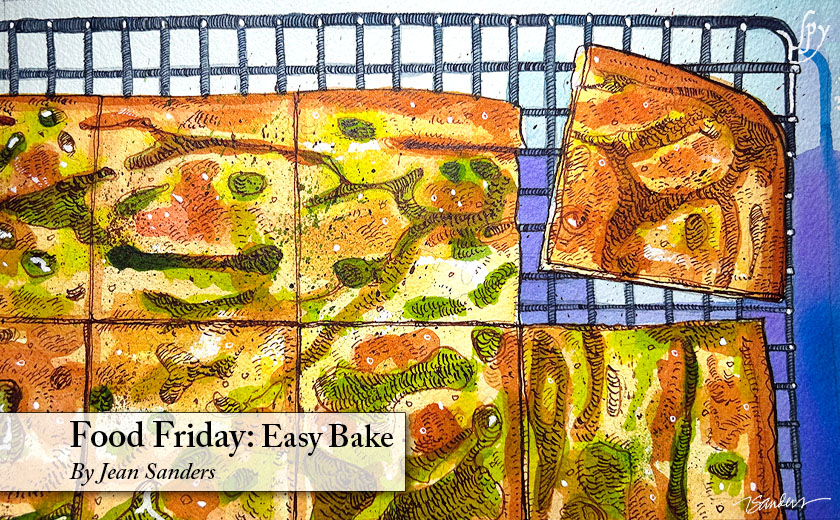
We had hoped to simplify Thanksgiving this year. We have recently moved to temporary lodgings in an apartment while the new house is being finished, and confidently, and foolishly, have stowed most of our household gear in a storage unit. You couldn’t find Rosebud in that crammed storage space. Indiana Jones couldn’t find the Grail tucked in all those boxes and piles and rolls of rugs. It’s not crucial that I have turtlenecks just yet, but it might have been convenient to have the measuring cups, the garlic press, or a decent knife during the past month. I have been drinking my cheap white wine from a plastic wine glass left over from our Florida pool days. We have no festive Thanksgiving platters or cheery Pilgrim candle holders on hand. No good china. No electric knife. No gravy boat. They are tucked deep in the bowels of the Extra Space Storage Building. It’s looking grim here.

Next week we will be gathering together in a rental cottage near Savannah to share the Thanksgiving festivities with our daughter and her partner, and their two dynamo boys. Holiday cooking in rental houses can be fraught with complications because you never know what to expect, or how well-stocked the nearest grocery store is. Usually I overcompensate and overpack: the KitchenAid stand mixer, the cookie sheets, the roasting pan, the rolling pin, the gravy separator, the electric knife, a few platters, rolls of aluminum foil, parchment paper and Saran Wrap for the leftovers, mayonnaise for the leftovers turkey sandwiches, candles, tablecloths. Crafts for the boys. You name it, I would have packed it. We have never traveled light before. This will be an interesting year for us all. Interesting being the key word – like a grim passage in Dr. Spock, foretelling disaster and unmet developmental marker expectations. Irreversible disaster, and ruin.

At first Mr. Sanders and I had supposed that we could make changes to the traditional menu and streamline the prep. We floated that idea on a group call yesterday – where our suggestion that we skip the turkey this year was met with shocked silence. Dead air. A vacuum. Disbelief.

Then we suggested bringing a nice big homemade lasagne; heavy with sauce and cheese and spicy meatballs, redolent with garlic and memories of home. We had rationalized that we could just heat up the lasagne, and have lots of time to go for walks, find shells, rent bicycles. We didn’t realize that we had produced a hide-bound traditionalist, who was raising children steeped in Americana myths and legends. With the precision of an Ivy-trained lawyer, she argued that we must have turkey. Thanksgiving needs hot rolls and lumpy gravy. How could we expect them to go without green beans and cranberries and pie? Life is just not worth living without stuffing and candlelight and mac and cheese. Her final argument: what about the children?

Some of those bright and chirpy food writers say that you can prepare all of the Thanksgiving dishes ahead of time. They also have well-stocked test kitchens, staff, and expense accounts. Please excuse my very unladylike guffaw. In this rental apartment, which is just like a college dorm room, we have one cookie sheet, one nonstick frying pan, one mixing bowl and one battered old brownie pan – so I will not be preparing anything in advance. We don’t even have a Hot Pot. I harbor the fear being in a strange kitchen with its inevitable dearth of potholders. There was one year in a Thanksgiving rental that we were spatchcocking a 24-pound turkey, for the first time. Ever. Six college degrees were deemed useless as we grappled with the enormous carcass and one potholder.

I am considering hocking my soul and buying a Thanksgiving dinner already prepared by the closest grocery store. That will pry open the children’s eyes to the grim realities of modern living. This is the year that the boys will probably also figure out the truth about Santa. Bye, bye childhood. Sigh. Being an adult is hard.

Wish me luck next week. I am going to listen to Julia Child who believed: “If you’re alone in the kitchen and you drop the lamb, you can always just pick it up. Who’s going to know?” This is excellent advice as we might have to resort to instant mashed potatoes, and gravy from a jar this year – and no one will be wiser. I bought the pie crusts yesterday. I know for a fact that the Pepperidge Farm dinner rolls that we will pick up Tuesday night at Food Lion are going to be delicious, too. Which will leave us plenty of leisure time for family walks and photo ops and whipping the cream. Use your time wisely. Life is short. Bring potholders. Gobble, gobble.

Even Joan Didion used store-bought side dishes. In Wednesday’s New York Times: “She paid assistants to help cook and serve for these big occasions, and didn’t sweat details that could be finessed with store-bought ingredients like frozen artichokes or canned sweet potatoes.” We can rest reassured by Didion’s literary precedent setting. Joan Didion’s Thanksgiving: Dinner for 75, Reams of Notes, By Patrick Farrell.

“Never put off till tomorrow what may be done day after tomorrow just as well.”
― Mark Twain


Jean Dixon Sanders has been a painter and graphic designer for the past thirty years. A graduate of Washington College, where she majored in fine art, Jean started her work in design with the Literary House lecture program. The illustrations she contributes to the Spies are done with watercolor, colored pencil and ink.
The Spy Newspapers may periodically employ the assistance of artificial intelligence (AI) to enhance the clarity and accuracy of our content.

Filed Under: 00 Post to Chestertown Spy, 1 Homepage Slider, Food Friday

A Local Odyssey: One Woman’s Life with Breast Cancer – Part 1

November 17, 2025 by Val Cavalheri Leave a Comment

For most of her career, Beth Anne Dorman has been the one whom other people turn to in their hardest moments. As the CEO of For All Seasons and a clinician by training, she’s spent decades helping families navigate fear, trauma, and uncertainty. But when she found a lump this spring and received her cancer diagnosis in the middle of an ordinary July afternoon—parked at a baseball field beside her son—the roles reversed with dizzying speed.

In a conversation with Val Cavalheri, Beth Anne speaks with the kind of honesty that catches you off guard. She walks us through the punch-in-the-stomach moment of hearing the word “cancer,” the long week she waited before telling her children, and the careful balance of being vulnerable at home while steadying an 85-person staff at work. There are flashes of humor, too, the kind that families reach for when the ground shifts beneath them, along with the complicated truth that even without chemo, a bilateral mastectomy and a decade of hormone therapy remake your sense of self.

What emerges is not just a medical timeline but a portrait of leadership and humanity—how you let people in, how you accept help, and how you learn to live with a diagnosis that never fully leaves the room. It’s also a reminder, as Beth Anne says, that talking openly about illness and mental health isn’t a weakness. It’s the thing that keeps us connected.

This video is approximately 16 minutes in length. For more information about breast cancer, please go here.

The Spy Newspapers may periodically employ the assistance of artificial intelligence (AI) to enhance the clarity and accuracy of our content.

Filed Under: 00 Post to Chestertown Spy, 1 Homepage Slider

The Hard Problem of Consciousness By Laura J. Oliver

November 16, 2025 by Laura J. Oliver Leave a Comment

I’m walking across my college campus, mahogany leaves crunching beneath my feet, just as they did the year I arrived as an Eventual-English major.  

I climb the steep steps of William Smith Hall to sit in the same classroom where I studied American Lit in order to learn about “The Hard Problem of Consciousness” from Jeff, a fellow alumnus. Spoiler Alert: no one knows how to distinguish mind from brain or how life first became self-aware. No one knows how it was that millions and millions of years ago, some microbial cell in the primordial soup woke up and announced, “Eureka! 

“I see me!”

What if, I wonder as I glance out the centuries-old, massive windows of my classroom, one of us, one day, makes a similar leap in consciousness and announces, “Eureka! I’m love made manifest.” Because of course, we are.

I see you. 

Chairs scrape on hardwood floors as I wave goodbye to Jeff but rising to leave, I see the freshman co-ed I was rushing down the worn varnished steps of Smith Hall to my work-study job on High Street. 

I had been hired as a companion to an elderly widow named Mrs. Molloy. She employed a housekeeper but wanted a nice young girl from the college to accompany her on afternoon walks along the tree-lined streets of Chestertown. That nice young girl was me. 

She might have done better. 

Mrs. Molloy wore her silver hair up in a twist, and her home was only a block from the shallow banks of the sparkling Chester River. I thought of her as wealthy because she had traveled all over the world, though I had no means of comparison. She dictated letters for me to write, and then we bundled up and negotiated her steep front steps for our daily walk, she leaning heavily on my arm, and me trying to support the weight of fragile cargo three times my age but about my size. As we inched past art galleries and bakeries, I realized pretty quickly that my actual role was that of a storyteller.

So, I told her about the boy from Chapel Hill I had fallen in love with while working on Cape Cod for the summer, and about a Midshipman from the Naval Academy I’d gone out with a few times, before heading to the Cape. I told her about the letters my very Southern boyfriend wrote from his frat house at UNC, and how I was looking forward to him coming up to Maryland for Thanksgiving.

Weirdly, Mrs. Molloy followed each Chapel Hill update with a complete non sequitur: “And what about that Midshipman?” Maybe she was wise enough to know my long-distance relationship was going to be a challenge, but her strange loyalty, her advocacy for this other boy I barely knew, made me wonder if she was a fan of the Armed Forces or knew something I didn’t know. So, on the day I shared that without warning, Chapel Hill had broken my heart, her response was predictable and practical: “And what about that Midshipman?”

 For the first time, I took her advice and invited the Midshipman to Thanksgiving instead of the Confederate, and the rest of that story is three children. 

One spring afternoon, Mrs. Molloy and I were in her study—rust-and-blue oriental carpet, hardcover books to the ceiling, organdy curtains softly obscuring a bay window—she sitting on the overstuffed sofa, me in her desk chair–and she lit up a cigarette. She usually smoked in the garden, but on this day, as I watched, she tried to light the wrong end, then ignited it somewhere in the middle, stuck it between her lips, and continued our conversation with the smoldering cigarette bobbing about. This was odd, but I didn’t say anything. I didn’t know how. It was her house, she was my employer, and above all, I didn’t want to embarrass her. 

But as I watched, she started listing to the side, slowly, like she was kind of melting. Like she was a tree, felled by the last blow of the ax. Yet she kept talking and smoking as if everything was normal. 

As a child, I had learned to normalize everything—if there was an elephant in the room, I’d explain how that might not be so odd: circus in town, exotic pet on the loose! So, as she listed, I leaned, and just kept talking, covering for her, until, still acting as if everything was routine, she lay completely horizontal on the couch.

The word ‘stroke’ never crossed my mind. It was simply beyond my range of experience, and she seemed fine in every other way. I must have gotten the housekeeper for help, though I don’t remember. I may have just propped her back up like a Webble. 

I usually worked on Thursday afternoons, but that Monday in Seventeenth Century Literature, Professor James, who also lived in town, pulled me aside to tell me Mrs. Molloy was dead. I didn’t cry. I normalized the news. 

I think I had a Cinderella fantasy: that this woman with no children had cared for me, and that, knowing I was only in college by the grace of multiple scholarships, she might possibly leave me some financial help to further my education. That’s what I mean by she could have done better than a girl whose affection was corrupted by hope. She did leave the college $10,000.

She left me a begonia. 

Why am I telling you this, and why am I telling you now? Because I’m back on campus in the same room where I was so naive, I didn’t know how to say, Wait, what??? And I’m learning about consciousness even as I have to acknowledge that I have gone through my life pretty unconscious. Blundering along. And for that, I just can’t stop being sorry. 

Sorry.

I set my begonia on the sunny window ledge of my room in Minta Martin Hall and loved it in Mrs. Molloy’s honor for several years. And I’m still trying to separate out whether I can be sorry enough for the mistakes that I’ve made to absolve them, or whether that’s what the fuss is all about. 

Absolution is not required.

You did the best you could. “A” for effort, beloved classmates. And maybe the best that you could do was always the goal on your cosmic syllabus. You didn’t fail; you fulfilled.  

I read this prayer years ago, and perhaps it’s how consciousness came into the world –that moment when life became aware of itself for the first time, a blank slate of pure potential. 

Maybe that first cell woke up and said: “I’m alive!” And then with all the hope of you and me in its nascent awareness added–

“God, help me accept the truth about myself.

 “No matter how beautiful it is.” 


Laura J. Oliver is an award-winning developmental book editor and writing coach, who has taught writing at the University of Maryland and St. John’s College. She is the author of The Story Within (Penguin Random House). Co-creator of The Writing Intensive at St. John’s College, she is the recipient of a Maryland State Arts Council Individual Artist Award in Fiction, an Anne Arundel County Arts Council Literary Arts Award winner, a two-time Glimmer Train Short Fiction finalist, and her work has been nominated for a Pushcart Prize. Her website can be found here.

The Spy Newspapers may periodically employ the assistance of artificial intelligence (AI) to enhance the clarity and accuracy of our content.

Filed Under: 00 Post to Chestertown Spy, 1 Homepage Slider, Laura

Food Friday: Green Beans, Reimagined

November 14, 2025 by Jean Sanders Leave a Comment

I have never bought a can of cream of mushroom soup. I have never willingly consumed it. I will never buy a can of cream of mushroom soup. That is my mantra. If I could embroider I would probably have a cross-stitched pillow or two that announced this aversion. It might be genetic – my mother never used that staple of 1960s cooking, although she was fond of Jell-o molds. I doubt if my children have ever cooked with mushroom soup – although I have never asked them directly – I am employing delicate generational diplomacy: some things are private.

Not willingly eating mushroom soup has never made me popular at Thanksgiving, when everyone in the United States whips up their secret family recipe for Green Bean Casserole, which involves cooking perfectly delicious and crunchy green beans in a white Corning Ware casserole dish, smothered in a chemical septic field of gray mushroom slop, topped with canned fried onions. At Thanksgiving we should be giving thanks for the wonderful bounty of nature – not for PFAS, sodium nitrates, and other preservatives.

As a child I did not care for cooked vegetables, with the exception of corn and potatoes. And pizza. I have always preferred the crisp snap of fresh beans, the cool orbs of peas as they slide out of their pods, and cold, peppery radishes, floating in Pyrex bowls of iced water. It was one of my mother’s super powers that she assigned vegetable duties to me and my brother on the back porch steps in the summertime. It might take us forever to shell the peas, or string the beans, or shuck the corn, but we were quiet, and out of her hair. The price she paid was we might not fill the cooking pot with peas, because we had gobbled a few handfuls as we performed our task: one pea for me, one pea for the pot. The same technique worked with the string beans. We’d break of the ends, eat a few beans, throw the rest into the colander. We ate the greens without Mom hectoring us. Genius. And deelish. Who could eat hot, slimed green beans, dripping with mushroom soup after that childhood exposure to healthy eating?

I almost overlooked an obituary in the New York Times a few years ago. Dorcas Reilly died in New Jersey at 92. Reilly invented the almost ubiquitous Green Bean Casserole that appears on so many Thanksgiving dinner tables. Modestly, Reilly asserted she was just part of the team that developed the dish at Campbell’s Soup in Camden, New Jersey in 1955. They were looking for a tasty, economical side dish. This has just six ingredients, and it can be easily assembled by anyone. It became an institutional classic; it was America at its most homogenous and bland. Campbell’s estimated once that 20 million green bean casseroles would be prepared annually in the United States at Thanksgiving. Imagine being the person who was responsible for such a legacy. Will you have a green bean casserole on your table? Dorcas Reilly obituary

The Original: Campbell’s Green Bean Casserole
1 10 3/4-ounce can of Campbell’s cream of mushroom soup
1/2 cup milk
1 teaspoon soy sauce
A dash of pepper
4 cups cut green beans
1-1/3 cups of French fried onions

Mix soup, milk, soy, pepper, beans and 2/3 cup onions in 1-1/2-quart casserole.

Bake at 350°F for 25 minutes, or until hot. Stir. Sprinkle with remaining onions. Bake five minutes. Serves six.

Here is an alternative: This is a labor-intensive recipe, best brought to a potluck Thanksgiving, when you can boast about making the mushroom sauce from scratch. No sodium-riddled canned soup for you! Green Bean Casserole

I just love these bundles of beans trussed up with ribbons of bacon: Green Bean Bundles

This recipe can be made in advance, but it eliminates all the fun of the French fried onions, and it makes you make bread crumbs! Shocking! Another Green Bean Casserole

Get organized! The Thanksgiving clock is ticking down!

In two short weeks Thanksgiving will be over – except for the best part with the Pilgrim sandwiches, and some leftover pumpkin pie, smuggled cold from the fridge and eaten hastily while standing at the pantry window, looking out over the swirl of black leaves in your childhood home’s back yard.

“As we express our gratitude, we must never forget that the highest appreciation is not to utter words, but to live by them.”
—John Fitzgerald Kennedy


Jean Dixon Sanders has been a painter and graphic designer for the past thirty years. A graduate of Washington College, where she majored in fine art, Jean started her work in design with the Literary House lecture program. The illustrations she contributes to the Spies are done with watercolor, colored pencil and ink.

The Spy Newspapers may periodically employ the assistance of artificial intelligence (AI) to enhance the clarity and accuracy of our content.

Filed Under: 00 Post to Chestertown Spy, 1 Homepage Slider, Food Friday, Spy Journal

Attachment Theory By Laura J. Oliver

November 9, 2025 by Laura J. Oliver Leave a Comment

It was supposed to last a hundred years. The trust set up to protect Eagle Hill was to keep the woodland along the Magothy River safe from developers, but the last of the family who owned the property has died. Its future is unknown. 

The developers who would subdivide this legacy have very different aspirations from those my midwestern parents brought to Maryland more than half a century ago. All they wanted was an old house along a river in which to raise their three daughters. What they could afford was Barnstead, an abandoned stable overlooking the river, which they began remodeling into our family home the year I turned three. 

Time was told by season at Barnstead. In winter, migrating swans crowded the icy cove with their snowy grace, stark December’s only vain accessory. In summer, thunderstorms billowed across the open water like undulating curtains. Each raindrop, if you watched from the pier, displaced a small crown of water as it met the river, but there was no royalty here. Education had allowed my parents to exceed the usual limitations of their rural childhoods, but my father was still a carpenter’s son, and my mother, a farmer’s daughter.  

Together they built a home where my mother would write books and my father would boat, but the sparkling surface of the Magothy obscured unanticipated depths, and the sandy bottom could disappear without warning beneath small bare feet. My sisters and I would learn that sometimes we are parented by a place as much as by those responsible for us, and that dreams, though a less obvious inheritance than the color of our eyes, are also part of our parents’ legacy; both yours, I suspect, and mine.

On my last trip back to Eagle Hill, a 30-minute drive from the town where I live now, I think it is ironic that my kids, who grew up in a world of private schools and yacht clubs, would approach with caution the people who inhabited Eagle Hill.

Mr. Prince and his numerous preschool children rented an old house near the Barn. We seldom saw the Princes, but every so often, Mr. Prince would arrive on our doorstep for a visit. Smoking a pipe, he’d sit on the early American loveseat Mom had slipcovered, while several small muslin bags, tied through his belt loops, twitched and roiled.  

Mother served iced tea, and I kept a vigilant eye on those bags, knowing each contained one, if not several, snakes. I thought Mr. Prince was unbearably weird, but my father, if he were alive today, would laugh and assure me he was harmless. Dad was naturally generous and slow to pass judgment. I can’t imagine what they talked about, the snake collector and the hospital administrator, but a kind of midwestern hospitality was at work: no one is turned away from the door, even a man wearing snakes. 

A gregarious ladies’ man, my father had a story for every occasion, but I had learned not to always trust his claims. I doubt, for instance, that the pirate Blackbeard once slipped up the Chesapeake as far as the Magothy, but Dad said angry settlers had ambushed the pirate where he had moored in Black Hole Creek. During the most intense part of the battle, Blackbeard and his first mate managed to row ashore with a treasure chest. They walked for 15 minutes, then buried it, returned to the ship, and set sail. So somewhere near Barnstead lay a pirate’s chest of gold, Dad said. But in which direction did they walk? And how fast can two grown men walk carrying a heavy burden between them? As my father began taking longer and longer overnight business trips, I spent an increasing amount of time searching for treasure I thought would save us.

In my father’s absence and my mother’s increasing distraction, I found comfort in practicing self-sufficiency. I rearranged the furniture in my bedroom to resemble a living room. A small table in the center displayed a candy dish for visitors. I liked the idea that I could live on the apples in the orchard, walnuts and mulberries, even the bitter persimmons, and wild plums. I could crab and fish. Barnstead allowed me to believe I could take care of myself. It would never be necessary, of course, but there was a sense of security in the exercise. 

For all the tension around me as my parents’ distance grew, I never feared I’d be abandoned, as children often do. Instead, I worried that we would somehow lose Barnstead. I’d overhear my parents talking about developers and zoning laws, and I feared the woods would be lost to tract housing. I even began to worry that a tidal wave could appear at the mouth of the Magothy to sweep away my world. 

I prepared for a natural disaster because I didn’t know there were other kinds. My anxiety was well-founded. I had simply attached it to the wrong loss. 

As my parents’ dream of a river house full of children neared completion, so did their marriage. After a decade of sheltering my family, an ad was run, and Banstead was sold to the first person who walked in the door. 

My affection for Barnstead remains the intense attachment of a child, though I am a woman now. It was the only home in which I had two parents–a family. As I pass the entrance to our lane this afternoon, the house has been swallowed from view by the trees, but I heard it was torn down decades ago, replaced by a McMansion I do not want to see. 

I am a trespasser here. 

Whatever there was of value, I have taken with me–an appreciation for beauty, for labors of the heart, an unwillingness to pass judgment on their outcome. Now I am the mother who raised three children in the company of a river. Now, I write the books. 

Where do you carry the past? That’s not rhetorical, I’m really asking. What part of you is you because of where you’ve been?

My youngest, who lives in DC, is coming home for the weekend. I remember the night, years ago, when I went upstairs to check on her after the babysitter left. She was sound asleep in the twin Jenny Lind bed that had been mine as a child, the book she’d been reading, fallen to the floor. Kneeling to retrieve it, I lifted the white eyelet dust ruffle and noticed that the slats supporting the mattress were unusually narrow. 

Raising the fabric further, I realized for the first time that the slats were the rough, white battens that vertically sided the Barn when we found it, eventually replaced by cedar shingles, but saved and put to good use. 

Dropping the dust ruffle, I rose and walked out, leaving the legacy of Barnstead beneath new and tender dreams.


Laura J. Oliver is an award-winning developmental book editor and writing coach, who has taught writing at the University of Maryland and St. John’s College. She is the author of The Story Within (Penguin Random House). Co-creator of The Writing Intensive at St. John’s College, she is the recipient of a Maryland State Arts Council Individual Artist Award in Fiction, an Anne Arundel County Arts Council Literary Arts Award winner, a two-time Glimmer Train Short Fiction finalist, and her work has been nominated for a Pushcart Prize. Her website can be found here.

The Spy Newspapers may periodically employ the assistance of artificial intelligence (AI) to enhance the clarity and accuracy of our content.

Filed Under: 00 Post to Chestertown Spy, 1 Homepage Slider, Laura

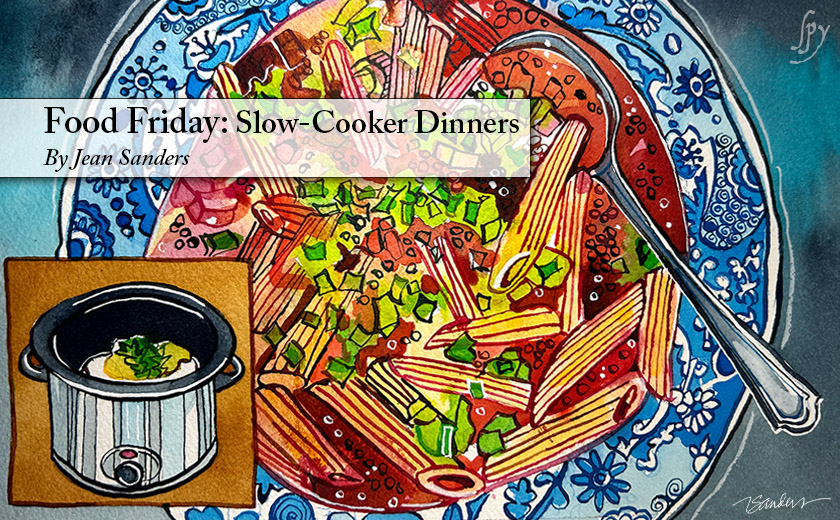
Food Friday: Easing into Thanksgiving

November 7, 2025 by Jean Sanders Leave a Comment

November is the busiest time for cooks and food writers – we cannot get enough of complicated planning, and scribbling bulleted lists, and charting menus and spread sheets for the Thanksgiving meal where we will gather together to ask the Lord’s blessing. I amaze myself by discovering how much time I can waste thinking about place cards. Place cards! There will be just six of us for Thanksgiving dinner this year, two of whom will be under 12 years old, and one of whom does not yet read. They will not appreciate the carefully inked swirls of calligraphic artistry. It might be best to just simplify.

Every year we like to remember Thanksgivings past. Like the year when we ran out of chairs, and the children’s table was children sitting cross legged on the floor around a coffee table. And how, like clockwork, we almost always manage to forget to cook the green beans until after the parade of food from the kitchen to the table has begun. Did you know that you can make the mashed potatoes ahead of time? Traditionally we always have to waylay a couple of mashed potato workers, one who peels with aplomb, and another who mashes with glee. What if I make the potatoes myself on Wednesday, and re-heat them on Thursday? Oooh – the time space continuum in the kitchen has been radically expanded!

One Thanksgiving when we lived in Florida we ate outside, at tables we had rigged up with sheets of plywood and saw horses, because it was a pleasant temperature and we had lots of friends there with their lots of wriggling children. We fired up the fairy lights and moved the stereo speakers onto the back patio. It was an adventure to eat formally, with candles and sterling, with the ancestral china, and tinkling crystal outside, but not one wriggling child fell into the pool. It was a good meal, and so memorable.

It is too early to know if outdoor dining is feasible for Thanksgiving this year. Thanksgiving dinner is rarely impromtu, or improvised because we are already scrawling our shopping lists here in the first week of November. But I have to say that the al fresco Thanksgiving was delightful, with zephyr breezes and elbow room and bright twinkly lights. Everyone who attended brought a covered dish and a chair. If we try it again this year we know that we can skip using the good china, just this once, and break out the finest of paper plates. It will be dark-ish, after all. And maybe we can think about grilling a turkey breast instead of risking life and limb by deep frying an entire bird – and you can spend even more time outdoors: Grilled Turkey Added bonus: the white wine will chill itself, especially in red Solo cups.

So start your low-key Thanksgiving planning. Be innovative. You don’t have to go outside. Skip our green bean tradition and try forgetting to roast the Brussels sprouts this year. Sprouts Bake a spice cake, and swirl on the cream cheese icing, instead of doing elaborate calligraphy. The under-twelves will love it. Spiced Pumpkin Layer Cake

If you are going to be a smaller family unit this year, how about making your life even easier? Roast a chicken. You can still eat drumsticks: Roasted Chicken Then splash out for some really nice wine, and assuage your guilt by making a labor intensive and decadent dessert involving choux pastry, chocolate and creme pat: Decadence Or pick up a pumpkin pie at Costco – who will know? The five-year-old won’t tell.

A dose of romance could liven up a more modest Thanksgiving: lots of candles and a brace of Cornish game hen, wild rice, a green salad and store-bought chocolate eclairs, Beaujolais Nouveau, and fewer dishes to wash. Take a nice meandering walk in the cold, and have an evening streaming comforting Diane Keaton films. Find something to make yourselves happy. And in 20 years, you’ll have a story about the nice, simple Thanksgiving when nothing went awry.

“The best way to find out what we really need is to get rid of what we don’t.”
― Marie Kondō


Jean Dixon Sanders has been a painter and graphic designer for the past thirty years. A graduate of Washington College, where she majored in fine art, Jean started her work in design with the Literary House lecture program. The illustrations she contributes to the Spies are done with watercolor, colored pencil and ink.
The Spy Newspapers may periodically employ the assistance of artificial intelligence (AI) to enhance the clarity and accuracy of our content.

Filed Under: 00 Post to Chestertown Spy, 1 Homepage Slider, Food Friday

Here’s to You By Laura J. Oliver

November 2, 2025 by Laura J. Oliver Leave a Comment

I was in my doctor’s office the other day thinking about some lies I was told as a kid…

  1. This is going to hurt me more than it’s going to hurt you.
  2. No one is going to laugh.
  3. You probably won’t need a shot.

I was going to receive a couple of injections, pleased that one of the advantages of being a grownup is that what used to be truly terrifying is no longer scary, like going to the dentist (drills) and going to the doctor (shots). 

 (Of course, the number one fear most people suffer, I still suffer as well: A fear greater than death, which is #4, or mutilation, which is #3, or divorce, #2. The most common fear greater than death? Public speaking.)

I did wonder, however, if it’s not that I’ve matured but that shots have gotten better, because I’m pretty sure when I was a kid, the needle was the size of a turkey baster, and the injection was not in my arm…  

So, I was taken back to a cubicle before I could even be seated in the waiting room, which is a bait-and-switch kind of move. You think you’re being seen right on time, but you’re really being removed from the interesting but jeopardizing melee of feverish coughers to cool your heels alone in an exam room. 

I got up on the table with the crinkly paper and eyed the same pictures on the wall that I’ve seen on previous visits—the blue-footed booby, the tortoise, and the gull…the chart on the back of the door where I could compute my body mass index. Time clicked on.  

I got out my phone and started emailing, having looked through all the drawers last time. Half an hour went by. I’m pretty punctual, so I admit I was getting a bit annoyed, but my doctor is retiring, and I didn’t want to be mad at her the last time we were going to see each other in this life. This was challenging, however, because I had seen her sitting in the room next door, eating a Caesar salad and yukking it up with a coworker when I was led to my cubicle, and I could still hear her socializing through the wall. Sometimes when this happens, I get up and open the door, so they can see me still sitting in there, a perky, punctual cuckoo in a clock. 

After a while, an apologetic nurse came in and said, “Let’s just go ahead and give you your flu shot and your COVID booster.”

“Sure,” I said, rolling up my sleeves with grown-up bravado. Have at it, sister! She pointedly closed the door upon leaving. 

When the door finally reopened, my doctor looked at me a little guiltily, but I did not complain. I am exceptional at not crying over spilled milk. I smiled hello, she sat down, and we chatted about our lives, though in reality, I barely know her.

She was installing a new birdfeeder, and I told her I used to wake to a cacophony of birdsong, but dawn comes silently now. Curious as to why, I looked it up. Turns out it was not my imagination. There is a virus sweeping through Maryland bird populations, and the State has asked that we stop using feeders (birds are polite but don’t need them). I noted I also haven’t seen the annual migration of yellow finches this fall, and that’s when we started talking about what will happen to us when we die. 

Sorry. She started it. 

I don’t have any health issues, so I don’t know why she suddenly said, “I think, when your time is up, it’s up.”

 (Oh my gosh…maybe she was talking about retirement!)

“Why do you think that?” I asked, intrigued and assuming otherwise. 

“I started thinking that when the Twin Towers fell,” she explained. “Too many people were on those planes who should not have been— unexpected changes to plans– and too many people were not on those flights who should have been—overslept, traffic jams.” 

I used to think that way as well for much the same reason, I told her. People survive the impossible and die from the improbable. But I don’t know anymore. I can make a case both ways. And as Stephan Hawking said, “I have noticed that even people who say they believe everything is predestined, look both ways before crossing the road.”  We laughed at that.

Suddenly she said, “I’m having a party. You should come.” And as we chatted, she wrote down an address and stuck the paper in my purse.

It’s at a church nearby, and although I won’t know a soul in attendance, I’m going. Alone, of course. It will be a little uncomfortable, and being alone makes it more so, but I’ve noticed that magic happens when you embrace the thing that most scares you. 

As long as it’s not a toast. That’s a fear worse than death. But I’ll think of you when I raise my glass and say, Cheers! I’m so glad I could come.

Because your best stories have not even begun. 


Laura J. Oliver is an award-winning developmental book editor and writing coach, who has taught writing at the University of Maryland and St. John’s College. She is the author of The Story Within (Penguin Random House). Co-creator of The Writing Intensive at St. John’s College, she is the recipient of a Maryland State Arts Council Individual Artist Award in Fiction, an Anne Arundel County Arts Council Literary Arts Award winner, a two-time Glimmer Train Short Fiction finalist, and her work has been nominated for a Pushcart Prize. Her website can be found here.

The Spy Newspapers may periodically employ the assistance of artificial intelligence (AI) to enhance the clarity and accuracy of our content.

Filed Under: 00 Post to Chestertown Spy, 1 Homepage Slider, Laura

  • « Previous Page
  • 1
  • 2
  • 3
  • 4
  • 5
  • 6
  • …
  • 50
  • Next Page »

Copyright © 2026

Affiliated News

  • Chestertown Spy
  • Talbot Spy
  • Cambridge Spy

Sections

  • Sample Page

Spy Community Media

  • Sample Page
  • Subscribe
  • Sample Page

Copyright © 2026 · Spy Community Media Child Theme on Genesis Framework · WordPress · Log in