MENU

Sections

  • Home
  • Education
  • Donate to the Centreville Spy
  • Free Subscription
  • Spy Community Media
    • Chestertown Spy
    • Talbot Spy
    • Cambridge Spy

More

  • Support the Spy
  • About Spy Community Media
  • Advertising with the Spy
  • Subscribe
February 15, 2026

Centreville Spy

Nonpartisan and Education-based News for Centreville

  • Home
  • Education
  • Donate to the Centreville Spy
  • Free Subscription
  • Spy Community Media
    • Chestertown Spy
    • Talbot Spy
    • Cambridge Spy
00 Post to Chestertown Spy 3 Top Story Point of View Jamie

How We Got Here By Jamie Kirkpatrick

January 27, 2026 by Jamie Kirkpatrick Leave a Comment

Wednesday, four days out…

The American and European models weren’t converging. Really? I’m shocked! The American model drew the snow/ice line just to the north of us, the Europeans placed it slightly to the south. Neither was anywhere near Greenland. Snowfall amounts varied: an inch or two to several feet. Your guess was as good as mine. Nevertheless, the madness had already begun: grocery stores were war zones, gas stations were crammed with guzzlers, and hardware stores sold shovels, rock salt, and candles out in the parking lot. Tempers flared, nerves were frayed. Weather reports came in in every other minute while the phone lines to heaven were jammed with kids and teachers calling about school cancellations. Here we go…


Thursday, three days out…

It was a lovely, mild afternoon. I was humming a line from a Paul Simon song: “I get all the news I need on the weather report.” But we all know that despite the best of equipment and intentions, weather prognosticators don’t really have a clue about the when or where or accumulation of snow or ice. I’m sure they were trying their best, but just like the rest of us, they were looking out the window and sniffing the air. Nevertheless, they were giddy with excitement; this is why they became meteorologists in the first place. Six inches…ten inches…fourteen inches: did anybody really know what time it was or how much snow or ice we would get? Place your bets and get out your measuring sticks. At that point, all I really knew for sure was that it was freezing cold in Davos, Switzerland…


Friday, two days out…

It has started to snow in Dallas. Memphis was preparing for lots of ice. In the Florida panhandle, iguanas were dropping from the trees, stunned with cold. Maryland’s truth was still twenty-four hours away. “Power outages” was added to the script; “below zero wind chill” became part of the lexicon. Just as when the Maestro picks up the orchestra’s tempo, the beat quickened and the audience leaned in, rapt with a mix of anticipation and dread. Out in the streets, people were walking around, looking up at the sky; What’s on its way now?  Meanwhile, down at Mar-a-Lago, it was sweater weather on the links, but then spring training was only a month away.


Late Saturday afternoon…

All the shelves in the grocery store are now bone-bare; the first few flakes are just hours away. Or not, nobody really knows. Maybe it will depend on which side of the street you live. For some families, tomorrow will be Armageddon, for others, all the preparation might be for naught. But down at the local television station, the meteorologists were either crowing or hiding in the bathroom, while the general manager was in the back room counting her ad revenue dollars. Kids were either nervous about all the homework they hadn’t done or were waxing the runners on their sleds. I don’t know about you, but I vividly remember how it felt to wake up on a frosty morning and see the world washed white. Snow day! Much to my parents’ chagrin, I was too excited to roll over and go back to sleep, so I would run downstairs, put on my goofy hat with earflaps, buckle my galoshes, pull on my fingerless mittens, and dash outside to pack my first snowball of the day. For a kid (or a teacher—believe me, I know!), nothing can beat a snow day. Except a second snow day.


First light, Sunday morning…

When I woke up, it was the utter silence I heard first. Then from across the street, I heard the scrape, scrape, scrape of a solitary snow shovel. I ran—no, limped—to the window and peered out on a grey polar landscape. There were several inches of fresh snow and more was coming down by the minute,  Across the street, a Sisyphean neighbor was already shoveling his sidewalk. There was nary a snowplow in sight, but then we live on a secondary street, hardly a priority job on this winter morning—the DOT had bigger bigger fish to fry. I relished the silence: for a few heartbeats, this busy world was stilled and hushed under a blanket of pure white snow. All too soon, the digging out would begin, the snow would turn to slush, but for that one dreamy, breathless moment, it really was a winter wonderland.


I’ll be right back.

PS: Monday…

All schools cancelled!


Jamie Kirkpatrick is a writer and photographer who lives on both sides of the Chesapeake Bay. His editorials and reviews have appeared in the Washington Post, the Baltimore Sun, the Philadelphia Inquirer, the Pittsburgh Post-Gazette, the Washington College Alumni Magazine, and American Cowboy Magazine. His most recent novel, “The Tales of Bismuth; Dispatches from Palestine, 1945-1948” explores the origins of the Arab-Israeli conflict. It is available on Amazon and in local bookstores. His newest novel, “The People Game,” is scheduled for publication in February, 2026. (It’s available for pre-order now on Amazon. His website is musingjamie.net.
 

The Spy Newspapers may periodically employ the assistance of artificial intelligence (AI) to enhance the clarity and accuracy of our content.

Filed Under: 00 Post to Chestertown Spy, 3 Top Story, Jamie

Endurance, Patience, and Lessons from the Snow

January 27, 2026 by Kate Emery General Leave a Comment

In Wyoming, snow isn’t an interruption, it’s an expectation. It arrives early, stays late, and teaches you, without ceremony, how small your plans really are. You prepare because you have to. You keep extra food, extra fuel, extra patience. When I was a child, preparation had become so routine it felt invisible. That may be why I didn’t hear the term “snow day” until I was a junior in high school, and even then, it sounded like a rumor from somewhere else.

The month I learned what a snow day was happened in May. The local tv station broke the news. We were excited, Dead Horse Hill was within walking distance, perfect for a day of sledding.

The weekend of our spring play, Applause, was closing in fast. Rehearsals stretched late into the evenings,  no one worried about the impeding storm, life would carry on as it always did. As a member of the dance ensemble, I counted steps everywhere, on the walk home, in the kitchen, lying awake at night. This was my second major production, and for the first time I understood the particular exhaustion that comes with wanting something badly and being afraid to lose it.

May in Wyoming is a dangerous month for wanting things. It’s lambing season, when time fractures into watchful nights and weather reports. My parents’ rancher friends spoke in a language of vigilance, who had lost lambs, who had already been hit by snow. Lambs were almost always born in the worst blizzard of the year, as if spring itself resented being rushed. The snow that fell in May was different from winter snow: wetter, heavier, capable of collapsing roofs and soaking you through before you could turn back.

That year, the storm arrived overnight.

By morning, we had three feet of snow. Maybe more. The numbers mattered less than the silence it brought with it. School was suddenly cancelled, too dangerous to be out on the roads. The snowplows carved the street in front of my house into narrow corridors, piling snow into the center until it formed a wall so high I couldn’t see the houses across the road. The world felt sealed off, contained by white.

The play was postponed. Costumes stayed on their hangers, choreography suspended mid-count. And the ski area on the mountain near my house, which should have been closed for weeks, extended its season into June, because winter in Wyoming leaves only when it decides to.

That storm taught me something I wouldn’t understand fully until years later: that preparedness isn’t control. It’s respect. You learn to live inside forces you cannot bend, only accommodate. You learn that timing is a negotiation you will not always win.

I left Wyoming eventually, as many of us do, carrying with me the habits of a place that doesn’t explain itself. Even now, if snow falls, I feel the old instinct to pause, to wait, to let the storm finish speaking.  The much talked about storm in Maryland this last week of January has been a challenge. Ice has covered everything. There’s no point in shoveling, this is a waiting game.

Some places teach you ambition, others teach you endurance. Wyoming taught me how to stand still and pay attention.

The Spy Newspapers may periodically employ the assistance of artificial intelligence (AI) to enhance the clarity and accuracy of our content.

Filed Under: 00 Post to Chestertown Spy, 9 Brevities

Mid-Atlantic Symphony Orchestra Announces Finalists for the Elizabeth Loker International Concerto Competition

January 27, 2026 by Mid-Atlantic Symphony Orchestra Leave a Comment

The Mid-Atlantic Symphony Orchestra (MSO) has selected the three finalists for the final round of the fifth annual Elizabeth Loker International Concerto Competition, presented as a live concert on Sunday, March 15 at 3:00 PM at the Todd Performing Arts Center at Chesapeake College in Wye Mills, Maryland, bringing outstanding young instrumental soloists from across the United States and around the world to the Eastern Shore.

Backed by the more than 40 musicians of the full Mid-Atlantic Symphony Orchestra, the final round features three finalists selected from an international applicant pool through two preliminary rounds of adjudicated video submissions. Over the past three years alone, 398 young musicians from 27 states and 16 countries across Europe, Asia, the Pacific Rim, the South Pacific, and North America have participated in the competition, reflecting its rapidly growing international reputation. The Competition is unique in the world of similar events for young instrumental musicians. Almost all other major competitions for young soloists are performed only with piano accompaniment or solo. This singular opportunity to perform and compete backed by a leading professional symphony orchestra is very rare and attracts record entries.

The three finalists will perform their complete concertos in a unique concert and competition all in one, offering a remarkable experience for both performers and audiences. In addition to international recognition and professional exposure, the Competition awards $9,000 in cash prizes, including $5,000 for First Prize, $2,500 for Second Prize, $1,000 for Honorable Mention, and a $500 Audience Prize, and offers finalists the opportunity to perform with the full Mid-Atlantic Symphony Orchestra under the direction of Grammy Award–winning Music Director Michael Repper.

This year’s finalists represent extraordinary artistic achievement and promise. Violinist Sophia Werner of New York City will perform Samuel Barber’s Violin Concerto. A Kovner Fellow at The Juilliard School, Werner won the 2024 Juilliard Concerto Competition and has appeared as a soloist with the Juilliard Orchestra in Alice Tully Hall. She regularly serves as Concertmaster of the Juilliard Orchestra and has performed at major venues including Carnegie Hall, the Kennedy Center, and David Geffen Hall.

Pianist Brielle Perez, also based in New York City, will perform Mozart’s Piano Concerto No. 25 in C Major. Praised for her expressive artistry and musical sensitivity, Perez is currently pursuing her Master’s degree at The Juilliard School and has performed extensively across the United States, Europe, and Asia, including appearances at Carnegie Hall, the Concertgebouw in Amsterdam, and the Mozarteum in Salzburg. She is a First Prize winner of the 2025 Juilliard Mieczysław Munz Piano Scholarship Competition and was recently featured on WQXR’s Young Artists Showcase.

Violinist Mio Imai of Philadelphia, Pennsylvania, will perform Dvořák’s Violin Concerto. At just fifteen years old, Imai has already appeared as a soloist with major orchestras in the United States and Europe, including the Nashville Symphony and Vancouver Symphony. A multiple international competition laureate, she studies with Kimberly Fisher of The Philadelphia Orchestra and is widely recognized as one of the most compelling young violinists of her generation.

The final round will be judged by a distinguished panel including Edward Polochick, longtime Music Director of the Lincoln Symphony Orchestra and a respected conductor and educator; Dr. Laura Colgate, Concertmaster of the National Philharmonic and co-founder and Artistic Director of the Boulanger Initiative; and Qing Li, Principal Second Violin of the Baltimore Symphony Orchestra.

In addition to the final competition concert, MSO will host a Preview Evening on Saturday, March 14 from 5:30 to 7:30 PM at the Academy Art Museum, where each finalist will present a short recital. This informal event offers audiences an intimate preview of the artistry and talent that will take center stage with the orchestra the following afternoon.

According to Maestro Repper, the Elizabeth Loker International Concerto Competition has become “world class” in just a few short years. “Young musicians can tell when something is genuine,” Repper says. “This Competition treats them with respect, care, and seriousness, and word spreads quickly when that happens. Its growth comes from trust—and from the feeling that this is a place where young artists are truly supported, not just evaluated.”

Tickets and additional information are available at www.midatlanticsymphony.org.


ABOUT THE MID-ATLANTIC SYMPHONY ORCHESTRA

The Mid-Atlantic Symphony Orchestra (MSO) is the only professional symphony orchestra serving southern Delaware and Maryland’s Eastern Shore with a full season of programs. The MSO is supported in part by the Maryland State Arts Council, the Talbot County Arts Council, the Worcester County Arts Council, the Sussex County (Delaware) Council, and the Community Foundation of the Eastern Shore, Inc.

A complete schedule of the 2025-2026 season’s Masterworks and Ensembles programs, including venues, times, and other details, is available at www.midatlanticsymphony.org.

The Spy Newspapers may periodically employ the assistance of artificial intelligence (AI) to enhance the clarity and accuracy of our content.

Filed Under: 00 Post to Chestertown Spy, 6 Arts Notes

Let’s Talk About It with For All Seasons’ Lesa Mulcahy: Loneliness at Every Age

January 26, 2026 by The Spy Leave a Comment

Loneliness touches people at every stage of life, but it doesn’t always look the same. In this conversation, the latest installment of our “Let’s Talk About” mental health series, Lesa Mulcahy, the chief clinical officer at For All Seasons, discusses how loneliness shows up across age groups and why older adults—and men in particular—may be feeling it more deeply today. She reflects on the loss of peer mentorship, the rise of social media and AI, and how changes in work and community life have reshaped how people connect.

Mulcahy also explains how loneliness often overlaps with anxiety and depression, even though it isn’t a diagnosis on its own. Drawing on her clinical work and personal experience, she discusses the importance of listening, teaching social skills early, and creating real opportunities for connection—for children, parents, and adults alike. The interview offers a grounded look at how communities can respond with care, honesty, and practical support.

This video is approximately five minutes in length.  For more information about For All Seasons, please go here. 

The Spy Newspapers may periodically employ the assistance of artificial intelligence (AI) to enhance the clarity and accuracy of our content.

Filed Under: 00 Post to Chestertown Spy, Health Lead

A Maryland Way to Help the Bay by David Reel

January 26, 2026 by David Reel Leave a Comment

The prospect of the Chesapeake Bay surviving and thriving is regularly threatened by events that negatively impact its ecology.

They include, but are not limited to, periodic overflows from wastewater treatments in Baltimore, periodic discharges of silt from the Conowingo Dam, stormwater runoff from farmland, residential, commercial, and industrial properties, and the always unpredictable, naturally recurring changes in weather by season of the year.

The current most serious threat to the Bay’s rich diversity of native inhabitants occurs every day. It is the steadily increasing number of blue catfish. They are an invasive species that first appeared in the Bay over fifty years ago after they were introduced into rivers on Virginia’s Western Shore by recreational fishing enthusiasts. It was expected that they would remain in those rivers, since conventional thinking held that blue catfish prefer a freshwater environment.

Defying expectations, blue catfish migrated to the Chesapeake Bay and adapted to higher salinity levels there. Their numbers in the Bay and beyond continue to expand. They are also in every major tidal river in Maryland.

Blue catfish are voracious predators of native Bay species such as blue crabs, clams, mussels, oysters, striped bass (rockfish), menhaden, American eel, and other critically economically and ecologically important species. After they reach maturity, natural predators for blue catfish are limited to humans, osprey, and bald eagles. Mature blue catfish, other fish, turtles, and raccoons may also eat juvenile blue catfish.

Scientists who study the Bay ecosystem have concluded that completely eradicating blue catfish in the Bay is not realistic. Instead, they suggest a realistic goal is reducing their numbers to a point where native species can coexist with them. They also further suggest a way to achieve that goal is harvesting more blue catfish for public consumption.

To date, that goal has yet to be achieved. In fact, we are far from it.

There are a variety of reasons:

Widespread negative public perceptions that catfish are foul-tasting bottom feeders.

Marketing efforts by Maryland’s Department of Agriculture to promote eating blue catfish to chefs, consumers, restaurants, and grocery stores, that blue catfish are delicious and nutritious, have not made a meaningful increase in public demand.

Unnecessary and cumbersome federal mandates for inspections of freshly harvested blue catfish (the only harvested seafood in Maryland requiring such inspections).

Reluctance by state regulators to revise current regulations that limit the manner of harvesting blue catfish by watermen and waterwomen, and to allow commercial electrofishing, a blue catfish harvesting technique permitted in Virginia.

Less than projected surplus blue catfish caught and sent to seafood processing plants by recreational fishing clients on charter boat excursions.

Winston Churchill once said, “In times of great uncertainty, look for great opportunities.”

Recent news from former Virginia Governor Glenn Youngkin provides a suggestion for a great opportunity for Maryland.

Youngkin announced his approval of a $3,500 planning grant for an Eastern Shore Hub Opportunity Assessment for two Eastern Shore Virginia counties, Accomack and Northampton, and three Eastern Shore of Virginia towns, Wachapreague, Parksley, and Onancock.

The planning grant will help fund a feasibility study on renovating the former Robert S. Bloxom Shore Agriculture Complex in Accomack County. The complex includes an abandoned 35,411 square-foot building once used for seafood processing, marketing, and storage. One renovation option is turning the property into a blue catfish processing plant.

Now is the time for Maryland to explore funding a grant on the costs and benefits of building new or upgrading existing seafood processing plants in Maryland.

Some may say state funding for such a grant is unrealistic, given the ongoing debates and deliberations in Annapolis over spending cuts to address a state budget deficit.

Maybe so, but there may be another unexpected funding source available for a similar feasibility study in Maryland.

That unexpected source is the Federal government. In a rare display of bipartisanship in Washington, the U.S. Senate and the U.S. House of Representatives approved and sent a bill to President Trump that includes $2 million to address blue catfish in Maryland. The bill is before President Trump for a signature, which should occur, given the Senate vote on the bill was eighty-two yes votes and only eighteen no votes.

Regardless of the final outcome on any federal funding on the Chesapeake Bay, a Maryland version of an Eastern Shore Hub Opportunity is an idea that merits further immediate and serious consideration.

This hub could:

•    Generate jobs.
•    Generate local tax revenue.
•    Generate state tax revenue.
•    Help preserve the historical and unique lifestyle of Maryland’s watermen and waterwomen with greater incentive for harvesting blue catfish.
•    Increase the markets for the distribution of Maryland blue catfish beyond Maryland.

Most importantly, it is a way for Maryland to help native species in the Chesapeake Bay and Maryland rivers survive and thrive by harvesting and processing more blue catfish.

David Reel is a public affairs consultant and public relations consultant who lives in Easton. 

The Spy Newspapers may periodically employ the assistance of artificial intelligence (AI) to enhance the clarity and accuracy of our content.

Filed Under: 00 Post to Chestertown Spy, 3 Top Story

The Fourth Satellite By Laura J. Oliver

January 25, 2026 by Laura J. Oliver Leave a Comment

So, the other day, I was supposed to meet my daughter at an arts club in Washington, DC, to celebrate a friend’s birthday. I’m terrible with directions. I have a near-perfect instinct to turn the wrong way, to panic when given a choice of exiting east or west, to walk out of a restaurant’s ladies’ room baffled as to how to get back to my table. Baffled.

The day I was to meet Emily, I was meticulously following the directions on my phone’s Google Maps when Google told me to turn from a traffic circle onto Rhode Island Ave, only to discover it was completely blocked off by concrete barricades. Can I move them? I wondered from a fear-induced altered state of reality. Drive up on the sidewalk and go around them? I kept circling—unable to instantaneously recalculate. 

The GPS’s rerouting suggestion was even more confusing, seeming to take me farther and farther from my destination. Should I trust it? I ended up approaching the parking garage where I had made a reservation from the wrong side of the entrance, which was on a two-lane, one-way street. While I could see the multi-story building from a block away, I couldn’t physically get the car to it. 

Stumped, I pulled over and parked illegally in a loading zone for a minute to run over and stand in the garage’s entrance to see if I could figure out how on Earth to route myself to get the car into the one-way entrance with its additionally confusing multiple service lanes. I gazed longingly at my car in the distance, wishing I could call it over like a dog. (But not my dog, who considers a command to be advice, an order to be a humorous suggestion.)

My daughter, having already arrived by Uber, witnessed my intensely riveted circling and said to her driver, “Uh, there goes my mother.” And several minutes later,” And there she goes again.” 

I wonder if I’m to blame for my inability to find my way because I’m always distracted. Not ADHD-distracted, just “you-think-too-much,” distracted.

Could that be inherited? I remember being in the car with my mother and my middle sister, on our way from somewhere—the church, school, laundromat —to pick up my eldest sister, Sharon, who was waiting at the drugstore. 

I remember staring out the window from the backseat as my mother blew by, glancing dispassionately at the drugstore parking lot and announcing, “There’s Sharon,” as we sped past without stopping. A disembodied observation. Like, there’s Ohio. I can’t imagine what my sister must have felt—probably what my daughter felt.

“There goes my mother.” 

At this moment, thirty GPS satellites are in orbit 12,500 miles above the Earth. I need four of them to navigate. We all do. When I turn on my phone, I’m not telling them where I am; I’m listening for where they are, as they constantly signal their precise locations at the speed of light. My phone compares the time their messages were sent to the time they were received here on Earth, on the front seat of my Jetta, circling a DC garage. 

Three of those 30 satellites give me the three dimensions that locate me in space, but I need the fourth as well. The fourth satellite corrects the clock in my phone down to the nanosecond. And that personal correction is what makes the difference between almost accurate and accurate, between finding your way to the restaurant where your friends have already ordered the calamari (which you won’t eat anyway because cephalopods are intelligent) and ending up in the Chesapeake Bay. One nanosecond equals a foot of distance. 

I recognize now how distracted I was while my children were growing up, subconsciously recreating the childhood I’d known when I’d meant to do it all better, when I’d meant to get it all right, when I thought perfect was possible. When it was all I wanted to be in this world. Instead, I often accepted being on-site for being present. And productivity for mothering. 

How do I course-correct history? How do any of us? 

My GPS doesn’t scold those who are lost from the heights of heaven; it unfailingly adjusts for delays. If presence has been the missing coordinate, the correction’s been calibrated. 

I may not be there yet, but I’m on my way.


Laura J. Oliver is an award-winning developmental book editor and writing coach, who has taught writing at the University of Maryland and St. John’s College. She is the author of The Story Within (Penguin Random House). Co-creator of The Writing Intensive at St. John’s College, she is the recipient of a Maryland State Arts Council Individual Artist Award in Fiction, an Anne Arundel County Arts Council Literary Arts Award winner, a two-time Glimmer Train Short Fiction finalist, and her work has been nominated for a Pushcart Prize. Her website can be found here.

The Spy Newspapers may periodically employ the assistance of artificial intelligence (AI) to enhance the clarity and accuracy of our content.

Filed Under: 00 Post to Chestertown Spy, 1 Homepage Slider, Laura

University of Maryland Shore Regional Health Announces Winter Weather Closures

January 25, 2026 by UM Shore Regional Health Leave a Comment

The National Weather Service (NWS) has issued a Winter Storm Warning for the Eastern Shore of Maryland as a major winter storm is predicted to impact the region starting Saturday night and continuing through Monday.

Due to this forecast, and our desire to keep both patients and team members safe, the following outpatient services will be closed on Monday, January 26, 2026:

  • All Shore Medical Group Practice Doctor’s Offices 
  • All Outpatient Laboratory locations
  • All Outpatient Imaging locations
  • All Outpatient Rehab locations
  • All Cardiac Rehabilitation locations
  • All Outpatient Behavioral Health locations
  • UM Shore Ambulatory Surgery Center on Caulk Lane
  • UM Shore Ambulatory Surgery Center in Cambridge
  • UM Shore Cancer Center in Easton 
  • Clark Comprehensive Breast Center in Easton
  • Leh Women’s Center in Chestertown 

In addition, all in-hospital elective surgeries, endoscopies, interventional radiology procedures, and cardiac catheterizations scheduled for Monday, January 26 are being rescheduled.

We will continue to update information regarding closures and delays on our website and social media channels as the weather changes. 


About University of Maryland Shore Regional Health

A member organization of the University of Maryland Medical System (UMMS), University of Maryland Shore Regional Health (UM SRH) is the principal provider of comprehensive health care services for more than 170,000 residents of five counties on Maryland’s Eastern Shore: Caroline, Dorchester, Kent, Queen Anne’s and Talbot. UM SRH consists of approximately 2,000 team members, including more than 400 health care providers on the Medical Staff, who work with community partners to advance the values that are foundational to our mission: Compassion, Discovery, Excellence, Diversity and Integrity. For more information, visit https://www.umms.org/shore.

About the University of Maryland Medical System

The University of Maryland Medical System (UMMS) is an academic private health system, focused on delivering compassionate, high quality care and putting discovery and innovation into practice at the bedside. Partnering with the University of Maryland School of Medicine and University of Maryland, Baltimore who educate the state’s future health care professionals, UMMS is an integrated network of care, delivering 25 percent of all hospital care in urban, suburban and rural communities across the state of Maryland. UMMS puts academic medicine within reach through primary and specialty care delivered at 11 hospitals, including the flagship University of Maryland Medical Center, the System’s anchor institution in downtown Baltimore, as well as through a network of 10 University of Maryland Urgent Care centers and more than 150 other locations in 13 counties. For more information, visit www.umms.org.


The Spy Newspapers may periodically employ the assistance of artificial intelligence (AI) to enhance the clarity and accuracy of our content.

Filed Under: 00 Post to Chestertown Spy, Health Notes

Maryland House Take Congressional Redistricting Bill with Big Changes for 1st District

January 24, 2026 by Maryland Matters Leave a Comment

House leaders are fast-tracking legislation to redraw the state’s eight congressional districts, drawing sharp criticism from Republicans who stand to lose the only seat the party holds in Maryland in the process.

The House on Friday introduced House Bill 488, a 40-page bill redrawing the state’s congressional districts for 2026 and then asking voters to approve a constitutional amendment that would keep the new districts for the 2028 and 2030 elections.

The bill is scheduled to be heard Monday afternoon by the House Rules Committee and could be back before the full House by the middle of the week.

The introduction of the bill comes just three days after a five-member gubernatorial advisory committee voted 3-2 to recommend a congressional redistricting plan that would heavily redraw the Eastern Shore–based 1st District.

Republicans were quick to challenge the process and express concerns that the public was not being given enough time to participate. They also raised concerns about how Monday’s hearing would be affected by an impending snowstorm.

“It is disappointing, and frankly unfair, that the House will be shoving this legislation on an accelerated timeline that provides no real opportunity for public input,” said House Minority Leader Jason Buckel (R-Allegany). He added that the storm could make it impossible to get to Annapolis to testify or knock out power, making virtual participation impossible.

“Moving this bill through so quickly in the middle of a giant weather event is a clear message that the Democratic majority has no interest in what the people think,” Buckel said.

HB 488 is sponsored by Del. C.T. Wilson (D-Charles), who served on the governor’s redistricting advisory commission, and is based on a “concept map” approved by that panel.

House Rules and Executive Nominations Chair Anne Healey (D-Prince George’s) said the committee would meet virtually in light of the winter storm that led Gov. Wes Moore (D) to declare a state of emergency.

The conservative, seven-member House Freedom Caucus called the governor’s redistricting commission “a sham” in a statement Friday.

“No Kings? Gov. Wes Moore is ramming through an unconstitutional congressional map to eliminate all Republican representation in D.C.,” said Del. Kathy Szeliga (R-Baltimore County), the caucus’ vice chair. “This is a rigged process.”

It’s possible the bill could clear the House by midweek and reach the Senate by next Friday. But it faces a tougher path there, where opponents — including Senate President Bill Ferguson (D-Baltimore City) — have said it should not come up for a vote.

Ferguson, who also served on the governor’s redistricting panel, opposes mid-cycle redistricting, saying it could reopen litigation that resulted in the current map. He also warned the move could ultimately risk additional seats for Republicans.

Despite pressure from national Democrats who want Maryland to pursue a fully Democratic map, Ferguson has emphasized other priorities.

When asked to respond Friday, Ferguson said, “I appreciate their thoughts and advice,” but added that voters are more concerned about other issues.

“The world is uncertain, the world is crazy, and we have a limited amount of time and energy and focus, and we have to put it where it matters most,” Ferguson said.

“We’ve got to close a $1.4 billion budget shortfall. We’ve got to focus on affordability. We’ve got to find a way to grow our economy, and we’ve got to pass policies that truly and actually protect Marylanders against the Trump administration,” he said.

Ferguson appears to have the support of his caucus, which holds a supermajority in the Senate. He has said previously that the chamber does not take up bills lacking caucus support.

Ferguson and Cumberland Mayor Ray Morriss, a Republican, were the two advisory commission members who voted against advancing the redistricting plan.

The concept map approved by the commission makes changes to all eight congressional districts, but the most dramatic changes affect the 1st District, currently held by Republican Rep. Andy Harris.

The district now includes the entire Eastern Shore before extending into Cecil and Harford counties and part of eastern Baltimore County. Under the new proposal, the district would lose part of the upper Shore and instead cross the Chesapeake Bay into Anne Arundel County, then extend north and west into Howard County to include part of Columbia.

Those changes would significantly increase the number of Democratic voters in the district, making it more difficult for a conservative Republican like Harris to retain the seat.

The original concept map had legal issues. None of the eight districts met the constitutional requirement that districts have nearly equal population, with differences exceeding 1,000 people between the largest and smallest districts.

Wilson said the bill introduced Friday corrects that problem by adjusting boundaries to “zero out” population discrepancies and bring the map into compliance with court rulings. An official analysis of the bill was not immediately available.

Szeliga raised concerns about the timing of the Department of Legislative Services’ fiscal analysis.

“This is for the public record, because should this proceed, there certainly will be a lawsuit,” Szeliga said on the House floor. “We need to know when the fiscal note will be available so people can read the bill along with it.”

Szeliga was the plaintiff in a lawsuit challenging the 2022 map. An Anne Arundel County judge struck down that map, leading to a quickly negotiated compromise that is currently in effect.

House Speaker Joseline Peña-Melnyk (D-Prince George’s and Anne Arundel) said the analysis would be available before the hearing.

By Bryan P. Sears

The Spy Newspapers may periodically employ the assistance of artificial intelligence (AI) to enhance the clarity and accuracy of our content.

Filed Under: 00 Post to Chestertown Spy, 2 News Homepage

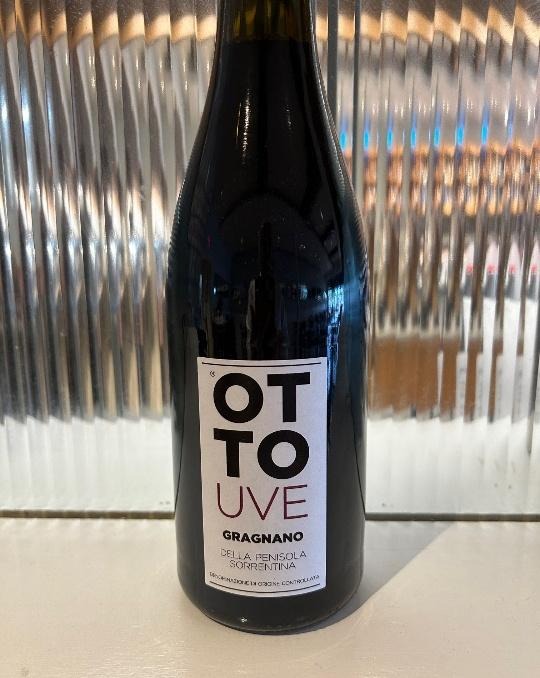
Wine of the Week: Otto Uve

January 24, 2026 by Jennifer Martella Leave a Comment

Ciao Tutti!

This weekend at Piazza Italian Market, we will taste the Otto Uve Gragnano Della Penisola Sorrentina Rosso Frizzante DOC  ($21.50, 11.5% ABV) from the Salvatore Martusciello winery in Pozzuoli, a municipality of the City of Naples, Campania. 

“Otto Uve”  (Eight Grapes) is named for the number of grape varieties in this wine, including the best known Aglianico and Piedirosso grapes. Gragnano is considered to be the quintessential red wine of Naples and the idyllic pairing for authentic Neapolitan pizza.

Pozzuoli is the main city on the Phlegraean Peninsula, famous for its Campi Flegrei, the twenty four craters and volcanic structures beneath the Bay of Naples. The ancient Romans believed that the gaseous Solfatara crater was the gateway to the Underworld, the domain of Vulcan, the God of Fire. The area’s sandy soil that covers the volcanic rock protected the area’s vines in the late 19th century when the disease phylloxera swept through Europe’s vineyards and decimated the grapes.

Salvatore Martusciello began working at his family’s Grotta del Sole vineyards and he soon became known for his dedication to preserving and extolling Campania’s indigenous grapes that had been almost forgotten.  His dedication led to his becoming the champion of  wines from the Campi Flegrei and Vesuvius. In 1991, he and his wife Gilda left his family’s estate  to establish their own vineyard. Salvatore is a very hands-on winemaker and he even delivers wine to customers so he can explain to them the wine’s special characteristics that he loves so well! 

Their Otto Uve Gragnano is not your traditional red wine. Slightly fizzy, best served chilled, fruit forward (cherry, strawberry), light tannins and balanced acidity. Pair with Piazza’s cured meat and cheese platters; fried foods, and my fave pairing, Piazza’s pizza -Otto Uve’s bubbles clean your palate from the richness of the cheese and its bright, tangy fruit is a perfetto match for the red sauce.

If you have not yet tasted this refreshing red wine, come join me on Friday from noon to 5:45 or Saturday from noon to 4:45 and take home a Piazza pizza too-the perfect pairing for the stormy weather ahead this weekend-stay safe, tutti!

Cin Cin, 

Jenn


Piazza  Italian Market is located in the Talbot Town Shopping Center, 218 N. Talbot St., suite 23, in Easton, MD

Contributor Jennifer Martella has pursued dual careers in architecture and real estate since she moved to the Eastern Shore in 2004. She has reestablished her architectural practice for residential and commercial projects and is a real estate agent for Meredith Fine Properties. She especially enjoys using her architectural expertise to help buyers envision how they could modify a potential property. Her Italian heritage led her to Piazza Italian Market, where she hosts wine tastings every Friday and Saturday afternoons.

The Spy Newspapers may periodically employ the assistance of artificial intelligence (AI) to enhance the clarity and accuracy of our content.

Filed Under: 00 Post to Chestertown Spy, Food and Garden Notes

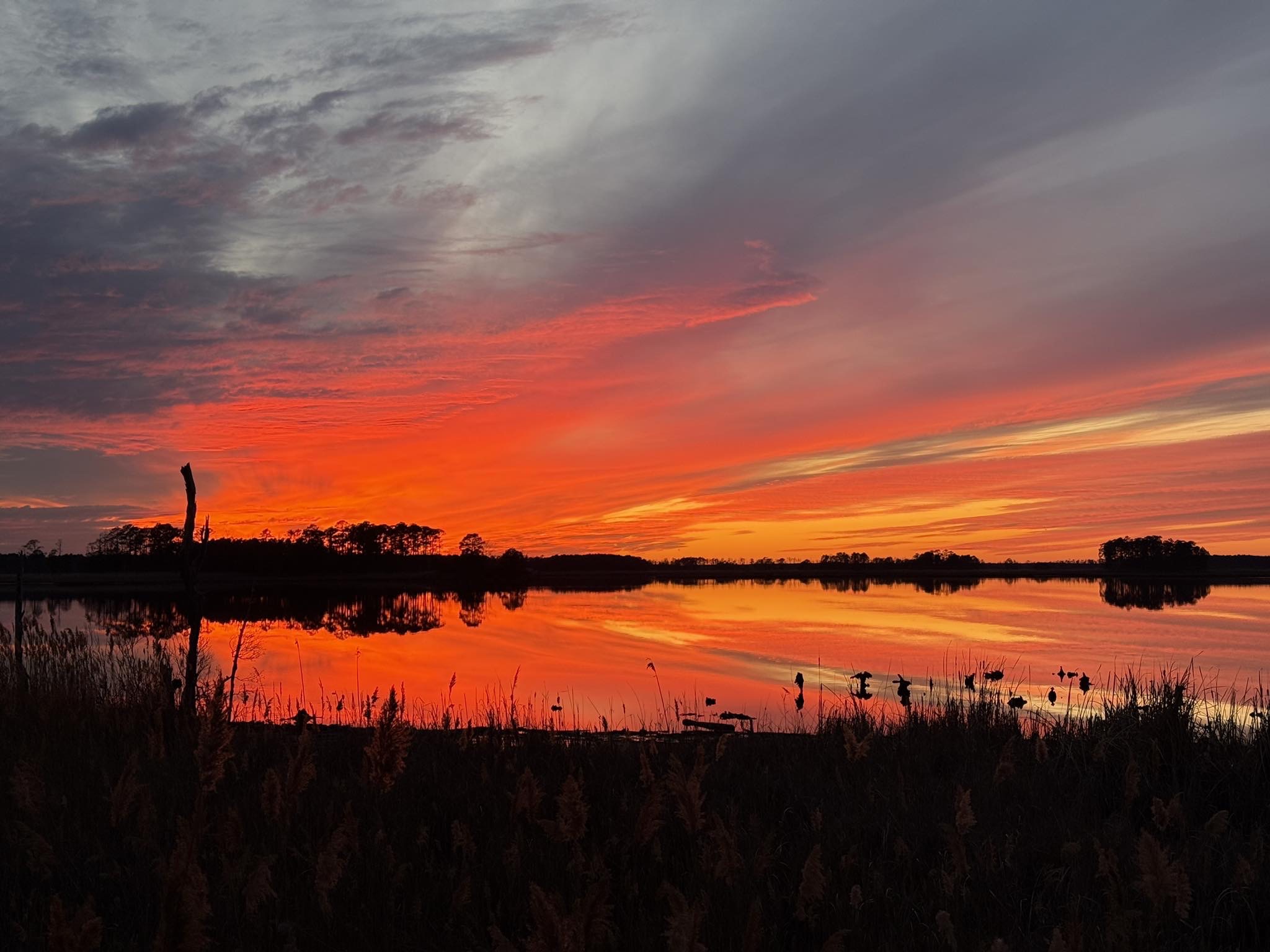
Chesapeake Lens: “Sailor’s Delight” By Lauren Morris Turner

January 24, 2026 by Chesapeake Lens Leave a Comment


A red sky at night, even in winter, promises a good next day.
“Sailor’s Delight” by Lauren Morris Turner

The Spy Newspapers may periodically employ the assistance of artificial intelligence (AI) to enhance the clarity and accuracy of our content.

Filed Under: 00 Post to Chestertown Spy, Chesapeake Lens

  • « Previous Page
  • 1
  • 2
  • 3
  • 4
  • 5
  • …
  • 33
  • Next Page »

Copyright © 2026

Affiliated News

  • Chestertown Spy
  • Talbot Spy
  • Cambridge Spy

Sections

  • Sample Page

Spy Community Media

  • Sample Page
  • Subscribe
  • Sample Page

Copyright © 2026 · Spy Community Media Child Theme on Genesis Framework · WordPress · Log in