
MENU

Sections

  • Home
  • Education
  • Donate to the Centreville Spy
  • Free Subscription
  • Spy Community Media
    • Chestertown Spy
    • Talbot Spy
    • Cambridge Spy

More

  • Support the Spy
  • About Spy Community Media
  • Advertising with the Spy
  • Subscribe
March 7, 2026

Centreville Spy

Nonpartisan and Education-based News for Centreville

  • Home
  • Education
  • Donate to the Centreville Spy
  • Free Subscription
  • Spy Community Media
    • Chestertown Spy
    • Talbot Spy
    • Cambridge Spy
00 Post to Chestertown Spy 3 Top Story

How much Power is Enough? by David Reel

December 8, 2025 by David Reel Leave a Comment

Two months ago, Stuart Pittman, chair of the Maryland Democratic Party, issued a news release with the following headline: “Maryland Democrats Launch First Ever ‘Contest Every Seat’ Campaign to Challenge Republicans in Every Corner of the State.”

The release includes the following: “’ Contest Every Seat’ is an ambitious new effort to recruit Democrats to run in every race in the 2026 elections, from every General Assembly district to every county council seat. “This initiative responds to the urgent threats posed by Donald Trump and Republicans. Their attacks on our freedoms, our jobs, the economy, and basic rights provide a significant opportunity for Democrats to fight back, build our party, and win in places we have been losing ground, not just where it is already blue. Contest Every Seat’ is a coordinated effort to recruit candidates from every corner of the state and give them the tools, training, and network they need to win in a general election. The initiative is led by the Maryland Democratic Party, in partnership with and coordinated with representatives on the ground in the 18 counties where Democrats have not always run a full slate against Republicans.

Additionally, we have partnered with organizations like ‘Run for Something,’ ‘Contest Every Race,’ and ‘Emerge Maryland’ to supercharge our efforts. We believe that voters in rural and small-town Maryland will be looking in 2026 for an alternative to the Republican Party’s anti-family, anti-worker, and anti-farmer policies. That’s why Democrats in every Maryland county are talking to their neighbors about getting on the ballot. They want to fight for economic justice and dignity. We will contest every seat.”

Not surprisingly, Governor Wes Moore has endorsed the “Contest Every Seat” campaign. He has said, ‘Contest Every Seat’ is about bringing everyone with us. Voters will see that while Washington is more divided than ever, we are showing people there’s a better way forward. I urge any Democrat who wants to make a difference in their community to consider running for office—the stakes are too high to have anyone on the sidelines. The ‘Contest Every Seat’ campaign is already underway, with recruitment focused on areas where Republicans have gone unchallenged for too long. The Party is calling on Democrats from all backgrounds to run for office.”

While every political party has the right (some would say an obligation) to recruit candidates for every office, why has this campaign been launched now, reportedly in response to decisions and actions by the Trump administration and a Republican Congress?

What is not in the news release is that Republicans and Democrats in the Maryland General Assembly and on Maryland County Councils have no decision-making power to approve or reject legislation in Congress or to approve or reject decisions made by a presidential administration. Conversely, in Maryland, the General Assembly and the governor have significant power.

With 102 Democratic members and 39 Republican members in the State House, and 34 Democratic members and 13 Republican members in the State Senate, Democrats currently hold long-time supermajorities that are extraordinarily durable and secure. As a result, they say the Republican members in the legislature will always have their say, but the Democratic members will always have their way.

That is the case not only in legislation, but also in votes to override gubernatorial vetoes.

Democratic supermajority veto overrides were standard operating procedure for Republican Larry Hogan’s vetoes during his two terms as Governor.

Apparently, for the Maryland Democratic Party, the entrenched one-party control of the State House, State Senate, and regular control of the governor’s office is not enough.

That said, current “Contest Every Seat” messages for Democratic candidates challenging Republican state legislative and county town council candidates may not work as expected.

Messages linking President Trump and Republican  Congressional actions to Republican state legislative candidates and county council candidates in Maryland are not likely to be widely accepted by the 1,035,555 Maryland voters who voted for Trump in 2024, the most votes he received in Maryland in his three campaigns for the presidency.

These messages may also not be widely accepted by Maryland voters, as 49% of respondents in a recent University of Maryland, Baltimore County poll believe Maryland is on the wrong track.

Both groups of voters and perhaps significant numbers of others are more likely to respond positively to very different messages from Republican state legislative candidates and county council candidates.

One message could remind voters about new state taxes, state income tax increases, new state fees, state fee increases, and withdrawals from the state’s “Rainy Day” reserve fund, which were approved by Democratic supermajorities in the 2025 General Assembly session without Republican support.

A second message could suggest to voters that Democratic supermajorities in the 2026 General Assembly session approved more new taxes, more income tax rate increases, more new fees, more fee increases, and more withdrawals from the state’s “Rainy Day” reserve fund, again without Republican support. This scenario is not a given. It could occur next year and in future years based on current projections for major shortfalls in state revenues, increases in state funding, and a state constitutional mandate for a balanced state budget.

Either way, the most compelling message to targeted Maryland voters could be that Maryland Democratic elected officials already have more than enough power, and now they want even more. That conclusion can best be addressed by voting for Republican candidates in state legislative elections and for county council elections.

David Reel is a public affairs and public relations consultant. He is also a consultant for profit organizations on governance, leadership, and management matters. He lives in Easton.

 

The Spy Newspapers may periodically employ the assistance of artificial intelligence (AI) to enhance the clarity and accuracy of our content.

Filed Under: 00 Post to Chestertown Spy, 3 Top Story

Painting a Sense of Well Being in Chestertown By Dennis Forney

December 4, 2025 by Dennis Forney Leave a Comment

Artist Jack Lewis painted this watercolor of Lawyer’s Row in Chestertown, across from the Masonic Lodge building, in the mid 20th century.

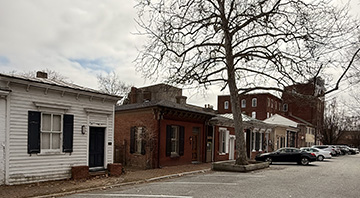
Lawyer’s Row on Court Street in Chestertown, a collection of distinctive one-story offices crowded together in the shadows of the nearby courthouse, for centuries has been witnessing wills, title searches and property transfers, a wide variety of contracts, divorces and other civil and criminal legal matters.

Though the digital age has diluted the once-steady flow of people walking between the law offices and the Kent County courts, Lawyer’s Row today continues to house at least five active law offices and the practices of more than a dozen lawyers. Peeling paint, cob webs and crooked windows here and there signal varying degrees of maintenance while adding to the charm wrought by decades of generational transactions over the decades.  At least one of the offices has been converted to a ‘pied a terre’ style residence while another’s windows now sport photos of real estate listings.

In the early 1950s, prolific Eastern Shore artist Jack Lewis published a large-format hard cover book titled The Chesapeake Bay Scene.  In his ramblings up and down the shore, Lewis captured the people and places of the tidewater region in literally hundreds of sketches and watercolors.

Lawyer’s Row caught his attention during a visit to Chestertown. As was his wont, Lewis set up his easel near the edge of a nearby street and went about freezing a moment in time on a fair weather day.

A large sycamore tree, shown here, used to shade a wide swath of Lawyers Row but was removed in the past year due to disease. “It was almost completely dead,” said Billy Sullivan of Bartlett Tree. “Branches five and six inches in diameter were falling on the buildings and sidewalks. It had become a real hazard.” Sullivan, a member of the Chestertown Tree Committee, said discussions are underway about possibly replacing the tree which had reached an age, he guessed, between 60 and 75 years.

In addition to his artistic work, Lewis wrote notes to accompany each scene, including human interest, composition and philosophy details that rambled through his brain between the colorful dashes of his brush strokes.  Here are the notes he recorded, as a young artist, with his Lawyer’s Row scene.

“Title: Lawyers Row, Chestertown

Sam Heck has been practicing law for more than three decades in the Lawyers Row office where his father, Preston P. Heck, practiced for several decades before him.

“Human Interest: The name explains itself . . . a row of charming little houses . . . law offices. People are busily stepping from one doorway to another, and in and out of the soft maple shade. It is like a song in true harmony. A cart lumbers along the street in an interval sufficient to make itself fixed indelibly upon the design. As I stood at my painting a man spoke to me.  Upon raising my eyes, they rested upon a most radiant subject. A blooming young woman with flaxen hair, eyes dark with mascara and false lashes, great gray eyes. In confusion my attention switched between the two people.  The young man ranted on until she quite abruptly cried, ‘Come on Bill! Let the kid alone.’”

Lewis clearly had an eye for more than just architecture.  Though he didn’t paint the ‘blooming young woman,’ he did include in his Chesapeake Bay Scene many portraits of the people he encountered in his travels. People coming upon artists working outside ‘en plein air’ usually have to satisfy their curiosity by taking a look at the work in progress and chatting it up with the artist.

His comments about Lawyer’s Row continue:

“Composition: As the cart passed, the question arose.  ‘Will it fit with the composition?’ During a flash of resolve I reached for the cart.  It found a place in the design just below the houses. Coincidentally, the wagon had the coloring of the trees and houses.

“Philosophy: The universe seems to sing when all its components fit in well together. To be on a corner in Chestertown witnessing the singing of all the parts of ‘Lawyers Row’ rewarded me with a sense of well being. What better way to start off than with such awareness of the harmony of the world then to pause somewhere and paint it!”

Lead photo: Artist Jack Lewis painted this watercolor of Lawyer’s Row in Chestertown, across from the Masonic Lodge building, in the mid 20th century.

All photos by Dennis Forney.

The Spy Newspapers may periodically employ the assistance of artificial intelligence (AI) to enhance the clarity and accuracy of our content.

Filed Under: 00 Post to Chestertown Spy, 3 Top Story, Archives

America Divided By Angela Rieck

December 4, 2025 by Angela Rieck Leave a Comment

I watched the Ken Burns series, The American Revolution. It is his usual outstanding and comprehensive documentary film. The American Revolution is 12 hours long (six 2-hour segments) and provides us with an intimate view of Revolutionary times. 

It is not an understatement to state that this was one of the most important revolutions in history. America’s Democracy has been successful for almost 250 years and spawned revolutions throughout the world. The Declaration of Independence often served as the framework.

Most of us think of the Revolution as a time when Americans united to create the great experiment, Democracy, home rule by the people. We were taught that Americans rose up en-masse to create a government that allowed for independence, equal representation, and religious freedom for all. But the documentary makes clear that the American Revolution was actually a civil war. Americans who wanted to remain under British rule (called Tories) fought against those who wanted self-government (Patriots). Other Americans excluded from the democracy fought against the Patriots.

This was freedom for white men only, with a preference for educated property owners. The American Revolution excluded enslaved people, native Americans, and women, thereby encouraging indigenous and enslaved people to fight with the British. There were columns of soldiers with enslaved people, native Americans, and Tories that battled the Patriots.

In the Dunmore Act in 1775, enslaved men were offered freedom if they fought for the crown. Understandably, most of the enslaved population who fought in the Revolutionary War battled on the British side.

Most Native Americans, seeing how Patriots were usurping their land, sided with the British, who guaranteed their lands outside of the current colonies.

Women were never even considered, despite Abigail Adams’ pleas. They courageously followed their husbands in the war. Women tended to the wounded, buried the dead, cooked the meals, cared for the children, and in some instances, actually participated in the fighting.

It took centuries to include those who were excluded in our Democracy. The repercussions to indigenous people, women, and enslaved people are felt today.

But the point remains the same, we talk about how fractious and dangerous America is now (in fact, one Trump supporter has a sign that reads “All Hail King Trump”). It is important to remember that America has often been divided and fractious. It is the nature of a Democracy that gives representation to all, regardless of property or education. But, when speaking up and taking a stand, the country has usually pointed to independence, freedom, separation of church and state, and government by the majority.

It keeps me hopeful.


Angela Rieck, a Caroline County native, received her PhD in Mathematical Psychology from the University of Maryland and worked as a scientist at Bell Labs, and other high-tech companies in New Jersey before retiring as a corporate executive. Angela and her dogs divide their time between St Michaels and Key West Florida. Her daughter lives and works in New York City.

The Spy Newspapers may periodically employ the assistance of artificial intelligence (AI) to enhance the clarity and accuracy of our content.

Filed Under: 00 Post to Chestertown Spy, 3 Top Story, Angela

Will Humans Become History’s Losers? By Al Sikes

December 3, 2025 by Al Sikes Leave a Comment

Is intuition obsolete? What about our accumulated layers of information and feelings or what we might call seasoning? Including, of course, the lessons from failures and the information-laden seams of character? Or, the fruits of relationships—the improvisational values of collaboration?

It was 1959. One of the greatest jazz pieces ever composed, “Take Five”, was performed by the Dave Brubeck Quartet. The melody was written by Paul Desmond, but the band collaborated on the final fusion of ideas and musical notes. Brubeck created the harmonic foundation and Joe Morello the famous drum pattern.

“Take Five” is both Desmond’s composition and a Brubeck Quartet creation. A collaboration for the ages.

Are the coders with their artificial intelligence (AI) tools going to upstage fertile minds? Minds shaped and reshaped by life? Can they turn the generative algorithms  into 21st-century creators without pirating previous works? Can AI models take humans out of the equation?

At the risk of mixing up input and outcomes, here are some recent experiences—the complex and simple kind. When I got my knees replaced, I offhandedly referred to the surgery as robotic chainsawing. Thank goodness for the strides in pain management. My research and subsequent experience suggest that doctors working with robotic tools are a generation or two more effective in the removal of the old and integrating the new.

But then how much do we want tools to get in the middle? For example, in a recent trip back from New York, I came face-to-face with both a person and a screen at the same service area on the New Jersey Turnpike. As required by New Jersey law, a human pumped gas and cleaned the car window while my wife had to figure out the tablet interface at a ShakeShack. Best in show: the gas attendant, not the interface,

Whether we are dealing with a medical breakthrough or ordering sandwiches, humans can be either crucial or welcome. I am afraid that when they are just welcome they will disappear. Too bad, variations on the default format go missing, and hospitality is nonexistent.

As one friend of mine often quips, “Here’s the thing.” I started with a slide rule, welcomed the electronic spreadsheet, and then the calculator, followed quickly by the computerization of most things.

Technology attracts investment. And, return on investment will require volume—a robust demand side. The capital investment in AI is without precedent and that will help to assure the ultimate flipped script. Will we flip from humanics to mechanics? If so what will be lost, a civilization?

A recent headline in the Wall Street Journal proclaimed “The College Students Who Can’t Do Elementary Math.” The underlying story verified that many students at the University of California, San Diego can’t round numbers or add fractions. If you cannot tally up numbers, trouble will follow.

Regardless, as momentum flips the script, the depth of human creativity will remain crucial to progress and humanity. But, if AI becomes a substitute for thinking, the incurious will need to muscle up.

Al Sikes is the former Chair of the Federal Communications Commission under George H.W. Bush. Al writes on themes from his book, Culture Leads Leaders Follow published by Koehler Books. 

The Spy Newspapers may periodically employ the assistance of artificial intelligence (AI) to enhance the clarity and accuracy of our content.

Filed Under: 00 Post to Chestertown Spy, 3 Top Story, Al

The Hegseth “Kill Them All” Order is Trump’s—and America’s—Nightmare By J.E. Dean

December 3, 2025 by J.E. Dean Leave a Comment

Just as the Epstein scandal was temporarily disappearing from the daily news, The Washington Post reported a more horrific story. Self-dubbed Secretary of War Pete Hegseth is reported to have ordered a second strike on an already-destroyed suspected drug smuggling boat to kill two survivors. If the story is accurate, the United States may have committed a war crime.

Those of us familiar with the history of the Vietnam War will remember the Mai Lai Massacre, where between 347 and 504 unarmed Vietnamese adults and children were killed. The Hegseth incident is, of course, much smaller, but the legal issue is the same. An illegal order was given resulting in unarmed people being killed.

Much is being written about who gave what order. Donald Trump, unsurprisingly, says he knew nothing about it and that Pete Hegseth denies giving the order. No surprises here, but if Trump and Hegseth are lying, it may not protect them from accountability. The bipartisan leadership of both the House and Senate Armed Services Committees have announced investigations. 

A phrase featured on The X-Files television series comes to mind: The truth is out there.

Legal pundits are pouring over details of the attack that killed the two survivors. The issues are complex, but, assuming that the account is true, the answer is simple: Murder.

Among the issues involved is the legitimacy of characterizing Venezuelan boats suspected of smuggling dangerous narcotics as an attack on the United States. Another issue is why; after releasing video footage of the first attack on the suspected drug boat, the Department of Defense did not release the second or report that a second strike had been carried out. Was there a coverup? If there was a coverup, does that prove that whoever ordered it knew an illegal order had been given and executed?

Also, if Hegseth did not give the order, who did? And are Hegseth, Trump, or others responsible or was someone else insubordinate? Is someone going to be thrown under the bus? (As of this writing, the betting is on US Special Operations Command commander Admiral Frank “Mitch” Bradley.) 

I won’t review the Law of War or the U.S. Code of Military Justice, but the law is clear that killing civilians who pose no threat to U.S. military members, even in a war zone, is murder. Read 18 U.S.C. § 2441-War Crimes and judge for yourself.

In coming weeks, articles of Impeachment will likely be filed in the U.S. House of Representatives against President Trump, Secretary Hegseth, and others. The coming House and Senate Committee investigations, which the President is unlikely to be able to stop, could not only assign responsibility for what appears to be a horrific war crime, but also document a coverup likely to put Watergate to shame.

When I started work on this week’s column, I was going to write about accountability and the absence of it in the age of Trump. If the Post reporting is accurate, and many in Congress, including Republicans, believe it is, accountability may finally come to Donald J. Trump.


J.E. Dean writes on politics, government, goldendoodles, and other subjects. A former counsel on Capitol Hill and public affairs consultant, Dean is an advocate for democracy and the rule of law.

The Spy Newspapers may periodically employ the assistance of artificial intelligence (AI) to enhance the clarity and accuracy of our content.

Filed Under: 00 Post to Chestertown Spy, 3 Top Story, J.E. Dean

Why Can’t We All Get Along Anymore? By Maria Grant

December 2, 2025 by Maria Grant Leave a Comment

During the holiday season, when I’m particularly thankful for family and friends, I sometimes reflect on how many family members, friends, colleagues, and former couples no longer speak to one another. It seems as though it’s getting more difficult for us to get along. Or maybe it’s always been that way. Or maybe the world is simply less forgiving, crueler, crasser, and less kind.

Consider just a few of the “celebrity” relationships that have somehow dissolved: Nicole Kidman and Keith Urban, Ben and Jerry, Dennis and Randy Quaid, Simon and Garfunkel, Hall and Oates, Katy Perry and Orlando Bloom, Macaulay Culkin and his dad, Meghan Markle and her dad, Brooke Shields and her mom; Donald Trump and Marjorie Taylor Greene, Mike Pence, Bill Barr, James Mattis, General Mark Milley, Chris Christie, Michael Cohen, H.R. McMaster, Omarosa, Anthony Scaramucci. (I could keep going.) 

Such rifts can be caused by incompatible values, jealousy, and lack of respect. Friendships can end because two people no longer share core values. Co-workers may have professional rivalries that lead to tensions and avoidance. Business partners relationships may sour over the direction of the company, politics, or personal conduct. 

Research suggests there are top 10 reasons marriages break up: Family (not being able to get along with the spouse’s family); lack of communication; stress; technology (not unplugging from it); selfishness; inability to forgive; loose boundaries; the past (not getting past it); dishonesty; and pride. 

Dr Gottman of the Gottman Institute identified four key behaviors which he labeled the four horsemen that indicate a relationship is in trouble: Criticism, contempt, defensiveness, and stonewalling. (I remember a therapist friend once told me that when she is doing couples therapy and senses contempt from one of the partners, she knows the relationship is doomed.)

Some friends have shared that they have broken off relationships because of substance abuse issues, cheating, boredom, financial issues, or just plain apathy. 

So, what’s the secret to getting along? Experts say it’s a combination of empathy and respect achieved through active listening, open-mindedness, and effective communication. Key practices include seeking to understand others, finding common ground, and showing general appreciation. 

Here are a few quotes that emphasize why getting along is worth the effort.

“The most important single ingredient in the formula of success is knowing how to get along with people.” Theodore Roosevelt

“Without friends, no one would choose to live, though he had all other goods.” Aristotle

“A day without a friend is like a pot without a single drop of honey left inside.” A. A. Milne Winnie-the-Pooh

“The longer I live, the more deeply I learn that love—whether we call it friendship or family or romance—is the work of mirroring and magnifying each other’s light.” James Baldwin

Something to think about. 


Maria Grant, a former principal-in-charge of the federal human capital practice of an international consulting firm, now focuses on writing, reading, music, bicycling, and nature.

The Spy Newspapers may periodically employ the assistance of artificial intelligence (AI) to enhance the clarity and accuracy of our content.

Filed Under: 00 Post to Chestertown Spy, 3 Top Story, Maria

My Newest Word By Jamie Kirkpatrick

December 2, 2025 by Jamie Kirkpatrick Leave a Comment

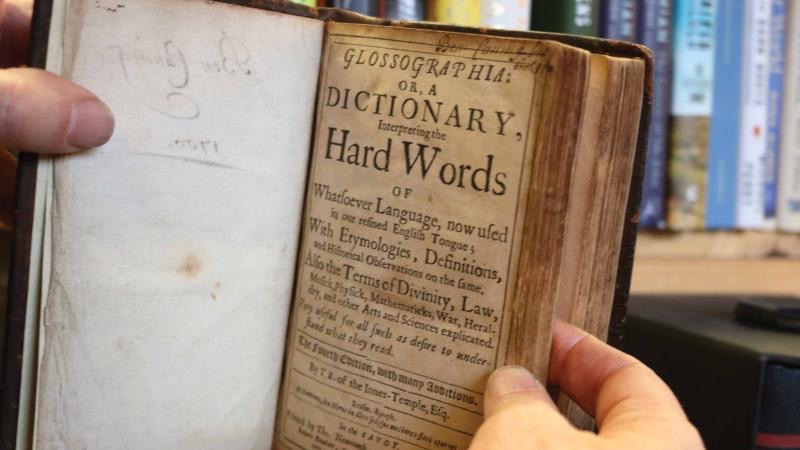
I love words! If I were King Midas, I would turn all the world’s words to gold. If I were a miser, I would horde every word in the dictionary. If I were an architect, I would build skyscrapers out of words. If I were Warren Buffett, I would invest in words and make millions. And if I were Johnny Appleseed, I would plant words and watch fragrant orchards grow. But I’m just a writer so I celebrate words; they are the precious coins of my realm.

I make it a point to do three or four crossword puzzles every day. My wife thinks I’m just fooling around, but I believe crossword puzzles keep my mind sharp, but every once in a while, I trip over a new word. When that happens, I feel like I’ve run a marathon—giddy, energized, sky-high on endorphins. OK, so I’m a word nerd and proud of it!

Case in point: yesterday, I discovered my newest word—“echt.” It essentially means “authentic.” Apparently, we have George Bernard Shaw to thank for bringing “echt” to America. He used the word in an article he wrote in 1916, and it has been around ever since. As the current saying goes, I appreciate you, GBS!

“Echt” has it etymologic roots in both German and Yiddish. That’s hardly surprising since both languages share the same Middle German source. In both languages, the word is spelled “ekht,” but it still means “true to form.” As German words go, “ekht” is a lot easier to say than “kraftfahrzeughaftpflichtversicherung” (motor vehicle liability insurance), “streichholzschachtel (box of matches), or even one of my personal favorite words, “eichhörnchen!” (Squirrel!). Infatuated as I am with words, I don’t plan on using any of those words anytime soon, but “echt” in English has staying power. It’s true-blue, the genuine article, the Real McCoy. Literally!

Once I’ve discovered a new word, I can’t wait to pop it into speech or incorporate it into my writing as soon as I can. A new word weighs in my pocket like a gold coin waiting to be spent and I don’t want to disappoint it. I look for opportunities to drop the word into conversation. For example, “My friend Allen hails from New Orleans and he sure knows how to make some echt gumbo!” Or this: “Trump doesn’t have an echt bone in his body—no true north, no underlying principles, no overarching philosophy. He’s just an erratic, impulsive brat.” That’s true enough, but “echt” just makes it so much more true. 

Now that we’ve entered the territory of December, I’ll be looking for more timely occasions to drop my new favorite word into the conversation. Please don’t judge me. It’s just that one of my missions in life is to up the English-speaking world’s vocabulary, and there’s no better time than the holidays to introduce friends and family to a new word or two. So, in that spirit, I hope you all had an echt Thanksgiving, and that the days ahead will be filled with all manner of echt cheer and joy.

I’ll be right back.


Jamie Kirkpatrick is a writer and photographer who lives on both sides of the Chesapeake Bay. His editorials and reviews have appeared in the Washington Post, the Baltimore Sun, the Philadelphia Inquirer, the Pittsburgh Post-Gazette, the Washington College Alumni Magazine, and American Cowboy Magazine. His most recent novel, “The Tales of Bismuth; Dispatches from Palestine, 1945-1948” explores the origins of the Arab-Israeli conflict. It is available on Amazon and in local bookstores. His newest novel, “The People Game,” hits the market in February, 2026. His website is musingjamie.net.

The Spy Newspapers may periodically employ the assistance of artificial intelligence (AI) to enhance the clarity and accuracy of our content.

Filed Under: 00 Post to Chestertown Spy, 3 Top Story, Jamie

John F. Kennedy and the War in Vietnam – What if? By David Reel

December 1, 2025 by David Reel Leave a Comment

Last month, November 22 was the 62nd anniversary of the assassination of President John F. Kennedy (JFK).

To this day, there are countless unresolved “what if” questions about that day in Dallas.

What if JFK had not gone to Dallas in the first place? What if JFK’s schedule had been limited to a speech at an indoor banquet hall and did not include a slow-motion open-roof ride through downtown Dallas that had more challenges for security and safety? What if he was shot by multiple assassins who were recruited by a conspiracy and not by a lone deranged assassin?

All we know with absolute certainty is that President Kennedy died that day, and Vice President Lyndon B. Johnson (LBJ) was immediately sworn in as his successor.

That raises a post-assassination “what if” question. What if JFK had lived and disapproved or reversed previous decisions on additional American ground troops in a civil war in Vietnam?

Obviously, we will never know with absolute certainty the answer to that “what if” question.

We can make some informed assumptions based on presidential historian Robert Dalek’s book, “An Unfinished Life: John F. Kennedy 1917-1963.” Dalek includes a riveting review of deliberations with, and decisions made by JFK on the recommendations of his foreign policy and military advisors during the “Cuban Missile Crisis” in October 1962.

This crisis began when JFK was told that the former Soviet Union was placing nuclear missiles in Cuba that were capable of destroying huge sections of the continental United States.

For thirteen days, there was widespread public uncertainty and fear that, after a decades-long cold war between America and the former Soviet Union, this crisis could lead to a nuclear war.

JFK immediately convened a series of meetings with the Executive Committee of the National Security Council, whose members included his National Security Advisor, Secretary of Defense, Secretary of the Treasury, Director of the Central Intelligence Agency, the military’s Joint Chiefs of Staff, and Attorney General Robert F. Kennedy Sr., JFK’s brother and closest advisor.

During these meetings, military action was given serious consideration by all the attendees who shared a commitment to contain and even reverse the former Soviet Union’s efforts since the end of World War II to expand communism throughout the world.

Some suggest the 1962 Cuban Missile Crisis resulted in part from an American Central Intelligence Agency scheme to recruit, train, and fund a group of Cuban exiles to invade Cuba and overthrow Fidel Castro’s communist government. That invasion was a spectacular failure and was a worldwide embarrassment for the Kennedy administration.

Despite that failure, JFK’s advisors discussed a military campaign that included bombings of the Soviet missile sites and air bases in Cuba, followed by another invasion of Cuba.
The October 1962 Cuban Missile Crisis ended after thirteen days when an unexpected offer came to JFK from Soviet Union leader Nikita Khrushchev. The Soviets would remove missiles in Cuba if America removed U.S. missiles in Türkiye (then known as Turkey).

JFK viewed the request as reasonable and immediately expressed his support for it. With one exception, his advisors did not and continued to push for immediate military action in Cuba.

JFK’s Secretary of Defense endorsed the military’s Joint Chiefs of Staff plan that included steps needed before an attack on Cuba, as if attacks were inevitable and ready for final approval.
JFK’s National Security Advisor said, “I think we should tell you … the universal assessment of everyone in the government who’s connected with alliance problems—if we appear to be trading the defense of Turkey for the threat in Cuba, we will face a radical decline.”

Undaunted by this almost universal opposition to a diplomatic compromise, JFK rejected military strike recommendations. Instead, he directed his brother Robert to relay his agreement to Moscow, even though RFK strongly opposed Khrushchev’s compromise.

In doing so, Kennedy exercised his authority as President and Commander in Chief, much like Abraham Lincoln did during the American Civil war.

At one cabinet meeting, Lincoln presented his proposed change in strategy to help end the Civil War and asked his cabinet members to vote on it. Lincoln reported there were seven no votes and his yes vote. He then said the yes vote has it.

In a review of Dalek’s book, Fred Kaplan, a veteran observer of American foreign policy, wrote that Dalek failed to address significant differences between JFK’s and LBJ’s presidential leadership experiences and leadership styles.

Kaplan suggested JFK grew increasingly unhappy with “expert advice” from his foreign policy and military advisors. As a result, going forward, he would make final decisions by trusting his own instincts.

Kaplan also suggests LBJ had limited dealings with those advisors, was insecure about trusting his own instincts and was overly deferential to his foreign policy and military advisors, many of whom were holdover Kennedy appointees who had firmly held views that American military action was the best way to address the spread of communism in the world.

In any event, both Dalek and Kaplan agree that if JFK had lived, he would have withdrawn American ground troops already in Vietnam and not approved future deployments.

I agree and believe such a decision could have avoided at least 58,000 American deaths with a deeply flawed war strategy, nationwide antiwar protests, including one where four students were killed and nine wounded. Vietnam also ignited a lack of trust in our national government to do the right thing the right way — a feeling still held by many in American society today.

David Reel is a public affairs and public relations consultant and a consultant on governance, leadership, and management matters exclusively for not-for-profit organizations. He lives in Easton.

The Spy Newspapers may periodically employ the assistance of artificial intelligence (AI) to enhance the clarity and accuracy of our content.

Filed Under: 00 Post to Chestertown Spy, 3 Top Story

Thanksgiving By Angela Rieck

November 27, 2025 by Angela Rieck Leave a Comment

Thanksgiving is the most popular holiday in the United States. Since it is not tied to a particular religion, people of all religions and ethnic groups celebrate it. Thanksgiving may also be the most tradition-rich holiday. Its traditions are typically centered around gratitude, giving back, family and friends, food, and football.

Despite historical stories about the feast between Pilgrims and Native Americans, it is actually a holiday that was initiated during the Civil War. In 1863, President Lincoln declared Thanksgiving a national holiday to boost soldier’s morale. President Lincoln assigned the holiday to the last Thursday in November, perhaps to coincide with the date the Pilgrims first landed the Mayflower in New England. In 1941, FDR signed a bill making the fourth Thursday in November its official date, regardless of whether it’s the last Thursday of the month or not.

Our traditional meal is different from the original feast. Although there are few records detailing the original menu, it is believed that the Pilgrims brought local fowl and the Wampanoag brought deer. Pumpkin, lobster, and seal were probably also included in the feast. It is not known if the pumpkins were in pie form, but we know that people have been baking pumpkin pies since the 1600s. 

There is a fun fact associated with Thanksgiving. Thanksgiving leftovers led to the invention of TV dinners. In 1953, apparently Swanson overestimated how much turkey would be consumed on Thanksgiving. So, using 5,000 aluminum trays and an assembly line of hand-packers they created a Thanksgiving-inspired meal with turkey, cornbread dressing, gravy, peas, and sweet potatoes. In the first full year of production, they sold ten million trays.

Thanksgiving is known for its customs and traditions. First and foremost, it is a gathering of friends and family to a feast, often turkey, with sides of yams, mashed potatoes and gravy, rolls, stuffing, cranberry, and pumpkin and apple pies.

The theme of Thanksgiving is gratitude. Some participate in Turkey Trots for charity, others volunteer at a soup kitchen, or simply reflect on what they are grateful for. Football and parades provide entertainment.

I am grateful for Thanksgiving. It is a welcoming event because I come from a large family. Our Thanksgiving meal is hosted by my sister who accommodates as many as 45 people. Thanksgiving, for us, begins on Wednesday when we commence baking. Our houses are festive and the air is filled with spices as we bake sides and desserts for the turkey and ham feast. On Thanksgiving day, my sister’s house is a din of laughter and happy conversation as we catch up and share our blessings. The house is warm and inviting, strewn with flowers and smells of turkey and spices. The side table is laden with pies and desserts and all around are appetizers. The feast lasts all day as some of us watch football and others just catch up at the dinner table.

I love our Thanksgivings, but I am also wary that each celebration may be the last. Our children who live far away may soon wish to start their own. At some point, we will become too old to do the cooking and host. It makes each celebration more valuable.

I wrote a column about traditions a couple of weeks ago. Thanksgiving is full of traditions, but…what happens when the children can no longer come or we move away from them, or our family dwindles down due to death and divorce? Many people reminisce about how wonderful traditional memories are, but memories bring me sadness rather than joy. Memories make me miss what used to be. 

When this happens, many create new traditions. Some people have a Friendsgiving. Friendsgiving is a combination of “friends” and “Thanksgiving” that refers to a large meal shared with friends on Thanksgiving Day. 

For those who are lucky enough to have their spouses, the two can start a tradition of preparing a special meal together and visiting with friends and family remotely.

My philosophy is to move forward. This year my daughter and son-in-law can’t be there for Christmas, another holiday with our own traditions. They will be on a special trip to Egypt, so it is my responsibility to create my own tradition. Our friends in Key West have established a tradition on Christmas Eve where we bicycle to see the Christmas lights. I haven’t decided what Christmas day will be. It may be just a celebration with my dogs…but I will create a tradition which keeps me moving forward.

This column is scheduled to appear on Thanksgiving, so I hope that this finds you enjoying old or building new traditions. 


Angela Rieck, a Caroline County native, received her PhD in Mathematical Psychology from the University of Maryland and worked as a scientist at Bell Labs, and other high-tech companies in New Jersey before retiring as a corporate executive. Angela and her dogs divide their time between St Michaels and Key West Florida. Her daughter lives and works in New York City.

The Spy Newspapers may periodically employ the assistance of artificial intelligence (AI) to enhance the clarity and accuracy of our content.

Filed Under: 00 Post to Chestertown Spy, 3 Top Story, Angela

Thanksgiving 2025 By J.E. Dean

November 26, 2025 by J.E. Dean Leave a Comment


Happy Thanksgiving and thank you for reading The Spy today.

We live in troubled times, but there is much to be thankful for, especially on the Eastern Shore. 

I am grateful for my wonderful wife, Maria, who learned how to run a boat this year. I can hardly wait until Spring.

I’m also fortunate to have many friends, near and far. I’m sending them notes thanking them for being good friends. 

Music. Talbot County is blessed with rich opportunities to hear music live. I am grateful for Chesapeake Music’s fantastic June chamber music festival, for the Avalon Theater, and for the Gabriela Montero exceptional concerts held at the Ebenezer Theater. I love the Mid-Shore Atlantic Symphony. When Maria and I moved to the Eastern Shore many years ago, we didn’t realize we had arrived at a cultural mecca.

Speaking of friends, I must mention the birds. They’re magical. The Eastern Shore is blessed with herons, egrets, osprey, eagles, ducks, and, of course, Canada geese. 

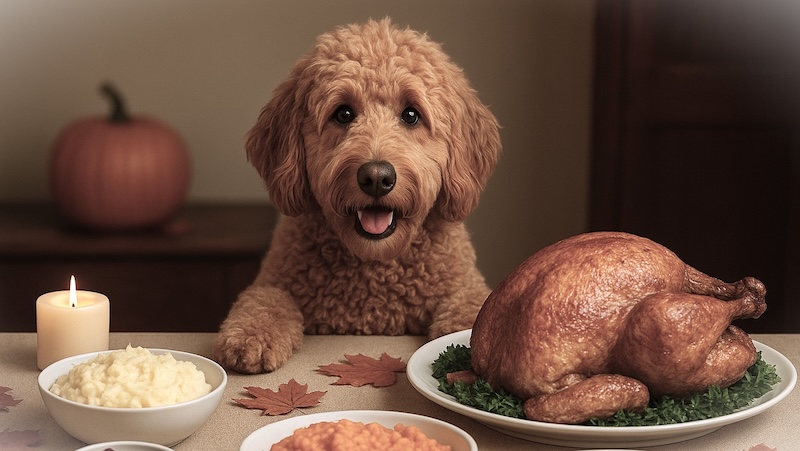
Lucca. A 15-year-old goldendoodle–the best goldendoodle on the planet

Genuine Chesapeake Bay Blue Crabs. There is no substitute. I’d like to see the “Maryland-Style” crabcakes peddled in Florida banned.

Rockfish. Don’t tell my friends, but I prefer it over grouper, Chilean sea bass, salmon, and walleye.

 No catastrophic hurricane damage on the Eastern Shore this year. Tropical Storm Chantal visited in July and Hurricane Erin passed offshore in August, but there were no direct hits. My fingers are already crossed for 2026.

The reopening of the federal government. The federal government should never have been closed. Now, with a little luck, families and friends travelling this Thanksgiving will be spared the nightmare of cancelled flights. And, more importantly, federal workers may be able to salvage the holidays. 

A short note to Congress and the President:  Please don’t close the government down again in January. Please. It’s harmful and it’s counterproductive.

Democracy. Given our political divide and the events of the past year, I’m more grateful than ever for Democracy. 

The Spy. I look forward to the Spy Daily Intelligencer arriving in my email box at 3 p.m. There is always something interesting to read. Thank you, Spy, for being our spy. Your insights and information about the Eastern Shore help make us a thriving community.

One last thing. Thank you for those of you who read my editorials, even those of you who disagree with my points of view. I am grateful to have had the opportunity to share my perspective on politics with you this past year.

That’s it. Happy Thanksgiving!

J.E. Dean writes on politics, government, goldendoodles, and other subjects. A former counsel on Capitol Hill and public affairs consultant, Dean is an advocate for democracy and the rule of law.

The Spy Newspapers may periodically employ the assistance of artificial intelligence (AI) to enhance the clarity and accuracy of our content.

Filed Under: 00 Post to Chestertown Spy, 3 Top Story, J.E. Dean

  • « Previous Page
  • 1
  • …
  • 5
  • 6
  • 7
  • 8
  • 9
  • …
  • 116
  • Next Page »

Copyright © 2026

Affiliated News

  • Chestertown Spy
  • Talbot Spy
  • Cambridge Spy

Sections

  • Sample Page

Spy Community Media

  • Sample Page
  • Subscribe
  • Sample Page

Copyright © 2026 · Spy Community Media Child Theme on Genesis Framework · WordPress · Log in